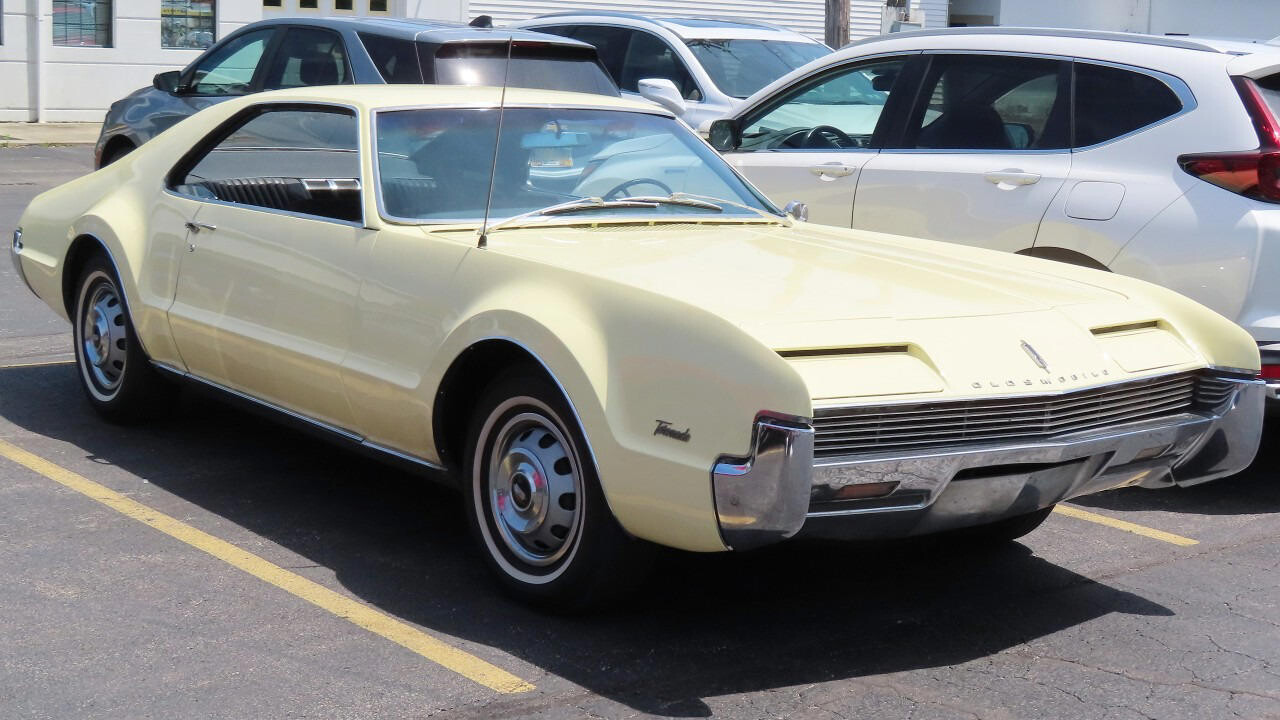
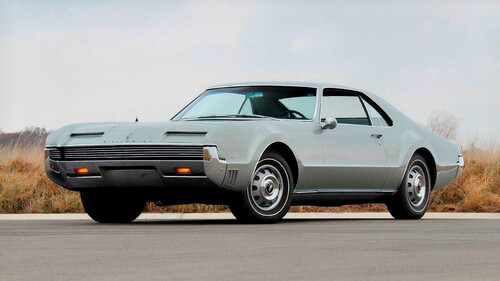
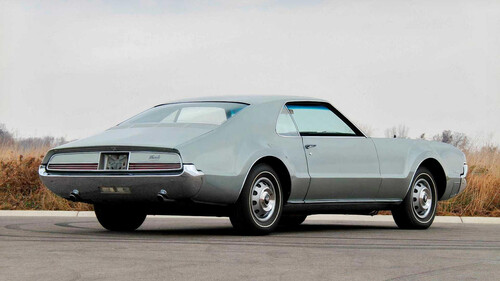
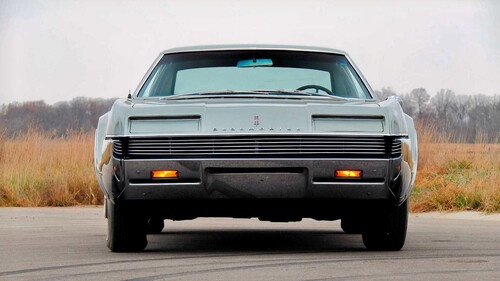
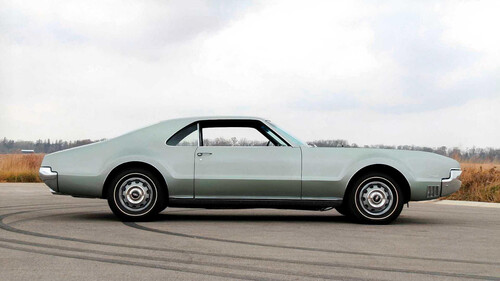
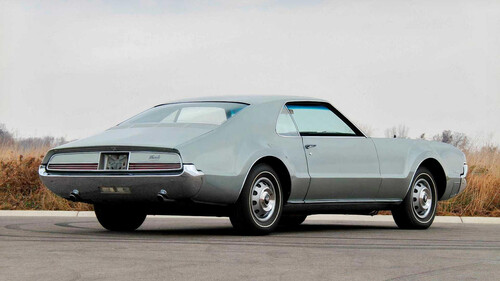
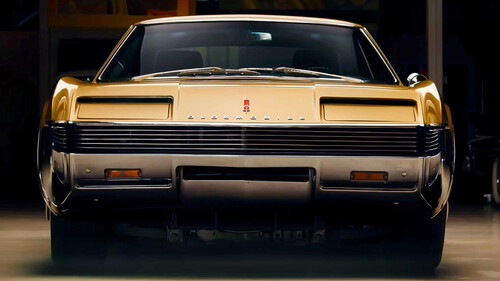
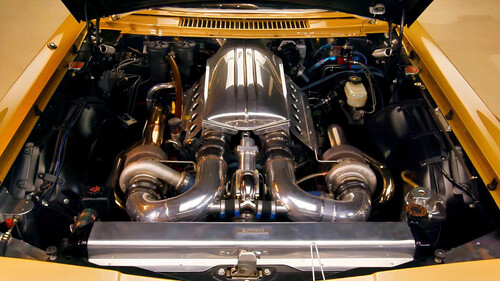
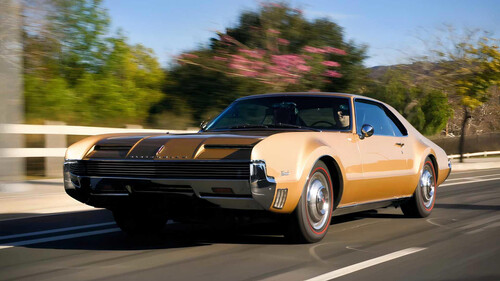
Oldsmobile took a risk with the 1966 Toronado and it paid offThe 1966 Oldsmobile Toronado arrived at a moment when American drivers still equated performance with rear-wheel drive and full frames, yet Oldsmobile bet heavily on a different formula. A radical front-drive layout, a massive V-8, and a striking body turned the Toronado into a rolling experiment in what a personal luxury coupe could be. That gamble brought both engineering headaches and sales challenges, but it also delivered a car that reshaped expectations and still feels audacious decades later. Oldsmobile did not simply add another shiny coupe to the showroom. Instead, it pushed General Motors to prove that front-wheel drive could handle big-block power, high speed, and American highway distances, and in the process the division created a car that enthusiasts and historians now treat as a high point of corporate courage. The risky idea behind Oldsmobile’s front-drive flagship By the mid 1960s, Oldsmobile was already a solid middle-tier brand within General Motors, but it lacked a dramatic statement car. The Toronado project set out to change that by pairing a huge V-8 with a layout that had not been seen in a mainstream American car since the Cord 810 and Cord 812 of the 1930s. With the Toronado, Oldsmobile revived front-wheel drive for an American production coupe and linked it to a heavy, powerful grand touring body. Inside General Motors, that meant overcoming a strong “not invented here” instinct that favored conventional rear-drive hardware. Engineering teams had to package the engine and transmission alongside each other to drive the front wheels, manage torque steer, and keep the car stable at speed. The result was a unique powertrain layout that allowed a lower floor and a different stance compared with Oldsmobile’s existing big cars. Styling followed the engineering ambition. Contemporary advertising and period photos show a long hood, muscular fenders, and a fastback roof that made the Toronado look lower and more aggressive than Oldsmobile sedans. A period image of the car in motion, preserved through a widely shared short video clip, underlines how far Oldsmobile went to give the car road presence that matched its unorthodox hardware. Motor Trend’s embrace and the “Car of the Year” spotlight The industry reaction to that ambition was immediate. In selecting the 1966 Oldmobile Toronado as its Car of the Year, Motor Trend celebrated the car as a breakthrough for General Motors. The award framed the Toronado as proof that a major American manufacturer could still surprise the market with technical innovation rather than just yearly facelifts. Jan critics later argued that perhaps Motor Trend got carried away by the excitement and by the sense that the Toronado symbolized a new era. The magazine’s praise focused on the idea that a big domestic coupe could combine modern driveline thinking with the comfort and performance buyers expected from Detroit. That judgment, and the Car of the Year trophy, gave Oldsmobile a powerful marketing tool and briefly put the brand at the center of the enthusiast conversation. Another Jan perspective, reflected in a detailed critique of the Oldmobile Toronado and its Car of the Year win, suggests that the award also revealed how the industry sometimes fell in love with concept-level innovation without fully weighing long-term market performance. In that view, Motor Trend’s enthusiasm glossed over the risk that buyers might not follow critics into embracing front-wheel drive in a big, premium-priced coupe. How the Toronado changed the driving experience On the road, the Toronado did more than just advertise new hardware. Contemporary testers were struck by how normal the car felt despite its unusual layout. Reports from Nov testing noted that testers were surprised to discover that the Toronado’s front-wheel drive was almost undetectable in everyday driving. Despite the big V-8 and the car’s weight, torque steer was well controlled and the steering remained composed. The front-drive layout also unlocked practical advantages. Without a driveshaft hump, the Toronado could offer a nearly flat floor, which improved legroom and gave the interior a lounge-like feel that fit the personal luxury brief. Later assessments of the car’s design highlight how FWD gave the both a technical talking point and a more flexible cabin than its rear-drive rivals. Innovation, of course, came with tradeoffs. A Nov retrospective bluntly states that, sadly, benefits often come with a price to pay, and the Toronado extracted its share. The complex driveline and heavy structure meant the car weighed significantly more than some competitors, and that weight affected fuel consumption and certain aspects of handling. As one analysis notes, the Toronado’s mass and complexity contrasted with the simpler front-drive cars that were becoming common in Europe at the time. Marketing the “Flame Red Car” and its deluxe siblings Inside Oldsmobile’s own storytelling, the Toronado was never just a powertrain experiment. A detailed feature on the model’s development recalls that engineers and designers spoke of it in almost mythic terms: “And then there was the Toronado. The Flame Red Car.” That description captures how the project was envisioned as a smaller coupe at first, then gradually stretched in dimension until it became a dramatic showcase of GM capabilities. The same account notes that the Toronado, nicknamed Flame Red Car, represented a kind of high-water mark for the corporation’s willingness to invest in adventurous engineering. Trim variations further pushed the car upmarket. The Oldsmobile Toronado Deluxe gave buyers more equipment and visual distinction while keeping the same basic mechanical package. A later enthusiast description of the Oldsmobile Toronado Deluxe calls it a groundbreaking car that helped redefine American expectations for personal coupes and notes that this specification has become a highly sought-after classic. Social media tributes show how the car’s image has endured. One Jan post introduces the 1966 Oldsmobile Toronado as a major turning point in American automotive design, framing the model as a bold break from the rear-drive muscle car template. That post, which refers directly to the Oldsmobile Toronado, underscores how the car’s reputation as a “groundbreaking” machine has only grown with time. Sales reality: a cool public response to a hot idea For all the engineering effort and media attention, the Toronado faced a tougher road in showrooms. Sales for the first-generation models were the worst of any of the premium-priced big personal coupes in the General Motors family. One Jan assessment notes that although almost 41,000 Toro units were sold in the first model year, the broader public response remained cool compared with rivals that used more conventional layouts. Separate reporting on a surviving car points out that Oldsmobile sold 40,963 Toronados when the model was introduced, a figure that illustrates how the car attracted attention but did not dominate its segment. A later feature on a high-speed survivor car uses that sales number to show the contrast between the Toronado’s engineering ambition and its relatively modest commercial footprint. Part of the challenge lay in pricing and positioning. The Toronado was a premium-priced big personal coupe in a field that already included strong competitors with shared corporate platforms. Some buyers may have been wary of front-wheel drive in such a large car, especially when rear-drive alternatives promised familiar behavior and easier servicing. A Jan critique of the car’s market performance argues that GM’s internal competition and overlapping body shells diluted the Toronado’s uniqueness even as its mechanical layout set it apart. How enthusiasts and historians now judge the experiment Over time, the Toronado has been reappraised not just as a curiosity but as a serious piece of engineering that arrived slightly ahead of its market. Enthusiast channels such as Oct presentations by Adam and his Rare Classic Cars series walk viewers through the car’s technical features and explain how its driveline, suspension, and packaging influenced later GM products. These modern deep dives treat the Toronado as an important bridge between the rear-drive muscle era and the more diverse driveline strategies that followed. Another Dec video essay asks whether a car weighing more than two tons and carrying a massive engine could still be considered innovative, then uses the Toronado as a case study in how American manufacturers tried to reconcile size and efficiency. That discussion places the car in a broader narrative about how the industry responded to changing fuel costs and safety expectations in the years that followed. Written retrospectives also highlight how the Toronado’s image has shifted. Where some earlier critics saw it as overcomplicated, more recent assessments emphasize how sleek and cool the original cars look today, particularly in strong colors with period-correct wheels. The combination of a flat floor, hidden technical complexity, and bold styling has made the first-generation Toronado a favorite among collectors who value engineering stories as much as chrome. Why Oldsmobile’s gamble still matters The Toronado’s legacy now rests on more than nostalgia. By proving that front-wheel drive could handle big-block power in a domestic setting, Oldsmobile opened the door for later American experiments with alternative layouts in large cars. The car’s success in technical terms helped validate corporate investments in new transmissions, packaging strategies, and chassis tuning techniques that would later filter into more mainstream products. At the same time, the Toronado stands as a cautionary tale about the limits of innovation without clear alignment to buyer expectations. The Car of the Year trophy and the praise from Jan commentators did not automatically translate into sustained sales leadership. Oldsmobile’s experience shows that even a technically impressive car can struggle if its segment, pricing, or brand story do not fully connect with the public. Yet when enthusiasts watch a Feb walkaround of the 1966 Motor Trend Car or pore over brochures preserved through period literature, the reaction is often admiration rather than second-guessing. The Toronado looks like a product of a time when a major American manufacturer was willing to take a genuine risk on something new, even if that risk did not pay off in every metric. Viewed from today’s perspective, that is the real payoff. Oldsmobile’s decision to build the Toronado gave the industry a concrete example of how far a mass-market brand could stretch technically and stylistically. The car’s front-wheel-drive powertrain, its dramatic proportions, and its mixed commercial fate all contribute to a story that still feels relevant whenever manufacturers weigh whether to follow the safe path or to chase a bold idea that might, just might, change what drivers expect from their cars. More from Fast Lane Only Unboxing the WWII Jeep in a Crate 15 rare Chevys collectors are quietly buying 10 underrated V8s still worth hunting down Police notice this before you even roll window down