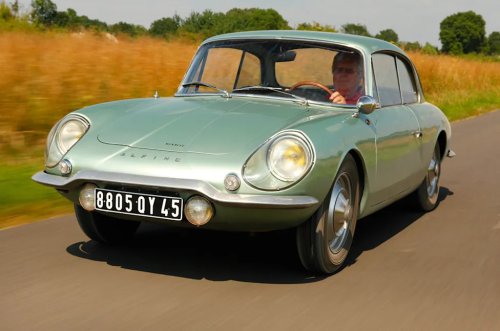
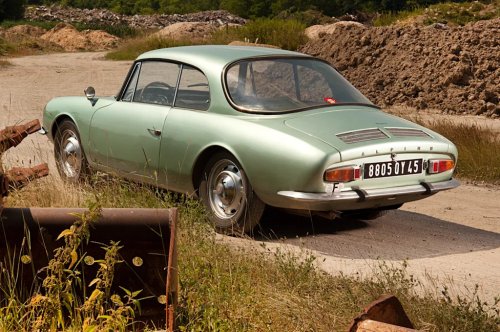
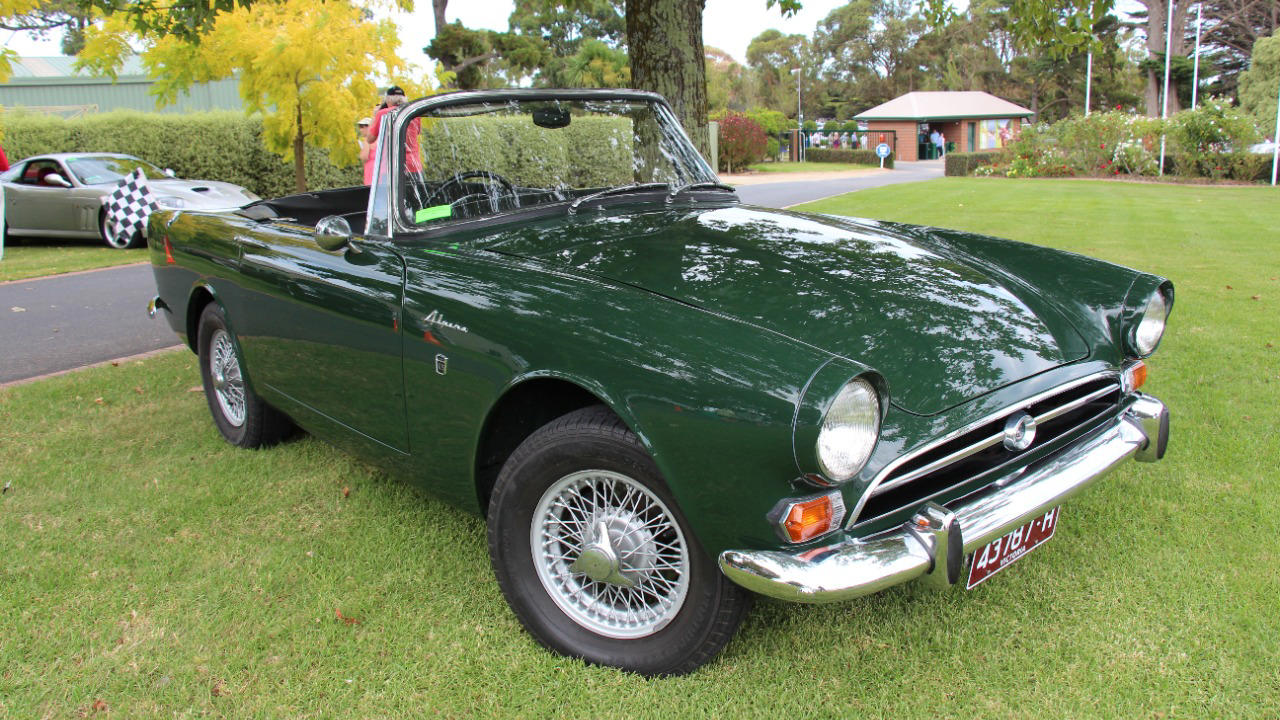
You’ve probably never heard of the 1966 Sunbeam Alpine but it had a surprising second lifeThe 1966 Sunbeam Alpine rarely tops classic car wish lists, yet this tidy British roadster quietly shaped one of the great Anglo American performance mashups of the 1960s. Built in large numbers as a mild mannered tourer, it went on to provide the bones and bodywork for a V8 bruiser that could trouble far more expensive sports cars. That second life turned an overlooked soft top into the unlikely starting point for a small performance revolution. The modest roadster that set the stage To understand why the 1966 Sunbeam Alpine matters, it helps to look at what the car was designed to be. The Alpine arrived as a two seat convertible aimed at drivers who wanted open air style with more comfort than a spartan British sports car usually offered. From its introduction, the Sunbeam Alpine carried a four cylinder engine and a focus on touring rather than outright speed, with Alpines promoted as attractive companions for long drives rather than track tools. Designers wrapped that brief in a surprisingly refined package. Period accounts describe how the body incorporated wind up windows, a proper folding roof and an interior that would not look out of place at a country club. A detailed video history notes that the Alpine’s design incorporated features like windup windows and a proper convertible top, along with an interior suitable for country clubs, a level of civility that set it apart from simpler rivals, as seen in this period overview. Under the bonnet, the early cars used a modest four cylinder that delivered usable but unthreatening performance. One example, a 1962 Sunbeam Alpine, is described as having a 1700cc four cylinder in house engine that originally produced 85 horsepower, a figure that made it brisk enough for relaxed touring rather than serious racing, according to a detailed walkaround of the Sunbeam Alpine. Comfort, style and a manageable driving experience mattered more than raw numbers. From series evolution to the 1966 Alpine V The model did not stand still. The Alpine was produced in four subsequent revisions until 1968, with Total production numbered around 70,000, a scale that gave the car a visible presence on both British and export roads according to production data on the Alpine. The 1966 model year sat within the final Series V generation, which refined the formula rather than rewriting it. For collectors today, the 1966 Sunbeam Alpine V is often described as the most numerous and accessible version. A valuation guide notes that this car became the basis for the V 8 Sunbeam Tiger and it was by far the most numerous Alpine produced with more than 19,000 examples built, making the Series V common enough to find yet distinctive enough to stand out, as detailed in a 1966 Sunbeam Alpine profile. That production volume matters because it meant the Alpine’s chassis and bodywork were widely available just as performance tastes were shifting. The Series V carried incremental mechanical improvements, but its overall layout remained a traditional front engine, rear drive sports car with tidy proportions and relatively light weight. It was this basic, well sorted structure that would soon attract attention from a very different corner of the car world. The Alpine’s quiet brush with James Bond Before the Alpine became a performance donor, it enjoyed a brief moment in the cinematic spotlight. In the first James Bond film, Dr. No, the secret agent drove a light blue Sunbeam Alpine, a casting choice that cemented the car’s association with early 1960s style. One sales listing for a restored example notes that in 1962, James Bond drove a Sunbeam Alpine in the movie Dr. No, a detail used to frame a 1966 Sunbeam Alpine roadster as a spiritual descendant of that screen car, as described in the background for a James Bond Sunbeam. Other enthusiasts highlight the same link when introducing the model to new audiences. One video that follows a father and son on a buying trip notes that the Sunbeam Alpine is that it was actually James Bond’s first car, explaining that before the Aston and the Lotuses the BMWs James Bond drove a Sunbeam Alpine, a reminder that the little roadster predates the brand’s later, more muscular screen icons, as recounted in a fan’s story about the Sunbeam Alpine. This association did not transform the Alpine into a sales phenomenon, but it did give the car a certain cachet. The image of a compact British convertible threading Caribbean roads with Bond at the wheel reinforced the idea that the Alpine was a stylish companion rather than a raw performance machine. That perception would make the car’s later transformation into a V8 hot rod all the more dramatic. How a mild Alpine became the basis for a Tiger Behind the scenes, executives within the British Rootes group saw an opportunity in the Alpine’s tidy chassis. The company wanted a more powerful sports car that could appeal to American buyers who were increasingly drawn to V8 engines. Instead of designing a new model from scratch, engineers looked at the existing Sunbeam Alpine as a candidate for a performance conversion. Specialists who study the model’s history describe how the Alpine provided the basis for a V8 powered sister car. A detailed buying guide explains that the Alpine provided the basis of the Tiger, a Carroll Shelby designed hot rod that blended a small, light roadster chassis with a strong American V8, a combination that delivered the torque and that V8 sound enthusiasts craved, as recounted in a feature on Alpine and Tiger. The choice of partner for that conversion was no accident. Carroll Shelby had already made his name by marrying a British chassis to an American V8 in the AC Cobra, and Rootes turned to him again. Historical accounts describe how the Sunbeam Tiger was a development of the Sunbeam Alpine series I, introduced by the British manufacturer Rootes in 1959, with a Ford V8 engine chosen for its compact dimensions and strong performance, as summarized in background on The Sunbeam Tiger. Carroll Shelby’s team set about proving that a V8 could fit into the Alpine’s compact engine bay and that the chassis could handle the extra power. The resulting prototype impressed Rootes enough to green light production. From that point, the humble Alpine, particularly in its later Series V form, effectively became the donor platform for a much more aggressive sibling. Taking a Ford V8 and a Sunbeam Alpine The mechanical recipe for the Tiger was direct. One performance focused account describes how, taking a Ford 260 cid V8 engine and a Sunbeam Alpine, Shelby began to build what would become the first Sunbeam Tiger in April of the development program, a simple phrase that captures the essence of the project: a compact British roadster plus a 260 cid American V8, as laid out in a retrospective on Taking a Ford. Production Tigers used that same basic configuration. Early Tigers were equipped with a 260 cubic inch Ford V8 engine mated to a four speed Top Loader transmission, producing 164 brake horsepower in factory trim, figures that transformed the Alpine’s genteel performance into something far more urgent, as detailed in a profile of the first Tigers with Ford. Later, the Series II Tiger upgraded to a 200hp 289ci V8, a step that moved the car even further from the Alpine’s original brief and closer to full blooded muscle car territory, as highlighted in an enthusiast summary of the Series II Tiger. On paper, the transformation was stark. One discussion among owners notes that The Tiger MK1 had 164 g gross horsepower from its 260 cubic inch engine, making it roughly comparable in straight line pace to a 2012 Toyota RAV4, a modern benchmark that underscores how much performance Shelby extracted from the Alpine’s basic shell, as described in a comparison that mentions Tiger and Toyota. The key point is that the Alpine’s gentle touring character became the starting point for a car that could finally match American expectations for speed. Shared bones, different character Despite the dramatic difference in power, the Tiger and the Alpine shared much of their visible structure. Specialists who have examined both cars side by side point out that the Sunbeam Alpine and Tiger are essentially identical, save for their engines and some unibody sheet metal beneath the exterior bodywork, a reminder that the transformation relied on targeted structural changes rather than a completely new design, as explained in a retrospective comparing Sunbeam Alpine and Tiger. That shared DNA means a 1966 Alpine can look, from a distance, very similar to a contemporary Tiger. The differences lie under the bonnet and in the way the chassis was stiffened to cope with V8 torque. For some enthusiasts, the Alpine’s lighter four cylinder setup offers a more delicate, balanced feel, while others see the Tiger as the ultimate expression of what the platform could support. Either way, the connection between the two cars has reshaped how collectors view the Alpine. What began as a pleasant but relatively ordinary British roadster is now recognized as the foundation of a sought after performance model. The Alpine’s second life as a donor and design twin has lifted interest in surviving four cylinder cars. From affordable classic to cult favorite Market analysts often describe the Alpine as an accessible way into 1960s sports car ownership. One buyer’s guide notes that the Alpine, which is quite collectible and desirable thanks to its rarity in some markets, remains an affordable, practical 1960s sports car, with the Sunbeam Alpine praised for its basic layout and ease of ownership compared with more temperamental exotics, as outlined in an enthusiast focused guide to the. Real world sale listings reinforce that image. One owner describes a 1966 Sunbeam Alpine for sale as a fully restored car that had been in the family for many years, shared through a community of Sunbeam Alpine Fans and enthusiasts such as Lester Strait, a reminder that these cars often survive through the dedication of small but passionate groups, as seen in a listing for a Sunbeam Alpine. The connection to the Tiger has added an extra layer of appeal. Collectors who cannot justify the rising prices of genuine Tigers sometimes seek out clean Alpines, both as enjoyable classics in their own right and as potential bases for sympathetic performance upgrades. The knowledge that the same basic body and chassis once housed a Ford V8 gives even a stock 1966 Alpine a certain latent credibility. The Alpine’s footprint beyond the showroom The Alpine’s influence also extends into enthusiast culture and visual storytelling. Photographers and writers have highlighted the car’s cinematic lines in projects that celebrate distinctive design. One feature aimed at design fans notes that James Bond fans should instantly recognize a 1960s Sunbeam Alpine, explaining that though not exactly the model IV pictured, Bond’s lake blue Alpine in Dr. No helped fix the car’s image in popular memory, as described in a profile of the Sunbeam Alpine IV. Specialist workshops and custom builders have also taken notice. A British firm that focuses on classic modifications references its experience with the Sunbeam Alpine and Tiger, indicating that these cars remain active canvases for restoration and performance tuning, as suggested by the classic projects documented by forestcustom.co.uk. That ongoing interest helps keep parts circulating and knowledge alive, which in turn supports owners of stock 1966 Alpines. The model’s presence in online communities further extends its reach. Social media groups dedicated to Sunbeam Alpine and Tiger owners share restoration tips, period photos and buying advice, with some posts explicitly tagged to highlight the shared heritage of the Sunbeam Alpine and Tiger, as seen in sharing tools that reference Sunbeam Alpine and. This digital footprint keeps the story of the Alpine’s second life circulating well beyond traditional car club circles. Why the 1966 Alpine still matters Seen in isolation, the 1966 Sunbeam Alpine is a pleasant, modestly powered British roadster with clean lines and a comfortable cabin. Its four cylinder engine, in typical tune, produced figures such as the 85 horsepower quoted for a 1700cc example, enough for relaxed touring but not enough to define a generation of performance cars. Yet the Alpine’s real significance lies in what its structure enabled. By providing the chassis and bodywork for the Sunbeam Tiger, the Alpine became the quiet enabler of a transatlantic experiment that brought Carroll Shelby’s V8 formula to a wider audience. The decision by Rootes and Shelby to take a Ford 260 cid engine and a Sunbeam Alpine and create the first Tiger showed how a well engineered but unassuming platform could be transformed with the right powertrain. The later use of a 200hp 289ci V8 in the Series II Tiger only reinforced how far the basic design could be pushed. For collectors and enthusiasts today, that history changes how a 1966 Alpine is perceived. It is no longer just the car James Bond once drove in an early film or a charming footnote in British sports car history. It is also the starting point for a V8 roadster that challenged more expensive machinery, the car that carried within its steel the potential that Carroll Shelby and Rootes unlocked. That is the surprising second life of the 1966 Sunbeam Alpine. It began as a comfortable, stylish tourer, became an on screen companion for a fictional spy, and then quietly donated its structure to one of the most charismatic Anglo American sports cars of its era. In the process, an unassuming roadster earned a permanent place in performance history, not through headline grabbing specs of its own, but through the cars that followed in its wheel tracks. More from Fast Lane Only Unboxing the WWII Jeep in a Crate 15 rare Chevys collectors are quietly buying 10 underrated V8s still worth hunting down Police notice this before you even roll window down The post You’ve probably never heard of the 1966 Sunbeam Alpine but it had a surprising second life appeared first on FAST LANE ONLY.















 +72 others