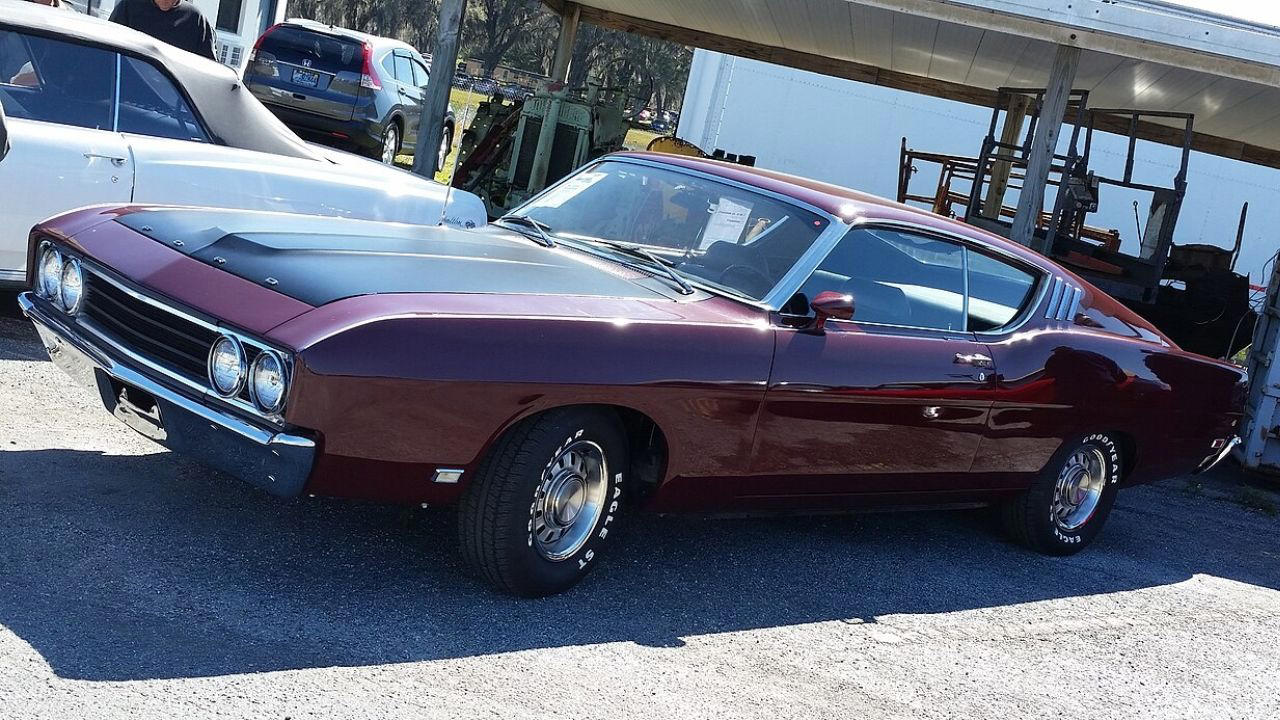



















Built with racing in mind the 1969 Ford Torino Talladega stood apartThe 1969 Ford Torino Talladega was not a typical muscle car with a few cosmetic tweaks. It was engineered from the sheetmetal up to survive at nearly 200 miles per hour, then quietly slipped into showrooms in just enough numbers to satisfy racing rules. Built with competition in mind, it stood apart from its contemporaries by treating aerodynamics and homologation as seriously as any purpose-built stock car. On the street it looked like a slightly sleeker Torino, but under the surface it was a wind-cheating weapon shaped by hand, stripped of frills and tuned to turn NASCAR’s superspeedways into Ford territory. That dual identity, part family coupe and part race chassis, is what keeps the Torino Talladega so fascinating today. The NASCAR problem Ford set out to solve In the late 1960s, stock car racing had become an arms race. Hemi-powered Mopars were wiping the floor with the competition, and Chrysler’s entries gave Dodge and Plymouth a visible edge on the big ovals. Ford needed a miracle, and instead of just chasing more power the company pivoted toward the air. The mantra in Detroit at the time was simple: Win on Sunday, sell on Monday. One report on how Detroit lived by in the 1960s describes how seriously manufacturers took the connection between the grandstands and the showroom. For Ford, that meant building a car that was not only legal under NASCAR rules but also fast enough in a straight line to beat Chrysler at its own game. The Talladega project grew out of that pressure. The Talladega was originally designed to beat Chrysler in NASCAR racing, and it is often described as the first car that Ford built specifically for stock car aero advantage rather than simple engine output. The name itself referenced NASCAR’s newest superspeedway, a venue that demanded stability and low drag more than brute torque. From Fairlane Sportsroof to secret weapon The Ford Torino Talladega started life as a Fairlane Sportsroof, the fastback body style that already offered a relatively sleek profile. According to one detailed overview, the Torino Talladega was and then reworked heavily by race specialists. Ford handed the basic shells to Holman Moody, with additional help from Kar Kraft, to transform them into something that could slip through the air and still pass as a production Torino. That meant subtle but significant surgery. While they were at it, H M created different rocker panels that allowed the body to ride closer to the track while remaining within NASCAR’s rules. Lowering the car without technically changing its suspension geometry gave Ford a smaller frontal area and a lower center of gravity, both critical at superspeedway speeds. Up front, the 1969 Ford Talladega received a fastback roofline and a grafted-on snout that extended the nose and rounded off the leading edges. Contemporary descriptions of the Ford Talladega front emphasize how that new snout cleaned up the airflow, replacing the standard Torino’s upright grille with a more pointed face that cut drag dramatically. Hand shaped aero and limited production Ford did not simply tweak a few body panels on the assembly line. The Ford Torino Talladega was Ford’s wind-cheating NASCAR homologation special, built in roughly 750 units and shaped by hand to become one of the most effective aero warriors of its era. Each car’s extended nose and reworked rocker panels required extra labor that went beyond normal mass production. Those roughly 750 units existed for one reason: NASCAR’s homologation rules required that a manufacturer sell a minimum number of cars to the public if it wanted to run that body style on track. The Ford Torino Talladega satisfied that requirement while remaining rare enough to feel like a secret weapon. A detailed background on the Ford Torino Talladega notes that it was produced by Ford only during the first few weeks of the 1969 model year, which further limited its numbers. That compressed production run means the Talladega occupies a narrow slice of Ford history. It arrived, did its job in competition and in showrooms, then disappeared as quickly as it came once the aero wars moved on. Built to dominate both track and street Everything about the Torino Talladega’s configuration pointed toward NASCAR. The Torino Talladega was created to dominate NASCAR and rule the streets, according to a period description of the project that emphasizes how Ford balanced racing intent with public sale. The car’s very name referenced Talladega Superspeedway, and the factory specification mirrored race priorities. Under the hood, the Talladega carried big-block power tuned for sustained high-speed work. While multiple engine options have been associated with the broader Torino line, racing-focused Talladegas leaned on strong, reliable V8s that could survive full-throttle runs for hundreds of miles. The aero bodywork, lowered stance and race-influenced cooling all worked together to support that mission. On the street, that same package translated into a car that felt more composed at highway speeds than many of its muscle contemporaries. The long nose, smoothed front bumper and tucked-in grille made the Talladega look slightly unusual in traffic, but they also helped it track straight and stable when other cars started to feel nervous. One period overview of the 1969 Ford Talladega notes that the Auto Editors of highlighted how the car’s fastback roofline and extended front end were named for NASCAR’s newest superspeedway and designed with high-speed racing in mind. That connection between name, shape and purpose was central to the Talladega story. Spartan cabin, race car priorities The Torino Talladega’s interior made its racing priorities clear. Citing weight savings, Ford outfitted all the cars with what amounted to a spartan, all-black, taxicab interior that relied on base cloth and vinyl instead of upscale trim. One detailed feature on the car notes that Citing weight savings, stripped away unnecessary luxury in order to keep mass down and performance up. That meant bench seats instead of elaborate buckets, minimal brightwork and a focus on function over form. The cabin still had to satisfy regular buyers, but Ford clearly prioritized homologation and track results over showroom flash. In an era when many muscle cars were loaded with stripes, badges and flashy interiors, the Talladega’s subdued cabin made it feel more like a purpose-built tool. From a modern perspective, that simplicity adds to the car’s appeal. Collectors often prize the way the Torino Talladega mixes a relatively plain interior with a highly specialized body and chassis, a combination that reflects its origin as a race car first and a boulevard cruiser second. How it differed from other Torino variants To understand how far Ford went with the Talladega, it helps to compare it with the regular Torino lineup and the related Cobra models. A broader overview of the Ford Talladega profile and other Torino variants explains that standard Torinos shared much of the same basic structure but lacked the hand-formed nose, the special rocker panels and the lowered stance that defined the Talladega. The 1969 Ford Cobra and other performance Torinos focused more on straight-line acceleration and visual aggression, with hood scoops and stripes that signaled power. The Talladega, by contrast, hid its aggression behind smoother lines. Its performance advantage came from reduced drag and improved stability rather than simply more cubic inches or louder exhaust. That distinction made the Talladega feel almost understated next to some of its showroom siblings. Yet on track, the sleek body and carefully tuned chassis gave Ford teams an edge that could not be matched by bolt-on parts alone. Street legal NASCAR for regular buyers For enthusiasts, one of the most remarkable aspects of the Torino Talladega is that it brought NASCAR-level engineering into the hands of regular buyers. A detailed retrospective on how Ford built a NASCAR level car in the 1960s highlights how the company treated homologation as an opportunity to showcase its racing technology rather than a mere compliance exercise. Owners could walk into a dealership and purchase essentially the same body shape that ran at Talladega Superspeedway, with the same extended nose, the same rocker panel modifications and the same aero-tuned fastback roof. While the engines and safety equipment differed from full race specification, the core structure and airflow advantages carried over almost unchanged. That blurred the line between race car and road car in a way that few other models of the era managed. The Talladega was not just a cosmetic tribute to NASCAR, it was the homologation special that made the race car legal. Early NASCAR homologation and collector appeal The 1969 Ford Torino Talladega was one of the early NASCAR homologation specials that set the template for later aero warriors. A widely shared description of the Ford Torino Talladega emphasizes its role as an early example of a manufacturer building a limited-run, track-focused body style specifically to meet NASCAR’s production requirements. That heritage has made the Talladega a favorite among collectors who appreciate both its rarity and its historical significance. With roughly 750 units built, surviving examples are relatively scarce, and many were used hard in period by owners who valued their performance more than their future value. Today, restored cars often highlight the subtle differences that set the Talladega apart from other Torinos, from the unique front bumper and grille treatment to the modified rockers and lower ride height. Enthusiasts also seek out documentation that ties individual cars back to the short production window when Ford and its partners were hand-shaping bodies for the homologation run. From racetrack weapon to social media icon Modern interest in the Torino Talladega extends far beyond traditional car shows. Social media accounts dedicated to American classics regularly feature the car, often highlighting how The Torino Talladega was created to dominate NASCAR and rule the streets. One widely shared post on The Torino Talladega frames it as a rare ride that bridged the gap between the superspeedway and suburban driveways. Other posts from enthusiast pages such as Yesterday Retro, American Classic and Muscle Cars describe the 1969 Ford Torino Talladega in similar terms, stressing its role as an early NASCAR homologation legend. A popular feature on how the Ford fits into broader muscle car history helps new fans place it alongside more familiar names like Mustang and Charger. That online presence has introduced the Talladega to younger enthusiasts who may never have seen one in person. Video clips and photo galleries emphasize its long nose, sleek roofline and understated badging, reinforcing its reputation as a car that looks subtle until the details are explained. Why it still stands apart More than half a century after it first appeared, the Ford Torino Talladega still stands apart because it embodies a very specific moment in American racing. It represents the point where aerodynamics, homologation rules and marketing all converged into a single, limited-run model that had to satisfy NASCAR inspectors and family buyers at the same time. More from Fast Lane Only Unboxing the WWII Jeep in a Crate 15 rare Chevys collectors are quietly buying 10 underrated V8s still worth hunting down Police notice this before you even roll window down