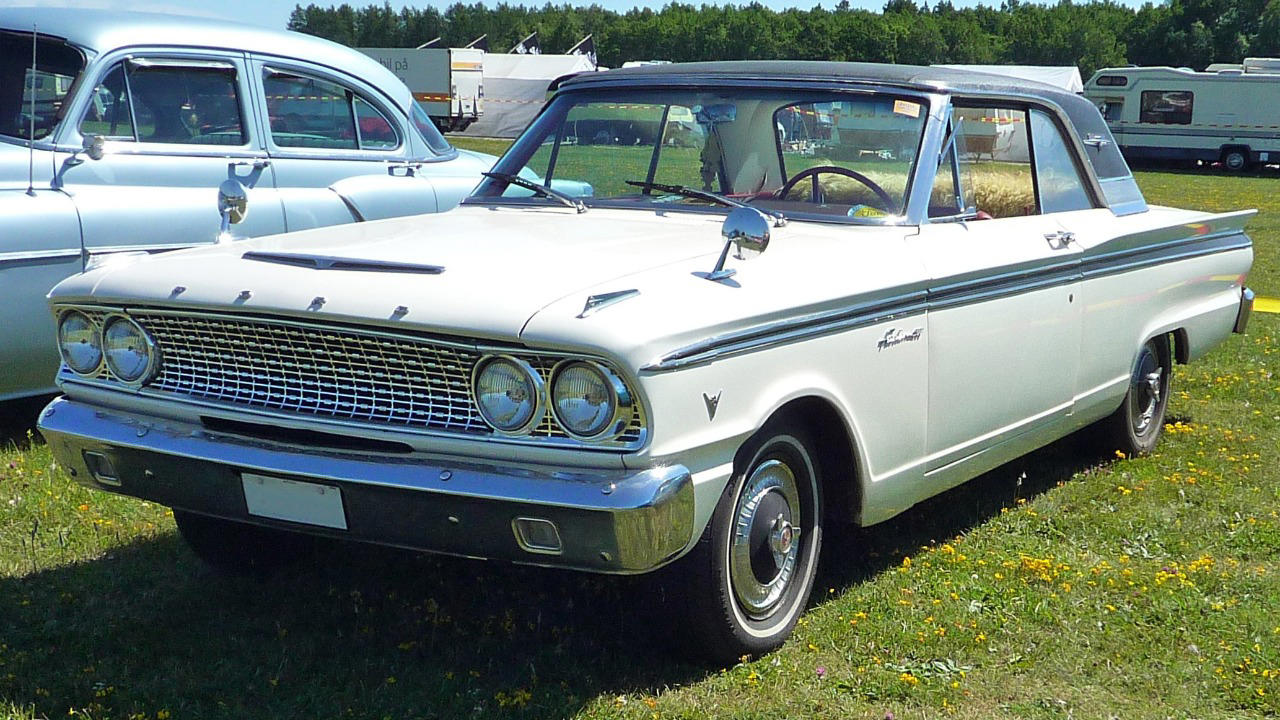
The 1963 Ford Fairlane 500 seems straightforward until deeper issues surfaceThe 1963 Ford Fairlane 500 looks like one of the simpler ways into classic-car ownership: clean lines, modest size, and a reputation for durability. On the surface it promises straightforward mid century motoring, yet owners quickly discover a second story hidden under the paint, in the steering, and inside the wiring. The car that seems so approachable in the driveway can turn into a layered project once deeper issues begin to surface. The appeal of Ford’s midsize workhorse Part of the Fairlane’s charm lies in its role as Ford’s midsize bridge between compact and full size models. Enthusiasts still praise how Fairlanes hit a “very nice size compromise,” big enough for family duty yet easier to park and maneuver than the company’s larger sedans. That balance made the Fairlane 500 an everyday car first and a collectible only later, which helps explain why so many survivors carry the scars of long, hard use. Powertrain choices mirrored that practical mission. Earlier in the run, the standard engine was a 170-cid inline six, with V8 options layered on top as budgets and ambitions allowed. A later high performance four door shows how Ford used the same basic shell to host everything from frugal commuter setups to more serious power, which in turn means today’s buyers encounter wildly different levels of mechanical stress and modification history under the same body lines. Video tours of surviving cars underline that split personality. The Ford Fairlane Sports appears as a stylish midsize with bucket seats and sporty trim, yet it still shares the bones of the workaday sedans that hauled families and groceries. That shared architecture is exactly where the hidden problems tend to lurk. Rust that hides in plain sight Rust is the first surprise that catches out new owners. At a glance, a Fairlane 500 can present straight panels and shiny paint, particularly when a seller has laid down fresh primer or a quick respray. Underneath, the story can be very different. One buyer who described dragging home a primer grey car as a parts donor called it the Prettiest Car Ford ever made, then immediately asked for advice on what to do with a shell that was better on top than below. Online checklists for would be owners focus on specific danger zones. A discussion about a 1963 Fairlane 500 with a 221 engine highlights guidance that “Some internet searching brings me to ‘The only major problem may be rusted sheetmetal under the RH front strut rod bracket, under …’” and similar areas, with Some owners stressing that hidden structure matters more than cosmetic flaws. The front strut rod mounts, frame rails, and floor pans can all deteriorate quietly while the exterior still looks presentable. On social media, owners swap photos of crusty inner rockers and patched trunk floors, while voices like Phil Hotchkin and Troy Johnson urge patience. In one group, Phil Hotchkin and Troy Johnson respond to a rough car by insisting that “Phil Hotchkin All she needs is some TLC!!” and another member, Icon Wuzapuppy, chimes in with encouragement. The optimism is genuine, but the subtext is clear: rust on these cars is as much a structural question as a cosmetic one, and “TLC” can quickly escalate into major surgery. Steering that feels looser than it looks Even when the body checks out, the first test drive often reveals the next surprise. Many Fairlane 500 owners report that the car tracks straight on smooth pavement yet wanders or pulls as soon as the road crowns or ruts. One owner summed up the experience under the heading “1963 Ford Fairlane 500 Steering Issues: Excessive Play and Pulling,” describing a car that drives straight on flat roads but becomes unpredictable as soon as conditions change, with the complaint logged as Steering Issues involving Excessive Play and Pulling. Specialists who focus on 1960s Ford products point to wear throughout the steering linkage and box as a common culprit. A detailed how to video on steering linkage and box removal for Fairlane and Mustang models, produced with parts support from Eaton Detroit in the USA, walks through the process of dropping the center link, idler arm, and steering box. The level of disassembly involved contrasts sharply with the apparent simplicity of a car that many buyers expect to be an easy weekend driver. Another video on why a classic Ford feels loose frames the problem in broader terms. The host asks what an owner’s “90%” use case is, then explains that worn bushings, tired springs, and aging steering components combine to produce vague responses even if alignment numbers look acceptable. In that clip, the key phrase “what is your 90% with your classic” becomes a shorthand for setting realistic expectations about how much work is required to make a Fairlane feel secure at modern speeds. Suspension myths and the reality of old hardware Confusion about the suspension layout adds another layer of difficulty for newcomers. In one recent thread about a 1962 Ford project, a commenter pushes back on a seller’s claim that the car uses torsion bars, pointing out that “Not sure what the guy’s talking about with torsion bars…these cars use traditional coil springs. Maybe he’s talking about the strut …” The exchange, captured in a discussion where Not and Maybe show up as part of the same skeptical remark, illustrates how misinformation can steer a first time restorer toward the wrong parts or procedures. More broadly, a video on common classic Ford issues from the 1960s and 1970s lists worn suspension bushings, sagging springs, and tired shocks as standard fare for any unrestored car of this age. The host, Jun, mentions liking elements from different models but acknowledges that the “perfect blend” of parts usually requires mixing and matching components from multiple sources. For a Fairlane 500 owner, that can mean upgrading to modern bushings or improved geometry pieces to tame body roll and nose dive, even if the factory setup technically still functions. Engines that run, then suddenly do not Under the hood, the Fairlane’s engines are generally regarded as stout, yet age and neglect create their own traps. A guide to Ford Fairlane Questions opens with a familiar scenario: Having trouble with a Ford Fairlane not starting, then moving quickly to “Need help troubleshooting the problem” and “Is the brakes ba…” as it branches into other common issues. The pattern repeats across owner forums, where a car that ran fine last season suddenly refuses to crank or fires intermittently after a long sit. Some of those headaches reflect broader Ford engine traits. A service overview of 7 common Ford notes that Ford builds some of the most popular and powerful truck engines on the market, yet certain designs are known for recurring issues. While that piece focuses on later truck powerplants, the underlying message applies to older Fairlane mills as well: understanding platform specific weak points saves time and money when chasing misfires or oil leaks. Fuel system quirks round out the mechanical surprises. One owner wrestling with a 1963 Ford Fairlane fuel sender wondered if the unit had been installed out of index, with the float arm contacting the tank or reading backwards. The response suggested that a misaligned sender could indeed cause erratic gauge behavior, turning a simple “old school problem” into a drawn out diagnosis. The exchange, preserved in a thread on fuel sender issues, shows how even basic components can become puzzles after decades of prior repairs. Ignition, wiring, and the invisible gremlins Electrical problems often stay hidden until a Fairlane 500 is pressed back into regular use. One owner of a 1963 car described an ignition switch that would not turn the starter, prompting advice that the “Most likely” cause was a neutral safety switch failure. The commenter added that they had the same issue in a “’62” model and that column shift automatics are particularly vulnerable to linkage misadjustment. That diagnosis appears in a discussion where Most of the troubleshooting centers on the 62 experience, reinforcing how shared components span multiple years. Deeper inside the column, wiring faults can create intermittent no start conditions, horn failures, or inoperative turn signals. A detailed Steering Column Wiring for the 1963 Fairlane 500 notes that these steering columns often face wiring shorts and faulty ignition circuits, particularly in four speed cars where extra stress from manual shifting can chafe harnesses. For owners who expected a simple key and go experience, tracing brittle wires through a half century old column quickly changes the tone of the project. Brakes and the illusion of “just fine” Brake systems on these cars often fall into a gray area between functioning and safe. In the same set of Ford Fairlane Questions, owners ask whether the brakes are bad, whether the pedal feel is normal, and how much upgrade is necessary for occasional driving. Drum setups that passed inspection decades ago can feel marginal in modern traffic, especially when combined with the loose steering and soft suspension already described. Some Fairlane 500 drivers opt for front disc conversions or dual circuit master cylinders, while others try to preserve originality with careful drum refurbishment. Either way, the initial assumption that “the brakes seem okay” often gives way to a more sober assessment once the car is driven in real conditions. That shift mirrors the broader pattern with these cars: apparent simplicity on the surface, layered complexity underneath. Community knowledge and the culture of making do Part of what keeps the 1963 Fairlane 500 on the road is the informal network of owners who share fixes, parts sources, and moral support. In one case, a man who had just bought a Fairlane described eating beanie weenies and crackers for lunch because he had spent all his money on the car, yet he was still thrilled to have the project. His story, told in a video titled “1963 Ford Fairlane 500: Pop died & Maw couldn’t Drive. So I …,” captures the emotional pull of these cars and the willingness to sacrifice for them, even when the budget is tight. That clip, accessible through a short segment of owner storytelling, shows how personal history and nostalgia often matter as much as mechanical logic. Elsewhere in the community, an owner asks what to do with a damaged Fairlane body, calling it the prettiest car Ford ever made and wondering if it deserves a full resurrection or a dignified part out. The responses tend to split between pragmatists who see a donor shell and romantics who see a savable classic. That tension mirrors the broader debate about how far to go with a car that can require extensive rust repair, steering rebuilds, and electrical work before it feels trustworthy. Enthusiasts like Eric Hanson, who commented that the most underwhelming thing about his car was the overall power output, add another dimension. In the same Fairlanes discussion, he suggests that the chassis and styling deserve more engine, which pushes some owners toward swaps or performance builds. Those modifications can transform the driving experience but also introduce new variables into an already complex package. More from Fast Lane Only Unboxing the WWII Jeep in a Crate 15 rare Chevys collectors are quietly buying 10 underrated V8s still worth hunting down Police notice this before you even roll window down