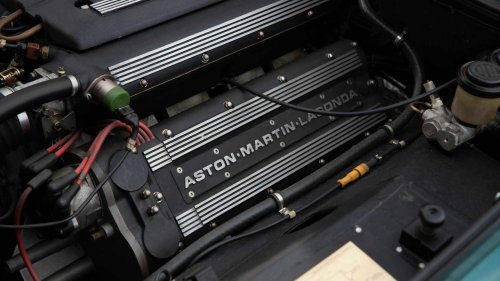
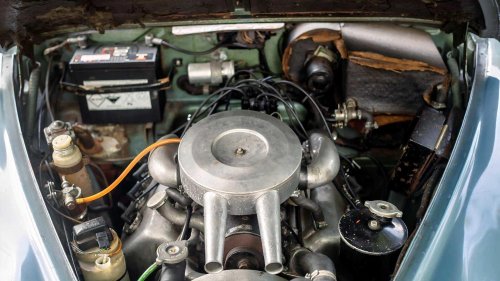
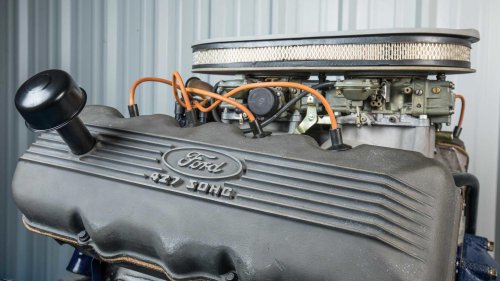
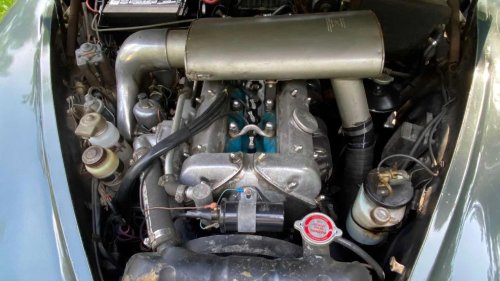
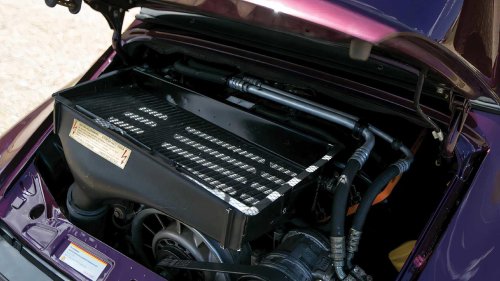
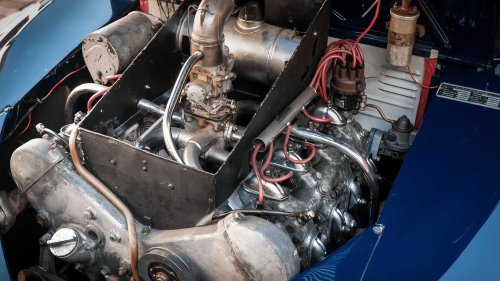
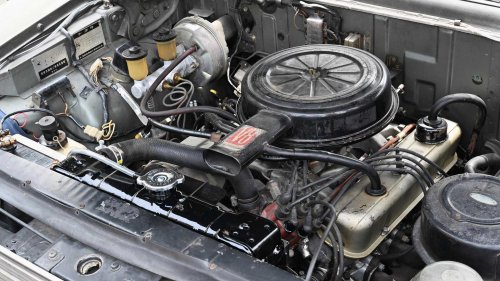
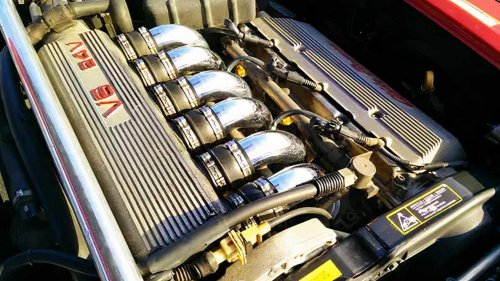
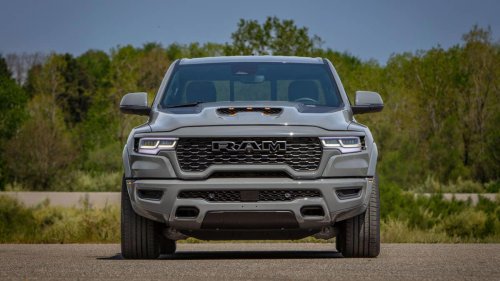
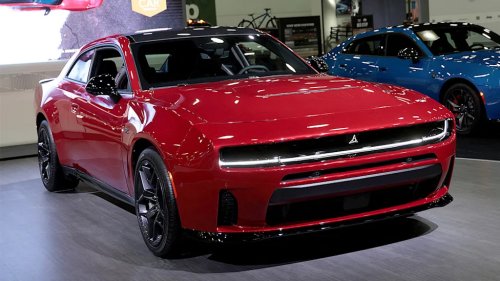
Most people hear “HEMI” and picture a Shaker hood, pistol-grip shifter, and a Mopar big-block trying to turn bias-ply tires into smoke. Chrysler leaned hard into that badge, and it earned the reputation. But a hemispherical combustion chamber is just a shape, not a brand, and plenty of other companies played the same game without any help from Highland Park.A hemi chamber is basically a dome carved into the head. The valves sit on opposite sides, angled toward the center, and the spark plug fires right in the middle. That layout lets the engineer cram in bigger valves and straighten the ports, so the engine breathes better and likes compression. The tradeoff is complexity – weird rocker gear or extra cams, bulky heads, and cost. It makes sense for performance or prestige stuff, much less sense for a cheap commuter.Chrysler popularized the term in the 1950s with the FirePower V8, then turned the 426 Hemi into a dragstrip and NASCAR terror in the 1960s. Later, “new HEMI” V8s kept the marketing alive, even though the chamber shape evolved away from a perfect dome. Mopar’s engines became so dominant in pop culture that a lot of enthusiasts assume everyone else copied them, if they even tried at all. Truth is, some brands built hemi-headed engines long before Chrysler, others went in their own direction at the same time, and a few were still doing it decades after the last 426 left the factory.For this list, “hemi” means an engine with genuinely hemispherical (or very close) combustion chambers in the head, not just marketing fluff. That rules in everything from early air-cooled V8s to high-revving sixes, as long as the chamber and valve layout fit the classic hemi pattern. Chrysler could not design, build, license, or directly supply the engine or its heads. Aftermarket Chrysler-pattern blocks and heads also stay off the list, even if they are wild. To keep it interesting, the focus stays on engines that powered real cars, street or race, not just static test mules. Aston Martin “Tadek Marek” V8 (1969–2000) Bonhams Pop the hood on a DBS V8 or V8 Vantage, and this thing looks like it belongs in a gentleman’s Can-Am car. Aston’s first production V8 arrived in 1969, designed by Tadek Marek as a replacement for the old straight-six. Right out of the gate, the 5.3-liter version in the DBS V8 made north of 300 hp in street trim, which was serious pace for a heavy GT on skinny 1960s tires. Supercharged versions made in the '90s produced 550 to 600 hp, as featured in the rare Vantage V550 and V600 trims, respectively. Over three decades, it powered everything from laid-back automatics to brutal Vantage models that tried very hard to murder their rear tires.The hardware reads like a hemi fan’s wish list. It is an all-alloy V8 with four overhead cams, two per bank, feeding big valves in hemispherical chambers. That setup gives the engine the airflow it needs to make real power even in smog-era tune, and it responds well to more cam and more compression. In its wildest road form, the Vantage Le Mans V600, the supercharged version pushed around 600 hp while still carrying four people and their luggage. Chrysler did some crazy stuff in the 1970s, but a hand-built British quad-cam hemi GT that can draft airliners is very much not one of theirs. Daimler Edward Turner V8 (1959–1969) Bonhams Before Jaguar swallowed the British Daimler car company, it built its own weird and wonderful hardware, including this jewel of a V8. Designer Edward Turner came from the motorcycle world, where he already used hemi chambers on Triumph twins. For Daimler, he scaled the idea up into 2.5- and 4.5-liter V8s with iron blocks and alloy heads, first for the fiberglass-bodied SP250 sports car and then for Majestic Major limousines and saloons.The Daimler V8 uses pushrods and a single cam, but the chambers are classic hemis with opposed valves and tidy ports. The 2.5-liter version made about 140 hp, which gave the lightweight SP250 genuinely quick performance for the late 1950s, while the 4.5-liter Majestic Major engine pushed out around 220 hp and huge torque, enough to hustle a big limousine to motorway speeds without breaking a sweat. Jag liked the engine so much that, after the takeover, it kept the little 2.5-liter in production and dropped it into Jaguar Mark 2-based sedans. No Chrysler tooling, no licensing, just a motorcycle guy turning hemi tricks into a very British small-block. Ford 427 SOHC “Cammer” (1964–1967) Bonhams If the Chrysler 426 Hemi is the prom king, Ford’s 427 SOHC “Cammer” is the troublemaker doing burnouts in the parking lot. Ford rushed it together in the mid-1960s as a nuclear option for NASCAR, starting with the existing FE 427 “side-oiler” block and topping it with single-overhead-cam heads and hemispherical combustion chambers. The cammer name comes from those monster cams, each driven by a timing chain long enough to use as a jump rope.On paper, the Cammer checked every hemi box – cross-flow heads, huge valves in domed chambers, and flow that made race tuners grin. Ford rated the crate engines at around 615 hp, but period stories and dyno sheets land them much closer to 650–700 hp in race trim. NASCAR looked at that and basically said “absolutely not,” banning it as a special-purpose engine before it could dominate. That pushed the 427 SOHC into drag racing, where funny cars and rails loved its willingness to rev and its hammer-blow midrange. Chrysler had its own hemi fights with NASCAR, but the Cammer’s design and hardware came entirely from the Blue Oval side of the fence. Jaguar XK6 (1949–1992) Bring A Trailer Every time someone lifts the bonnet on an old Jaguar and you see those polished cam covers, you are looking at a non-Chrysler hemi. Jaguar’s XK inline-six debuted right after World War II and stayed in production into the early 1990s, powering everything from XK120 roadsters to E-Types and XJ6 sedans. It also carried D-Types to multiple Le Mans wins and helped cement Jaguar’s image as a builder of fast, refined GTs.The XK top end is classic old-school performance engineering – twin overhead cams, two big valves per cylinder, and deeply hemispherical combustion chambers that allow serious valve diameter and port area. That layout gives the engine huge breathing potential, which tuners still exploit with hotter cams, bigger carbs or injection, and higher compression. While emissions rules eventually exposed the hemi chamber’s weaknesses at low load, the XK’s blend of smoothness, race pedigree, and easy power makes it one of the longest-lived non-Chrysler hemi designs ever put in a road car. Porsche Air-Cooled Flat-Six (1963–1998) RM Sotheby's Here is the stealth hemi that almost nobody calls a Hemi. The original air-cooled flat-six that launched in the 1963 Porsche 911 used six individual heads, each with its own fully machined hemispherical chamber on top of an air-cooled cylinder barrel. Early 2.0-liter engines only made around 110 hp in road trim, but the design evolved into everything from 911S screamers to turbocharged widow-makers and endurance-racing monsters.Porsche stuck with hemi chambers in most air-cooled 911 engines all the way to the end of the 993 generation in 1998, tweaking port shapes and valvetrain layouts but keeping the fundamental dome-and-opposed-valves idea. The compact boxer layout drops the engine’s center of gravity, and the hemi heads let it breathe well enough to support everything from mild 2.7-liter CIS motors to 450-hp twin-turbo 993 Turbos. In other words, a hemispherical head is just part of the package here, not a marketing term, which makes it the opposite of Chrysler’s approach but no less legit. Tatra T77 Air-Cooled V8 (1934–1938) Bring A Trailer Decades before “Hemi” turned into a sticker on a muscle car, the Czechoslovak company Tatra built a luxury streamliner that hid a wild hemi V8 out back. The T77 and later T77A used a rear-mounted, air-cooled, 3.0- to 3.4-liter V8 with an elektron (magnesium) crankcase and hemispherical combustion chambers. The car itself looked like something from a sci-fi magazine, with a central tail fin and bodywork tuned in a wind tunnel, and it could cruise at close to 90 mph in the mid-1930s.The engine is just as odd as the body. Instead of pushrods, a central camshaft sits between the cylinder banks and works huge drilled rocker arms that open the valves in those hemi heads, keeping reciprocating mass low and packaging neat. Tatra wanted low drag, reasonable weight, and robust cooling for long high-speed trips, and the hemi chamber fit perfectly into that mission. If you want to nitpick Chrysler’s “we invented the Hemi” image on a forum, dropping “Tatra 77 did it in 1934” into the thread usually stops the argument cold. Toyota V-Series “Toyota Hemi” V8 (1963–1997) TTTNIS/Wikimedia Commons Toyota quietly built its own Hemi V8 for more than three decades, and most people outside Japan never heard about it. The V-series V8 started work in the early 1960s as Toyota prepared an upscale sedan to challenge American imports. Yamaha helped engineer the all-aluminum 2.6-liter V8, which first showed up in the Crown Eight in 1963 and later grew into 3.0, 3.4, and 4.0-liter versions used almost exclusively in the Toyota Century, the company’s chauffeur-driven flagship.Enthusiasts nicknamed it the “Toyota Hemi” for a reason. The V-series uses OHV two-valve heads with approximately hemispherical chambers and centrally placed spark plugs. That layout, plus the full-alloy construction, makes it compact, smooth, and relatively light for a V8 designed in the early 1960s. Power never looks wild on paper, topping out around 190 hp in later 5V-EU 4.0-liter form, but this engine lives in big, quiet sedans where creamy torque matters more than dyno numbers. It also proves that Toyota did not only copy American V8s, it built its own long-running hemi-headed family completely outside the Mopar umbrella. Alfa Romeo Busso V6 (1979–2005) Bring a Trailer Ask any Italian what the best-sounding engine ever is, and there's a good chance the name Busso will come up. Alfa’s 60-degree “Busso” V6, named after designer Giuseppe Busso, started work in a period when most manufacturers pulled back from thirsty performance motors. It still arrived in 1979 with six individual carburetors on the Alfa 6 sedan and a soundtrack that made everything else in traffic feel broken. Over the years, it moved into transaxle cars like the GTV6, 75/Milano, and finally front-drivers like the 164 and the 156/147 GTA, where the intake runners turned into chrome trumpet art.Underneath the jewelry, the Busso is proper hemi hardware. The early versions use single-overhead-cam heads with two valves per cylinder and hemispherical chambers that allow almost straight exhaust ports, which helps both flow and that razor-sharp exhaust note. Later 24-valve DOHC versions keep the basic chamber philosophy and push displacement up to 3.2 liters, with road-car outputs topping out around 247 hp in the 156 GTA. It is not a torque monster like a big American Hemi, but it loves rpm, makes throttle blips feel like heel-and-toe therapy, and proves you do not need eight cylinders to build a legendary Hemi-headed engine.