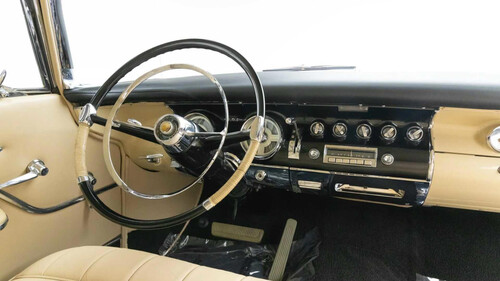
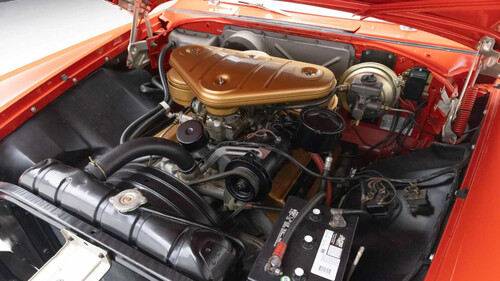
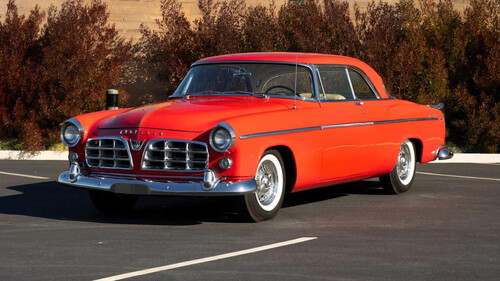
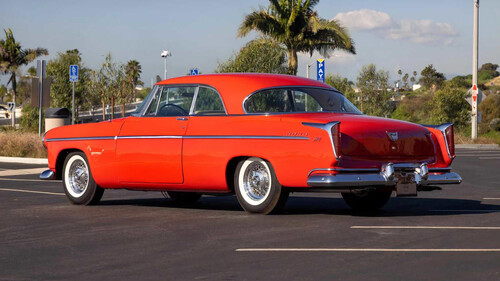
1957 DeSoto Firedome vs 1957 Chrysler Windsor one survived the era betterThe 1957 model year produced two closely related Mopar full-sizers that have aged in very different ways. The DeSoto Firedome and the Chrysler Windsor shared engines, architecture, and Virgil Exner’s dramatic fins, yet one nameplate vanished while the other’s lineage quietly threaded its way into later Chryslers. Lining them up side by side shows how corporate strategy, market timing, and brand perception can matter more than sheetmetal. On the surface, the Firedome seemed better positioned. It offered Hemi power, flashier trim, and the glamour of a rising midpriced marque. The Windsor looked more conservative. Six decades later, however, DeSoto is a memory and Chrysler’s full-size line, through successors like the Newport, carried on. The reasons sit at the intersection of engineering choices, economic shocks, and some very costly decisions inside Chrysler Corporation. Shared bones, different badges Both the 1957 DeSoto Firedome and the 1957 Chrysler Windsor rode on Chrysler Corporation’s new “Forward Look” bodies, with low rooflines, long decks, and those sweeping fins that defined late fifties American style. The basic chassis and suspension were common across the corporation’s B and C bodies, which meant the two cars felt more like cousins than competitors. Under the hood, the Firedome leaned into performance. A detailed 1957 DeSoto Facts breakdown lists a 325 CID 245 HP V-8, a 325 CID 260 HP “Power Pack” V-8, and a 341 CID 270 HP V-8 among the available engines. Another technical look at the Firedome Hemi notes that DeSoto offered 270 hp in a two-barrel 34 configuration, marketed under the Firedome Hemi banner as part of the “Tailfins Meet the Hemi in the Space Age” pitch. These figures put the Firedome squarely into the performance conversation for middle America buyers who wanted something more than a basic Dodge. The Windsor, by contrast, occupied the lower end of the Chrysler brand’s own hierarchy. It sat beneath the New Yorker in price and prestige, but above DeSoto in corporate pecking order. The postwar Windsor history shows that after the war the Windsor returned to production with underlying technology that still traced back to pre WWII designs, even as styling moved forward. That conservative engineering appealed to buyers who valued smoothness and durability more than outright performance figures. In practice, that meant the Firedome felt like the hot one, while the Windsor projected quiet competence. On paper, the DeSoto had the edge in excitement. In the showroom, the Chrysler badge still carried more weight. DeSoto’s rise, and the seeds of trouble DeSoto had not always been the corporate orphan. The brand, created under the Chrysler Corporation umbrella in 1928, spent decades as a solid midpriced offering. A detailed brand history notes that by 1961 the DeSoto name had been pushed to the brink, but that collapse came only after a long run in which DeSoto filled the gap between Dodge and Chrysler. Community histories of the marque, such as one that highlights a 1953 Desoto and traces the automobile marque that was manufactured and marketed by the DeSoto division of Chrysler Corporation from 1928 to the 1961 model year, emphasize how integrated the brand was inside the corporate structure. Another enthusiast discussion of a 1959 DeSoto Convertible describes DeSoto as a division of Chrysler Corporation and stresses that despite strong products, corporate decisions undercut the brand’s long term viability. That same analysis of corporate frames DeSoto’s end as a case where, despite apparent success, internal politics and strategy sealed its fate. By the early fifties, DeSoto was positioned closer to Chrysler than Dodge in quality and engineering. Coverage of the Firedome and its siblings notes that from that time until its demise, DeSoto was closer to Chrysler than Dodge in features and owed most of its engineering to the higher brand. That closeness became a problem when Dodge moved upmarket and Chrysler itself needed volume in the lower end of its range. One detailed account of the 1952 to 1961 period argues that the public’s perception of DeSoto as an over priced Dodge and a poor sister to Chrysler gained momentum. When Dodge complained about overlap, corporate planners faced a three way squeeze: Dodge wanted room to grow, Chrysler needed to protect its prestige, and DeSoto sat in the middle. Another segment of that same analysis explains that Chrysler, who was suffering as well, with a 50% drop, saw the top end of DeSoto as a way to augment the Windsor line that sat on the same basic underpinnings, in hopes that DeSoto would draw buyers into their stores. In other words, DeSoto was asked to both stand apart and support Chrysler’s own entry level full-size line at the same time. Against that backdrop, the 1957 Firedome arrived as a hit. Period retrospectives point out that people loved their stunning styling and that fins and flash were in, with Chrysler’s line of affordable sedans capturing the public mood. DeSoto’s Fireflite and Adventurer models, introduced earlier in the decade, had already solidified the brand’s reputation for elegance and presence, and one historic cars overview describes the Fireflite and Adventurer as among the greatest and well renown designs of the 1950s. The Firedome slotted into that halo, offering Hemi power at a price that undercut some comparable Chryslers. Quality, recession and the brand that disappeared The trouble for DeSoto and the Firedome was not demand in 1957. It was what came next. Inside Chrysler Corporation, President Lex Colbert pushed production of the new 1957 bodies ahead of schedule, and a later internal critique argues that the result was a poor quality product that suffered from rushed engineering. Owners reported rust, water leaks, and structural issues that undermined the glamorous styling. A detailed social media discussion of how Chrysler went from style leader in 1957 to failure traces much of the blame to President Lex Colbert and that accelerated timetable. When the 1958 recession hit, the midpriced segment was hammered. The DeSoto brand history notes explicitly that the 1958 Recession seriously affected demand for mid priced automobiles and pushed DeSoto toward the brink. Chrysler could still lean on its luxury image and fleet sales, and Dodge had a clearer value position. DeSoto, caught in the middle with tarnished quality and overlapping pricing, saw buyers vanish. Corporate decisions compounded the problem. The Firesweep, introduced as a lower priced DeSoto that shared more with Dodge, generated volume but also blurred the brand’s identity. A detailed review of the 1957 to 1959 DeSoto Firesweep describes it as a success at a price, where using Dodge underpinnings and parts helped margins but made the car feel less distinct. That critique of the Firesweep strategy argues that buyers increasingly saw DeSoto as either a dressed up Dodge or an undercut Chrysler, with little reason to pay extra for the badge. By the turn of the new decade, the corporate axe fell. A widely shared video history of the brand notes that on November 30th 1960 after 32 years the name Dotto was officially discontinued. Another version of that same account repeats that after 32 years the name Dotto was officially discontinued and frames the paradox of a company that broke sales records only to be killed off. The repeated use of Dotto in those narratives reflects either a transcription quirk or a colloquialism, but the figure of 32 years and the finality of the decision are clear. The Windsor, by contrast, survived that period of turmoil. While Chrysler trimmed and reshaped its lineup, the Windsor name remained attached to entry level full-size Chryslers into the early sixties. When the company rationalized its range, the Windsor’s role effectively passed to models like the Chrysler Newport, which carried the brand’s affordable full-size banner for years. The Newport overview traces how that car took over as the accessible Chrysler, suggesting a continuity of mission that the Windsor began and the Firedome never had a chance to match. Why the Windsor’s legacy outlasted the Firedome From a collector’s standpoint, the 1957 Firedome might seem like the survivor. The cars are rare, striking, and often command attention on the show field. Yet in market and cultural memory, the Windsor’s lineage through later Chryslers has proven more durable. Part of the explanation lies in branding. DeSoto was always a secondary name under Chrysler Corporation. When the corporation needed to cut costs and simplify, eliminating a midpriced division that overlapped with Dodge and Chrysler itself was a straightforward move. The detailed analysis of the emphasizes how Dodge’s complaints, Chrysler’s own 50% drop in sales, and the need to protect the Windsor line all converged on a single outcome: DeSoto would be sacrificed to save the core. Another factor was perceived value. Buyers who wanted the engineering and comfort of a Chrysler could get much of it in a Windsor, at a price that still carried the prestige of the Chrysler badge. The Windsor and later Newport sat in a clear position as the entry point to Chrysler ownership. DeSoto’s Firedome, despite its Hemi power and glamorous trim, could not escape the sense that it was either a stretched Dodge or a discounted Chrysler. Enthusiast accounts of DeSoto’s final years often stress how the public saw the brand as an over priced Dodge and a poor sister to Chrysler. That perception, once it hardened, meant that even strong products like the 1957 Firedome could not rebuild trust quickly enough. The 1958 Recession accelerated the slide, and by the time the economy recovered, DeSoto’s dealer network and product pipeline had already been gutted. Meanwhile, the Windsor’s conservative engineering, rooted in pre WWII architecture, turned out to be an asset. The Windsor documentation notes that while the underlying technology was based on pre WWII vehicles, buyers valued that familiarity. Fleet operators and conservative families gravitated toward a car that felt proven. When the Forward Look bodies suffered quality issues, Chrysler’s corporate reputation took a hit, but the brand had enough institutional weight to recover. DeSoto did not. There is also the matter of narrative. Histories of DeSoto, from English language summaries to Arabic, Egyptian Arabic, Czech, and German versions discovered via citation trails, all tell a story of a brand that rose, shone briefly in the fifties, then disappeared. That arc gives DeSoto a kind of tragic glamour. Chrysler’s Windsor and Newport, by contrast, are woven into a longer, steadier story of the Chrysler brand itself. They become chapters in a larger book rather than a self contained saga. Collector interest reflects that split. High end DeSotos, such as the limited production Adventurer convertibles, have become cult favorites. A detailed feature on De Soto Adventurers notes that De Soto Adventurers were never abundant and that just 479 Adventurer ragtops were built, which gives those cars rarity and value. The Firedome sits just below that halo, especially in Sportsman hardtop form, where coverage of a 1957 Firedome Hemi Sportsman emphasizes its tailfins, Hemi power, and space age appeal. More from Fast Lane Only Unboxing the WWII Jeep in a Crate 15 rare Chevys collectors are quietly buying 10 underrated V8s still worth hunting down Police notice this before you even roll window down