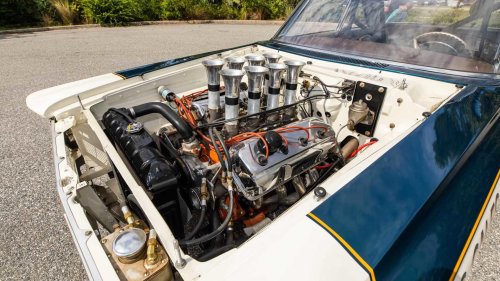
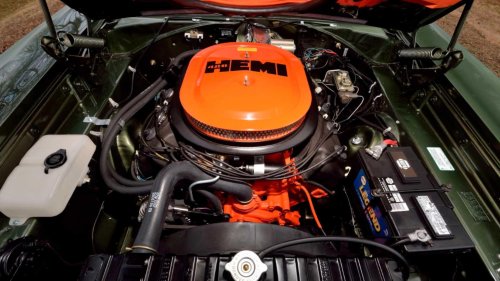
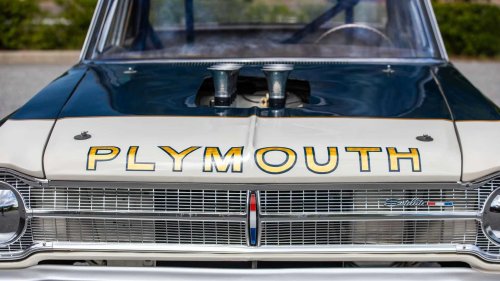
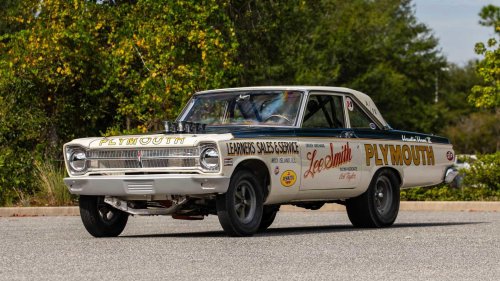
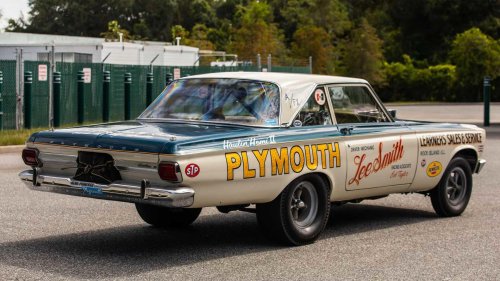
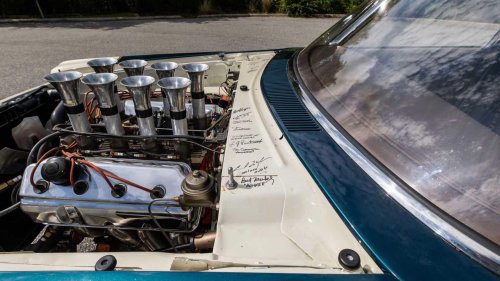
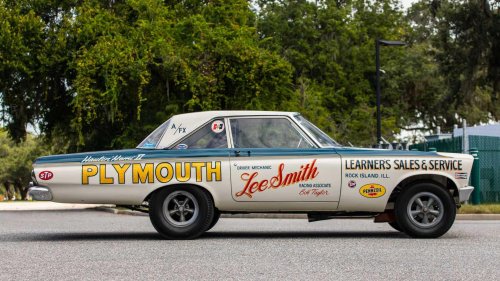
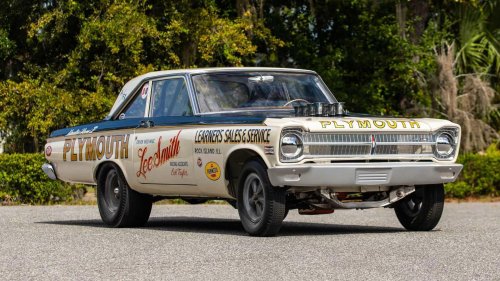
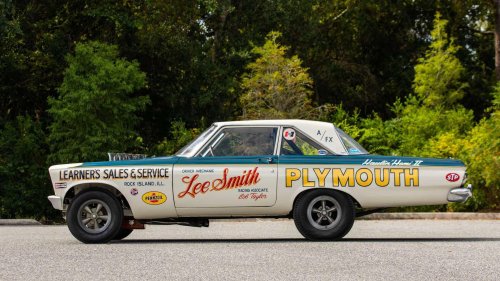
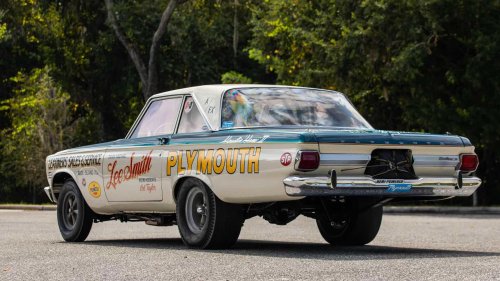
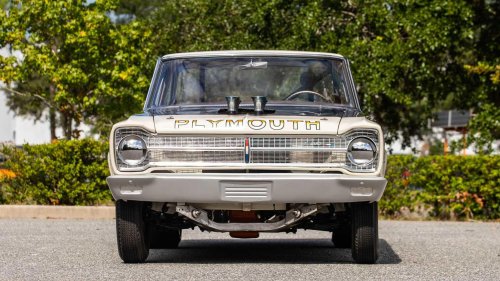
In the 1960s American car scene, winning on the NASCAR oval or drag strip meant everything to Detroit giants, who understood that every race won on Sunday would directly translate to more showroom traffic on Monday. Manufacturers were willing to go to great lengths to clinch every podium position available, and this led to some rather unusual engineering decisions.Chrysler arguably took this engineering madness to the most extreme level in 1965. In a process that Chrysler appropriately named "Chemical Engineering," the automaker literally dipped car parts in acid in the hunt for more speed and track dominance, creating some of the wildest and rarest race cars. Paired with Mopar's greatest racing engine of the era and a radically altered wheelbase to maximize traction, these volatile machines pushed engineering to its absolute, corrosive limits, and more than six decades later, their influence can still be felt in the modern American racing scene. Chrysler Built The Ultimate Racing Weapon, But NASCAR Wasn’t Having It MecumChrysler kicked off its performance legacy with the early FirePower Hemis in the 1950s before dominating the drag strip with the 413 and 426 Max Wedge engines. The Max Wedge dominated in the early '60s, but with the competition getting stronger and rumors spreading that Ford was developing the lethal 427 SOHC “Cammer”, Chrysler knew it needed a more brutal power plant. Seeking sustained top-end airflow for NASCAR ovals, Chrysler engineers combined the heavy-breathing architecture of their 1950s hemispherical designs with the big-block power of the 426 to form the legendary race Hemi in 1964.The 426 Hemi hit Detroit like a nuclear bomb by utterly obliterating the competition and engineering an uncontested Mopar podium sweep at its 1964 Daytona 500 debut. Terrified by this unhinged dominance in the 1964 season, NASCAR head Bill France Senior instantly rewrote the rulebook, banning the specialized engines for the 1965 season. Chrysler Went To War After NASCAR Banned The Hemi MecumExiled from NASCAR, Mopar didn't retreat. The top brass pivoted to the drag strip in the hunt for vengeance, redirecting its entire factory motorsport budget to straight-line competition.This forced relocation landed the race Hemi directly into the NHRA's Super Stock and A/Factory Experimental (A/FX) classes, where Chrysler’s engineers finally had the freedom to treat the strip as an open-ended playground for radical modification. The move also shifted the engineering battlefield from high-speed aerodynamics to brute mechanical traction and extreme power-to-weight ratios. “Chemical Engineering” Was Chrysler’s Radical Answer To The Hemi Ban MecumWhile the NHRA gave Chrysler a much longer leash than NASCAR, it wasn't a total lawless wasteland. The organization implemented strict material restrictions for cars competing in the 1965 Stock and Super Stock classes, specifically outlawing lightweight aluminum and fiberglass body panels. This regulatory shift severely disadvantaged Chrysler's program, which relied on heavy steel-clad mid-size Plymouth Belvedere and Dodge Coronet B-body platforms.To achieve a competitive power-to-weight ratio without violating the ban on composite materials, Chrysler's engineering group bypassed traditional manufacturing and leveraged a volatile process they christened as "chemical engineering," dissolving steel body shells in industrial acid baths to reduce the weight. The result was a deceptively stock-looking race car with paper-thin steel skin and an altered wheelbase engineered solely for straight-line violence. Meet the 1965 Plymouth Belvedere A/FX. Meet The Plymouth Chrysler Turned Into A Factory Experiment MecumWhen Chrysler boycotted NASCAR and decided to shift its focus to the drag strip, it chose its B-body cars to fly its flag as they offered the best power-to-weight ratio. The 1965 Belvedere was selected from the Plymouth family while the Coronet represented Dodge. To convert the Belvedere into an NHRA racer for the Super Stock class, Chrysler brilliantly engineered the A990 package, which armed the midsize car with the mighty race Hemi and used “chemical engineering” to trim the weight down to roughly 3,200 pounds.The A990 Belvederes were phenomenal machines, but when Chrysler got wind that Ford was working on new prototypes for the wide-open Factory Experimental (A/FX) class, it realized that they stood no chance. Not only were they still too heavy, but they also lacked the traction architecture to handle the Hemi's massive torque and often couldn't hook up. As such, Chrysler went back to the drawing board and built six altered-wheelbase A990 Plymouth Belvedere versions called the Belvedere A/FX, which shed even more weight and had altered wheelbases that improved off-the-line traction and earned them the nickname “Funny Cars.” Chrysler Literally Dissolved Steel In Acid To Save Weight MecumTo bring the Belvedere's weight down without violating the NHRA's material restrictions, Chrysler utilized a controlled chemical milling process where steel unibody structures were submerged into baths of concentrated acid. This immersion reduced the steel's thickness by up to 60 percent while maintaining the vehicle's factory silhouette, shedding nearly 250 pounds of structural mass from the Belvedere platform. They then used thin-gauge steel body panels in standard A990 cars and fiberglass in A/FX cars to further bring the weight down. However, this extreme mass reduction affected the car's structural rigidity. The resulting sheet metal was so thin and fragile that crews could accidentally dent the doors just by pushing the car into the staging lanes.The weight-saving measures didn't stop there. To guarantee the Belvedere A/FX hit its target weight, Chrysler gutted the cabin with absolute zero mercy, removing the soundproofing, floor insulation, and body sealers. Comfort features like the heater assembly, radio, armrests, and the entire rear bench seat were completely deleted, while the standard heavy power windows were deleted in favor of thin, lightweight Plexiglas panels. In the end, the Belvedere A/FX weighed approximately 2,800 pounds.Fun Fact: While Chrysler popularized it in drag racing, chemical milling (acid-dipping) was already used in aerospace to shave weight off aircraft parts. The 426 Race Hemi Was The Heart Of The Madness MecumUnderneath the Belvedere A/FX’s fragile hood lay the crown jewel of Detroit horsepower: the A990-spec 426 Race Hemi. Unlike the tamer street Hemi that arrived later, this 1965 monster was a purebred track terrorist and was engineered purely for racing. It featured high-flow aluminum cylinder heads with massive valves, a forged steel crankshaft, heavy-duty connecting rods, high-compression 12.5:1 aluminum pistons, a radical solid-lifter camshaft, and a massive, dual-quad magnesium cross-ram intake manifold.Because of its complex intake setup, the engine bay looked completely alien compared to standard muscle cars and had symmetrical valve covers that capped the hemispherical cylinder heads, making it significantly wider than any standard wedge-shaped V8 of the era. Officially, Chrysler rated this beast at 425 horsepower, but everyone on the strip knew it made a lot more. The Altered Wheelbase Made These Cars Something Else Entirely MecumNow to the “Funny Car” part of the story. While the A990 was a heavily optimized factory production car, the six A/FX cars underwent extreme chassis surgery to gain the ultimate advantage in traction. To solve the traction limitations of the standard A990 Belvederes, Mopar sliced up the chassis and moved the rear axle forward by 15 inches and the front axle by 10 inches, resulting in a silhouette that looked so bizarre that track-side fans joked the cars looked "funny.” This helped popularize the Funny Car moniker.While these altered wheelbase monsters hooked up violently and delivered crowd-pleasing wheelies, the NHRA ultimately banned the radical architecture. This forced Chrysler to pivot its factory efforts to the AHRA. The Legacy Of Chrysler’s Most Extreme Factory Experiment MecumIn total, the 1965 factory A990 program consisted of a highly restricted production run of 101 Plymouth Belvederes. While all 101 homologation specials received the lightened steel skins and the solid-lifter 426 Race Hemi, the six factory experimentals stood far above the rest and became the absolute crown jewels of the entire program. Dodge also had a similar program that produced 101 units of the B-body Dodge Coronet and six AWB versions, but that's a story for another day.On the drag strip, these chemical experiments delivered physics-defying performance. Standard A990 Belvederes would blast through the quarter-mile in the low 11-second range at over 120 mph, while AWB versions utilized superior traction to clock 10.20-second E.T.s at 138 mph consistently, with notable examples like Larry Griffith’s machine being one of the earliest factory-specification vehicles to break into the 10-second quarter-mile range.Fun Fact: You could technically buy an A990 car through a dealership, even though it was basically a race car with license plates (barely). They Launched The Funny Car Era MecumThough several cars that fit the “funny car” description existed before the 1965 Plymouth Belvedere A/FX and its Dodge sibling, many enthusiasts credit the Mopar icons as the first cars to be christened as such by race announcers and spectators when they debuted in the 1965 season. The radical proportions of Chrysler's altered-wheelbase package not only created brawlers that consistently recorded passes in the low 10-second range at almost 140 mph but also created a wild, unhinged look that fans couldn't get enough of. However, the NHRA quickly outlawed the AWB cars for the 1965 season, prompting Chrysler to pivot to the AHRA, where they dominated.Facing absolute defeat on the strip, rival teams followed Chrysler’s lead and started hacking up their own cars, pushing the axles forward and cranking the engine power to eleven. These wild, wheel-standing outlaws became the biggest draws in motorsports, and the NHRA started losing money as fans skipped its events to go watch funny cars in action. By late 1965, the NHRA realized that trying to force drag racing to stay stock was a losing battle.MecumTo regain control of the sport and bring the biggest star drivers back to NHRA venues, the organization established the "Funny Car" class for the 1966 season as a place where radical chassis geometry, fiberglass body shells, and nitro-burning engines could legally compete. The NHRA Funny Car class still exists today as a high-tech, multi-million-dollar arena of engineering extremism. Today’s 11,000-horsepower, 330-mph NHRA giants might look like spaceships, but their DNA traces back to those six experimental, acid-eaten Disposable Race Cars Became Collector Gold MecumBuilt with fragile steel skins and designed to be brutally thrashed a quarter-mile at a time, the 1965 A990 Belvederes and their radical altered-wheelbase siblings were not built to survive. Many were crashed, cut up by racers, or simply left to rust away once the industry moved on to less corrosive weight-saving techniques.Today, that built-in obsolescence has turned the survivors into collector gold. One of the 101 standard 1965 A990 Belvederes sold for $112,750 in May 2026 while one of only two original A/FX versions known to survive today sold for $297,000 in 2022.By dunking factory steel into vats of industrial acid, Chrysler fundamentally rewrote motorsport history. Sixty years later, those paper-thin Plymouths stand as legendary monuments to an unhinged era when absolute madness was considered cutting-edge engineering.Sources: NHRA, Dodge Garage, Mecum Auctions



















 +71 others