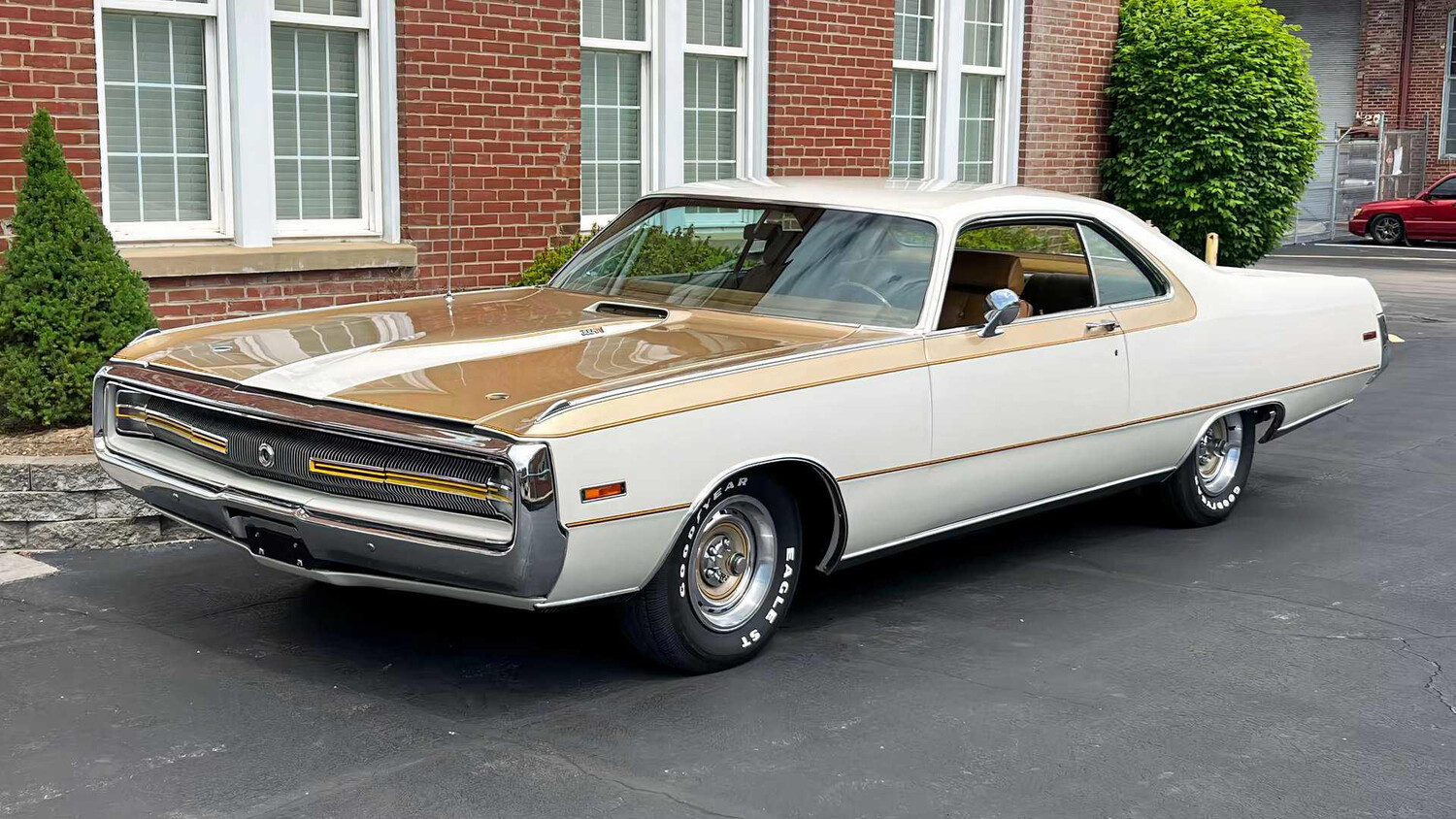
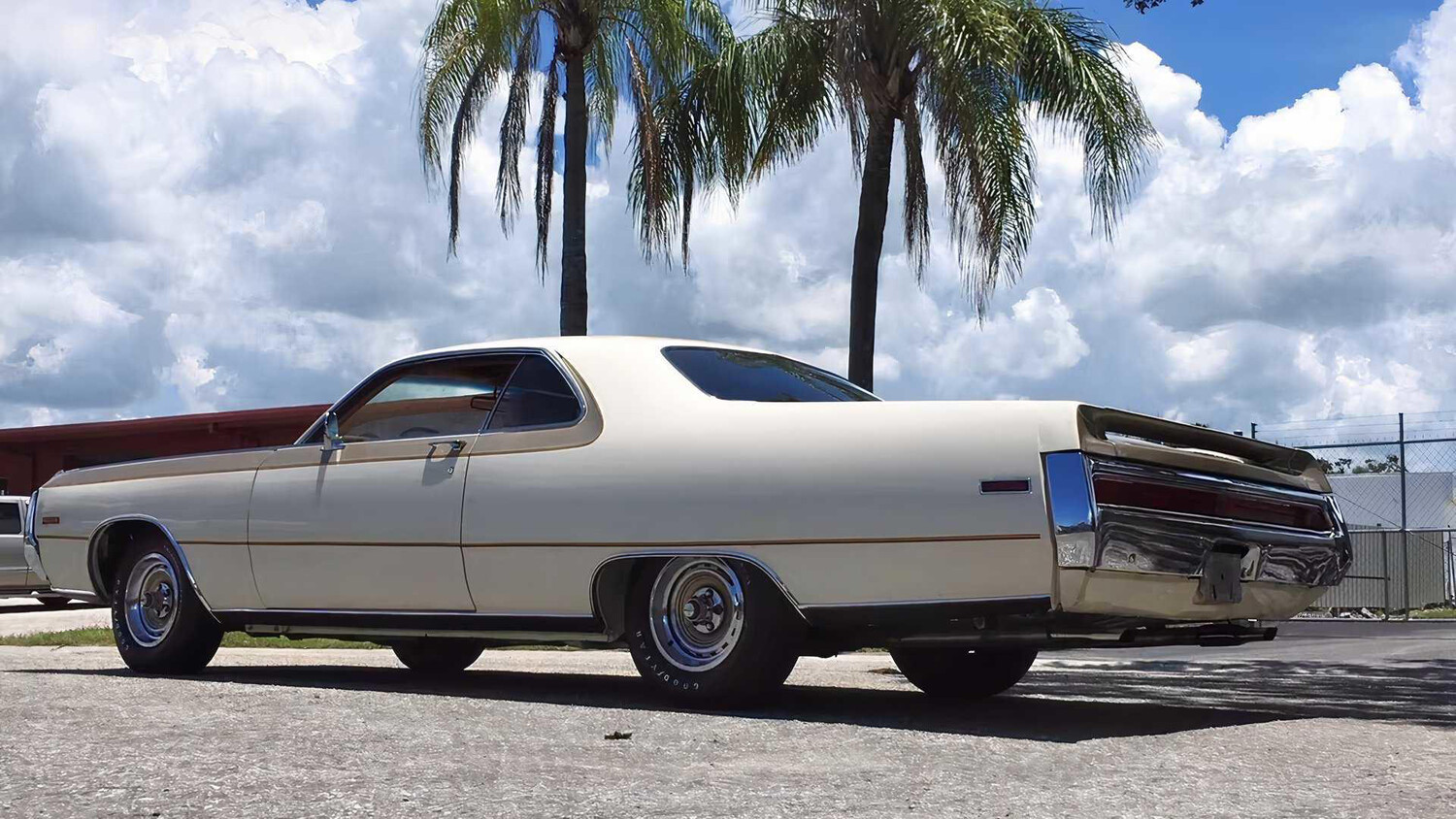
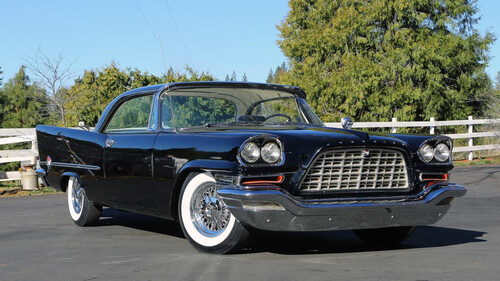
The muscle car era had a formula everyone understood: small body, big engine, cheap price, maximum noise. One American manufacturer threw all of it out and built something the market never expected. A full-size personal luxury coupe with genuine muscle-car power under the hood. The price was steep, the car was enormous, and almost nobody at the dealership knew what they were looking at when it arrived. But the numbers didn't lie. The Chrysler Performance Tradition That Predated The Muscle Car Era Via: Mecum Auctions Chrysler had a performance tradition long before muscle cars were a category. The brand was building fast cars before the genre had a name, paving the path that eventually fed into the American muscle car industry. Their halo car went to Daytona, set the Flying Mile record at 127.58 mph, and won 37 NASCAR and AAA races. It was the first American production car to cross the 300 hp mark. Back then, that number meant everything. The Record-Breaking Winners Formula Mecum The formula was deliberately simple, and the discipline to stick with it is what made it work. Chrysler took the most powerful engine available and dropped it under the hood of the most luxurious body it had ever made, then brought in a leading performance parts maker to fine-tune everything from the gearbox to the suspension. The tuning did the job. The result was a powerful engine inside a luxurious coupe, engineered as a personal luxury car that could genuinely satisfy a thirst for performance. It was definitely not a teenager's project car, even if the teenagers from back then are now the ones restoring them. The Milestone Making Machine Bring A Trailer In 1956, the 300B became the first American production car to achieve one horsepower per cubic inch. The letter series ran for more than a decade, adding the next letter each year, topping out at 400 horsepower by the early 1960s. In the run that lasted more than a decade, over 16,000 units left the production line, rare and expensive from start to finish and never the mainstream choice. By the mid-1960s, budget versions of the nameplate were slowly replacing the performance variants, and the models that quenched the adrenaline thirst quietly disappeared from the market. The Year American Luxury Coupes Stopped Running With Muscle Cars Bring A Trailer The letter series going quiet meant the nameplate that had set those speed records was shelved, and nobody made a move to revive it. Five years passed. The performance conversation had fully shifted to mid-size intermediates, and the GTO, the Charger, and the Mustang were the cars winning those arguments now. The full-size luxury coupe had dropped out of the conversation entirely, and that was not going to change on its own. The Switch That Was A Long Time Coming Bring a Trailer It happened, and personal luxury coupes stopped meaning performance. The segment dropped power and torque out of the conversation entirely, softening everything that had been tightened to extract maximum output. The cars that once embarrassed racers off the line had become showroom furniture. The nameplate that had once put Chrysler at the front of American performance had evolved into something that prioritized ride quality above everything else. The performance identity built over a decade was sitting on a shelf, and outside the muscle car world, nobody seemed to notice. When A Performance Outfit Spotted The Gap Mecum A performance consultancy from Michigan had been building limited-edition factory specials alongside major American manufacturers for several years, with a proven track record and the expertise to back it up. They were looking for something new, a prestige application that none of their previous work had covered. On the other side of that equation, Chrysler had a dormant performance identity and a nameplate that had once set speed records sitting idle. Both parties had something the other needed. What neither planned for was that between the two of them, they would build the car and forget to tell anyone it existed. The Mad Yacht Of America: Chrysler 300 Hurst Mecum The mad yacht of America is the Chrysler 300 Hurst. The performance consultancy was Hurst, and the car was the Chrysler 300. Breaking cover at the 1970 Chicago Auto Show, the 300H had one goal: to bring back the powerful identity of the letter series cars and combine it with the best luxury experience Chrysler could offer. Hurst had the performance credentials. Chrysler had the nameplate. They cracked the formula nobody else had bothered to try. Limited Production, Comfort, And The Kick Of Performance Mecum Chrysler kept production below 500, and the 300 Hurst came in one color scheme. Spinnaker White with Satin Tan accents and pinstripes, with hide-away headlights and styled 15-inch Rallye wheels the only visual cues that something different was going on. The car stretched 224.7 inches on a 124-inch wheelbase, making it the largest vehicle ever to carry the Hurst name. Under the hood sat a 440 cubic-inch TNT V8, the same block as the 440 Magnum and the Super Commando 440, rated at 375 horsepower and 480 lb-ft of torque. The H designation caused some confusion since a 1962 letter car shared the same initial, but the 1970 Hurst edition was a special edition based on the 300, not part of the official letter series. Mechanical Masterclass That Wasn't Marketed Well Via Lou Costabile on Youtube. The 440 TNT was coupled with a TorqueFlite 727 3-speed automatic, with the option of a column or console shift. The suspension ran larger torsion bars up front and stiffer leaf springs out back, giving the 300H flatter cornering than the standard 300. Inside, air conditioning was standard, the seats were covered in tan leather sourced directly from the Imperial, and power windows and power front seats completed the package. At $5,939, the 300 Hurst was the most expensive Chrysler outside the Imperial lineup, and production reached 485 hardtops alongside one promotional convertible. The biggest failure was the marketing. Hurst expected Chrysler to promote it, Chrysler expected Hurst to, and neither did. More Than Just Initials, What The 300 Hurst Delivered On The Road Via Lou Costabile on Youtube. The numbers say more than any badge could, and the numbers were strong for the 300H. Period press tested the car in 1970 and recorded a 0–60 mph time of 7.1 seconds and a quarter mile of 15.30 seconds at 94.4 mph. That is serious output from a car pushing 4,440 lbs down the track. The competition was serious, and the Dodge Charger R/T was the benchmark everyone was watching. Capped In Power, Yet Came With Performance Mecum There was no Hemi option for the 300H. The 440 TNT was the maximum engine Chrysler authorized for this application, and Hurst added a functional fiberglass hood with twist-lock pins, a vacuum-operated remote trunk release, and an integrated rear spoiler. Period press had also tested the Dodge Charger R/T which shared the same 440 power unit. The Charger ran the quarter mile half a second quicker. The 300H beat it to 60 mph by one-tenth of a second. All 4,440 lbs had a job to do, and off the line, that weight was delivering traction. The Performance Car In Luxury Clothes It Was Mecum The interior of the 300 Hurst was sourced from the Chrysler Imperial, which puts the pricing in context. The Imperial was the more expensive car, and the 300H sat directly below it in the lineup at close to $6,000. Hurst's suspension tuning let the car attack corners flat, considerably sportier than the standard 300. Imperial-grade leather combined with a genuine performance chassis, and that was the exact formula the letter series had been built on for a decade. It was a performance car in luxury clothing, and most people who walked past it at the dealership had no idea. What Makes The Chrysler 300 H The Most Overlooked One? Bring A Trailer That question has more than one answer. The failed marketing strategy is part of it, and the production ceiling is another. But the clearest evidence is what the market shows right now. As of 2026, there are only very few examples listed on major auction sites, and only a handful have changed hands in the last five years. The 300H is one of those muscle-era cars that serious collectors have been slow to recognize for what it actually is. 485 Units, One Year, And A Reputation That Never Came Bring a Trailer The Dodge Daytona is one of the rarest performance Mopars ever built, and the 300H came off the line in comparable numbers. One model year only, never returned. Chrysler's own press materials described the 300H as "reminiscent of the famed letter cars" of the late 1950s and early 1960s. That framing was accurate. The letter cars earned their collector reputation over decades of recognition. The 300H, which can make the same argument for its own legacy, arrived and disappeared before most people had time to notice. That gap in recognition is where the opportunity sits. What The Market Says Now Bring A Trailer The auction record makes the case. A documented example sold for $65,000 on Bring a Trailer in December 2022, and a Mecum auction in March 2025 brought $64,900 for a well-documented car. Earlier sales landed closer to $33,000–$45,000 depending on condition, and specialist valuations currently place a solid driver around $32,600. The nameplate Chrysler called the heir to the letter series never earned the letter series premium. That might be the best argument for why it deserves attention now.