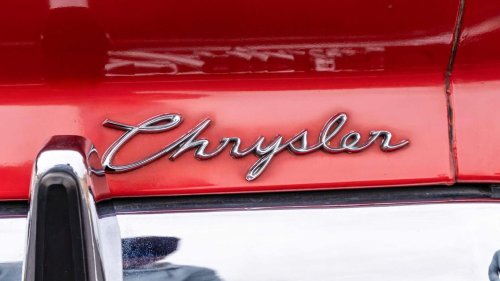
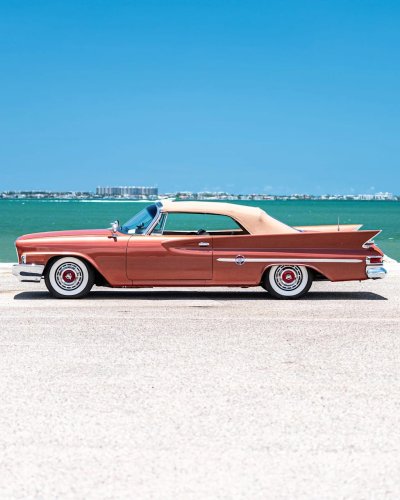
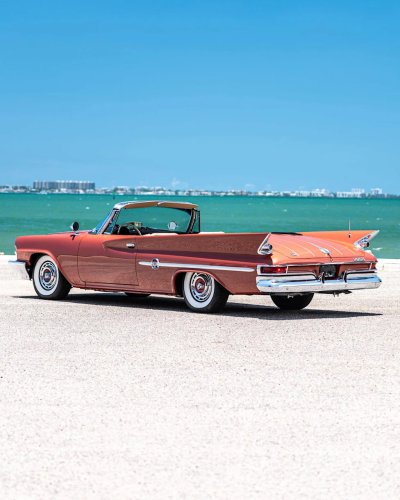
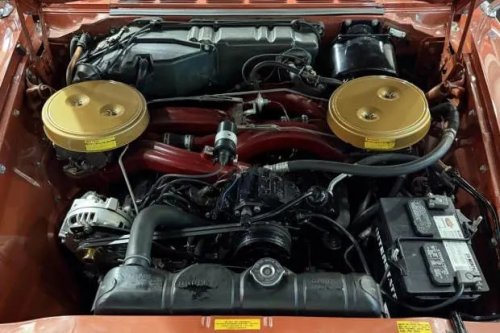
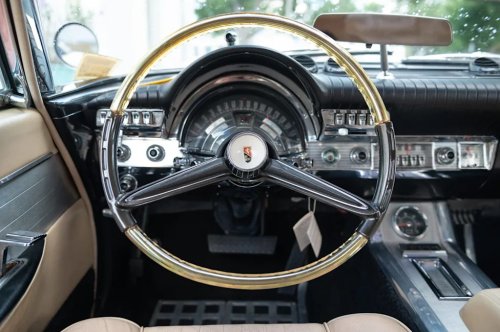
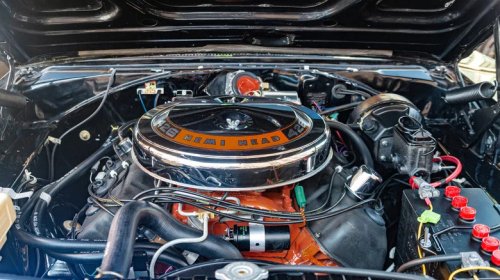
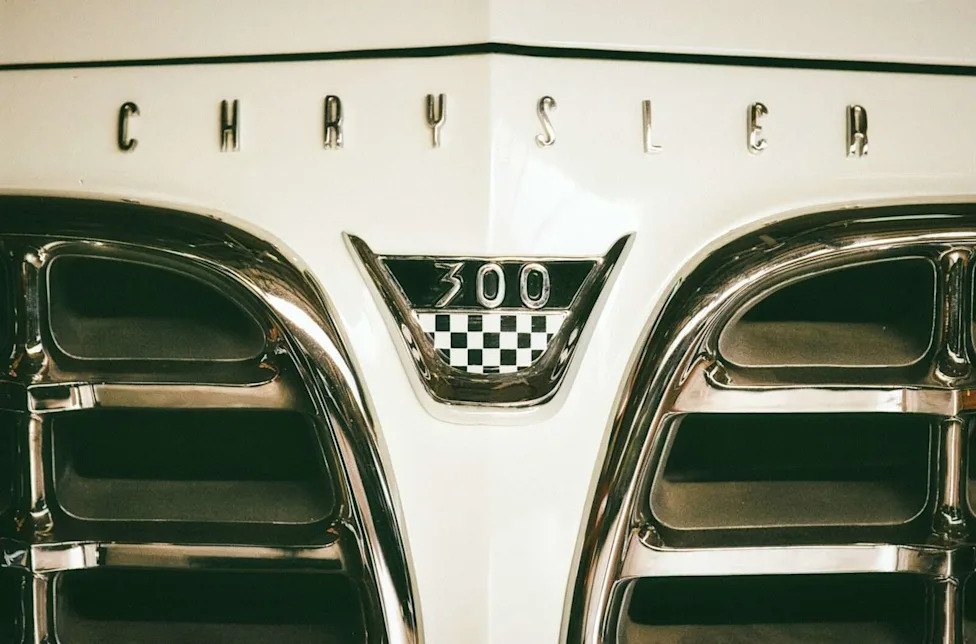
The Phantom 300: What a Chrysler That 'Shouldn't Exist' Teaches Collectors About DocumentationSomewhere between Detroit's factory ledgers and a Palm Springs consignment lot sits a black 1955 Chrysler C-300 convertible that, according to every surviving corporate record, was never built. Mopar historians have argued over it for years — clone, tribute, factory fluke, or elaborate fabrication — and the debate shows no sign of settling. But the real story here has little to do with whether this particular car is genuine. It has everything to do with how the collector market prices doubt.What the C-300 Actually WasTo understand why this Chrysler matters at all, it helps to understand what the C-300 actually was. For 1955, Chrysler took its 331-cubic-inch FirePower Hemi V8, fitted a solid-lifter camshaft borrowed from the New Yorker line, topped it with dual four-barrel carburetors, and built what amounted to a personal luxury coupe with a factory hot rod's heart. Advertised output was 300 horsepower, a genuine milestone and the first time an American manufacturer had claimed roughly one horsepower per cubic inch in a production car. Chrysler's postwar lineup ranged from workaday Windsors to this flagship, and the 300 sat unmistakably at the top of it. The factory built 1,725 examples that first year. Every one of them was a two-door hardtop. No convertible ever appeared on a factory order sheet, then or since.That absence is exactly what makes the black convertible currently circulating on Craigslist so compelling, and so contested. Beneath its tired paint sits a correct X-frame, the reinforced chassis Chrysler reserved for its convertibles to compensate for the rigidity lost when a steel roof disappears. Open the hood and a gold "batwing" air cleaner sits where it should, atop an engine whose stamped numbers fall within accepted parameters for a genuine 300. None of that is trivial to a trained eye. None of it is proof, either.The Kiekhaefer LegendThe car's origin story leans heavily on Carl Kiekhaefer, the Mercury outboard-motor magnate who fielded a factory-backed NASCAR team of C-300s in 1955 and 1956 and dominated the series so completely that officials eventually rewrote the rules to slow him down. Oral tradition holds that Kiekhaefer used his considerable leverage with Chrysler executives to have a small handful of convertibles built for the 1955 auto show circuit, perhaps two or three cars, of which this might be one. It is a genuinely good story. It is also, so far, unsupported by a single period photograph, invoice, or press release.AdvertisementAdvertisementWhen collectors have pressed Chrysler's corporate archives for clarity, the answer has come back as a shrug in writing: the company can neither confirm this car's pedigree nor verify that any C-300 convertible was ever authorized in 1955. That non-answer is the real headline. It echoes the case ofSteve McQueen's Husqvarna motocrosser, where provenance either exists on paper or it exists only as folklore, and the market treats those two conditions very differently.A Five-Year Trail of Modest MoneyThe car's sales history reads like a referendum on exactly that principle. It surfaced publicly in February 2021 at a Palm Springs auction, where a confident seller and a flawlessly driving car met a market unwilling to buy the legend without the letter; bidding stalled at $35,000 and the car went home unsold. Three months later it changed hands privately for $69,500, real money, but a fraction of what a documented, numbers-matching 1955 C-300 hardtop routinely brings, let alone what an authenticated convertible would command. By that August, the car turned up at Mecum's Monterey sale, where it brought only $40,000. A year almost to the day after its Palm Springs debut, it returned to the same venue and sold for $50,000. This year it resurfaced again, this time in a Craigslist listing, still carrying the same open questions it carried in 2021.Compare that trajectory with what a properly documented Mopar convertible can do. Genuine, build-sheet-verified Hemi convertibles from Chrysler's muscle car era routinely draw six-figure, even seven-figure bids, specifically because the paperwork removes the doubt. This car's convertible ghost, by contrast, has spent five years trading in the low five figures to low six figures: real money for a fun, usable classic, but nowhere near what an authenticated factory show car would bring, and nowhere near enough to suggest the market has embraced the Kiekhaefer legend.Documentation as Its Own Asset ClassThis is not really a story about a rare car. Rarity on its own has never been what moves serious money in this hobby. Chrysler, so far as anyone can prove, built zero 1955 convertibles, but expectation of rarity and proof of desirability are not the same thing, and desirability without documentation does not command a premium. What this Chrysler actually demonstrates is that documentation functions as its own asset class. A build sheet, a factory letter, a verified race entry list: these are worth more to a serious buyer than the most romantic backstory a mechanic ever repeated at a swap meet.AdvertisementAdvertisementFor collectors evaluating a car like this, the practical guidance is straightforward. Treat oral history as color, not evidence. A missing factory record is not proof of fraud, but it is not proof of authenticity either; it simply shifts the entire burden of proof onto the seller, and no amount of a correct-looking X-frame or a period-correct air cleaner changes that math. Buyers considering this car, or others like it, should budget for it as an enjoyable, driver-quality curiosity rather than a blue-chip investment, and should expect its value to stay suppressed unless genuine factory documentation eventually surfaces.Every few years, a car like this resurfaces to remind the hobby of an old truth: mystery is entertaining, but it has never been what serious collectors actually pay for. They pay for certainty. Until this Chrysler's paper trail exists somewhere other than legend, it will likely keep changing hands the way it has for five years now: admired, argued about, and priced like the question mark it remains.Join our Newsletter, follow our Instagram page, and follow us on Facebook.



















 +63 others