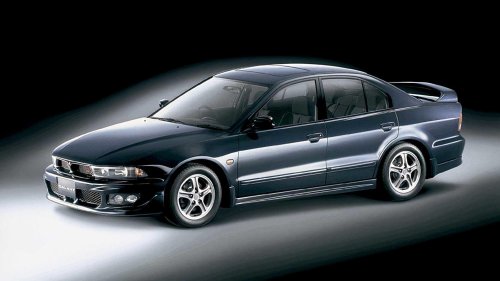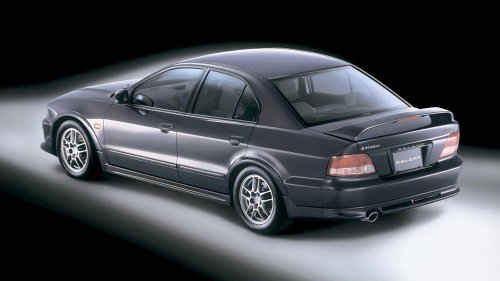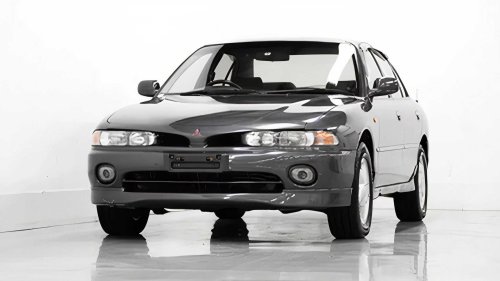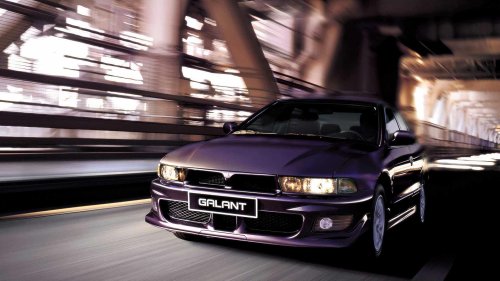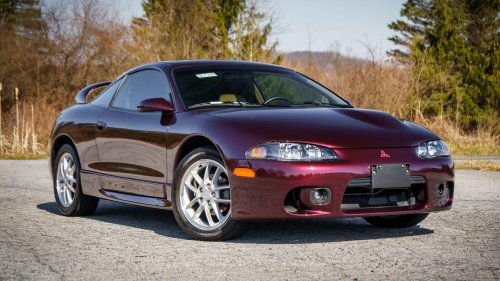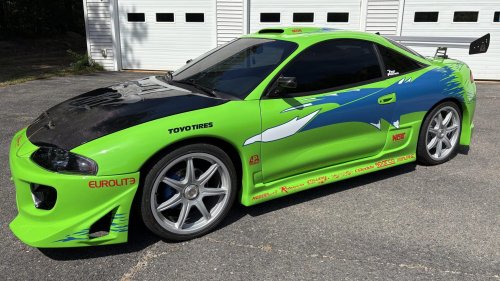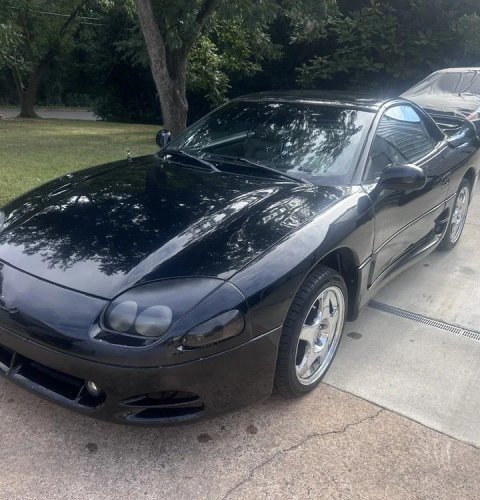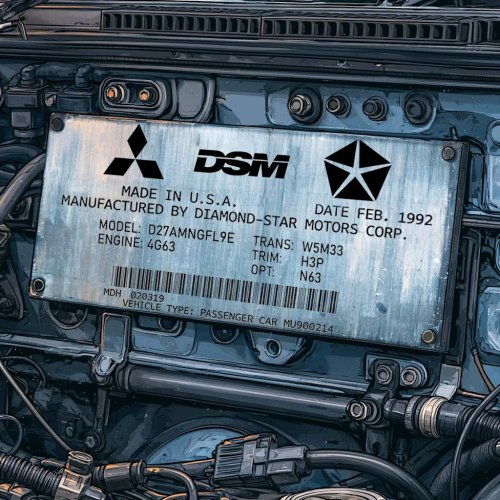
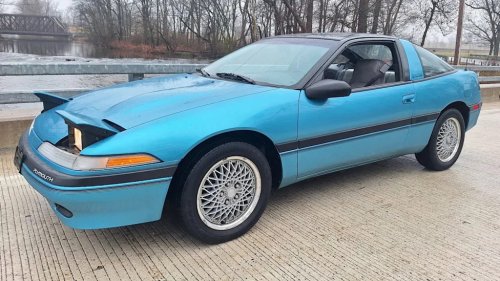


















Diamond-Star Motors' Lasting LegacyRyan Lugo - MotorTrendCooperation between global automakers has become standard practice, a modern method for sharing the immense cost burden of developing new vehicle platforms. Doing so spreads the investment and allows brands that ostensibly don't go head to head in every market to reap the benefits when a fresh model goes on sale.In the early days of international cooperation, American car companies were less likely to go all in on shared designs with international partners, instead importing autos assembled elsewhere and rebadging them for the U.S. market. This strategy held firm for decades, and while some technological cross-pollination did occur, there were still clear silos separating "built here" and "built over there," regardless of how the marketing copy might read.In the 1980s, Chrysler took an unusual step alongside its longtime collaborator Mitsubishi that pushed past this status quo. Having long invested in the Japanese brand and featuring a fleet of "captive import" rebadged vehicles developed by Mitsubishi, the brain trust in Auburn Hills chose to go all in on building cars together in America.AdvertisementAdvertisementThis was no marriage of convenience, no forced merger of equals (as would later haunt Chrysler's corporate story). Instead, it was a conscious choice to test the kind of synergy that would drive the foundation of so many of today's boardroom tie-ups. So begins the story of Diamond-Star Motors, a match that helped write the opening chapter of how today's automotive industry operates.Bring a TrailerCorralling the Captive ImportsCaptive imports were a brisk business for Chrysler after it emerged from bankruptcy in the early 1980s. The trickle of small hatchbacks and coupes borrowed from Mitsubishi soon became a torrent as Americans sought out fuel-efficient commuters from a familiar face. Not many of these buyers knew the Dodges and Plymouths they were buying in that era were being built overseas, and with more than 100,000 sales per year of these thrifty fuel sippers, Chrysler was making good money that crosstown rivals like Ford and General Motors weren't matching with import programs of their own.There was a storm cloud on the horizon for Chrysler-Mitsubishi machinery, though. During the same period, companies like Honda and Toyota were doubling their efforts at cracking the U.S. market, with Datsun (soon to be Nissan) hot on their heels. With a level of top-down management not seen in the American economy, the Japanese giants eventually agreed to keep their individual exports below a certain level each year so as to maintain a healthy spirit of competition, one of the many voluntary brakes applied by the industry on its various outputs over the years as Japan blueprinted itself into the industrial powerhouse it eventually became.Why was this a problem for Chrysler, specifically? As mentioned above, neither FoMoCo nor GM were leaning all that heavily on Japanese partnerships to fill their dealer lots, which meant any kind of export quota was unlikely to significantly impact their bottom lines. The Pentastar, on the other hand, didn't just have to contend with limits on how many cars it could ship over from Mitsubishi's Japanese operations, but it also had to contend with Mitsubishi's own sales operations in the United States. Under the eyes of its Japanese rivals, those weren't separate items when tabulating the quota, and suddenly Chrysler's plans for expanding its compact car family were in trouble.MotorTrend - MotorTrendEnd Run Around Self-Imposed RegulationsIt was clear the export limit favored companies that could make the massive investment that was an American manufacturing presence. Cars that were built outside of Japan weren't subject to this agreement, and it's a part of what drove Honda and Toyota to get serious about extending their factory footprints to the United States.AdvertisementAdvertisementMitsubishi, however, was a smaller player when it came to total automotive sales. It was also facing down the deal it had negotiated with Chrysler that gave its partner the right to bring over as many of its vehicles as it wanted to, an arrangement that could potentially leave the Japanese brand with just scraps for its showrooms were it to be exercised in full.It was a problem with an obvious solution. Both companies had a common interest in continuing their partnership, and with the leverage it enjoyed over Mitsubishi, Chrysler came to an agreement that saw it pony up cash for a shared manufacturing facility to be built in Normal, Illinois, but not burden itself with any aspect of operations. Ground broke in 1985, with the plant coming fully online three years later, bringing 3,000 jobs to Normal and establishing a beachhead for "import" cars in America's heartland that could churn out nearly 250,000 vehicles per year.Bring a TrailerDiamonds and StarsThis is how Diamond-Star Motors (DSM) was born, welding the Pentastar with the diamond from Mitsubishi's logo. From the start, it was unlike the captive import situation that had been status quo between the two brands up to that point and unique when compared to other partnerships in place in the broader automotive world.Rather than simply use the DSM plant's line space to build existing Mitsubishi designs and continue to swap badges as they exited the factory, the two companies instead collaborated on a new platform that combined the Japanese company's drivetrain expertise with Chrysler's knowledge of what American customers were looking for. The latter meant taking the underpinnings of the Mitsubishi Galant sedan, heavily revising them, and renaming it the D platform.Bring a TrailerThe first vehicles to emerge from the DSM factory on the D platform were the Mitsubishi Eclipse, the Eagle Talon, and the Plymouth Laser. This trio of hatchbacks were a significant step forward when compared to the compacts that had come before them, as they featured the option of all-wheel drive, strikingly modern styling, and the availability of the venerable 2.0-liter 4G63T turbocharged four-cylinder engine.AdvertisementAdvertisementThe DSM offerings were immediately competitive. Their arrival for the 1990 model year came just as the Japanese bubble economy pushed toward increasingly sophisticated, high-tech sports cars whose prices climbed past what the average enthusiast could afford. The Talon and Eclipse were a clear cut above the previous crop of compact performers, but they were also much more affordable than the sky-high stickers beginning to be attached to models like the Nissan 300ZX, the upcoming Toyota Supra replacement, and the FD-generation Mazda RX-7, each of which arrived within a handful of years of the DSM models.Bring a TrailerToo Short a Collaborative SeasonAs good as the DSM designs were, they couldn't save Chrysler from itself. Having gone on a bit of a buying spree at the end of the '80s that included big-ticket purchases like Lamborghini and American Motors, and facing down the utter indifference of the car-buying public to its hugely expensive Chrysler TC by Maserati luxury convertible, the company was getting short on cash.With a host of important models in development (including concepts that would become the Jeep Grand Cherokee, the Dodge Viper, and the third-generation Dodge Ram), Chrysler decided it was time to unload its DSM stake, selling its 50 percent interest to Mitsubishi in 1991.This wasn't the end of their close collaboration—the Eagle Talon and Mitsubishi Eclipse would each get a second generation in 1995, retaining their roots in the original D platform—but it did spell the end of Diamond-Star Motors as a corporate construct. Eagle didn't make it past the end of the decade, but Chrysler continued to work with Mitsubishi on D-platform models like the two-door Chrysler Sebring and Dodge Avenger models (the Sebring sedan rode on a completely different architecture), eventually evolving it into the ST-22 platform in 2000.Bring a TrailerAlthough it had been also building homebrewed models like the original Mirage at the DSM plant (rebranded as the Dodge Colt and the Eagle Summit), Mitsubishi's full takeover of the former DSM facility gave it more flexibility in terms of what it could produce in the United States. Initially, this took the form of the Endeavor SUV, as well as the midsize Galant sedan over and above its Eclipse interests, and while the automaker's lineup largely calcified in the 2000s, the plant stayed active until 2015 as the brand's various nameplates played out the string in America. Eventually, the plant wound down to just 25 percent of its original capacity.AdvertisementAdvertisementToday, the DSM facility lives on, but not under the auspices of either Mitsubishi or Chrysler. Instead, EV brand Rivian purchased the Normal campus in 2017, and it currently serves as the sole manufacturing location for the company until its Stanton Springs, Georgia, facility comes online in 2028.