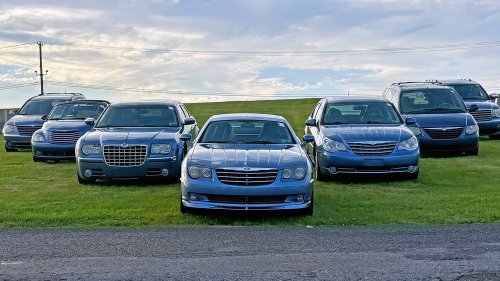
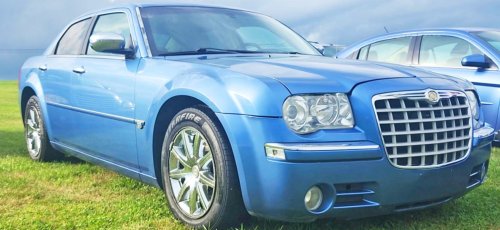
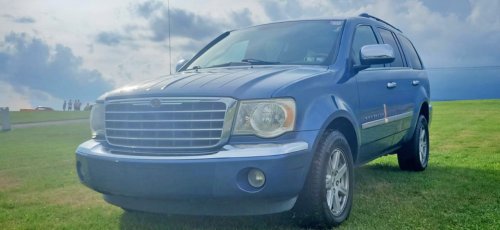
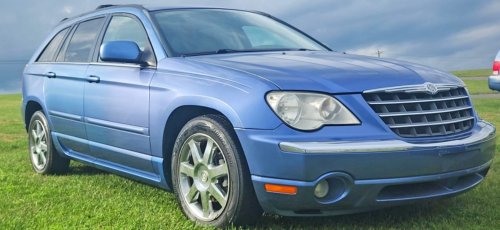
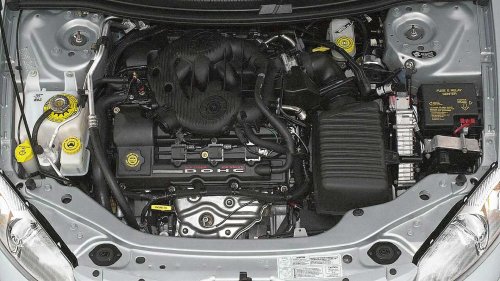
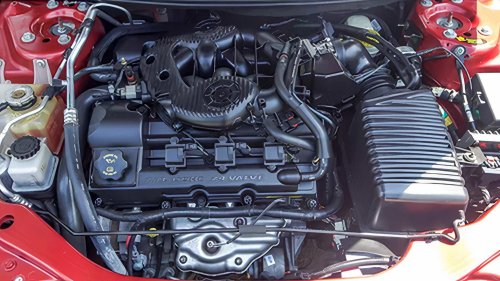
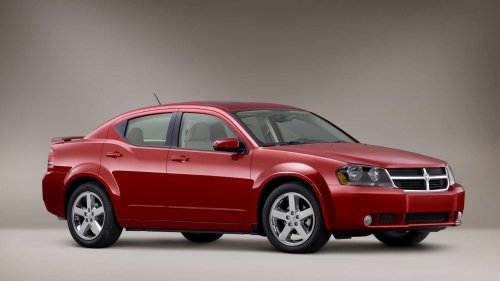
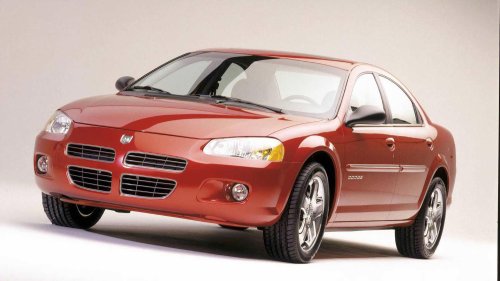
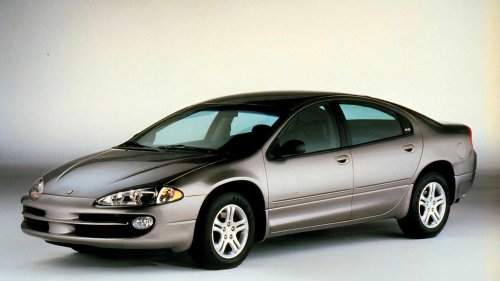
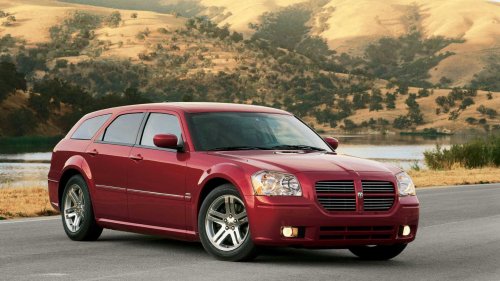
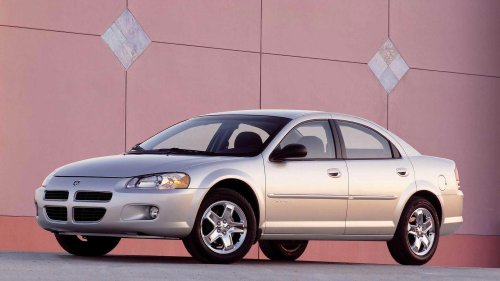
Just like cars, there have been good engines and bad engines built throughout automotive history. On the good side, you have mills like Ford's 4.9-liter straight-six, which is positioned as one of the most reliable engines ever produced. You also have the Chevrolet small-block V8, Toyota's 2JZ straight-six, and a large list of Honda motors ranging from the B, K, and D-Series inline-four units. There are many more, and listing them all would be quite the task.As for the bad engines, one that stands out in particular is Chrysler's 2.7-liter "LH" V6. It came about in the late 1990s to complement the brand's then-new vehicle platform, which went by the same name as the engine. Not only was the engine deemed extremely unreliable, but Chrysler also made things worse by blaming the engine's problems on its owners, which created an extremely hostile brand-buyer relationship that, to some, is still felt today. Chrysler Tried To Modernize With The LH Engine Chrysler*Specs courtesy of AllPar.comAt the turn of the Millennium, Chrysler was in dire need of an engine revamp. The brand's two V6 powerplants available prior to the introduction of the LH engine were a Mitsubishi-sourced 2.5-liter and a 3.3-liter, both of which were dangerously obsolete compared to competing engines. Engine tech was evolving rapidly, and Chrysler needed to catch up in a major way. So, a plan for a new engine was laid out.The 2.7-liter V6 first hit the market in 1998, just in time for the second-gen Chrysler Concorde and Dodge Intrepid to be introduced. In addition to those two models, the LH engine was destined for several transverse, front-wheel drive applications in the future. Because Chrysler wanted to modernize the new engine, it was designed with features such as dual-overhead camshafts, all-aluminum construction, and cast-iron cylinder liners for better head encapsulation and reduced cylinder wall wear.Bring a Trailer Another notable hallmark of the LH engine was its minuscule footprint. Chrysler designed the engine with tight tolerances and compact components to reduce the engine's overall size. In doing so, this freed up more space under the hood and allowed whichever model it was installed in to have more cabin space than with previous transverse V6 engines made by the brand.All of the above sounds great on paper, especially the small footprint, but in the real world, nothing could be further from the truth. The engine quickly began to suffer from catastrophic issues regarding oil sludge buildup, along with problems with its cooling system and small oil reserve. Models That Used The Chrysler LH Engine 1998–2004 Chrysler Concorde 1998–2004 Dodge Intrepid 2001–2006 Dodge Stratus sedan 2001–2010 Chrysler Sebring 2005–2008 Dodge Magnum SE 2005–2010 Chrysler 300 2006–2010 Dodge Charger SE 2008–2010 Dodge Avenger The LH Engine's Time Of Reckoning The largest and most problematic issue facing the LH engine was oil sludge. The small tolerances built into the engine meant small oil passageways, setting the stage for such an issue. On top of that, the mill had a relatively tiny oil capacity of just five quarts. For context, most modern V6 engines house anywhere from 5.5 to 6.5 quarts of oil, meaning the LH engine had less than what one would normally expect. Its oil pan was also shallow to allow for a smaller footprint, which hurts the oil's ability to cool somewhat.Because of the small amount of oil and shallow pan, the LH engine's oil would overheat and begin to create sludge. That sludge would then be forced into the tiny oil passages, clogging them up. Once this sludge forms clogs, the engine becomes oil-starved, which can lead to catastrophic failure.Stellantis The LH engine also had a significant issue with its cooling system, namely its timing chain-driven water pump. Because it is mounted inside the engine, any water pump failure that results in a leak can cause coolant to enter directly into the engine's oil supply. To make matters worse, the water pump was heavily prone to gasket failures, creating a perfect storm for coolant/oil mixture. Once this occurs, the oil's viscosity — or its ability to lubricate — is ruined, which can then cause engine seizure. The mixture, coupled with a weak PCV system that could not properly vent the engine's crankcase, also helped accelerate oil sludge formation. Another issue prevalent with the LH engine was failing timing chain tensioners.All of these issues were heavily publicized when the mill was in production, but Chrysler decided to go about dealing with it in a very unsavory, hostile way. Chrysler Had The Nerve To Blame Owners DodgeIn essence, Chrysler pinned the LH engine's failures on its owners, namely the issue with oil sludge. Chrysler's defense was rooted in maintenance intervals, which the brand claimed owners were not adhering to. The LH engine called for an oil change interval of every 3,000 miles with conventional oil and every 5,000 miles with synthetic. Chrysler's claim was that the owners who were having sludge issues were not following manufacturer guidelines. Because of this approach, Chrysler was denying warranty claims.However, a slew of owners quickly came forward with evidence to the contrary. Many of these folks had service records showing meticulous, regular maintenance, and the sludging issue was still present. Even with these records in hand, Chrysler continued to deny warranty claims. This did not sit well with anyone, and a volley of lawsuits was filed directly against the brand. One of the groups spearheading the litigation campaign was the Center for Auto Safety.Dodge After a series of legal battles, Chrysler was finally forced to address the large volume of defect claims. Strangely, despite the wide-reaching publicity that the engine's issues received, Chrysler's original claim of owner negligence being the cause of the LH's woes was still accepted by many. At the same time, a large majority of loyal Chrysler buyers took issue with the brand's approach to a problem of its own making and chose to stay away from the brand thereafter.However, Chrysler's minor success in convincing some buyers that it was their fault that their LH engine was failing, rather than the brand's own engineering oversights, obscured some of the severity of the engine's issues. LH Engines That Survived Tell Us A Story DodgeIt goes without saying that not every LH engine sludged up, locked up, or blew up. There are still a few out there powering cars that people actually use every day. These surviving examples managed to rack up over 200,000 miles over the last two decades or so, but their owners had to go to extreme lengths to keep their LH engines running. For many, strict car maintenance can be difficult to keep up with.For the LH engine survivors, a couple of key maintenance items needed to be completed in order to avoid a potential sludge-fest. For starters, its oil change interval needed to be shortened. Some long-time LH owners report changing the oil every 2,000 miles or less. In addition, invasive water pump inspections are seemingly required in order to avoid catastrophic failure. Alongside the inspections, regular coolant flushes are also recommended.Dodge It is important to note that these surviving LH engines are exceptions to the rule. Most LH engines failed long ago, but the few that have survived have done so thanks to extremely dedicated owners with considerable time — or money — to devote to proactive maintenance.If you find yourself with a hankering for an LH-powered Chrysler product, please, on behalf of everyone here at CarBuzz, have its engine thoroughly inspected. Fine-toothed combs, magnifying glasses, and possibly even a seance or two will all be needed to make sure the LH engine you buy stays sludge-free and trouble-free.



















 +76 others