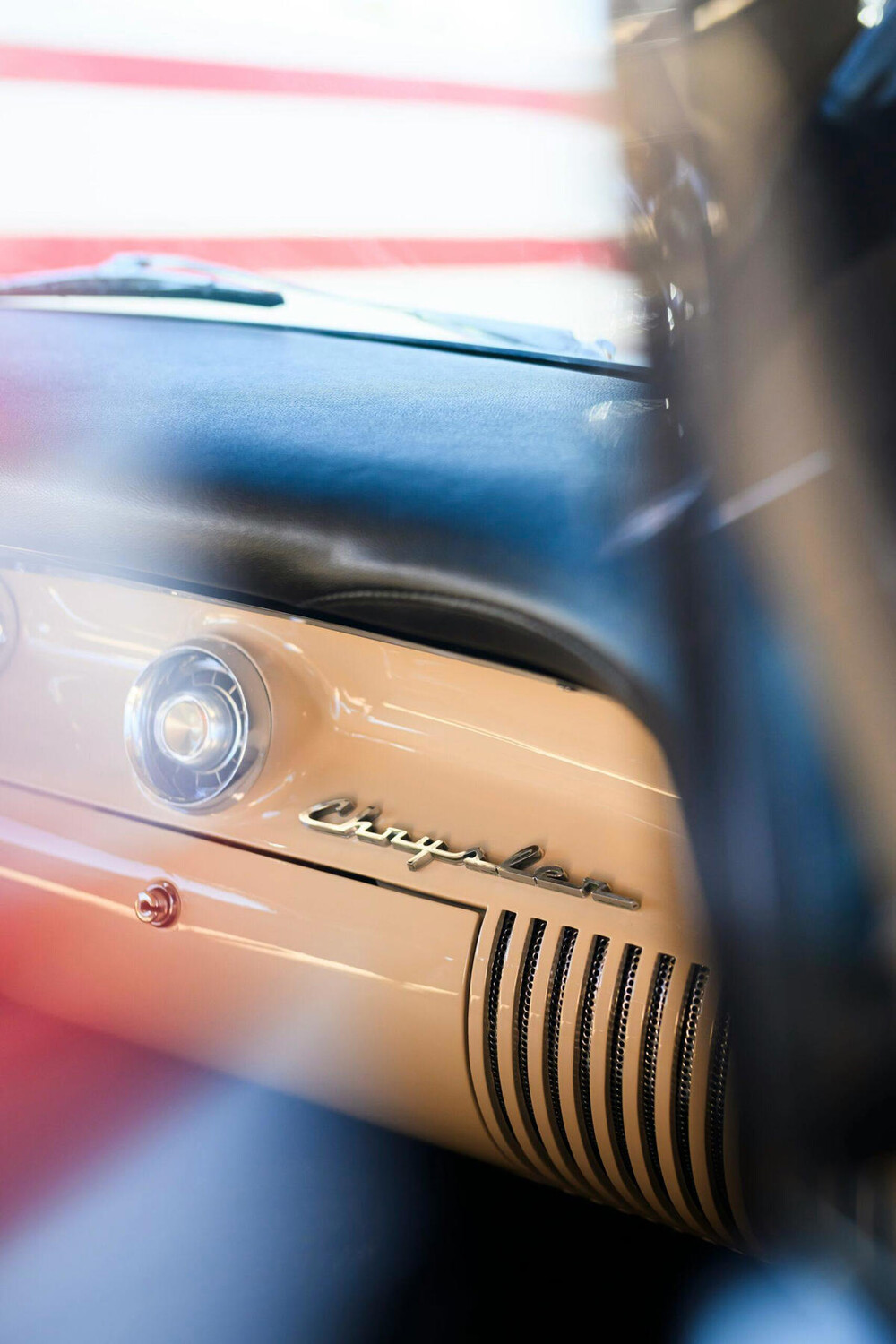
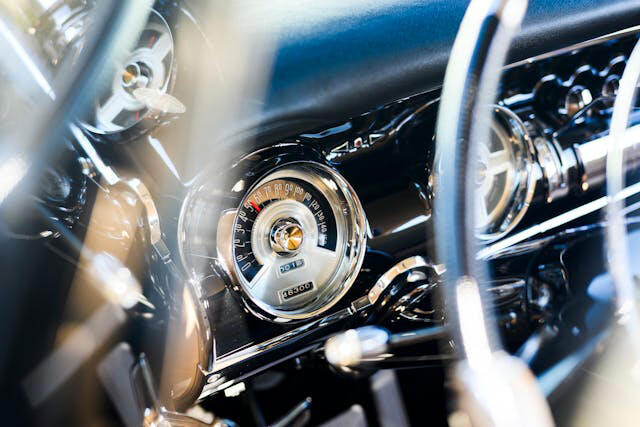
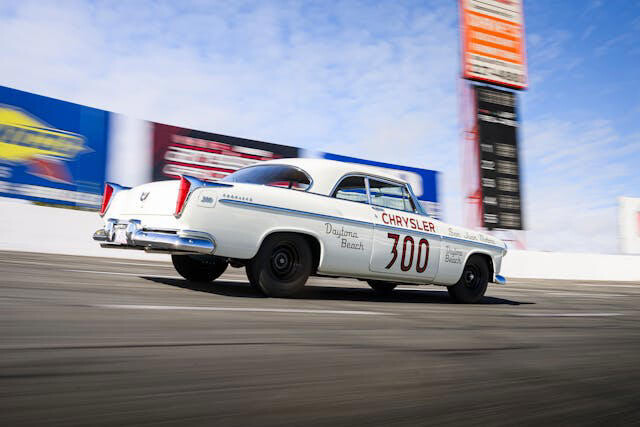
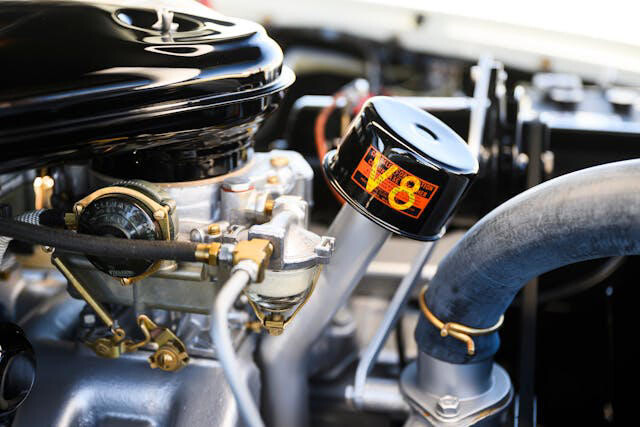
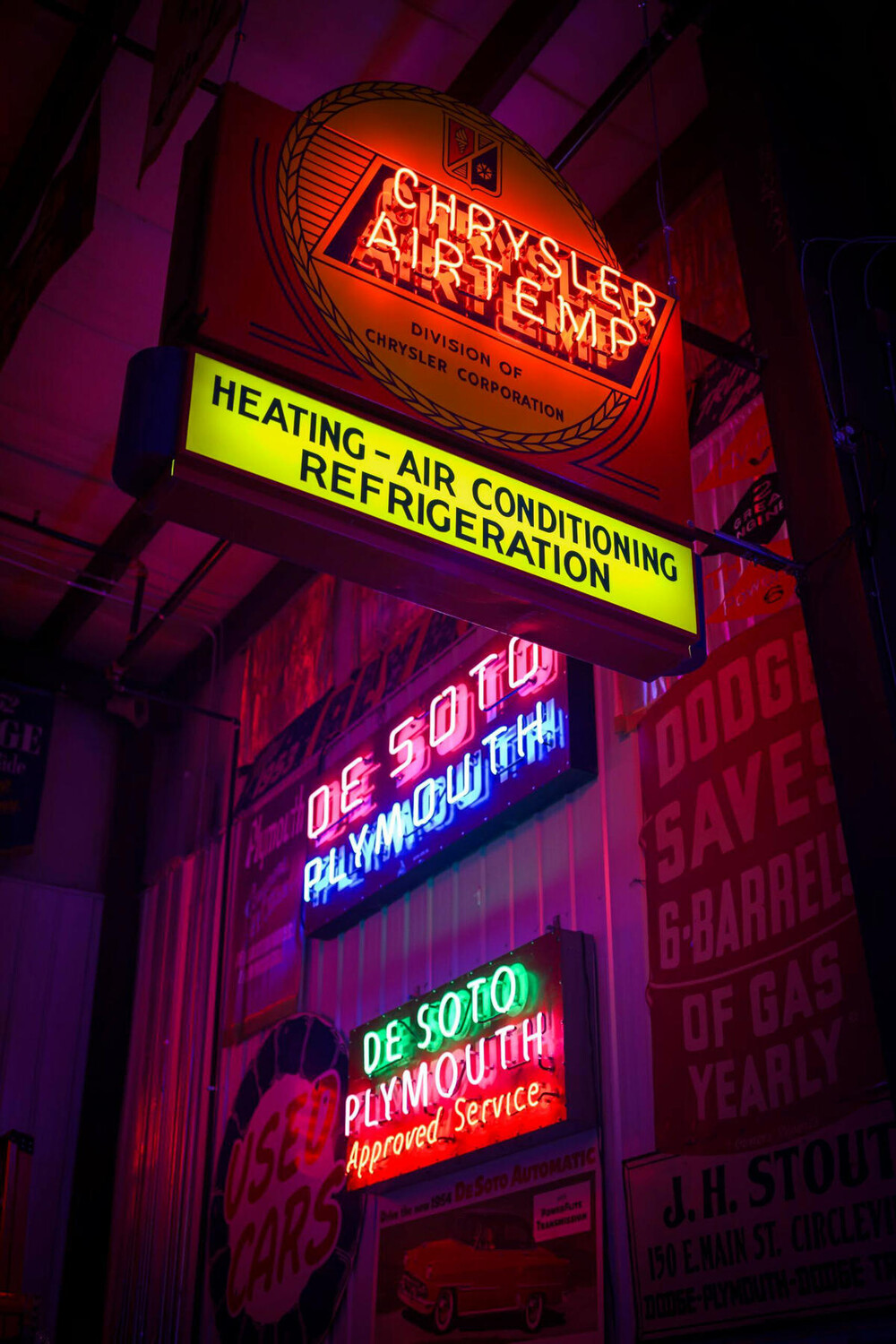
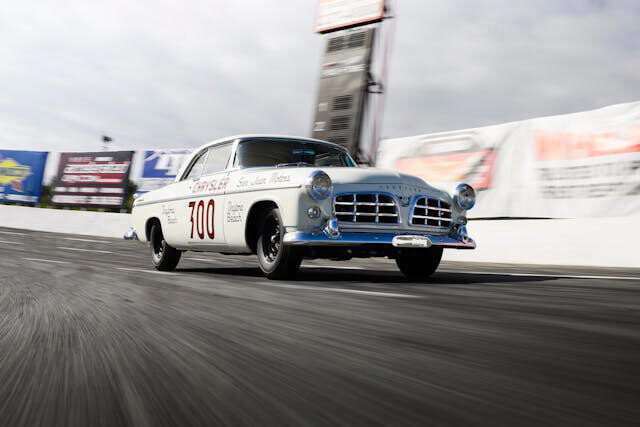
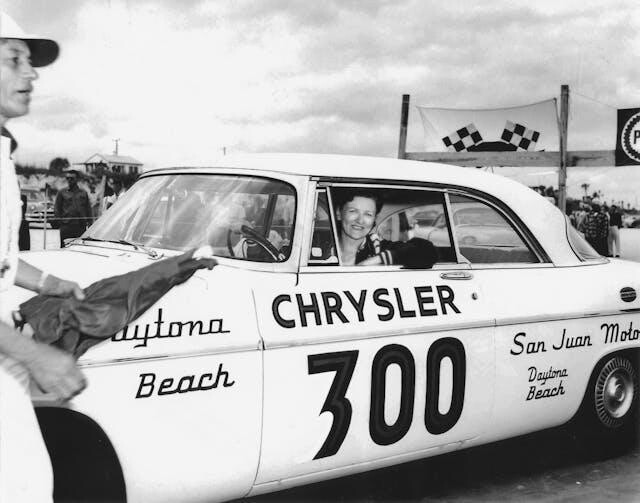
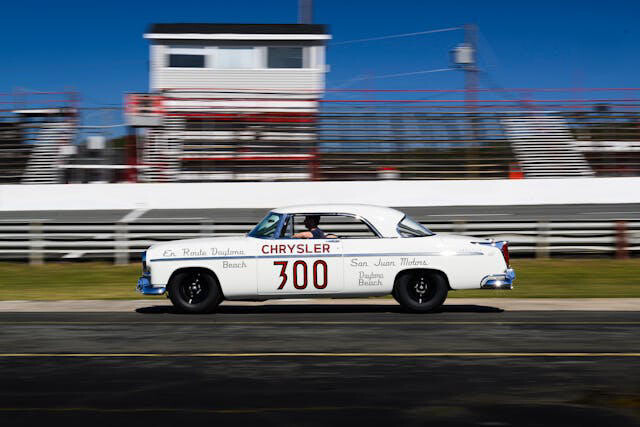
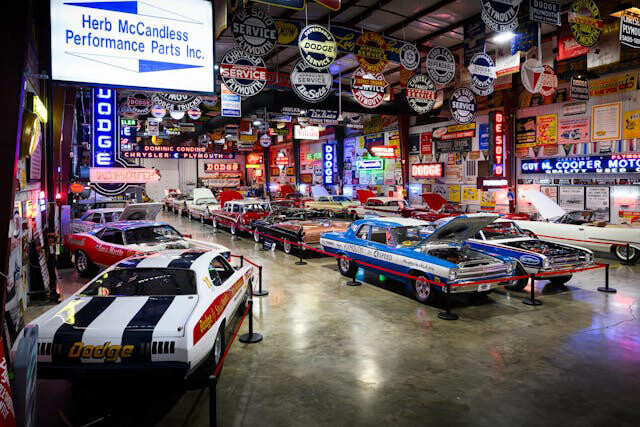
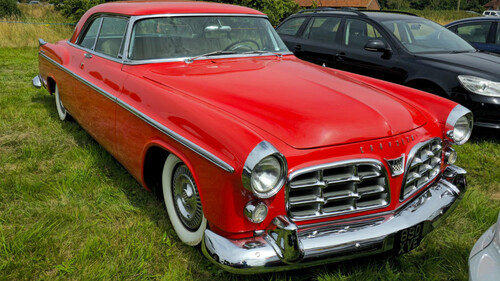
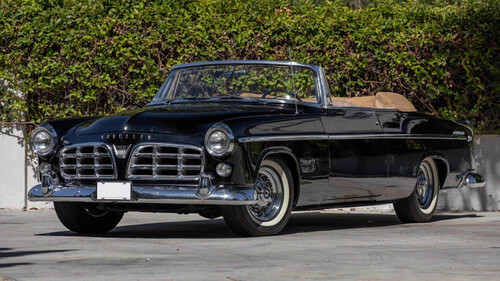
When America Got Moving: The 1955 Chrysler C-300 Kicked Off the Muscle Car Era Time waits for no one. It certainly wasn’t waiting for us on a Thursday morning last fall at Ace Speedway. The 4/10-mile oval in Altamahaw, North Carolina, built back in 1956, is a field of dreams for anyone who appreciates stock car racing, but the people wrenching in the infield were too busy prepping for a slate of races to pay any mind to the Not From Heres admiring the track and vintage signage. No, they were not aware that we were planning to shoot a magazine story here, and no, we can’t just sneak in for a few minutes. A Camaro-bodied stock car in the pits agreed, firing up and settling into an idle that sounded like an artillery barrage. But then, into the divide glided our subject car, a 1955 Chrysler C-300. Not a 300, actually, but the, as in the first production version ever built of what is often called the first muscle car. Morning sunlight glinted off polished chrome. Hard squints from the infield gave way to respectful “Hooo boys” and “No sh*t, is it…?” The Chrysler, not for the first time in its history, made everyone stop and pay attention. “Race on Sunday, sell on Monday” really meant something in 1955. Here, driver Brewster Shaw waits for a speed run at Daytona in the very 300 we drove 70 years later. Courtesy McCandless Collection *** Although the 300 looks at home on an old racetrack, especially with its livery (more on that in a bit), the car in truth belongs to a faraway time and place: 1950s Detroit. Most of us don’t remember the ’50s. This is true in the grim statistical sense: Americans born in that decade or earlier account for less than a fifth of the current U.S. population, and most of those are baby boomers whose memories of the decade are childhood flashes of Buck Rogers TV episodes and elementary school duck-and-cover drills. Yet even when the ’50s were recent history, they tended to get refracted through the tumult and change that followed. By the early 1970s, the decade had been flattened in the cultural consciousness to Elvis, poodle skirts, and waitresses on roller skates. A more innocent time, wiped free of social strife. Hence, the television series Happy Days. These prejudices play into perceptions of Detroit cars from the era. They are broadly celebrated for their style, yet they are also, with few exceptions, given less attention (read: are worth less money) than what followed. Hagerty’s index of 1950s American cars, which includes several Chrysler 300-series cars, has declined nearly 15 percent in the past 10 years. During that same time, our index of muscle cars has risen 8 percent. The irony is that much of the disruption and dynamism we associate with the 1960s and later actually belong to the 1950s: The Beatles and the Rolling Stones filled their early albums with covers of Little Richard and Chuck Berry; American soldiers started dying in Vietnam in ’56; the Civil Rights Movement had reached fever pitch by ’55, with bus boycotts in Montgomery. So it is with cars. This was the decade that gave us not only the Hemi that powers the 300 on these pages, but the American car—and the American car industry—as we all know it. It’s when “…the high-compression engines, the suspension systems, the automatic, and the power assists were developed, and more important, made to work,” wrote longtime New York Times journalist Jerry Flint in his book, The Dream Machine, which cataloged the era. There were profound changes in how cars were put together, as well. Automakers had, in the previous decade, morphed into the Arsenal of Democracy. In the ’50s, they raced to stand up new factories in the style of the sprawling, single-story facilities that had churned out bombers during the war, located strategically along newly built highways and filled with automated tooling. The catch was that deploying all this new technology required enormous investments that only enormous companies could make. “The scramble to automate production crushed independent automakers,” wrote historian Thomas Sugrue, whose book, The Origins of the Urban Crisis, examines changes and tensions in 1950s Detroit. A colossus like General Motors could snap up farmland all over the country and dot it with state-of-the-art assembly lines; smaller competitors remained tied to dated, multistory factories crowded near Detroit’s riverfront, supplied by small tool-and-die shops and reliant on skilled laborers. Thus, whereas the ’50s were a golden age for the biggest players, for the rest, it was an unprecedented age of extinction. At the end of World War II, close to a dozen major American automakers resumed production of new cars. By 1955, according to a story that year in The Saturday Evening Post, just five companies were building cars in any real numbers and two “Goliaths,” General Motors and Ford, accounted for 84 out of every 100 cars sold in the United States. They were able to leverage their manufacturing advantages by building cars in huge numbers, then undercutting the price of smaller competitors. Storied companies like Packard, Hudson, and Nash were either forced into mergers (Studebaker-Packard, American Motors Corporation) in frantic efforts to survive. Chrysler was by this point a significant enough player that the term “Big Three” had entered the lexicon, yet it was an order of magnitude smaller than the other two. It had been able to introduce some new technologies, such as power steering, but lagged on others, such as fully automatic transmissions and single-piece curved windshields. And although it invested $500,000,000 in new plants and tooling in the decade after World War II (more than $6 billion in 2026 dollars), its manufacturing footprint was older than GM and Ford’s. Sugrue noted that by 1960, Chrysler had become the city of Detroit’s largest employer, a dubious distinction reflective of the fact that its competitors had moved elsewhere. (Although the ’50s were supposedly a golden age for Detroit carmakers, the city itself lost more than 100,000 manufacturing jobs over the course of the decade.) Compounding these challenges, automakers found themselves in the then-novel position of having to convince people who already had a newer car to buy another. The incredible sales growth of the late 1940s was already sputtering in the early 1950s and then stalled outright. “Nobody thought the postwar sellers’ market would last forever,” noted The Saturday Evening Post in ’55. GM and Ford, thanks to their cost-of-labor advantages, were able to lower prices to keep sales soaring. Chrysler, unable to keep pace, bore the brunt of the decline: Its sales in 1954 plummeted 38 percent. *** If you think ’50s cars are no fun to drive, then you haven’t driven a perfect one, like this 300. James Lipman The 1955 Chrysler C-300, tasked with reviving Chrysler’s fortunes, looks and feels caught between eras. The design, penned under the leadership of Virgil Exner, who had recently joined Chrysler from Studebaker, looked new in a way few cars before or since really do. The 1949–1954 Chryslers, like many first-generation postwar cars, had seemed almost deliberately dowdy—still clinging to Depression and wartime notions of virtuous restraint. The ’55, marketed as the “100 Million Dollar Look,” gleefully threw off those shackles. The C-300’s squat stance and narrow greenhouse seem to take a note from the hot-rodders who’d been chopping sections out of the roofs of their 1940s Mercurys, while voluptuous fenders and vestigial fins at the taillights hint at what was to come. Things would get much wilder as the decade progressed. As if to illustrate that point, not long after our C-300 was unloaded at the track, its owner, Mike McCandless, drove up in a 1959 DeSoto convertible. Its sparkling purple paint and steep tailfins had the effect of a peacock in full courtship trotting around a shy blue jay. That said, the considered glam of the C-300 has in many ways aged better than the all-out excess of its cousin. Eye of the beholder, of course. The C-300’s interior winks at the car’s capability—the speedometer reads up to 150 mph. But the quality of its construction nods at the past. Chrysler-brand cars rolled out of an east-side Detroit assembly plant that had been built in 1904, and the dash alone, with its stitched-leather top and intricate chrome inlays, evinces the kind of skilled craftsmanship that soon disappeared on mass-production cars. The big selling point, both in ’55 and today, is the engine. Chrysler’s 331-cubic-inch OHV V-8, replete with hemispherical cylinder heads, had debuted for 1951 with a respectable 180 horsepower, but this was the first model to realize its potential. Two four-barrel carburetors, high-flow intake and exhaust, and an aggressive camshaft pushed output to heights once unheard of in a mass-produced production vehicle. The new name emphasized the watershed number: 300, for 300 horsepower. (The car is often referred to as “C-300,” following Chrysler’s naming conventions of the time, which denoted model series with the “C” prefix. Later histories sometimes call it “300A,” retroactively recognizing it as the first of the so-called letter series cars. Period marketing materials simply call it 300.) Whether this combination of style and power merits the moniker “The first muscle car” is up for debate—frankly, a pedantic one. Some will argue the formula was only truly created in the ’60s with the GTO; others might insist it’s at least as old as the 1914 Stutz Bearcat. What’s beyond question is that the Chrysler C-300 was on the bleeding edge of a new paradigm: Performance, which had to that point been largely reserved for the rich or, alternatively, achieved by hot-rodders in back-alley speed shops, was now a marketing tool to the masses. A very effective one at that. Chrysler had record production in the first quarter of 1955, according to a story that year in The New York Times, and increased market share by 63 percent over the previous year. *** “So… did you like driving it? Did you want one?” That’d be editor-in-chief Larry Webster, politely interrupting the history lesson with pertinent questions. Pertinent and maybe a bit loaded. The common dig on big old American cars from the 1950s is that for all their beauty and significance, they’re not much good on modern roads. Said reputation is, broadly speaking, unfair, and largely derives from the fact that many of the 1950s classics still on the road are poorly maintained. Even the ones that look cherry tend to be driven sparingly, such that making sure all the unsexy suspension bits are fresh is rarely a priority. To wit: Prior to writing this story, I got a short stint behind the wheel of the 1955 Chrysler C-300 in Stellantis’ corporate heritage collection. It was gorgeous, but I found myself wondering how anyone ever drove it in traffic, let alone found it sporty. Steering was squirmy. The brakes, a mere suggestion. McCandless’ C-300 technically lives in a museum—his own. Yet he is hardly your typical collector of 1950s metal, and this is hardly a typical C-300. McCandless, a 40-something entrepreneur who by appearances and boyish enthusiasm could pass as 30-something, has assembled a sprawling, Mopar-heavy collection that spans from sought-after late-1960s muscle cars to modern-era dragsters with plenty of misfit toys in between. He also has assembled significant vehicles raced by his father, legendary NHRA racer Herb McCandless (aka “Mr. 4 Speed”). When we walked by a pro-stock 1972 Dodge Demon, Mike warned us not to lean on it—the sheetmetal had been dipped in acid to reduce weight and has roughly the structural integrity of double-ply Charmin. The heart of his collection is a parade of 1950s machines, including that gleaming purple DeSoto and several Chrysler 300 letter cars. “Fifty-five to ’61 is my wheelhouse,” he said. VIN 01 ’55 is the crown jewel, fresh off a concours-level restoration and typically occupying its own corner of his sprawling garage. When we first approached McCandless about the prospect of driving it for this story, he was refreshingly nonchalant. “No Dukes of Hazzard jumps?” he quipped. “We’ll sort the car [before the shoot], but I’m not worried.” North Carolina’s Ace Speedway, where we took most of our photos, is a 1950s relic that’s still running strong—just like our C-300. James Lipman He was right: There was nothing to worry about. What stood out most, in the first few minutes of driving it, is how little stood out. Many vehicles from the pre- and immediate postwar period require some amount of training to operate today—be it the nuances of an unsynchronized gearbox or when and where to move various levers to adjust throttle and spark. In contrast, I’m pretty sure my kids’ babysitter, who recently earned her learner’s permit, could figure out the Chrysler. Simply shift to “D” and get going. The thin-rimmed steering wheel whirls around easily but isn’t comically boosted, and it tracks accurately with the front tires. The brakes are soft by modern standards but not spookily so. Jerry Flint argued in his book, The Dream Machine, that “the automobile became a trustworthy machine in this Golden Age.” At the wheel of this Chrysler that was expertly returned to factory specification, it’s hard to disagree. But is this 300-hp Dream Machine fast? Well… sorta. The main limitation here is clearly the automatic transmission. Two gears aren’t sufficient to realize the Hemi’s full potential. Period performance tests pegged zero-to-60 mph in about 10 seconds, serious speed in the era and more than enough to keep pace with traffic today, but admittedly not the stuff of YouTube Ultimate Drag Races. As the performance wars heated up, letter cars could be special ordered with manual transmissions to go along with ever more powerful Hemis. With the right tune, they could be legit racing machines—someone in the infield at Ace Speedway noted they once set up a 300D as a drag racer. Yet it’s not hard to see why many enthusiasts gravitate to the outré Mopar muscle cars that followed in the 300’s wake, just like you can’t blame late ’60s teenagers for preferring Jimi Hendrix’s distorted wails to Chuck Berry’s precise pickings. McCandless brings a different perspective. Like many who have spent lots of time in and around purpose-built racing cars, he has a kind of wan indifference to fast road cars—his daily driver is a minivan. He thinks speed is beside the point when it comes to collecting. “You’re not going to go fast in an old car,” he said. In any event, the C-300’s shortcomings compared with 1960s muscle fades when you zoom out to the present, with its 815-hp Mustangs and 1064-hp Corvettes. The very notion of the C-300’s obsolescence has, in a sense, become obsolete. “They’re smile cars,” said McCandless. “The 1950s were all about excitement, having fun.” *** A few years before the C-300 debuted, Detroit homemaker Vicki Wood went to see a “powder puff” (all-female) race with her husband, Clarence “Skeeter” Wood. Like so many in her generation, she had seen a lot in a short time—her first husband had been killed in Germany during the war and now she was raising four stepchildren. She had never, however, participated in motorsports. Still, after taking it in, she was convinced she could do better. “The women in that race were so bad,” she later told Autoweek. “They were all over the track, running into the wall and all that sort of stuff. I said to Skeeter, ‘If I couldn’t drive any better than that, I wouldn’t be out there.’” Skeeter, who had some experience behind the wheel himself, put that claim to the test. The next week, he brought Vicki back to the same speedway and directed her to a 1937 Dodge in the pits. She came in ninth. The next night, she competed in a powder puff race and came in first. She started racing men, and beat them too, earning mentions in the Detroit Free Press (“Weaker Sex Vie at Flat Rock,” declared one headline). According to designer Peter Stevens, who penned an admiring tribute to Wood for Collier Media after her death in 2020, her husband then managed to bring all this to the attention of Chrysler’s media relations department. It was dawning on automakers around this time that if they had any hope of maintaining stratospheric postwar sales, they needed to speak to previously untapped audiences, including women. The same year the C-300 debuted, Dodge introduced a model called “La Femme,” complete with Heather Rose paint and interior fabric fashioned after rosebuds. A fast-driving housewife from Detroit was thus a marketing dream. Chrysler sent the very first C-300 off the line to a dealer in Daytona Beach, Florida, right in time for Speedweek. With Wood behind the wheel, the C-300 stormed the beach at 125.838 mph, good for second place in Class 4 for U.S. StockProduction Cars. The antics captured the attention of Lee Petty, who was supposed to compete the same week in the Grand National Division (now known as Cup Series) with a measly 250-hp Hemi. Chrysler hastily swapped the C-300’s engine, along with its front end and associated badging, onto Petty’s car, which went on to take second place. (McCandless notes that if you study old pictures of Petty’s car in that race, you’ll spot the subtle trim misalignments.) Wood returned to Daytona in subsequent years, campaigning several 300 letter cars. When the new Speedway opened in 1959, Wood was supposed to be on it. When she attempted to get to the track, she was purportedly stopped by officials who said women weren’t allowed in the pit area, at which point none other than NASCAR founder Bill France intervened. “Vicki Wood is not a woman,” he roared. “She’s a driver, and she’s allowed in the pits.” Wood quit racing in the early 1960s, in large part because men started refusing to compete against her, and went back to being an unassuming housewife. “If I had not been told what she did, I’d never have known,” said her grandson, Neil Wood. “She was just Grandma.” The ’55 also returned to civilian life. Post-race, the body components were put back in order, but not the engines, such that to this day, the C-300 has Petty’s original block, marked “special” on the side (it has since been upgraded to 300-hp spec). The car went back to the Daytona Beach dealership, which unceremoniously sold it to a man in West Virginia. From the 1970s, it passed through the hands of several collectors, finally landing with McCandless in 2019. After putting down triple-digit speeds at Daytona with drivers Brewster Shaw and Vicki Wood at the wheel, the Chrysler was sold off as a normal new car. McCandless bought it in 2019 and was in touch with Wood before her death in 2020. James Lipman Wood lived to 101, long enough to see a woman secure a full-time ride for a NASCAR Sprint Cup team (Danica Patrick in 2012)—and to be in touch with McCandless during restoration of her 300. “I still have her voicemail saved on my phone,” he said. The restoration was extensive and expensive. McCandless admits the chrome alone could have been the total bill for many cars. For many 1950s classics, these costs have become tough to justify. Hagerty’s price guide puts the going rate for a 1955 C-300 in “good” condition at $40,000, and even examples restored to concours-grade barely clear $100,000. On the other hand, that means a running, driving, presentable classic from this era can be yours for less than what people are currently paying for certain 1990s and 2000s sports cars. McCandless has curated a collection devoted to the history of Chrysler’s various brands (including DeSoto), as well as to the career of his father, drag-racing luminary Herb McCandless. (For more on “Mr. 4 Speed,” check out this documentary .) James Lipman Such estimates go out the window when terms like “first one built” and “racing provenance” enter the conversation. Keeping the significance and likely value in mind, I made no effort to drive like Vicki Wood at Ace Speedway and instead concentrated on steering the C-300 clear of the marbles in the banking. The car seemed happy just to be out and about, its Hemi burbling politely through dual exhaust tips and running without incident the entire day. The Camaro stock car waited respectfully as we ran our laps. Then, as we parked in the pits for more photos, it was off, drowning out our conversation. Time is like that. It can glide by so quietly you barely notice, or it can sweep by with a thudding roar. But it’s always moving. This story first appeared in the America 250 digital issue of Hagerty Drivers Club magazine. Join the club to receive our award-winning magazine and enjoy insider access to automotive events, discounts, roadside assistance, and more.