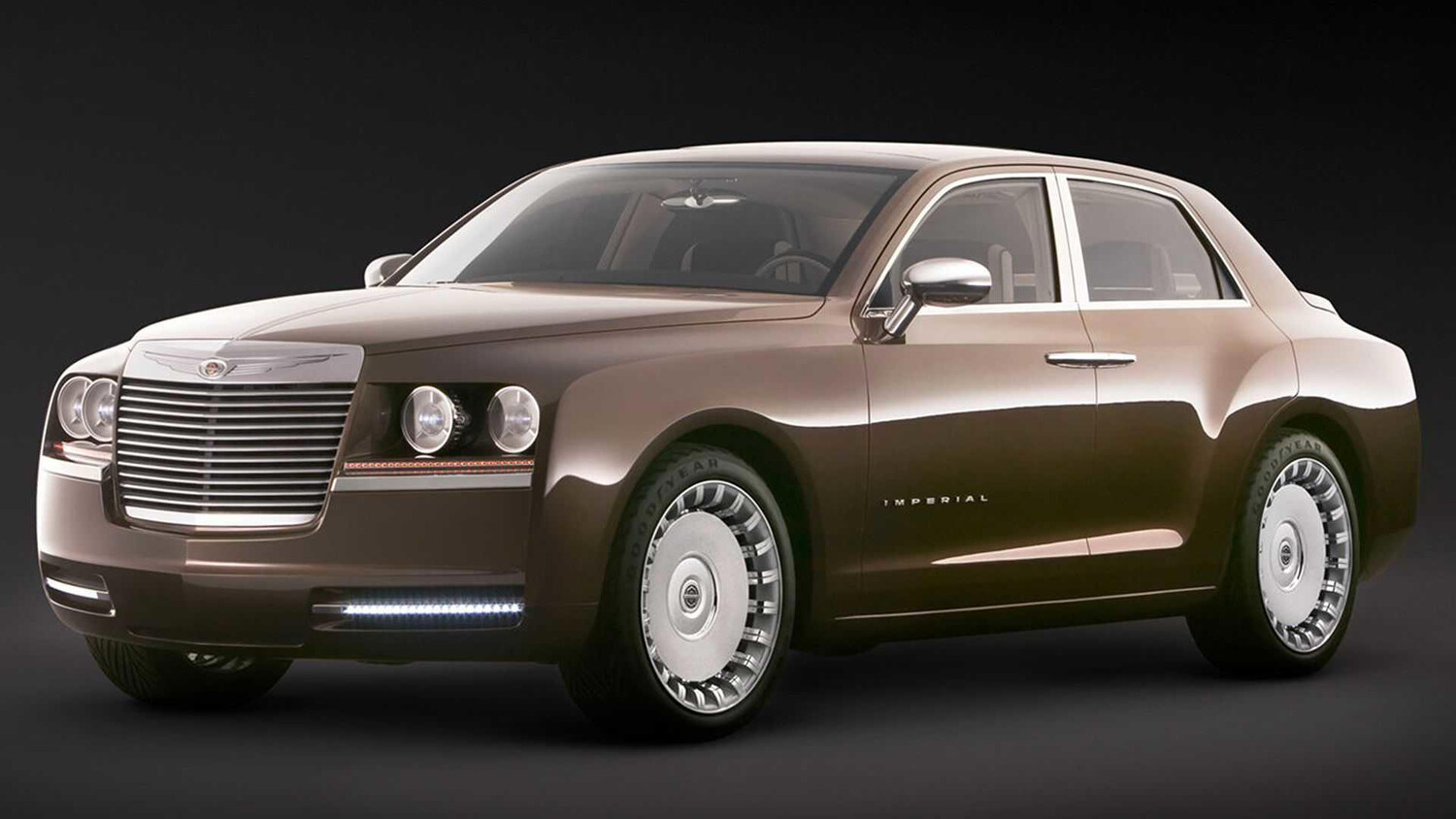
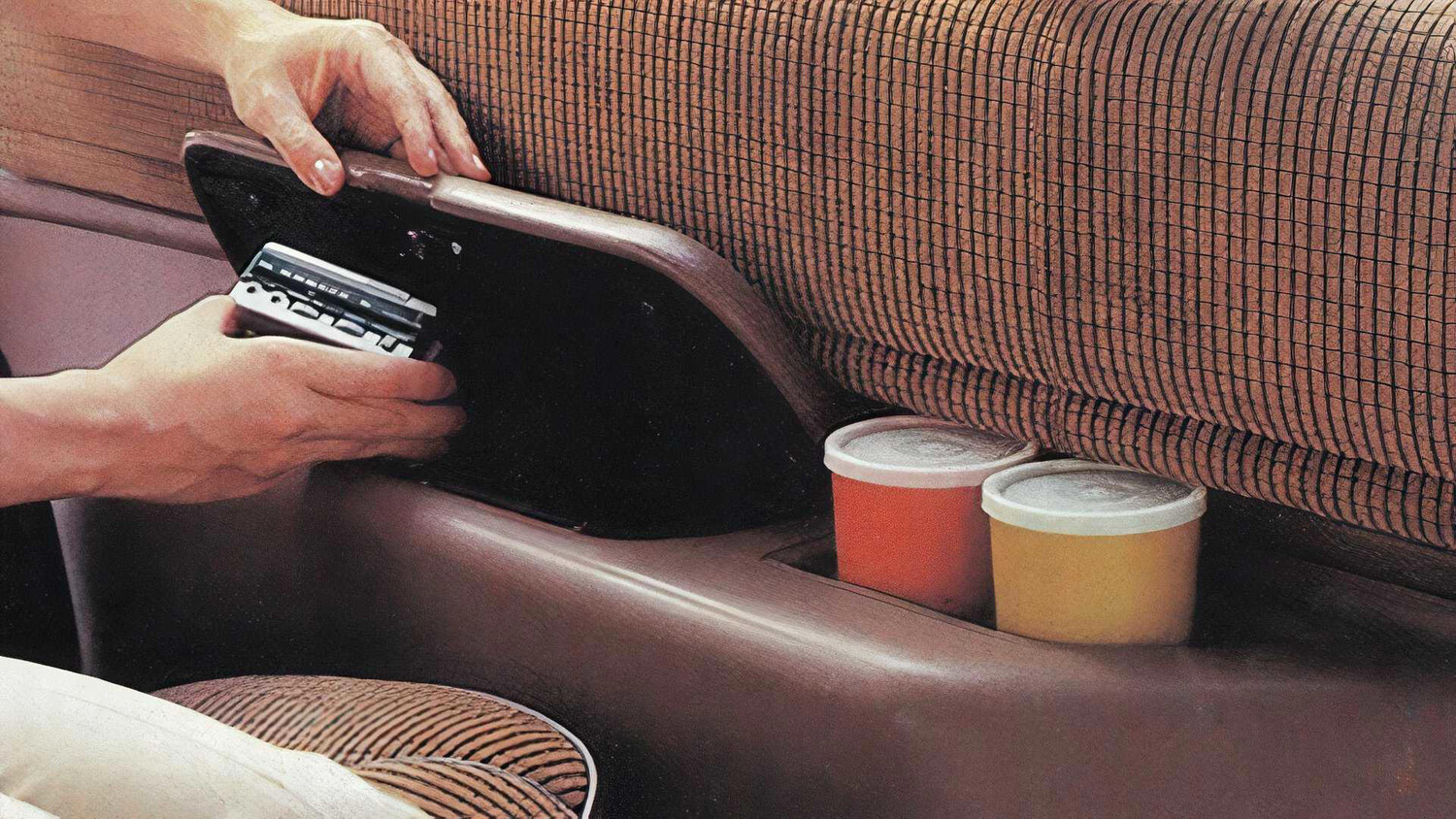
Quick LinksOne example of this was the Imperial, Chrysler’s flagship luxury sedan and, at one point, a model with its own dedicated brand. Looking at the seats on the 1975 Imperial, you would be forgiven for thinking you were looking at a living room couch, rather than the seats of a car. This cozy, cushioned environment was considered the height of luxury at the time, and is still a fascinating example of how automotive interior design has evolved throughout the years. The Mid-70s Chrysler Imperial: A Living Room On Wheels Bring A TrailerThe 1975 Chrysler Imperial wasn’t really a Chrysler; not officially, anyway. It was built under the Chrysler brand umbrella, but was part of the standalone Imperial marque, which Chrysler had established two decades earlier to separate the Imperial from the rest of its lineup. While the wider Chrysler Imperial model did not have precisely determined generations, within the standalone Imperial brand the 1975 model was part of the fifth generation.Bring A Trailer In the early 70s, Chrysler had planned to discontinue the Imperial due to low sales. However, the company later reconsidered its decision and decided to build another generation of the model. In order to save costs, the new Imperial shared some body panels with a Chrysler model, the New Yorker. It was only produced for two years, 1974 and 1975.The car was available in both a two- and four-door body style. Its design featured all the trademark characteristics associated with the Imperial: large and heavy, with a squared-off silhouette and a high-end feel inside and out. The interior was especially notable for its plush seats, upholstered in button-tufted leather or velour, which resembled a couch more than the seats of a car. On the powertrain front, the fifth-gen Imperial was equipped with a 7.2-liter V8 engine, producing 215 hp and paired with a three-speed automatic transmission.After the 1975 model year, the Imperial took a break for a few years, before returning in 1981 with a sixth generation, the last for the standalone Imperial brand. Like the rest of Chrysler’s lineup, the Imperial evolved and moved away from the “living room couch” design of the past, but the 1975 model remains as a curious time capsule. A Century-Old Nameplate: The Imperial's Early History RM Sotheby's The 1975 Imperial may have been an impressive model with its plush seats, but it was only one part of a long history that stretched all the way back to the 1920s. While the mid-70s model (and every other Imperial built between the mid-50s and the early 80s) was classified under its own separate brand, for most of its history the Imperial was a Chrysler model.The first Imperial arrived on the market in 1926, only a year after Chrysler itself had been founded. Like the Chrysler Six – another of the company’s early models – it was powered by an inline-six engine. The one found in the Imperial, however, was slightly larger and more powerful. The same year it was released, the Imperial was also chosen to be the pace car for the Indianapolis 500, which further cemented its place in the automotive world.Mecum Five more generations of the Imperial followed, with an extremely wide range of different body styles available over the years. These included a roadster, coupe, convertible, phaeton, sedan, and even a limousine. Always equipped with a wealth of luxury comfort features, the Imperial became a symbol of high-end American motoring.For a period of several years after the initial generation of the model, the inline-six engine was replaced by an inline-eight or “straight eight”. It wasn’t until the early 1950s when, as the straight eight began to fall out of fashion due to its mechanical limitations, the V8 engine began to take over.In 1955, Chrysler established the standalone Imperial marque, which was exclusively responsible for building and selling the Imperial with separate badging and branding. This brand was responsible for six further generations of the model, including the 1975 car we focused on earlier. What Came Next: The Imperial's Decline And The 2006 Concept Car Chrysler In 1983, the Imperial brand was shut down, and production of the model went on a seven-year hiatus. Chrysler eventually decided to bring the model back in 1990, but this time the company built the Imperial under its own brand, rather than re-establishing the standalone marque.The Imperial once again became Chrysler’s flagship luxury sedan, occupying the slot in the lineup directly above the New Yorker Fifth Avenue. The two models shared many similarities, but the Imperial distinguished itself thanks to some unique design features that made it stand out. These included full-width tail lights, more sharp angles at the rear end, and a more minimalistic interior.The new Imperial had room for six passengers, and was equipped with a host of advanced comfort and safety features for its time. These included automatic climate control, cruise control, anti-lock brakes, and a selection of high-end sound systems built by American manufacturer Infinity. These features were offered as standard, while several others were available as options, such as an electronically controlled air suspension, digital instrument cluster, integrated mobile phone, and even keyless entry.Chrysler This generation of the Imperial, however, turned out to be the last; the new model didn’t quite capture the market’s attention, partly thanks to its odd-looking design which was a considerable departure from previous Imperials. It was only in production for three model years, between 1990 and 1993.In 2006, the Imperial name was briefly brought back in a different way: a concept car. This one-off creation embodied the principles of opulence and comfort that had characterized the Imperial, adapting them for the modern age. It was powered by a 5.7-liter Hemi V8, which produced 340 hp and 390 lb-ft of torque. The Imperial concept, however, failed to capture the market’s attention; Chrysler was also going through a period of rapid change at the time. Both these factors contributed to the concept car never resulting in a new production Imperial. Chrysler's History Of Automotive Creature Comforts FCA US The plush cushions on the 70s Imperial were not the only comfort-oriented luxury feature Chrysler installed on its cars over the years. The company has a long history of introducing accessories in its cars that were aimed at making journeys more pleasant. Some of them were an instant hit, becoming commonplace in modern vehicles, while others were not quite as successful and were eventually consigned to the archives of automotive history. Here are a few examples of automotive features pioneered by Chrysler to improve the experience of car trips for both driver and passengers.Record Player: In-car entertainment has evolved a lot over the years, but this particular way of listening to music on the go is one of the ideas that didn’t really catch on. In 1956, Chrysler began offering a feature it called the Highway Hi-Fi: a built-in record player that only played custom discs built for the system. Technical limitations led to poor sales, which killed off the Highway Hi-Fi in 1959.Electric Windshield Wipers: While windshield wipers were not a Chrysler invention, in 1939 the company was responsible for the first production models where the wipers were driven by an electric motor, rather than by a vacuum motor. Vacuum-driven wipers moved erratically, while electric ones moved at a set speed, making them more efficient and making car journeys safer in all weather conditions.DodgeCup Holders: We take this feature for granted in modern vehicles, but it was Chrysler who originally introduced them through two models in its brand family: the Dodge Caravan and the Plymouth Voyager, in 1983. Earlier cupholders were shallow and not meant for use while the vehicle was moving. Chrysler’s version was full-sized, keeping drinks secure during car journeys. Cupholders gained popularity very quickly, and became commonplace in other brands’ models as well.Sources: Chrysler