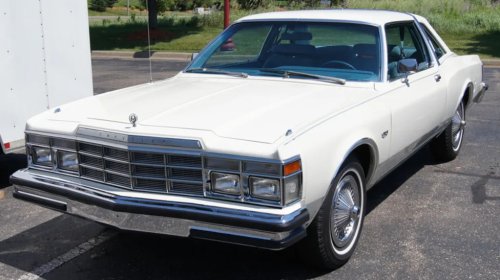
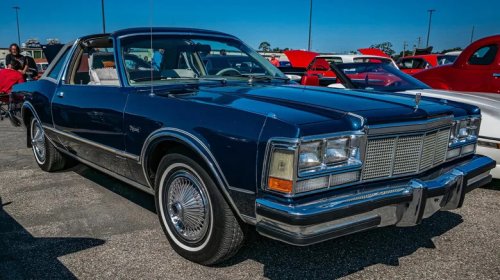
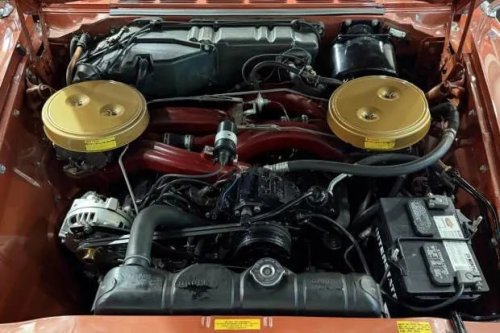
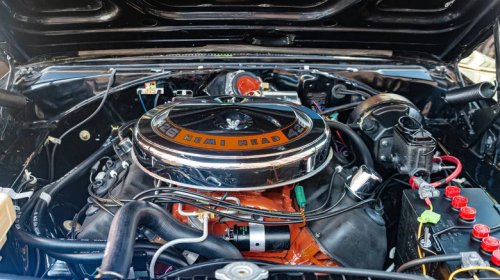
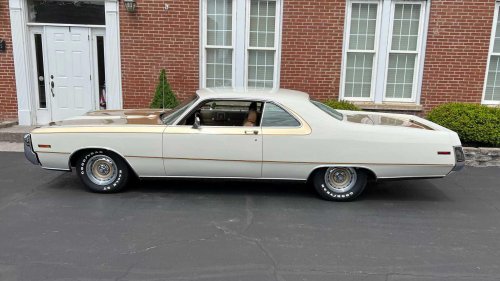
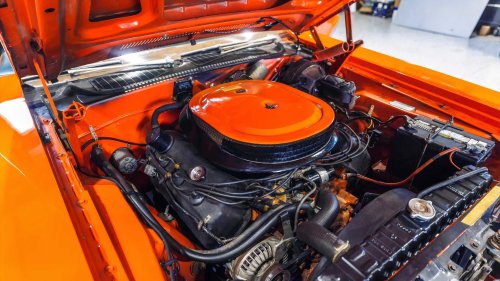
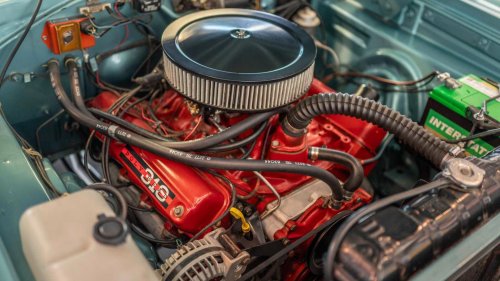
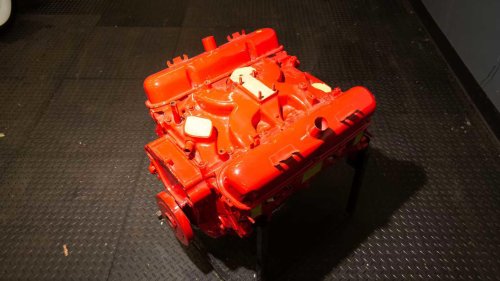
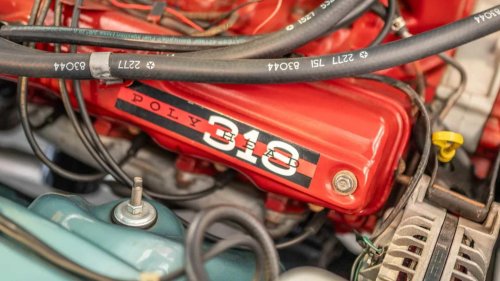
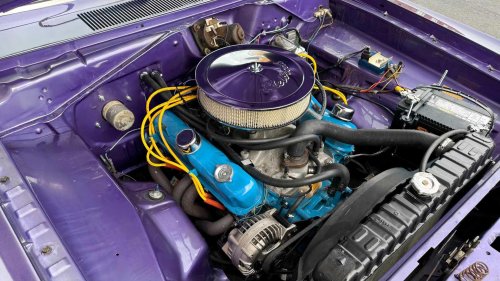
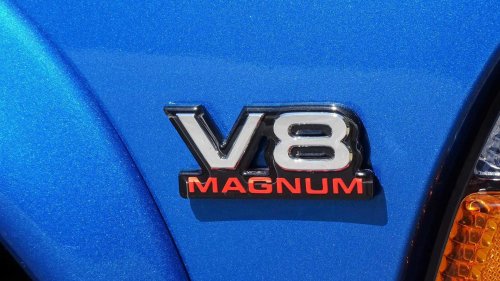
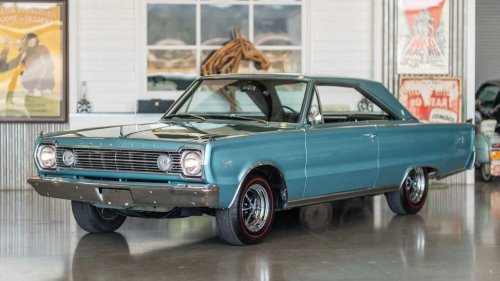
When it comes to automakers that produced famous engines, Chrysler sits near the top of the rankings. Chiefly, this is due to the Detroit Giant's production of the Hemi V8, which is still widely known and coveted to this day. The Hemi has seen use in a wide swath of models, ranging mainly from muscle cars to pickup trucks. Following a brief scare a few years ago, where Stellantis announced the discontinuation of the Hemi engine, it's recently been brought back to life.As famous as the Hemi engine is, it was never a king of reliability. However, Chrysler produced another V8 for quite a long time that is widely regarded as the brand's most reliable eight-pot ever produced. It's called the 318 CID V8, part of Chrysler's LA engine family. Unfortunately, outside Mopar circles, the 318 LA engine isn't very well-known. Despite this, the engine is still widely revered as a dependable, long-lasting engine. This Is Why It's So Reliable Bring A TrailerSmall in stature, yet exceedingly robust: that's the perfect way to sum up the Chrysler 318 CID V8. Its penchant for reliability begins in its casting process. It's a wholly cast-iron engine, wherein both its block and cylinder heads are made from the material. Underneath the thick skin are some forged internals, such as a forged crankshaft in examples built before 1973. It also boasted extremely robust main bearing caps and thick connecting rods, which upped the reliability ante, too.In addition, the 318 was built to be an understressed engine. In other words, the 318 was specifically designed to produce less power than its mechanical make-up could handle. Understressed engines are typically your best bet for being dependable workhorses, in comparison to engines which are tuned more for performance, as naturally these work a little harder. It's also not the highest-revving engine out there, which helps, sporting a max rev point of around 4,500 rpm, after which the engine is no longer producing its peak power. Some aftermarket applications can, reportedly, take the mill up to 6,000 rpm safely.Mecum Things get even more reliable when you dig deeper into the mill. Its lubrication system is designed to be, basically, overkill. Oil passages are everywhere, and its water jackets are slightly larger than other standard, small-block examples. Its cylinder walls are also thicker than normal, meaning the engine is much more unlikely to overheat. If it does overheat, its cast iron cylinder heads will resist warping, a potentially catastrophic phenomenon seen in engines with aluminum cylinder heads. How The 318 Came To Be Bring A TrailerThe 318 CID V8 was launched in 1964 as part of Chrysler's then-new "LA" engine lineup. The LA motor as a whole was meant to replace Chrysler's A Engine, which had been in production since 1957. The "L" in its name meant "Light", due to it weighing roughly 50 fewer pounds than the standard A motor. The LA was introduced as a 273 CID V8, which would end up being the more popular variation for the first few years of the LA engine family's lifespan.However, this would change in 1967. That year, the 318 hit the streets in earnest, replacing the identically-sized 318 CID A engine, which marked its final model year in 1967, as well. Some of its first assignments were in models like the Dodge Dart, the Plymouth Barracuda, Plymouth Fury, and Plymouth Valiant. From the outset, the 318 was not intended to be a performance-oriented engine, and there was never a mass-produced, hopped-up version of the mill produced throughout its lifespan.Following the close of the classic American muscle car era — which the 318 played virtually no role in — the engine continued on as an entry-level mill for larger cars, and an optional upgrade for smaller models. It also began to see more and more use in Dodge's pickup trucks. By this point, around the mid 1970s, the 318 had already cemented a reliable reputation in the American automotive market, which includes South America, too. Here, the 318 was a regular staple engine in select models sold there, such as the Dodge GTX. A Changing World Mecum When the American auto industry went through a massive downsizing effort in the mid to late 1970s, a good chunk of old-school big-block V8s received the ax, as they were simply too thirsty and too few people wanted them. This meant it was too costly to continue their production, at least on a mass-market scale. The 318 CID V8, as you'd expect, made it through this transitional period unscathed, along with its larger sibling, the 360 CID LA V8.Beginning in the 1980s, the 318 was having models added to its repertoire. The Chrysler Fifth Avenue and Imperial both began using the mill in the early 1980s, along with the Dodge Diplomat (which received it in 1977), and the forgotten Dodge Mirada. Of course, it was still widely used by Dodge's full-size D-Series and W-Series pickups. However, once the 1990s hit, the 318's use began to dwindle to just trucks and SUVs. By 1991, it was only used by the Dodge Ram and Ram Van, the Ramcharger, and the Dakota compact pickup. The End Of The 318 LA Engine Bring a Trailer The end of the 318's line came about in 1992. That year, Chrysler released a heavily revised version of the engine called the 5.2L Magnum V8. The new engine was almost completely different, except for things like deck height and cylinder bore spacing. The new Magnum held all-new, fast-burn heads, which were supposed to facilitate better combustion, resulting in a more efficient operation. It also sported pass-through pushrods, allowing oil to be injected directly into the rockers via the rods.An all-new valvetrain was installed too. Instead of the 318 LA's old-school shaft-pivot rocker arm setup, the new Magnum took advantage of a ball-stud rocker arm configuration. This meant the valvetrain could withstand higher revs, but it was also more prone to failure than the old shaft-pivot flavor. It also did away with the throttle-body injection found in the later-gen 318 LA engines. Instead, an all-new multi-point fuel injection system was seen.With all the new goodies strapped to an old-school block, the then-new Magnum 5.2-liter V8 could produce a good chunk of power compared to the outgoing 318 LA engine. For comparison, the '91 LA mill produced about 170 horsepower and 245 pound-feet of torque. The 5.2L Magnum pushed those numbers up to roughly 230 ponies and 290 pound-feet of torque. A 60-horsepower jump in a single model year is an impressive feat, no matter how you slice it. The Magnum 5.2L V8 was in production until 2003, when it was replaced by Chrysler's 4.7-liter PowerTech V8. The 318's Legacy Bring A TrailerOnce the 318 V8's reign ended in 1991, it had managed to explicitly cement itself as Chrysler's most reliable V8 ever produced. Of course, there were numerous factors that went into this, but it all boils down to its understressed nature. Throughout its time in production, it managed to quietly serve as Chrysler's underdog V8, picking up the slack and carrying the load while the big-blocks and Hemis got all the credit. In the end, the 318 LA engine teaches us that, sometimes, it's better to be the turtle than the hare.



















 +72 others