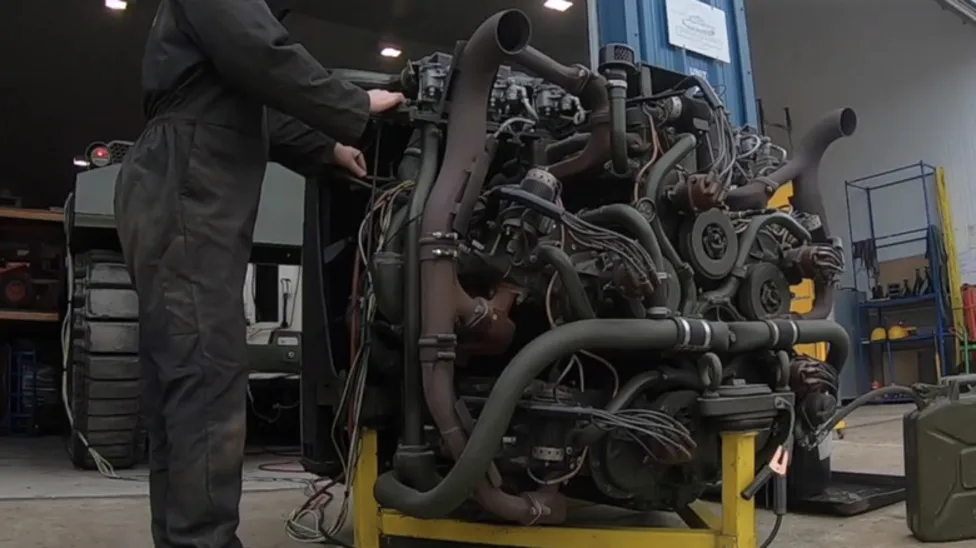
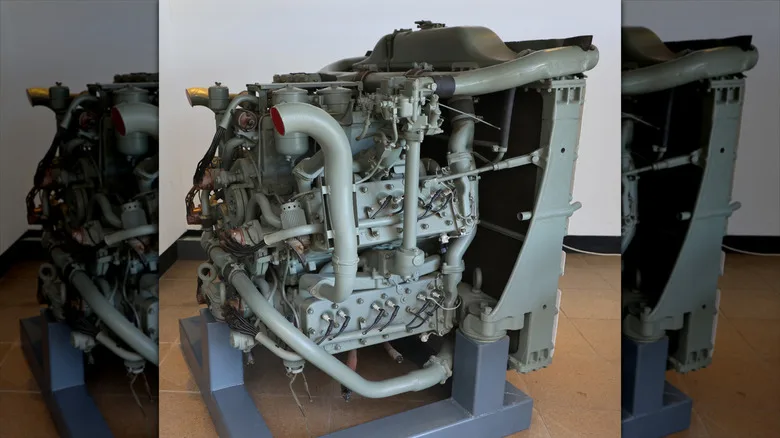
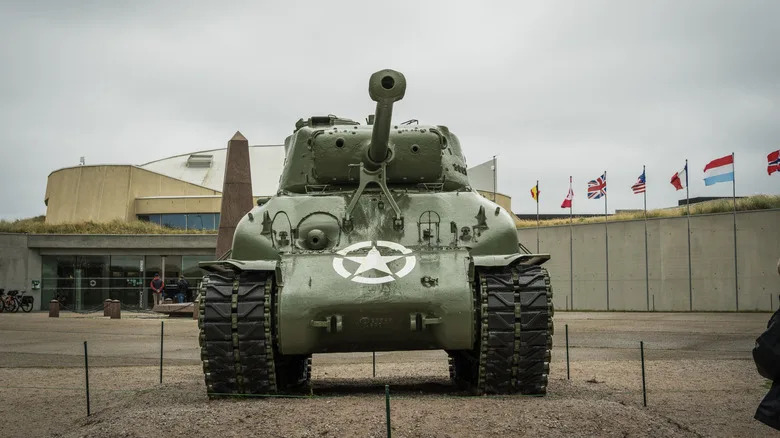
A Chrysler A57 Multibank engine being run on an engine stand. - Armoured Engineering Ltd/YouTubeThere have been some truly funky engine designs in the internal combustion engine's long history. One of the more common methods of creating oddball engines is simple: Smoosh a couple of them together, like with the Maserati Tipo V4 Sport back in 1929. However, many unusual engine designs came out of necessity during wartime, when engineers had to get creative with what they had in order to build something quick enough to support the war effort. One such example was Chrysler's A57 Multibank engine, which was actually five inline-six engines put together.Just as the United States was entering World War II in 1941, there was a need for engines to power the Sherman M4 tank. 40-ton tanks aren't exactly easy to move around, so a variety of different engines were used, including both gasoline and diesel engines — and even some from aircraft. Then there was Chrysler's A57 Multibank engine, which was more like a radial engine made using five L-head straight-sixes arranged in a star pattern. This allowed their individual crankshafts to turn a common central gear. It was an odd thing, but it worked.Read more: 11 Of The Biggest V8 Engines Ever Put In Production CarsThe power and engineering behind the A57 MultibankA Chrysler A57 Multibank engine on display in a room. - Geni/Wikimedia CommonsGrafting engines together isn't exactly new. Car companies have been doing it for ages, like BMW joining two straight-sixes to make the M70 V12. But Chrysler's Multibank A57 is one of the earliest examples, and with the use of five straight-sixes at once, it was also one of the most daring. The engines used weren't even developed specifically for this highly unique application; they were simple off-the-shelf automotive engines that Chrysler just figured out how to mesh together.AdvertisementAdvertisementSome incredible engineering went into making this engine work as well as it did. The original engines had their distributors and carburetors relocated, and their belt-driven water pumps were replaced in favor of a more reliable design utilizing just one pump. All of those 30 cylinders — and the endless complexity that came with them — displaced nearly 21 liters and made a maximum of 445 horsepower. And since it was based on road car engines, the A57 ran on ordinary gasoline, without the need for any special high-octane fuel. The total weight of that monstrous engine clocked in at around 5,250 pounds, making it heavier than many modern cars and SUVs all by itself.Surprising reliability, despite its complexityA head-on view of an M4A4 Sherman tank at a military base. - Chris Mcloughlin/Getty ImagesYou'd be forgiven for thinking that such a complex web of machinery would be prone to failure. However, it was actually one of the most reliable tank engines used by the Allies. In fact, that unusual engine configuration may have ended up helping its combat reliability, as it could reportedly run on just a couple of cylinder banks if others were damaged. The A57 engine was used in about 7,500 Sherman tanks, many of which were given to the British military under the Lend-Lease act. 100 A57s were also retrofitted to the Sherman's predecessor, the M3 Lee tank. Most of those A57-powered tanks were lost to history, and some were even stolen by Germany, but a few can be found in museums today. While the A57 handled things on the ground, the massive radial engines for the B29 Superfortress helped rule the skies. The engineering for both of these power trains is fascinating because it required quick thinking, cheap manufacturing, and durability that soldiers could trust their lives with. That's rarely a combination for success, but industrious engineers proved capable of getting the job done over and over throughout history. Chrysler's A57 is just one of the many examples of how impressive this sort of wartime engineering could get.Want more like this? Join the Jalopnik newsletter to get the latest auto news sent straight to your inbox, and add us as a preferred search source on Google.Read the original article on Jalopnik.



















 +21 others