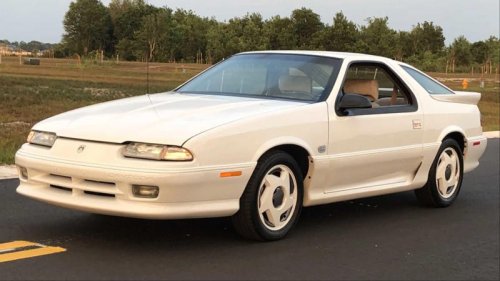
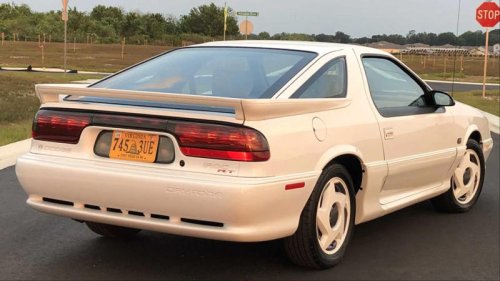
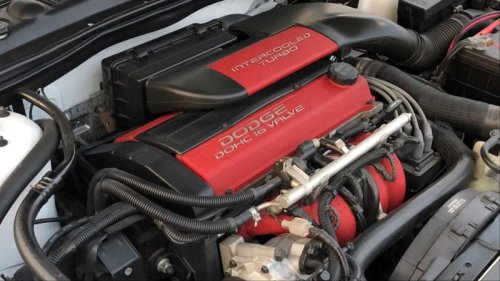
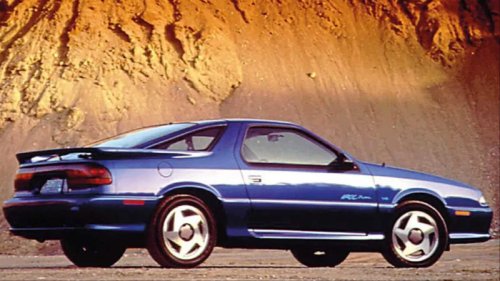
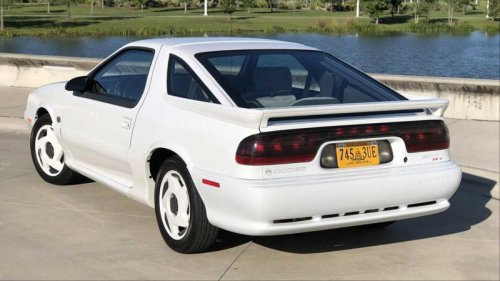
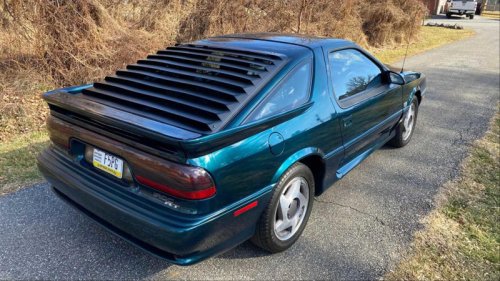
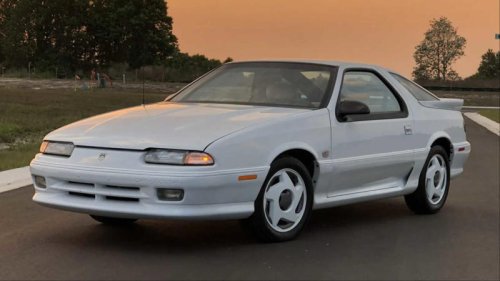



















In the early 1990s, American performance cars were still finding their footing. Big V8s were making a slow comeback, but most factory muscle had softened up. Imports were starting to pick up steam, and front-wheel drive was everywhere. It wasn’t the most exciting time, unless you knew where to look. One unlikely coupe hit the market with more power than anyone expected, a surprising spec sheet, and the kind of performance numbers usually reserved for higher-end cars.It didn’t wear a flashy badge or have a huge marketing campaign behind it. On the outside, it looked like just another boxy leftover from the late ’80s. But under the hood, it had serious engineering, a Lotus-tuned engine, and enough speed to shake things up in amateur racing. Enthusiasts who got their hands on one realized just how quick it was, and so did the people setting the rules.Instead of getting the recognition it deserved, this car ran into resistance. After dominating in showroom stock racing, it quietly disappeared from competition and eventually from the public eye. Today, it’s a hidden gem, one of the rare times a car was pulled back not because it failed, but because it succeeded a little too well. The Most Unexpected 224 Horsepower In America Bring a Trailer By the early ’90s, American muscle wasn’t in a great place. The Mustang GT was hanging on, the Camaro was a bit bloated, and the Corvette had gone soft. So when Dodge rolled out the Daytona IROC R/T in 1992, no one really expected much. It looked like a holdover from the ’80s: boxy, front-wheel drive, and wearing a name borrowed from a racing series that was past its prime. But under the hood, Dodge had a surprise waiting. The real story was the engine: a 2.2-liter Turbo III four-cylinder developed with help from Lotus. It made 224 horsepower and 217 lb-ft of torque, which was a lot for a front-drive coupe in 1992. Zero to 60 came in under six seconds, and it ran the quarter-mile in the high 14s. That's faster than a Fox Body Mustang GT or Z28 of the same year. This wasn’t just a quick Dodge; it was one of the quickest American cars you could buy without spending Corvette money. And the Daytona IROC never got the love it deserved.Bring a Trailer People who drove one knew it was special. It didn’t feel like a parts-bin car or a gimmick. It felt like something built with purpose. Dodge didn’t shout about it much, but the Daytona IROC R/T was a shot across the bow. Proof that Chrysler’s turbo-four platform could actually keep up with the V8s people loved to brag about.Even the name is pretty cool. In "Daytona IROC R/T," IROC stands for International Race of Champions. This was a series that brought together top drivers to compete in identical cars, mostly just to test the driver's abilities. The R/T part of the name refers to Road/Track, indicating a focus on sporty performance and handling. When Dodge Got Too Fast For The Rulebook The Daytona IROC R/T wasn’t just a surprise on the street; it turned heads on the track, too. In showroom stock and amateur racing series like SCCA and IMSA Firehawk, it dominated its class. Lightweight, quick, and surprisingly balanced, it had the kind of all-around performance that caught other teams off guard. You could pick one up from the dealership, swap on some race rubber, and start winning races.That kind of out-of-the-box dominance rarely goes unnoticed, and it didn’t take long for organizers to start rewriting the rulebook. The Daytona started getting hit with performance penalties and was eventually excluded from certain classes altogether. Not because it was cheating, but because it was simply too fast. The engine, the gearing, and the handling gave it an edge that nothing else in its category could touch.It wasn’t the first car to get sidelined for being too good, and it won’t be the last. But it was a rare moment where Dodge built a car so effective that it forced rule changes. A Lotus Engine In A Dodge Coupe? Bring a TrailerThe biggest “wait, really?” moment with the Daytona IROC R/T is its engine. It never had a V8 like everyone else, and it didn't need one. Chrysler had been experimenting with turbocharged four-cylinders for years, but the Turbo III was something else entirely. Co-developed with Lotus, it was a 2.2-liter DOHC 16-valve inline-four with forged internals, an intercooler, and a beefy Garrett turbo.Edmunds Only a few Chrysler vehicles ever got it: the Daytona IROC R/T and the Spirit R/T. Both were manual-only, enthusiast-targeted models with no automatic option and no apologies. The engine revved freely, made power across the band, and felt like nothing else coming out of Detroit at the time. It was modern, responsive, and overbuilt in a way you didn’t expect from early ’90s Dodge.Because the engine was hand-assembled and expensive to produce, Chrysler never made many of them. That’s part of why these cars are so rare today. But it also means the ones that survived have become cult classics. For gearheads who know what’s under the hood, the Turbo III is a badge of honor and a key part of why the IROC R/T is still talked about in performance circles. Front-Wheel Drive Muscle? It Worked Let’s get the obvious out of the way: yes, the Daytona was front-wheel drive. And for some people, that’s a dealbreaker when it comes to muscle cars. But in practice, the layout didn’t hold it back. With decent weight distribution and wide performance tires, the IROC R/T was surprisingly composed on the road and on the track. Daytona IROC R/T Fun Facts: The 2.2L Turbo III engine wasn’t mass-produced like most Dodge engines of the era. Each one was hand-assembled, making it a true oddball in Chrysler’s engine lineup. Fewer than 1,300 units of the IROC R/T were built in 1992. That’s fewer than most Hellcats, Vipers, and even some Ferrari models from the same era. Dodge offered the IROC R/T in Bright Red and Black only. No other color options were available, keeping it ultra-specific in both styling and identity. Bring a Trailer Torque steer was there, but manageable. The suspension tuning helped keep the car planted, and the steering had enough feel to let you push hard without second-guessing it. Unlike the twitchy rear-wheel-drive cars of the era, the Daytona had grip up front and confidence in corners. It wasn’t a burnout machine, but it didn’t need to be. It was fast with control, something muscle cars weren’t always known for.And in the real world, front-wheel drive meant the car was usable year-round. Snow, rain, or shine, it put the power down in a way V8 coupes couldn’t match in slippery conditions. Dodge didn’t try to sell it as a traditional muscle car, but in its own weird, turbocharged way, that’s exactly what it was: American muscle, just reimagined for a new era. Rarer Than A Hellcat, And Almost Forgotten Bring a Trailer Despite how capable the IROC R/T was, Dodge didn’t build many. Just around 1,280 units were sold in 1992, making it significantly rarer than almost any modern Dodge performance car. It was a short-run, high-performance oddity that quietly disappeared after just one model year, as the Daytona nameplate itself began to fade out. Classic.com Daytona IROC R/T Values: Average Sale: $12,550 Lowest Sale: $4,000 Top Sale: $20,900 Most Recent Sale: $20,900 Bring a Trailer Part of the reason it’s not more famous today is that Dodge never really marketed it like they should have. It wasn’t wrapped in flashy commercials or given a big motorsports push after it got banned. Instead, it became a footnote in Mopar history, just another name in the long list of things Chrysler did for a moment and then moved on from.But that rarity is part of what makes it so special now. The Daytona IROC R/T didn’t flop because it wasn’t good. It vanished because it was too good for the market it was in and the rules it had to follow. Today, it’s one of the most interesting and underappreciated performance cars to ever wear a Dodge badge. And like a lot of truly great things, it disappeared before most people even noticed.The early ’90s weren’t exactly a golden era for American muscle, which makes this car’s brief moment in the spotlight even more impressive. It showed that real performance didn’t have to come from a rear-wheel-drive V8 or a six-figure price tag. With the right engineering and a little boldness, even a front-drive Dodge coupe could outrun the usual suspects and force racing series to rethink their rules.Today, the few surviving examples are mostly in the hands of die-hard enthusiasts who have a deep understanding of their significance. You won’t see one at every car show, and that’s part of the appeal. It was fast, rare, and ahead of its time. And while the name might not show up in muscle car history books next to Mustangs and Camaros, those who know, know.