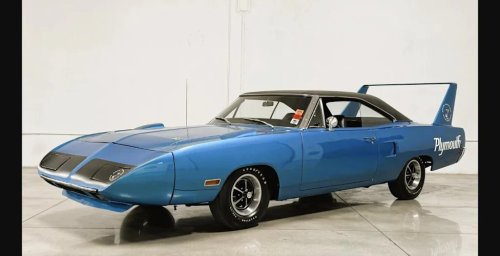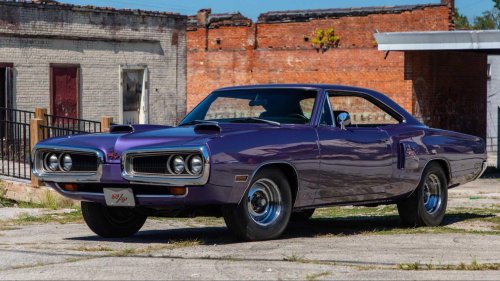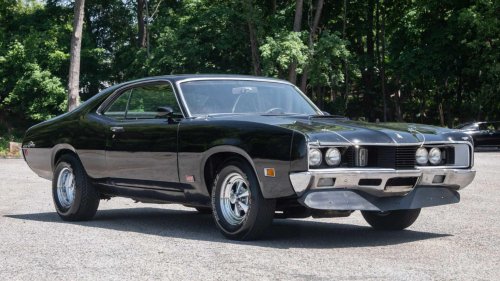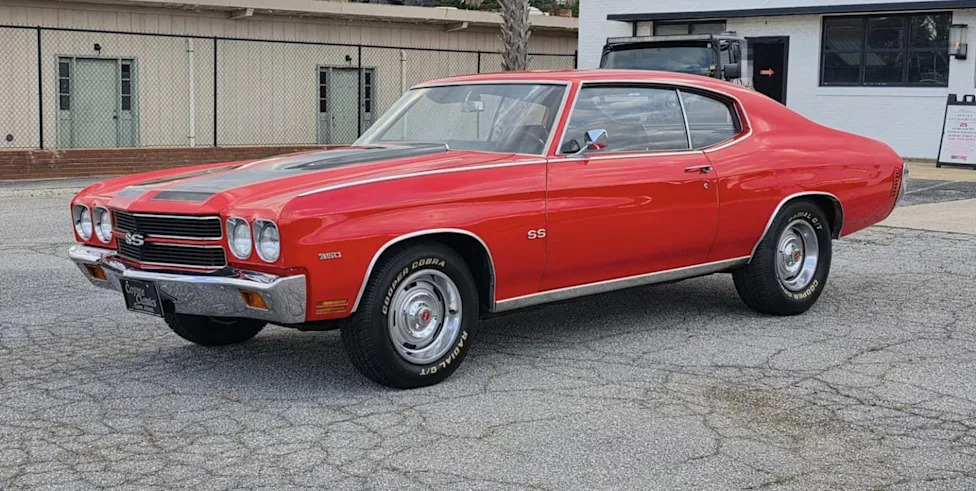
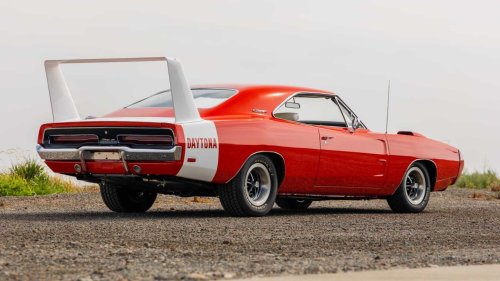
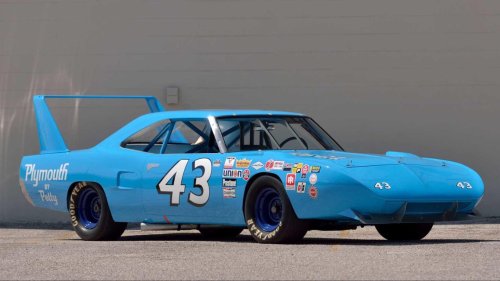
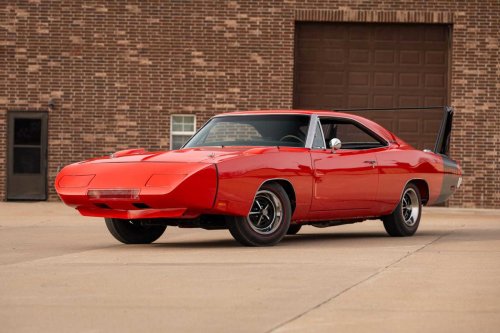


















Unfortunately, finding the key to success in areas like race car performance or other fields comes with experimenting a little. As a result, some cars don’t exactly get designed with the best style in mind. As a result, the public is often shocked as they form subjective opinions on vehicles like the Tesla Cybertruck. People either love its futuristic design or compare it to a trash can.However, one highly successful design for muscle cars doesn’t spur any arguments about its looks. It has been notoriously labeled as the ugliest car on the lot. The features were only placed on two car models for a brief period of time. While they unlocked significant racing innovations, they were rejected by the public. Drivers didn’t want to buy cars with this specific design, but racing would never be the same without the valuable lessons gained from foregoing aesthetic appeal to improve performance. Ugly Ducklings Can Win Hearts Plymouth-logoThere are plenty of examples of ugly cars that still delivered solid sales. For example, the AMC Gremlin is one of the ugliest compact cars in automotive history. The truncated design with a long nose, flat back, and bug-eyed front end didn’t help its style. But overall, the car was affordable and extremely popular. Now it’s seen as an adorable collectible.But the design that led to the undisputed ugliest car of all time was often hated from the start. Dealerships hated the two cars that adopted the design because they were impossible to sell. It didn’t matter that the muscle cars were winning races left and right. They were impossible to move off the lots. Decades later, enthusiasts are finally seeing the design in a different light as the cars that still have the racing enhancements are rapidly increasing in value. Their limited sales also contribute to their rarity among serious collectors. The Dodge Charger Daytona And Pontiac Superbird Are Notoriously UnattractiveMecumIn 1970, the Dodge Charger Daytona and Plymouth Superbird both had the classic aero warriors design, which includes a distinct nose cones and high rear wings. Both of these muscle cars only used the design for a year to meet NASCAR production requirements, as they were rejected by the public.Dealerships found the Charger Daytona and Plymouth Superbird to be impossible to sell because of their style. Oftentimes, the nose cones and spoilers were removed to convert them into more regular Road Runner cars. While the nose cones gained a reputation for scraping driveways, the massive rear spoilers hampered visibility.Dodge and Plymouth didn’t care that the cars were ugly, as they were designed to legalize their aerodynamic styles to dominate NASCAR competitions. They look a bit different as the Charger Daytona was shaped exclusively by a wind tunnel, and the Plymouth’s designers tweaked things to attempt to improve its style. The Dodge is referred to as the uglier model with a more pointed 18-inch nose and a more upright rear spoiler.The Superbird has a more rounded beak, and the rear spoiler leans further back. Both of the nose cones are sheet metal with fiberglass headlight covers, and the spoilers are aluminum. As a result of being more ghastly, only 503 Daytona models were produced. About 1,290 Superbird models were sent to dealerships. The Winged Warriors Are Winners MecumThese muscle cars are homologation models, designed to dominate the racetrack with wind management modifications. Also, the fenders were cut out under the scoops to reduce drag. The 58-inch-wide spoilers were tall enough to reach clean air. They improved stability at high speeds over 200 mph. Handling was improved to keep the car planted on the track. Thankfully, the large design allowed the trunk to open, maintaining a bit of practicality.While the Plymouth Superbird looked better than the Dodge Charger Daytona, it was notably slower despite experiencing racing success. It was about one to three miles slower than the Daytona and had more drag. Both of which are significant disadvantages in races.In 1970, the Daytona Charger and Superbird accounted for 38 wins, and Bobby Isaac won a championship behind the wheel of a Daytona. Plus, the Dodge Daytona Charger was the first NASCAR vehicle to break 200 mph.Both cars were available with the 440 cubic-inch 7.2-liter V8 engine with 375 hp and 480 lb-ft of torque and the 7.0-liter HEMI V8 engine with 425 hp and 490 lb-ft of torque. Also, the Superbird had an available Six Pack with 390 hp and 490 lb-ft of torque. The engines were paired with a heavy-duty four-speed manual transmission or a three-speed automatic transmission. The Winged Warriors Changed NASCAR Forever MecumBeing hard to look at didn’t matter at NASCAR speedways. The success of the winged warriors changed the way muscle cars were designed. The 1970 Dodge Charger Daytona and Plymouth Superbird proved that aerodynamics are just as important as power. This kick-started the aero wars as teams began focusing on drag reduction and solving high-speed lift problems.With record-breaking levels of down force at high speeds, tires benefited from enhanced grip on new high-banked ovals. Other automakers, such as Chrysler and Ford, turned to the wind tunnel to develop rivals. However, the muscle cars were also seen as incredibly dangerous.Unfortunately, the death of Talmage ‘Tab’ Prince occurred while he was driving a Dodge Daytona in a qualifier match as one Mopar struck another. In 1971, safety concerns caused NASCAR to restrict “aero cars” to a 305 cubic inch engine limit, which was reduced from the 426-inch limit. This ended the competitive lifespan for the winged warriors.Those who didn’t reject their style in 1970 could find themselves in a bit of luck. The muscle cars can be found on auction sites, going at rates from as low as $50,000 to over $300,000. Also, the rarest models have exceeded one million dollars. The ugly ducklings have matured into valuable swans, even if their nose beaks and rear spoilers might still be tough on the eyes.