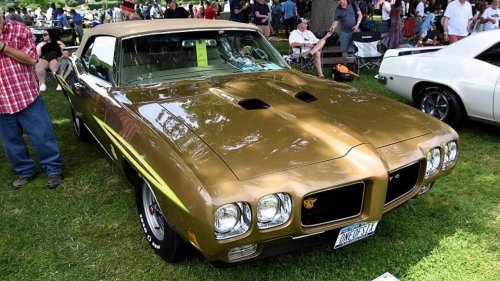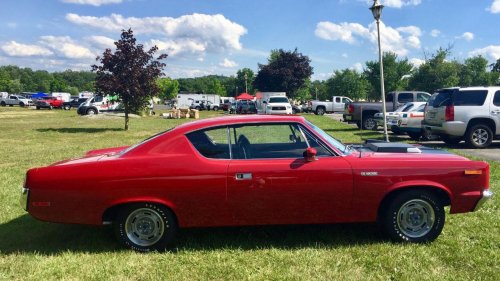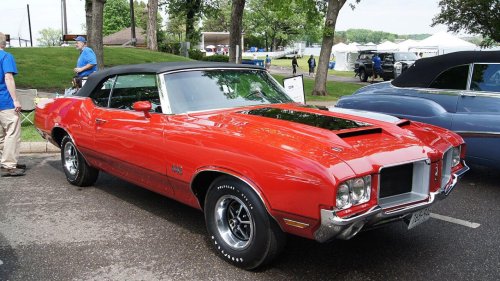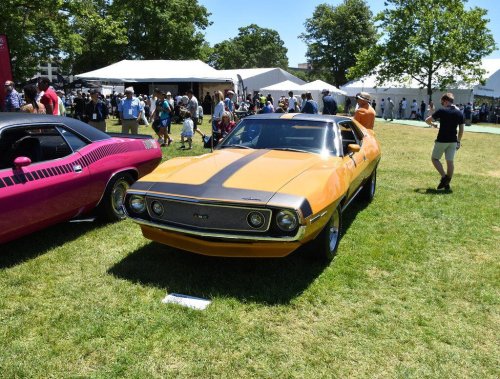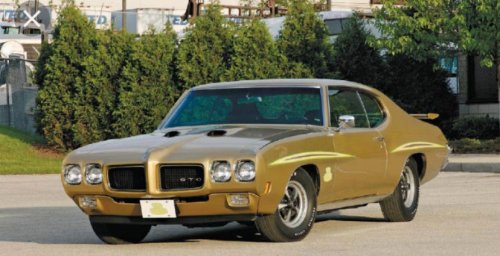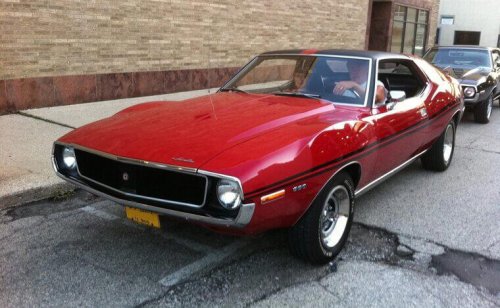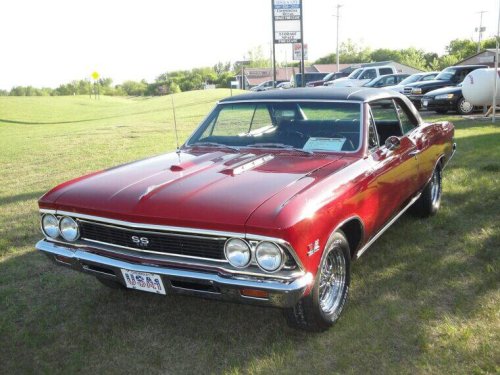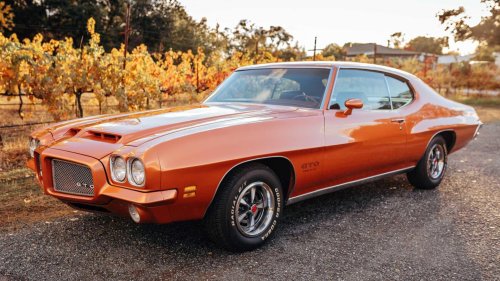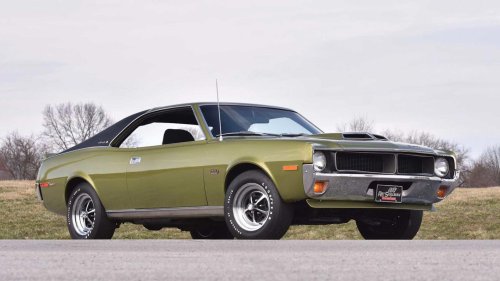


























When talk turns to classic factory muscle cars, you might think the banter will soon delve into matching numbers, rare factory parts, production numbers, and so on, but the pursuit of pure restoration is just one segment in the realm of muscle. Meanwhile, plenty of fans of Detroit’s factory performers are more interested in making updates and improvements to their favorite models. From there, things can escalate steadily. This week’s virtual window shopping on the collector car marketplace at Hemmings.com yielded a sampling of classic muscle cars, all deviating from factory specs, but in a tiered arrangement of intensity. We honed in on a mildly tweaked ’69 AMX, then moved to a ’70 GTO that looked mostly stock at first, while concealing some key upgrades. Then we happened upon a ’65 Chevelle that fully embraces the “Pro-Touring” movement that took off in the 1990s and continues today. Take a look at our findings and do some perusing of your own through the varied levels of muscle machines currently being offered at Hemmings.com. 1969 AMC AMX Modified Muscle Cars Come In Varying Intensities At Hemmings American Motors was shaking things up in the late ‘60s, trying to shed its uber-conservative image as a maker of cars that were known for thrift and not much else. The Javelin was the company’s commendably viable entry into the burgeoning “pony car” field, but taking that model and shortening it into the two-seat AMX was a surprisingly radical move for normally staid AMC. And it wasn’t just for show: Optioning an AMX with the Go-Package brought the high-performance 390-cu.in. V-8 along with suspension upgrades, front disc brakes, and twin “over the top” racing stripes. The styling of the early AMX has held up well through the years, and can still spark intrigue today whenever one of the two-seaters is seen by someone for the first time, evoking excited questions about its origins. This example of the 1969 AMC AMX has the desirable Go-Package along with a four-speed manual; it also has power assist for its front disc brakes as well as power steering. Though the Castilian Gray paint color is said to be factory spec, the red-and-black upholstery is a custom touch, and seller also points out that the headers and exhaust system are aftermarket upgrades. There is also an HEI-style electronic ignition distributor and an electric fan. So, while it does have some modifications, this AMX hasn’t strayed too far from American Motors’ specs for this image-bending sports model. The seller says the car needs nothing and advises to “Just drive it and have fun,” as AMC intended. 1970 Pontiac GTO Though the ’70 GTO is a model that has often been described as looking fast even when standing still, this one is somewhat subtle, yet it still exudes the broad-shouldered muscular attitude that made Pontiac’s Great One a legend. The Granada Gold paint and black vinyl top are major contributors to this car’s more subdued approach, but that gold really lights up in the sunlight. This GTO also has an inadvertent Hollywood link in that it appears very similar to the one Paul Newman drove in the movie, “Slap Shot.” Mild-mannered appearances aside, this 1970 Pontiac GTO is factory equipped with a four-speed manual backing its 400-cu.in. V-8, and that engine, which is said to be original to this car, was rebuilt with some upgrades. It now runs an aluminum intake manifold topped with Holley Sniper electronic fuel injection that is concealed beneath the factory dual-snorkel air cleaner. It also uses Ram Air-style exhaust manifolds and a custom exhaust system. The seller says the 400 “may have an upgraded camshaft” but from the sound of the healthy “chop” that can be heard at idle in some of the linked videos, we’re going to say it almost certainly does. It’s also got 15-inch chrome-plated Rally II-style wheels wrapped in 60-series radials in place of the original 14-inch Rallys and bias-plies this GTO originally had. Desirable factory options include front disc brakes and A/C, both specified on the PHS Historic Services copy of the original invoice. This car was sold new in California and resides there today, and the undercarriage shots have the look of a car that’s lived in a dry climate. A ’70 GTO doesn’t need to be painted in a bright color to get attention, and this one looks period perfect in metallic gold. It also has the right gear to make a proper showing at a classic car event or to hit the highway for a road tour. 1965 Chevrolet Chevelle Malibu The term “Pro Touring” was coined back in the ‘90s to describe muscle-era cars that had been upgraded to improve all aspects of vehicle performance, rather than the traditional focus on more power for better acceleration. A proper Pro-Touring car starts with a classic muscle model—the first-generation Camaro was the original poster child for the movement—and incorporates updated suspension gear and larger, more modern brakes, tucked behind large-diameter wheel/tire packages rolling the latest in contemporary performance rubber. A low-slung stance hunkering the body down over those oversize, low-profile tires was a key element of the genre’s look from its inception. In more recent years, the term “restomod” has become popular, and while it too refers to updated classic vehicles, a true Pro-Touring car is one that has been built with road-course capability as a significant goal. This 1965 Chevrolet Chevelle embodies all of that, including the builder’s choice to leave the body and trim mostly factory stock. Inside, there’s more factory trim, but a closer look reveals aftermarket gauges inside a stock dash bezel, aftermarket sport seats clothed in period-style upholstery, and a modern aftermarket steering wheel on a tilt column; four-point harnesses are installed for front and rear occupants. The undercarriage images show the Detroit Speed suspension components, including coil-over shocks and large-diameter anti-sway bars. The six-piston Baer brakes are also visible, and the custom 3-inch stainless exhaust system with X-pipe looks artfully symmetrical between the frame stiffening braces. Under the hood is also very tidy, and while you might expect to find an LS swap here, there’s a very traditional 327-cu.in. small-block with iron heads and a four-barrel carb. It’s backed up with a Tremec six-speed.