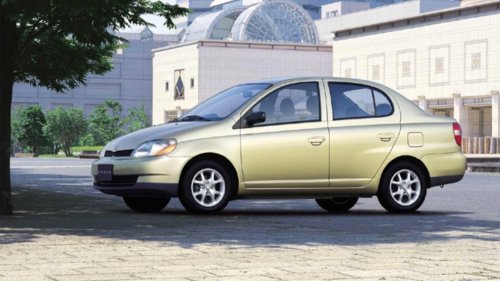
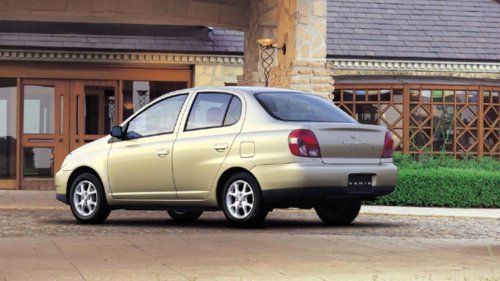
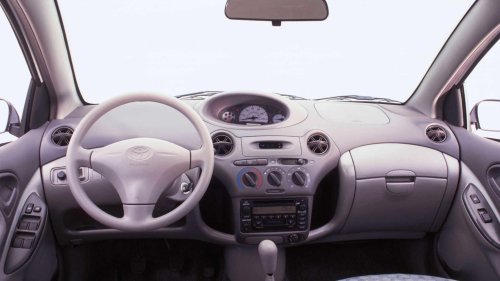
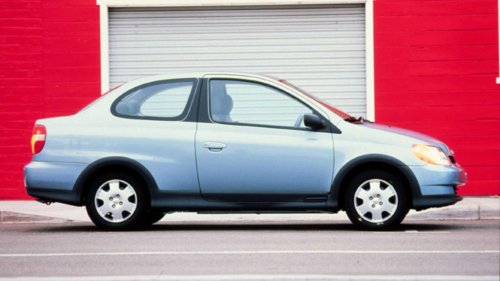
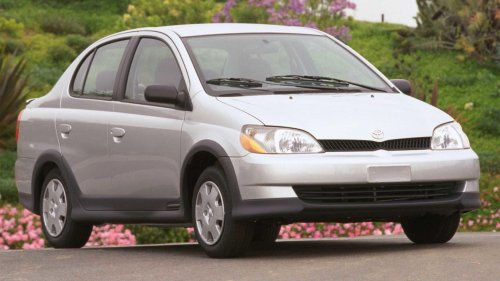
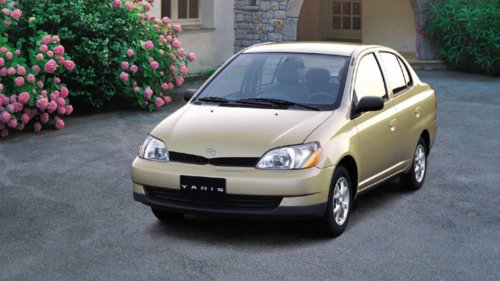



















A car's first year on the market often dictates its future. A slow-seller like the Dodge Hornet, introduced as a compliance car, might be canceled almost immediately, while a winner, like the Toyota RAV4, can stick around for decades. Then there are cars like the Toyota Echo, a budget-priced, Millennium-era compact that sold 50,000 units in its first model year, but never made it out of the '00s.The Echo was affordable, and it was popular, but it almost seems as if Toyota couldn't wait to wrap up the first generation and drop the model forever. So, a few questions worth asking. One, why did Toyota dump the Echo? Two, was it a good car, or just cheap? And three, is it worth buying one today? Let's find out. The Toyota Echo Was Small And Cheap, But Capable Toyota The Toyota Echo was sold elsewhere as the Toyota Platz, or as the Toyota Yaris. Here in the US, we got the four-door, plus an exclusive two-door version of the car, with a 1.5-liter engine and a standard five-speed manual transmission, although a four-speed automatic option was available for an extra $800.Toyota was able to keep the base price down to just $9,995 for a two-door manual model by stripping this thing to the bone. Almost anything you could want in a compact would cost you extra, from the $270 power steering option to the $925 air conditioner. You could outfit a Toyota Echo to the point of basic comfort while keeping the MSRP under $15,000, but this car was a cheapskate's delight if all you wanted was "something that'll get me from point A to point B."The Echo hit 60 mph in around eight and a half seconds, which wasn't terrible for a four-pot compact at the time, and roughly matched its pricier competitors like the Dodge Neon. "Adequate" Is The Word Of The Day For The Toyota Echo Toyota Toyota Echoes almost seemed to wear their economy car status on their sleeves. The car's skinny tires gave its one-ton body the appearance of a compact that could roll away in a stiff breeze. On the other hand, reviewers liked the smooth-shifting manual transmission, and it was more fuel-efficient than some of today's compacts, at a combined average of 32 miles to the gallon.In retrospect, it's not hard to see why nobody talks about the Toyota Echo today. The car was adequate, affordable, and not without its charms. But, a quarter-century later, all that really adds up to is "unremarkable." A dirt-cheap compact with a surprisingly smooth manual transmission is a bit of a gem when it's brand-new, but it's not the kind of car enthusiasts go hunting for over 25 years later. Why Did Toyota Scrap The Echo? Toyota The Toyota Platz on which the Echo was based stayed in production until 2012, for the Chinese market, and the Yaris nameplate is still in use today. Meanwhile, the North American version of this car never made it past the 2005 model year. The easiest way to explain this may be to simply go over the sales numbers.You could say that the Echo peaked too soon, attracting over 10,000 early birds in 1999, selling nearly 50,000 units in its first model year, and struggling to move a piddly 1,544 units in the home stretch.But, it's kind of a chicken-or-the-egg thing, because Toyota's loss of confidence in the car played a part in the brand spending very little money to advertise or refresh the car. We might not name the Echo as one of the nameplates we'd be most eager to bring back, but it's entirely possible that we could be talking about the 2026 Toyota Echo right now had the brand not gotten cold feet. Echo Drivers Skewed Older Than Toyota Liked Toyota In the early '00s, Toyota was targeting young adult buyers. A typical Echo driver was in their early forties, according to a J.D. Power demographic report. This was apparently a turn-off for the brand,Take a look at Toyota Echo TV commercials on YouTube, you'll find almost nothing past the 2003 model year, while early ads feature hip, young drivers and passengers, trippy, Matrix-inspired visuals, and funky hip-hop music. It's clear what Toyota wanted out of the Echo, and it's clear that the automaker simply threw in the towel when it realized that these cars were more likely to be driven by college professors than college students.In our view, it's not quite fair to call the Toyota Echo a total failure. Nearly 50,000 sales in the first model year isn't our idea of a flop. Rather, Toyota simply gave up on this car because it appealed to the wrong demographic. Toyota wanted a hip, affordable compact for first-time car-buyers, but the Echo held little appeal for the 20-something crowd due to its overwhelming plainness. That plainness would be a plus for older, more pragmatic buyers, but it seemed to take all the thrill out of car ownership for Millennial motorists. Is A Toyota Echo Worth Buying Today? Toyota A quarter-century ago, the Toyota Echo's appeal was that it was a decent car for the money. Today, the Echo's appeal is the same; it's a decent car for the money. It's a Toyota, so it's fairly reliable and low-maintenance. RepairPal estimates an annual maintenance cost of just $336, ranking it among the cheaper used cars to maintain, with the following accounting for the most expensive common fixes. Cylinder head replacement $3,711 - $4,816 Head gasket replacement $1,444 - $1,893 Air conditioning expansion valve replacement $294 - $416 Blower motor replacement $261 - $278 Window regulator replacement $243 - $356 According to CarComplaints, the 2003 Echo is the most troubled model, owing to a few engine complaints. One driver reports trouble starting at 106,900 miles, but this was solved with a simple $130 injector cleaning. Another driver reports engine stall when idling, at 161,600 miles.The main problem you're going to encounter when shopping for a Toyota Echo simply comes down to the car's age. These compacts have been on the road longer than some of our readers have been alive, and they're cheap commuters, not cherished classics. People tend to drive cheap cars like they're disposable, and, while Toyotas may be among the most reliable cars ever made, an Echo with close to 200,000 miles on the odometer may be simply too much at any price, as it's likely to have suffered years of neglect. The Toyota Echo Is Easy To Recommend, But Hard To Find With Low Miles Toyota There's no telling what will be available when you're ready to shop for a Toyota Echo of your own, but the freshest model we could find was a 52,271-mile 2003 two-door, selling for $4,990 in Pennsylvania. The second-lowest mileage we could find was 109,966 miles on a 2001 model in Illinois selling for $3,600. Most Echos are going to have a bare minimum of 120,000 miles on the odometer.On the other hand, these cars are typically selling for less than $4,000. If you just need something to get you where you're going, there's nothing wrong with buying a high-mileage model (say, 100,000 to 150,000 miles) and driving it until the wheels fall off. You could do a lot worse when it comes to dirt-cheap 2000s beaters.In other words, the Toyota Echo is essentially repeating history on the used market. It was nobody's dream car in 2000, and it's nobody's dream car today. But it's still an attractive, wallet-friendly option if you can't afford to be picky at the moment.