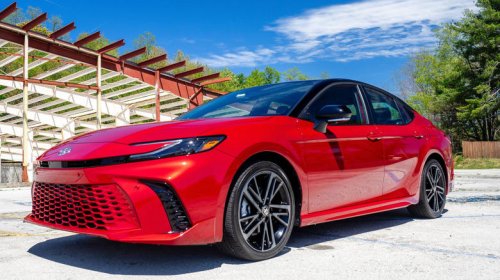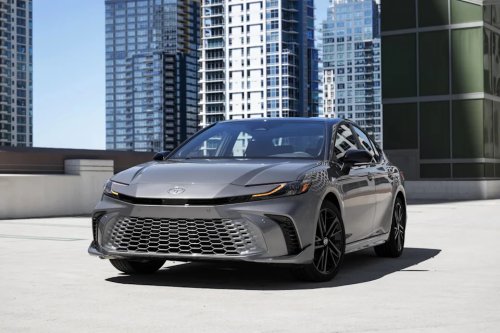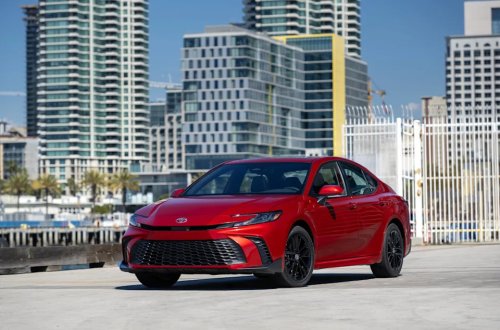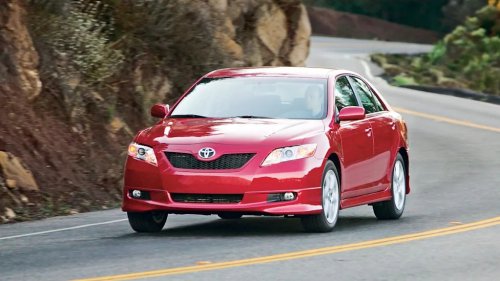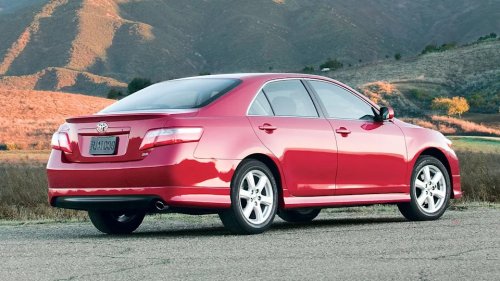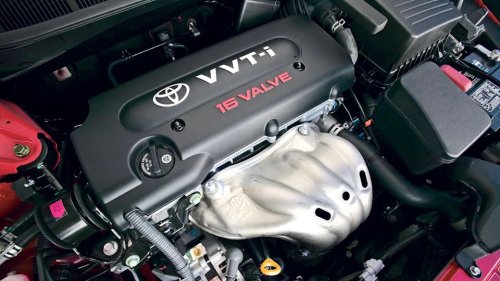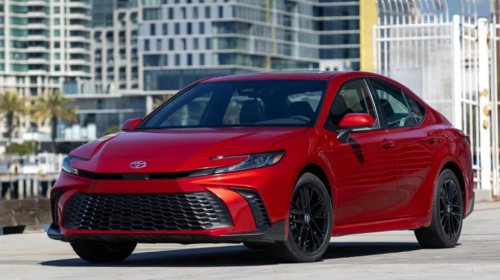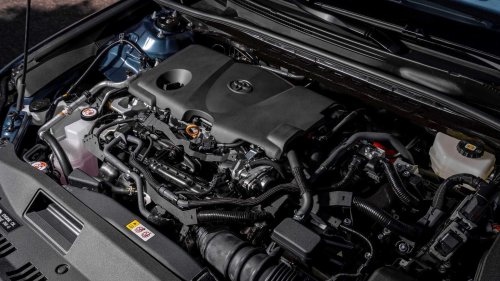
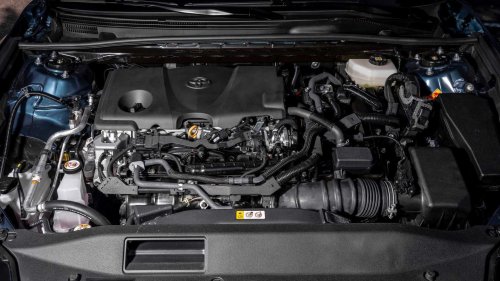
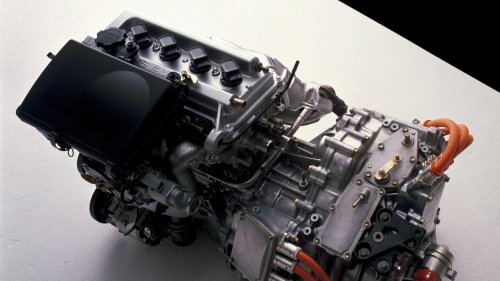
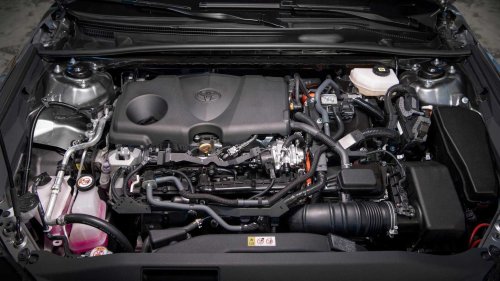
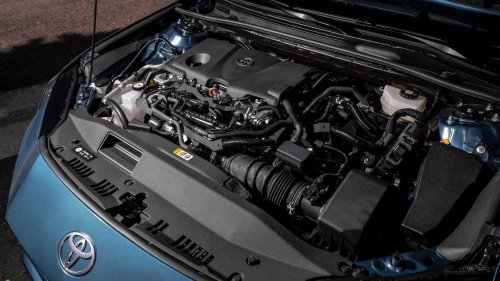



















Some engines are simply better made than others. Of course, this is a subjective statement, as someone's definition of "better made" can differ from someone else's. However, when it comes to sheer longevity, facts don't lie. Throughout automotive history, some engines have been famed for their penchant for reliability and long-lasting nature. Think of mills like Ford's 4.6-liter Modular V8 and AMC/Jeep's 4.0-liter straight-six.We can't have an engine reliability talk without involving Toyota, however. Even today, while many brands are slipping when it comes to dependability, the Japanese automaker continues to shine in reliability ratings, especially when it comes to its engines. Its 2.5-liter hybrid inline-four found within the 2026 Toyota Camry is a great example, as it boasts a slew of attributes that have helped it become one of the most long-lasting engines of the modern era. Meet The 2026 Toyota Camry's Bulletproof Engine ToyotaUnder the hood of the 2026 Camry lies its most prized piece of reliable engineering. It's called the A25A-FXS, and its roots lie in Toyota's Dynamic Force Engine family. The Dynamic Force dynasty traces its roots back to 2017, and it consists of inline-three, inline-four, and V6 powerplants. The A25A-FXS, in particular, entered the fold in 2017, and has been used in a slew of Toyota and Lexus models since. It's even been used by Mazda in its CX-50 Hybrid model.The Toyota Camry Hybrid adopted the mill in its debut year. For USDM models, the A25A-FXS is the only powerplant offered throughout the entire Camry lineup, as the nameplate is solely of a hybrid variety as of 2025, when the XV80 generation debuted. The A25A-FXS features a slew of aspects that help it earn its near-peerless penchant for reliability. In addition, it also boasts an impressive thermal efficiency rate, a key attribute for hybrid powertrains. It Boasts Advanced, High-Efficieny Engineering ToyotaThe crux of the A25A-FXS's engineering — along with the sort seen across the entire Dynamic Force Engine family — is meant to allow for an engine that's efficient, durable, and fun to drive. In order to achieve this, the A25A-FXS boasts a few key aspects that help it deliver both efficiency and enjoyment in healthy amounts.It all starts with the mill's intake. Toyota designed the A25A-FXS' intake manifold to take advantage of something called "tumble flow", which refers to how air moves through the motor's intake. The cylinder head is also optimized for aiding the intake's tumble flow. By combining the cylinder head and intake manifold's role in the mill's airflow, the mill is able to use its air more efficiently, which leads to lower fuel consumption.In addition to the tumble flow tinkering, the A25A-FXS also takes advantage of a steeper valve clamping angle. In other words, the degree to which the intake and exhaust valves sit opposite each other in the cylinder head. The A25A-FXS uses a 41-degree angle, 10 degrees steeper than many of Toyota's previous designs. It also boasts an undersquare design, wherein the engine's stroke is longer than the piston bore is wide, which helps the powerplant produce more torque, leading to less engine stress.Its water pump is also designed to optimize thermal efficiency by tailoring its operation to the engine's overall temperature. Because of this, the A25A-FXS is designed to reach operating temperature quicker than most other engines, as an up-to-temp engine runs more efficiently than a cold one. The Atkinson Cycle Toyota Another hallmark of the A25A-FXS's efficiency is its use of the Atkinson cycle, albeit a simulated version. An Atkinson cycle engine is categorized by its focus on overall efficiency above all else. However, this does mean that Atkinson cycle engines, the A25A-FXS included, are not typically known for power output. As for how the A25A-FXS earns its Atkinson cycle label, the mill keeps its intake valves open longer than normal, resulting in a change of airflow through the intake manifold.The goal behind designing a mill in this way is to reduce combustion chamber pressure to a point where it's equivalent to atmospheric pressure. In turn, this means that all energy from the combustion cycle has been utilized; the cornerstone of an engine that uses its fuel efficiently. It's Made Of Tough Stuff ToyotaHaving an engine that operates efficiently means nothing if the materials used to build it are sub-par, and Toyota knows this. In order to give the A25A-FXS enough bite to back up its bark, the Japanese automaker baked a healthy dose of strength into its physical recipe. It all starts with its engine block, which is cast from a special aluminum alloy, which allows the engine to be light while also maintaining a good bit of strength. Its cylinder head and piston heads are made from the same aluminum alloy.Moving further inside the mill, you'll find cylinder liners sporting an iron coating, which helps with heat absorption. Iron coatings are also extremely wear-resistant, meaning the A25A-FXS's pistons will have to work long and hard to score up its cylinder walls to the point of damaging them. Its crankshaft and connecting rods are forged, rather than cast, which helps it last longer without any potential damage or wear.Even the smaller, seemingly insignificant components are engineered to last forever. For example, its D-4S fuel injection system –— which allows for both direct and port injection – is made from precision-machined steel and ceramics. Even the plastics used throughout the mill are performance-grade, meaning they'll last longer than standard types. To top it all off, the A25A-FXS's valves are made from hardened steel, and it boasts a timing chain, rather than a wet belt, a huge plus for longevity. It's Extremely Popular Via: ToyotaThe last point is its sheer popularity. While being well-known doesn't exactly translate to being long-lasting – think of engines like the Mazda 13B Wankel rotary engine and the Subaru 2.5-liter turbocharged flat-four – it does help in one key way: part availability.Because the Camry's A25A-FXS is part of the Dynamic Force engine family, parts are widely available and, in some cases, interchangable with other motors that belong to the same engine group. Because of this, you'll hardly ever have to worry about repairs being long-winded or expensive.Another thing to keep in mind is service technician skill level. Because the A25A-FXS is popular in its own right – and the Toyota Dynamic Force Engine family is well-known, too – loads of service techs are bound to be familiar with the mill. This means that, on the whole, repairs will be simpler to complete, and more likely to last.After all, wouldn't you be more comfortable working on a well-known and simple engine like the A25A-FXS than something like a BMW S63 V8?