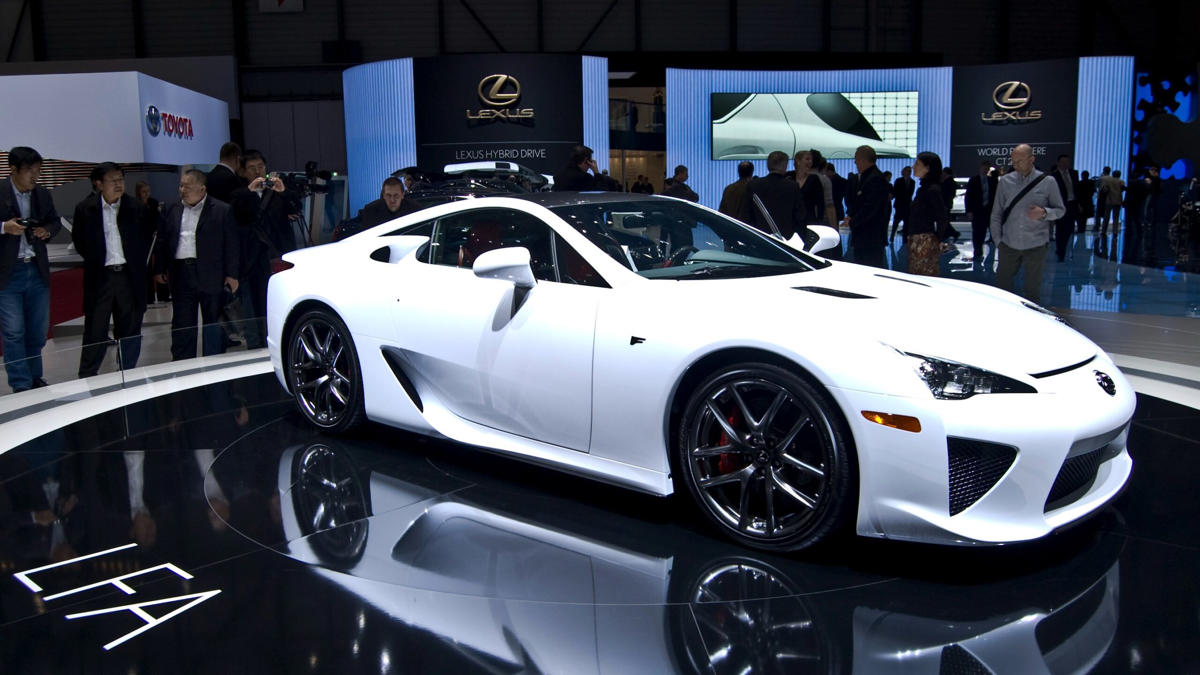
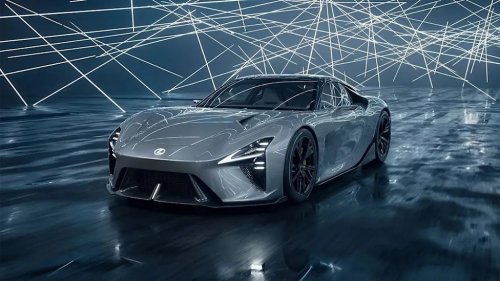
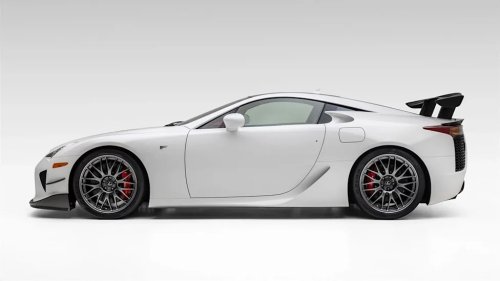
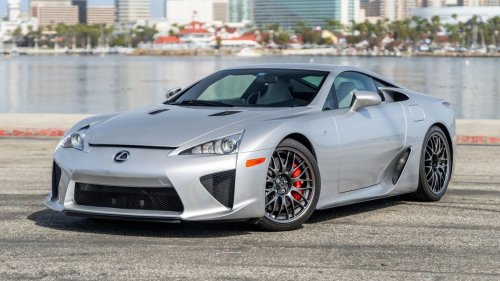
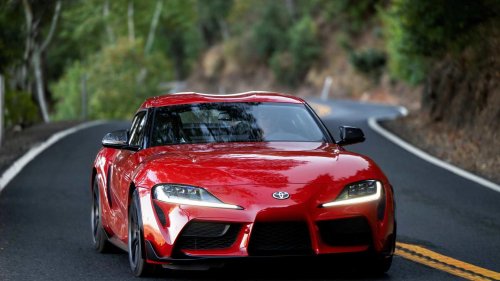
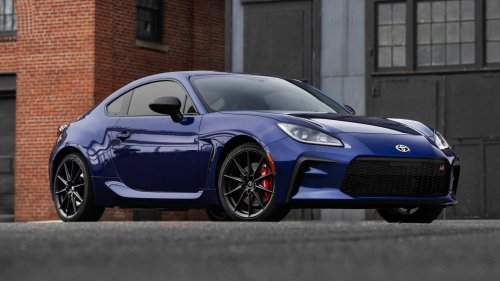
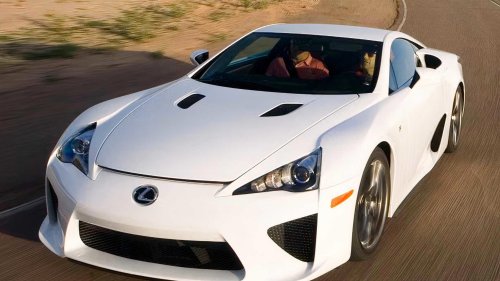
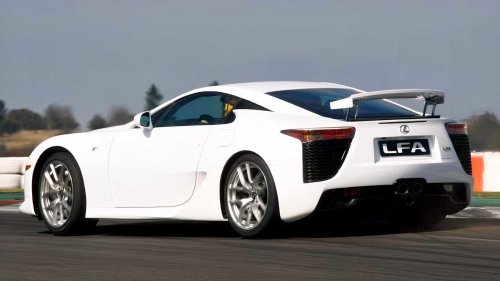
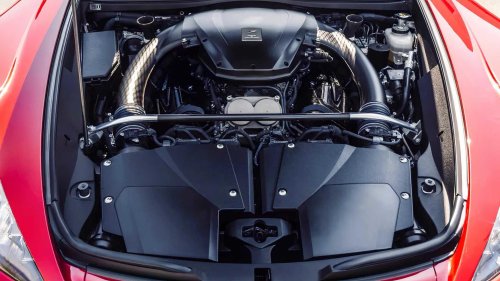
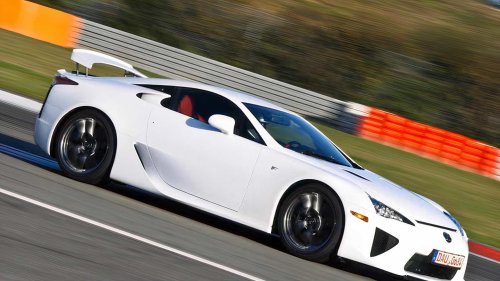
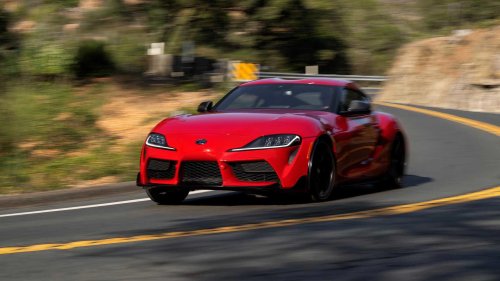
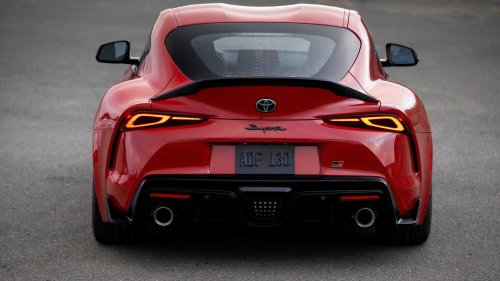
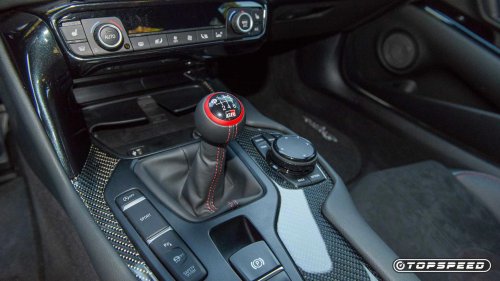
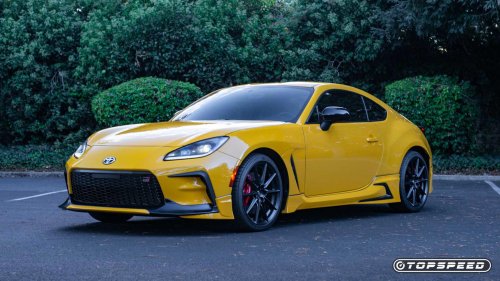
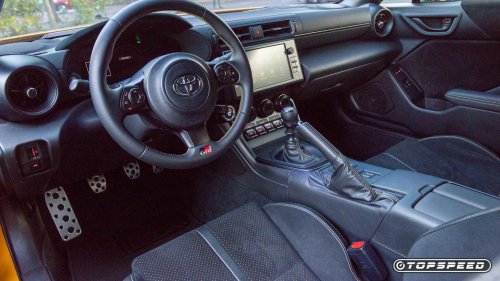
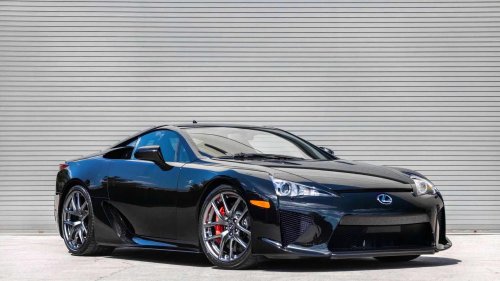
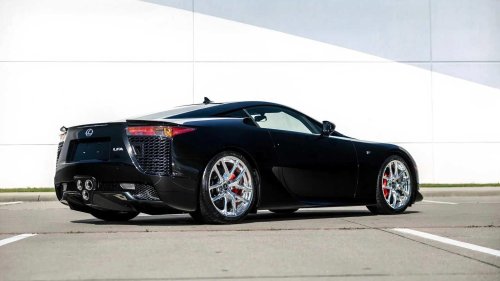
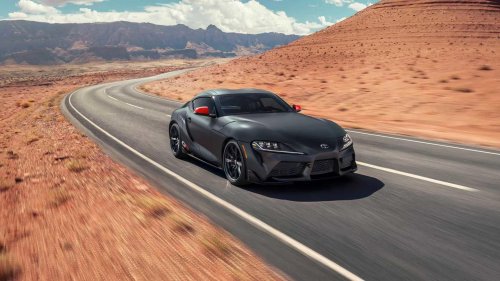
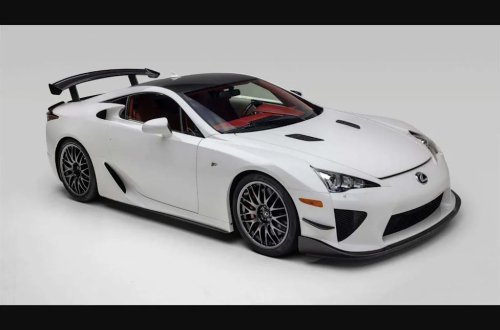
For years, enthusiasts believed there was an unavoidable compromise at the center of the sports-car world. If you wanted the emotional intensity of an Italian exotic, the screaming engine note, razor-sharp throttle response, and sense of mechanical theater that made every tunnel feel like a Formula 1 main straight, you also accepted punishing ownership costs and questionable long-term reliability. Passion came packaged with financial anxiety. Japanese performance cars traditionally occupied the opposite end of the spectrum. They earned reputations for precision engineering, durability, and everyday usability, but rarely for the kind of emotional drama associated with Ferrari or Lamborghini. They were admired logically more than they were desired emotionally. But over the last two decades, Toyota and Lexus quietly reshaped that conversation.From limited-production halo cars with Formula 1-inspired engineering to affordable rear-wheel-drive coupes that prioritize analog feedback over outright speed, Toyota’s performance philosophy has evolved into something far more ambitious than simple reliability. The company discovered how to build sports cars that deliver genuine emotional engagement without saddling owners with the unpredictable costs traditionally associated with exotic machinery. The result is a lineage of driver-focused machines that prove you no longer need an Italian badge to experience automotive soul. The Japanese Sports Car That Quietly Targets Ferrari-Level Emotion ToyotaModern performance cars have become astonishingly fast, but many have also become emotionally distant. Turbocharging, artificial sound enhancement, and increasingly digital driving experiences have created sports cars that dominate spec sheets while struggling to create memorable sensations behind the wheel. That’s where Toyota’s modern performance philosophy separates itself. Rather than focusing exclusively on horsepower figures or Nürburgring headlines, Toyota’s enthusiast-focused vehicles emphasize something harder to quantify: connection. Steering feel, throttle response, chassis communication, weight balance, and engine character all take priority alongside outright speed.This approach explains why Toyota’s modern sports cars often feel more special than their numbers suggest. The current-generation Toyota GR Supra demonstrates this philosophy particularly well. Despite its BMW-sourced architecture and turbocharged inline-six engine, Toyota engineers spent years recalibrating the car’s steering, suspension geometry, differential tuning, and throttle mapping to create a distinct personality. The result is a coupe that feels compact, responsive, and alive beneath the driver in ways many heavier modern performance cars do not. The Same Philosophy Appears In The Toyota GR86 Toyota Instead of chasing massive power figures, the GR86 focuses on lightweight balance, naturally aspirated responsiveness, and rear-wheel-drive playfulness. It delivers the kind of analog interaction that has become increasingly rare in modern performance cars, rewarding driver skill rather than overwhelming it with technology. Even the Toyota GR Corolla embraces this driver-first mindset. Its rally-inspired all-wheel-drive system, short gearing, and aggressive chassis tuning prioritize engagement and energy over refinement alone.But Toyota’s pursuit of emotional performance reached its peak when the company decided to build a true halo supercar, one engineered not merely to compete with European exotics on paper, but to challenge them emotionally. That car would ultimately become one of the most celebrated drivers’ machines of the modern era. Lexus LFA: Yamaha’s V10 Collaboration That Redefined What A Supercar Sound Should Be Lexus The heart of the Lexus LFA’s magic came from one of the most unusual collaborations in automotive history. Toyota partnered with Yamaha to develop the LFA’s engine acoustics and performance character. Yamaha’s expertise wasn’t limited to motorcycles and pianos. The company had decades of experience tuning high-performance engines for Japanese automakers. The resulting 1LR-GUE engine became an engineering masterpiece. Unlike Ferrari’s naturally aspirated V12 engines of the era, the LFA’s V10 prioritized compact dimensions and ultra-fast rotational response. Lexus engineers used titanium connecting rods, forged aluminum pistons, and dry-sump lubrication to reduce mass and improve high-rpm durability. The sound became legendary almost immediately.Yamaha’s musical division reportedly helped tune the intake resonance and exhaust harmonics to create a distinctive crescendo as revs climbed. The result wasn’t merely loud. It was layered and mechanical, transitioning from metallic induction noise at low rpm to a Formula 1-inspired shriek near redline. Real-World Reviews Confirm Its Emotional Impact LexusMotor1 described the LFA as “much more Ferrari than Toyota,” while Car and Driver’s comparison against the Ferrari 599 HGTE highlighted the Lexus’ sharper throttle response and more communicative personality. That comparison mattered because the 599 HGTE was no ordinary Ferrari; it was Ferrari’s hardcore handling package for its V12 grand tourer. Yet the Lexus repeatedly impressed testers with its precision. The chassis played a major role in that impression. Early in development, Lexus planned to use aluminum construction before switching to carbon fiber-reinforced polymer after realizing that traditional materials could not meet the car’s performance targets. Lexus ultimately developed its own carbon-fiber weaving machinery in-house rather than outsourcing the process. That obsessive engineering extended to the transmission.Bring A Trailer Critics often point to the LFA’s single-clutch automated manual gearbox as one weakness compared to modern dual-clutch systems. But context matters. During aggressive driving, the gearbox contributed to the car's raw, mechanical feel. Every shift delivered a physical jolt that reinforced the sense of occasion.Lexus The Nürburgring Package elevated the formula even further. Limited to just 50 units, the LFA Nürburgring Package increased output to 562 horsepower, revised suspension tuning, added aerodynamic upgrades, and cut shift times by nearly half. Lexus claimed a Nürburgring lap time of 7:14.64, placing it among the fastest production cars of its era.Today, collectors increasingly recognize the LFA as one of the defining analog supercars of the 21st century. Auction values have surged well beyond original MSRP, with pristine examples regularly commanding over $1 million. Ironically, the car once criticized for being too expensive now looks undervalued compared to many modern exotics that lack its engineering purity. The A90 Toyota Supra: BMW Engineering Meets Toyota Calibration For Everyday Performance Toyota The modern Toyota GR Supra occupies a very different space from the LFA, but it still reflects Toyota’s understanding of emotional driving dynamics. When Toyota revived the Supra nameplate, controversy arrived immediately because of the BMW partnership. Enthusiasts fixated on the shared architecture with the BMW Z4 and the use of BMW’s turbocharged B58 inline-six engine. But focusing solely on the parts-sharing misses the bigger story.Toyota engineers spent years recalibrating the Supra’s steering, suspension geometry, differential tuning, throttle response, and chassis balance to create a distinct driving personality. Former Toyota CEO Akio Toyoda reportedly insisted the car needed its own identity rather than feeling like a rebadged BMW. The Results Became Clear Once Independent Tests Emerged ToyotaMotorTrend testing showed the six-cylinder Supra capable of 0-60 mph in under four seconds, placing it firmly within modern sports-car territory. More importantly, reviewers consistently praised its short wheelbase agility, responsive front-end behavior, and approachable handling balance. Unlike the LFA, the Supra isn’t trying to rival Ferrari emotionally. That’s not its mission. Instead, the Supra captures a scaled-down version of the same philosophy: accessible performance wrapped in a car that feels special to drive every day. The turbocharged inline-six delivers strong midrange torque, the chassis rotates eagerly, and the compact dimensions make the car feel playful rather than intimidating.Toyota’s influence also appears in the calibration details. The Supra’s steering feels more natural than that of many modern BMW products, while the suspension tuning strikes a balance between compliance and aggression that suits real-world driving. The car behaves like a genuine sports coupe rather than a technology showcase. That matters because emotional engagement often disappears in modern performance cars overloaded with digital filters and artificial feedback. The Supra avoids much of that numbness.Amee Reehal | TopSpeed It also benefits from something many exotic-car buyers increasingly value, and that is relative usability. While BMW-sourced components mean maintenance costs exceed those of a typical Toyota Camry, ownership remains dramatically less intimidating than European exotic territory. The Supra may not deliver the once-in-a-generation brilliance of the LFA’s V10 symphony, but it proves Toyota still understands how to deliver a driver-focused sports car that feels alive beneath the driver even if its bones are pure BMW. GR86: The Lightweight Formula That Keeps Analog Driver Engagement Alive Amee Reehal | TopSpeed If the LFA represents Toyota’s supercar peak and the Supra serves as the modern turbocharged middle ground, the Toyota GR86 captures the purest expression of Toyota’s enthusiast philosophy. Lightweight. Rear-wheel drive. Naturally aspirated. Manual transmission available. That formula has become increasingly rare in the modern performance market. The GR86 succeeds because it prioritizes communication over outright speed. Instead of chasing enormous horsepower figures, Toyota and Subaru focused on balance, predictability, and driver confidence.Its performance figures seem modest compared to modern turbocharged performance cars, but the GR86’s appeal lies in how it delivers its performance. The naturally aspirated 2.4-liter flat-four provides linear throttle response, while the lightweight chassis encourages drivers to explore the car’s limits without requiring racetrack speeds. That accessibility matters. Many Modern High-Performance Cars Feel Untouchable On Public Roads Amee Reehal | TopSpeed Some high-performance cars' capabilities are so extreme that drivers rarely experience the chassis working beneath them. The GR86 reverses that trend by making moderate speeds genuinely entertaining. Steering feedback remains one of the car’s defining strengths. The front end responds immediately to driver inputs, and the rear-wheel-drive layout allows subtle rotation adjustments through throttle application. That analog interaction echoes the philosophy that made cars like the original Acura NSX and Mazda MX-5 Miata legendary.Toyota’s Gazoo Racing division also sharpened the GR86 compared to its predecessor. Increased chassis rigidity, revised suspension tuning, and improved torque delivery transformed the second-generation car into a more serious performance machine without sacrificing its playful character. Importantly, the GR86 also demonstrates how Toyota’s performance philosophy scales downward successfully. The emotional ingredients found in the LFA, responsiveness, communication, lightweight engineering, and driver connection, remain present here, just at a vastly lower price point. Toyota-Bred Reliability Vs Exotic Ownership Costs: Why Emotional Driving Doesn’t Have to Break You Bring A Trailer The most compelling part of the Lexus LFA story may not be its performance. It may be what happens after the drive. Exotic-car ownership often becomes a financial endurance test. Ferrari’s 599 HGTE, for example, delivers magnificent performance and one of the greatest V12 engines ever built, but maintaining one properly can be brutally expensive. Major Ferrari services frequently cost thousands of dollars annually, while components like carbon-ceramic brakes, suspension systems, and transmission hardware can generate staggering repair bills as mileage climbs. Parts availability for aging Ferraris also becomes increasingly complicated over time.The LFA occupies a different ownership universe. That doesn’t mean it’s inexpensive to maintain. This is an ultra-low-volume carbon-fiber supercar with bespoke engineering and specialized components. Routine servicing still requires expertise, and certain replacement parts are inevitably expensive due to the car’s rarity. But compared to Ferrari ownership, the experience is notably more stable and predictable. Lexus’ dealership infrastructure and Toyota-backed engineering standards created a level of long-term durability uncommon in the exotic-car world. Reports from LexusEnthusiast and independent service specialists consistently note that the LFA lacks many of the chronic reliability anxieties associated with aging European exotics. The V10 itself has developed a reputation for robustness under proper maintenance. Unlike some Italian exotics that can become temperamental with mileage, the LFA’s drivetrain appears engineered with Toyota-style durability targets in mind.Bring A Trailer The LFA is not “cheap” to own, nor should it be framed as a simple Toyota Corolla mechanically. Specialist servicing requirements remain real, and sourcing certain low-volume parts can take time. But ownership costs remain significantly more manageable than many Ferrari contemporaries. That balance fundamentally changes the ownership equation. Drivers can actually use the LFA without constantly fearing catastrophic repair bills or electrical gremlins. The car invites mileage rather than discouraging it. That usability enhances the emotional experience because owners spend more time driving and less time worrying. The Same Philosophy Extends Downward Through Toyota’s Broader Performance Lineup Front 3/4 shot of a 2026 Toyota GR Supra driving down desert roadThe A90 Supra combines high-performance capability with comparatively reasonable servicing expectations thanks to broad parts availability. The GR86 further lowers the barrier to entry by offering genuine rear-wheel-drive sports-car engagement with mainstream-car operating costs. That accessibility is increasingly important in the modern performance-car landscape.Many enthusiasts crave emotional driving experiences but cannot justify the financial volatility of traditional exotic ownership. Toyota’s performance cars succeed because they deliver authentic driver engagement without requiring owners to gamble their savings accounts. The Lexus LFA remains the ultimate expression of that idea. It proved that a Japanese automaker could create a supercar with Ferrari-level emotional intensity while preserving the engineering discipline and durability standards that made Toyota legendary in the first place.FAQQ: How much does a Lexus LFA cost on average?Classic.com places the Lexus LFA's average price at $982,200, with the lowest sale coming in at $676,000.Q: How reliable is the Lexus LFA?Reliability scores are scarce for a car as rare as the Lexus LFA, though numerous sources highlight Toyota's durable build quality and precision engineering when speaking of the LFA's long-term reliability.Q: What are the Lexus LFA's 0-60 MPH and top speed?Car and Driver clocked a 0-60 MPH of 3.7 seconds, and Lexus claims a top speed of 202 MPH for the 2012 Lexus LFA.



















 +74 others
![Lexus, Lexus LFA, SuperCar, The Lexus LFA electric supercar debuts with a fake V-8 roar [Video]](https://cdn.topcarnews.net/thumb/id/aHR0cHM6Ly9pMC53cC5jb20vZWxlY3Ry-ZWsuY28vd3AtY29udGVudC91cGxvYWRz-L3NpdGVzLzMvMjAyNi8wNy9MZXh1cy1M-RkEtRVYtc3VwZXJjYXItZGVidXQuanBl-Zz93PTE1MDAmYW1wO3F1YWxpdHk9ODIm-YW1wO3N0cmlwPWFsbCZhbXA7c3NsPTE/99abf3bea06e2854bc77646d0e7a8ee1.jpeg?t=20261006&post_id=45002)
![Lexus, Lexus LFA, SuperCar, The Lexus LFA electric supercar debuts with a fake V-8 roar [Video]](https://cdn.topcarnews.net/thumb/id/aHR0cHM6Ly9lbGVjdHJlay5jby93cC1j-b250ZW50L3VwbG9hZHMvc2l0ZXMvMy8y-MDI2LzA3L0xleHVzLUxGQS1FVi5qcGVn/e117be707f42b1b5c9211c7a4e764f43.jpeg?t=20261006&post_id=45002)
![Lexus, Lexus LFA, SuperCar, The Lexus LFA electric supercar debuts with a fake V-8 roar [Video]](https://cdn.topcarnews.net/thumb/id/aHR0cHM6Ly9pMC53cC5jb20vZWxlY3Ry-ZWsuY28vd3AtY29udGVudC91cGxvYWRz-L3NpdGVzLzMvMjAyNS8xMi9MZXh1cy1M-RkEtZWxlY3RyaWMtaW50ZXJpb3IuanBn-P3N0cmlwPWluZm8mYW1wO3c9MTkyMCZh-bXA7c3NsPTE/8e558188169dad25e6508f3994d380c1.jpg?t=20261006&post_id=45002)
![Lexus, Lexus LFA, SuperCar, The Lexus LFA electric supercar debuts with a fake V-8 roar [Video]](https://cdn.topcarnews.net/thumb/id/aHR0cHM6Ly9pMC53cC5jb20vZWxlY3Ry-ZWsuY28vd3AtY29udGVudC91cGxvYWRz-L3NpdGVzLzMvMjAyNS8xMi9MZXh1cy1M-RkEtZWxlY3RyaWMteW9rZS1zdGVlcmlu-Zy13aGVlbC5qcGc_c3RyaXA9aW5mbyZh-bXA7dz0xOTIwJmFtcDtzc2w9MQ/5c5ca9daad21479e9edf4b870d335ae6.jpg?t=20261006&post_id=45002)