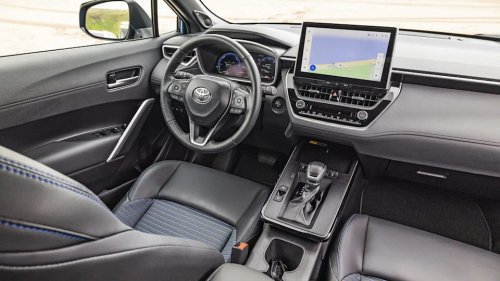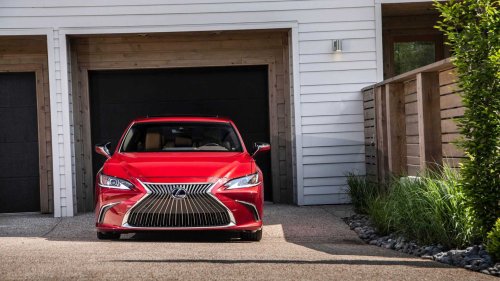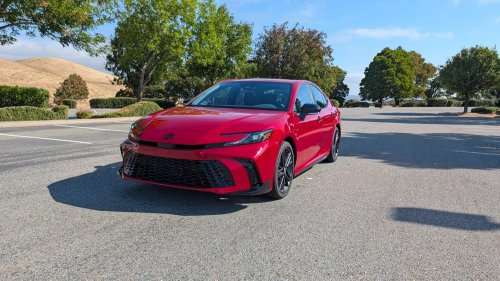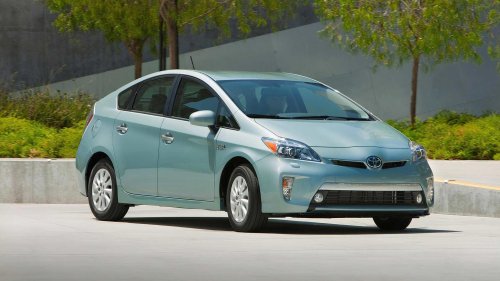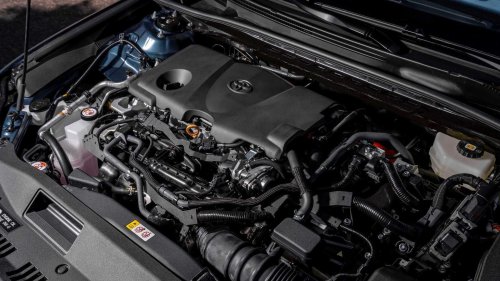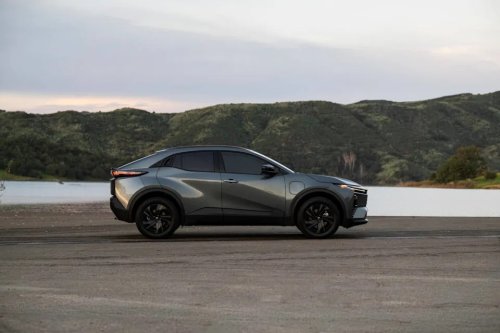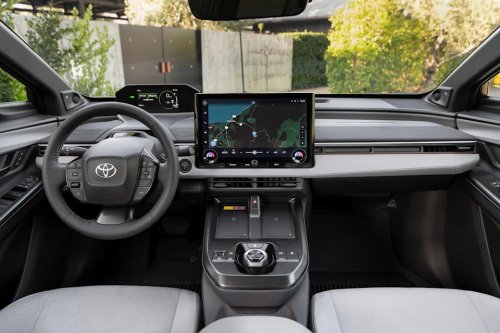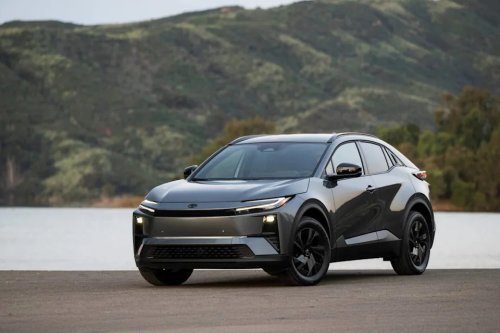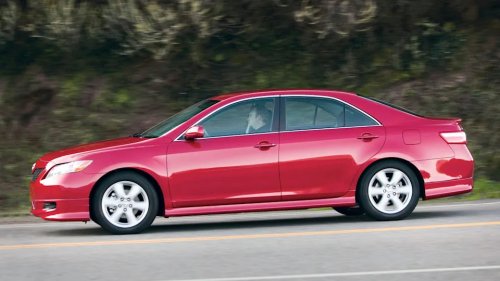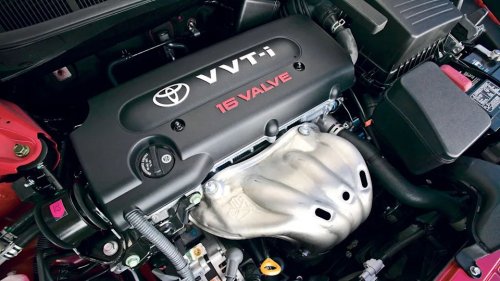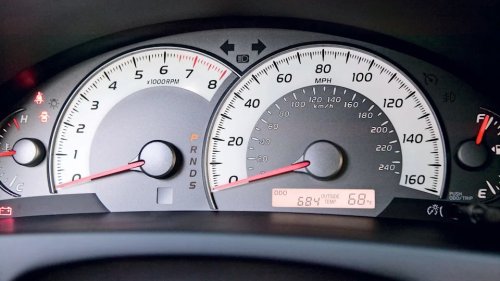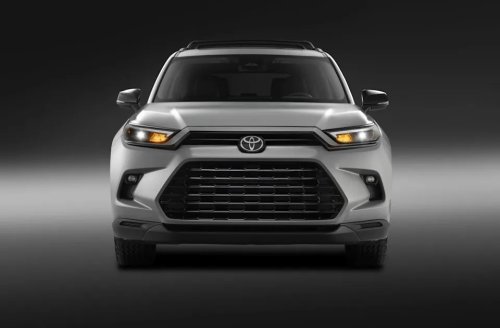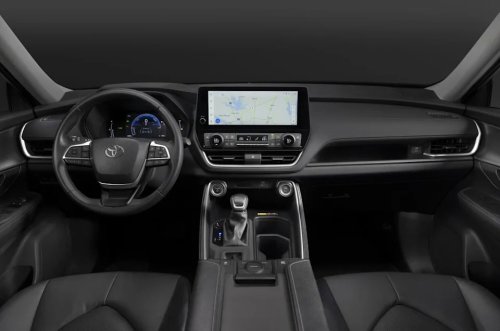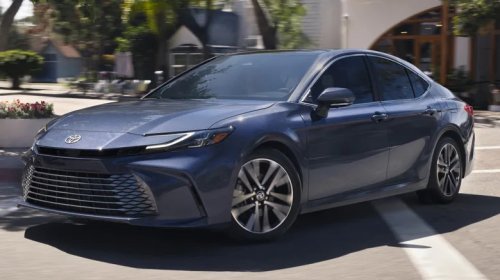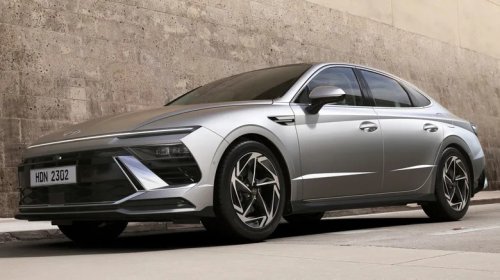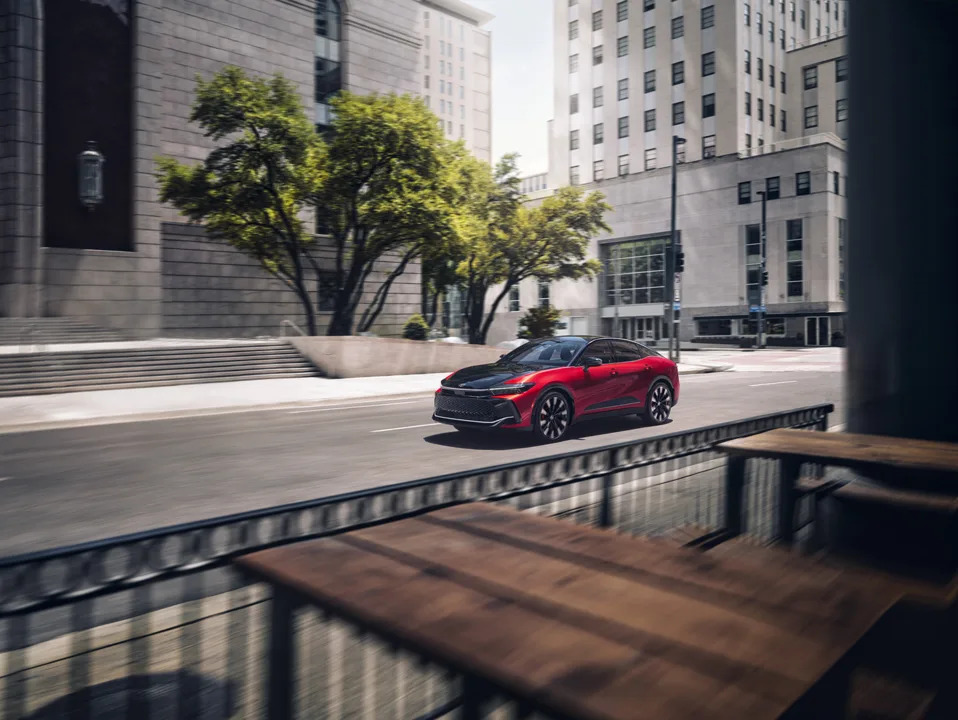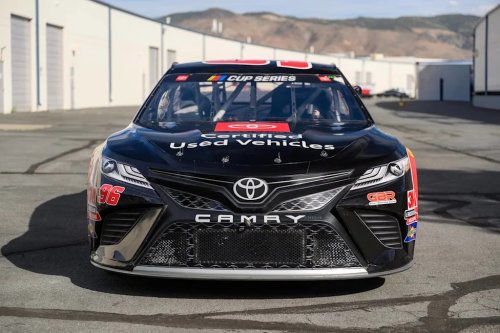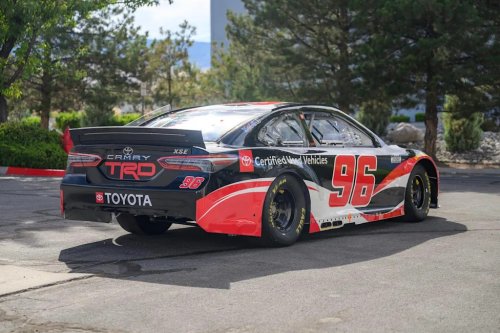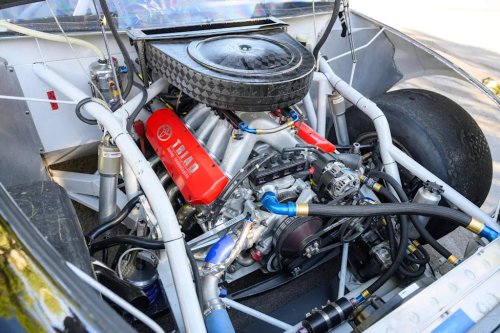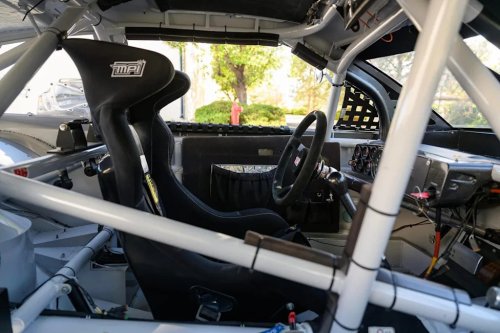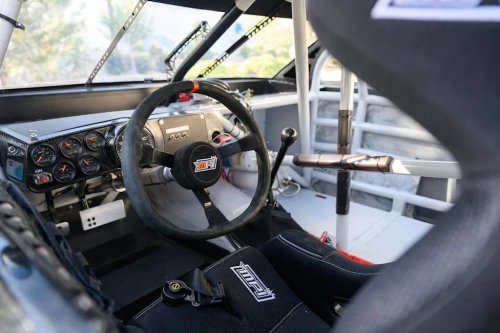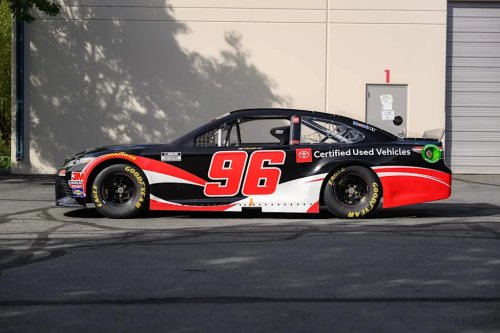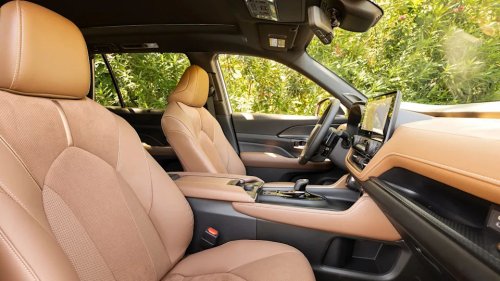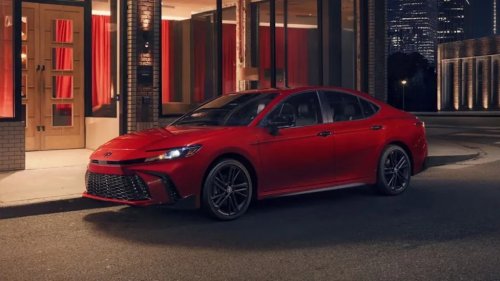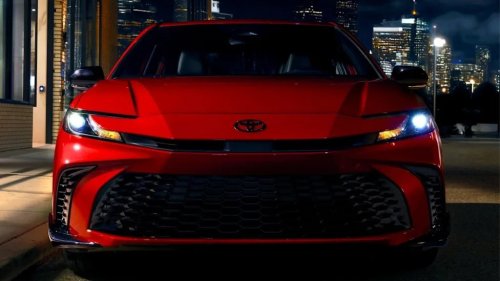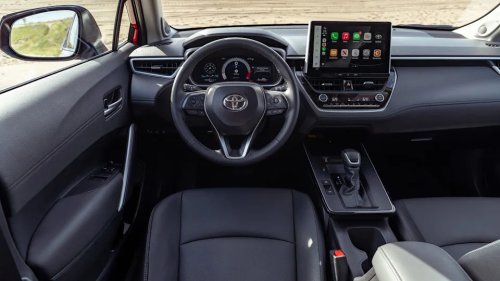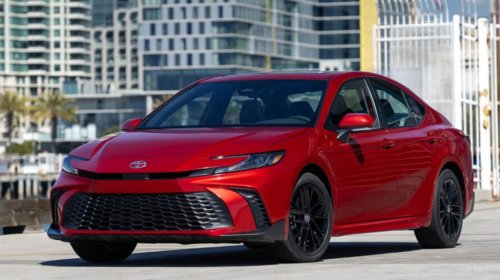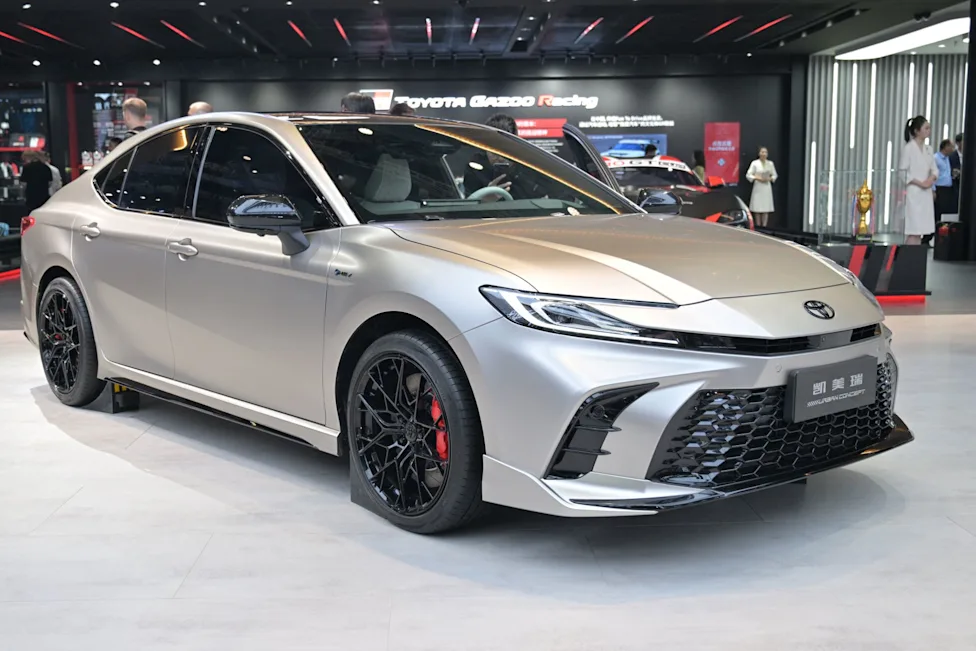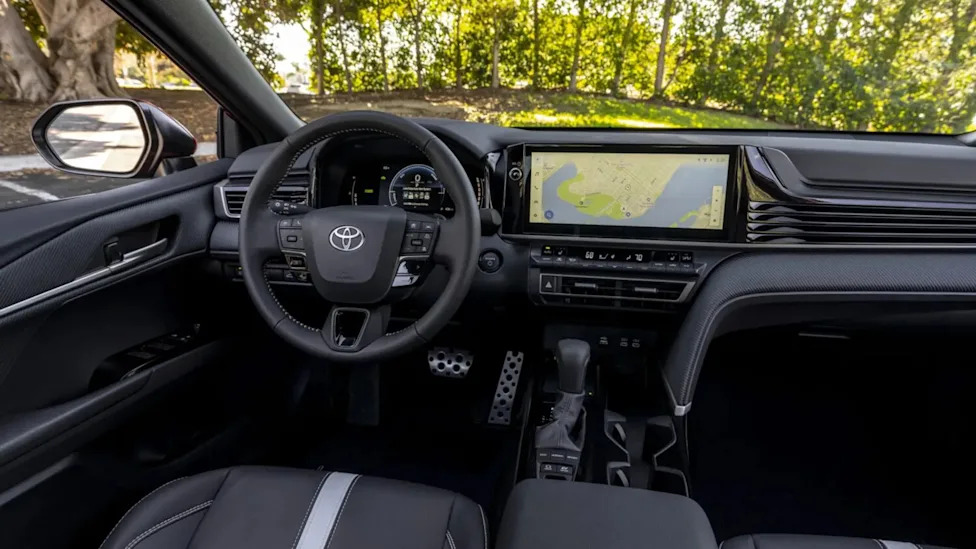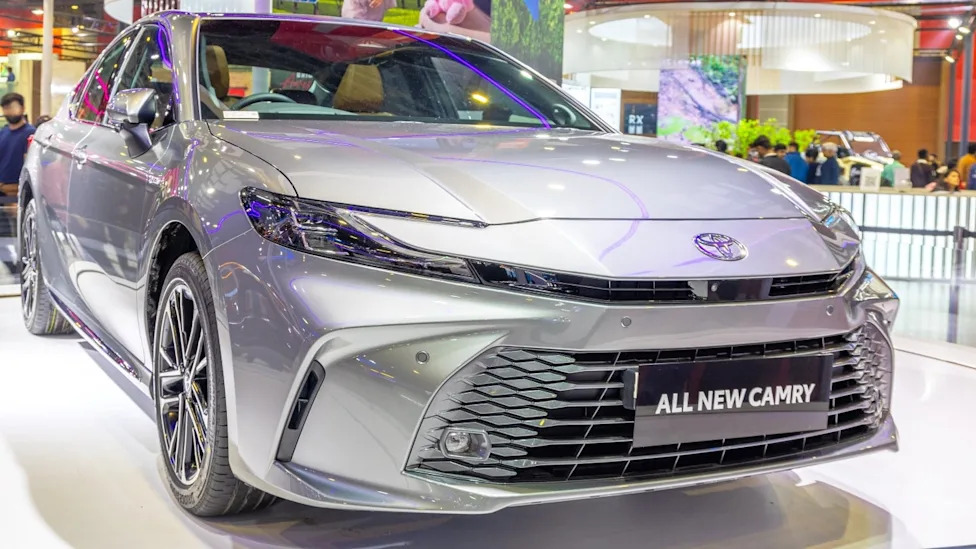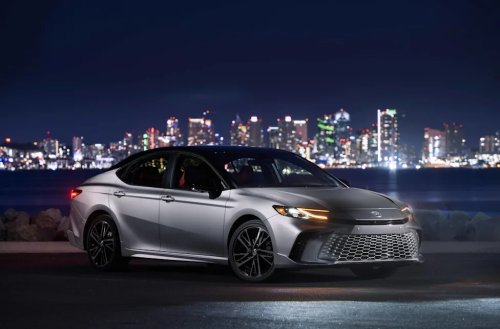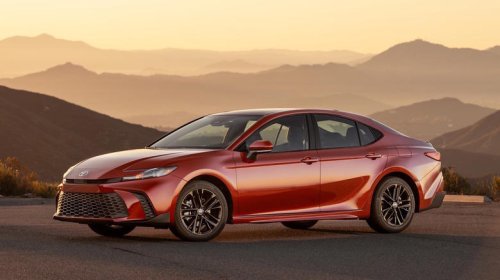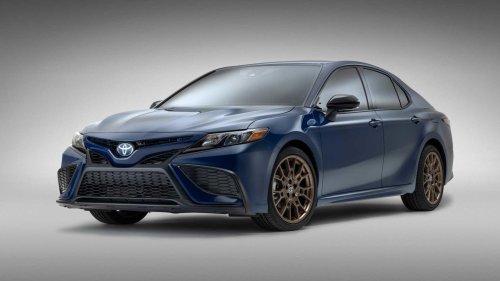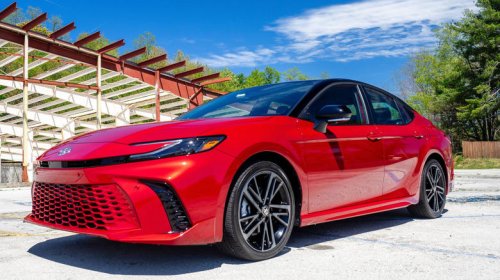
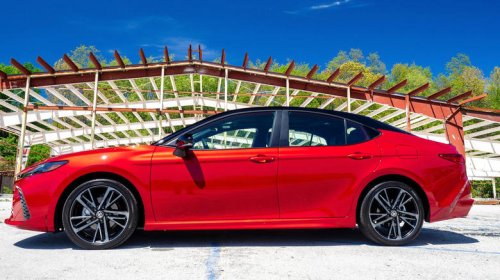
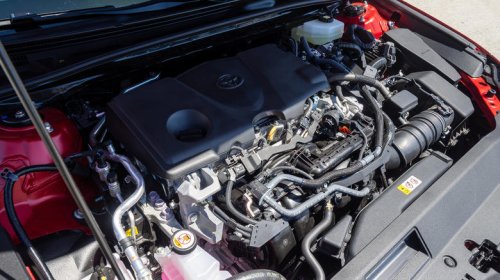
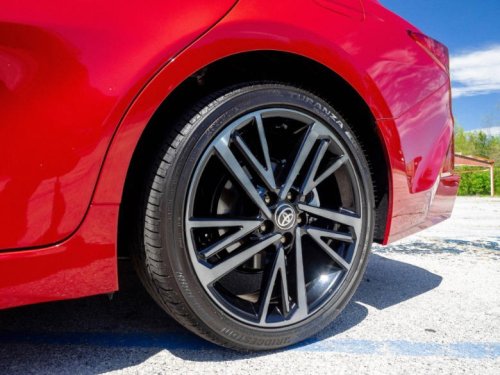
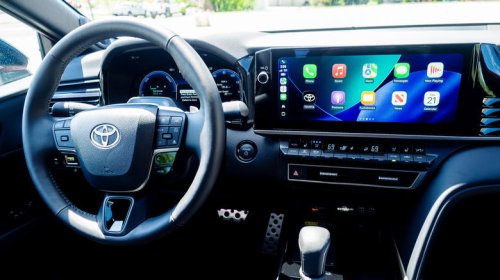
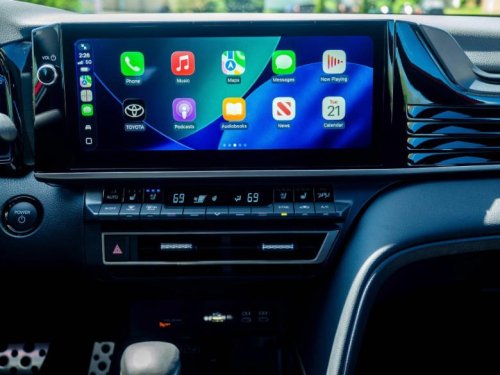
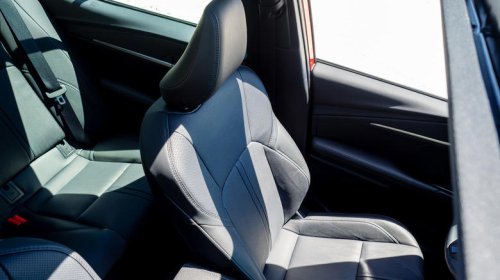
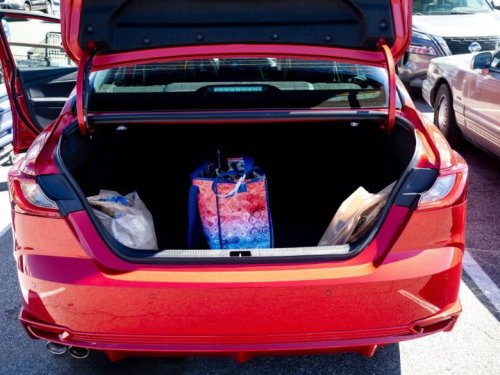
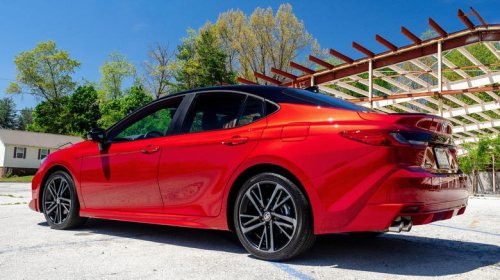
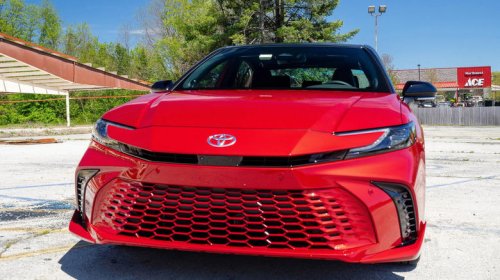



















2026 Toyota Camry left front three-quarter view - Cameron Aubernon/SlashGearThese days, any given dealer lot is full to the curb with SUVs and trucks with incredibly high price tags on the windshield (or, at minimum, the window sticker). At one end, the entry-level Ford Maverick — which started close to $21,000 back in 2021 — is today just above $28,000 for the base trim alone, reaching nearly $41,000 at the top level. At the other extreme, the likes of the Ram 1500 and Chevrolet Suburban can reach, if not surpass, the six-figure mark with the right trim and options chosen. Combined with rising fuel prices across the country, as well as the heavy drinking habits of these already-expensive propositions, consumers can only look and wonder if they really want to spend that kind of cash on a vehicle for hauling friends, family, and groceries around week-in, week-out.An increasingly appealing alternative is an affordable and fuel-efficient sedan, such as the 2026 Toyota Camry. The ninth-generation sedan arrived for the 2025 model year exclusively as a hybrid, while maintaining an affordable price that should draw in those seeking refuge from the madness of the day. It likely doesn't hurt that the Camry is killing it right now in NASCAR's top division, led by the likes of Joe Gibbs Racing and Michael Jordan's 23XI Racing. And since I do live within NASCAR Country, surrounded by tracks like Bristol, Charlotte, Richmond and Martinsville, it was only fitting to be visited by a 2026 Camry in its top-tier form, the XSE. Would I find myself wanting to take on Talladega after a week in this Supersonic Red/Black Metallic two-tone machine? Boogity-boogity, let's go reviewin' fellas!AdvertisementAdvertisementRead more: 5 Car Batteries With The Longest Lifespan, According To Consumer ReportsCompetitively priced in a competitive field2026 Toyota Camry driver's side profile view - Cameron Aubernon/SlashGearExclusively available as a hybrid from the 2025 model year, the ninth-generation Camry plays in a very competitive hybrid sedan field. Here's what you'll pay for your 2026 Camry before the $1,195 destination fee:LE: $29,300SE: $31,800Nightshade: $32,800XLE: $34,500XSE: $35,700, $43,974 total sticker as-testedThough on the high side in the hybrid car category, the 2026 Toyota Camry is still competitively priced against the likes of the Honda Civic Hybrid ($29,295 – $33,495), Honda Accord Hybrid ($33,795 – $39,495), and Hyundai Sonata Hybrid ($29,200 – $38,250). AdvertisementAdvertisementWithin the Toyota family, the Camry contends with the entry-level Corolla Hybrid ($24,575 – $28,940) and the ur-hybrid, the Prius ($28,550 – $36,965), both of which are smaller cars. Or there's the similarly sized, but more expensive, Toyota Crown ($41,440 – $54,990) or the upcoming 2026 Lexus ES hybrid (from $51,095). None of its competitors can say they're the best-selling car in the world, though; Toyota has sold 22 million Camrys through 2026 since the first ones rolled off the line for the 1982 model year.NASCAR dreams and fuel economy wishes2026 Toyota Camry engine bay - Cameron Aubernon/SlashGearSince its debut in the 2007 NASCAR Cup season, the Toyota Camry on the track has had a big V8 under the hood moving the rear wheels. The current NASCAR Cup Camry XSE runs a spec 358 cu-in (5.9-liter) pushrod V8 built by Toyota Racing Development (TRD). Output from this monster V8 comes to around 510 to 750 horsepower, depending on which track the Camry visits during the NASCAR Cup schedule; torque is 530 lb-ft. That power goes through a five-speed sequential manual transmission to the rear pair of 18-inch single-lug aluminum wheels made by BBS, each one wrapped in Goodyear Eagles.Cameron Aubernon/SlashGearThe 2026 Toyota Camry is a far cry from what's seen at Charlotte or Daytona, of course. No matter which trim you choose, there's a 2.5-liter four-cylinder with two electric motors producing a combined 225 horsepower and 163 lb-ft of torque for the front pair of 16- to 19-inch alloy wheels. For $1,525, you can add a third electric motor out back to any trim, for all-wheel drive and an increase in horsepower to 232 ponies. No matter how you send it, it all goes through a continuously variable transmission (CVT). The combination is a noisy bit of business, and not as pleasant as what's heard 'round Martinsville or Sonoma on Sundays.Fuel economy ranges from an EPA combined estimate of 51 mpg (52 city/49 highway) for the front-drive LE trim to — as with my top-tier all-wheel drive XSE — 43 mpg combined (43 mpg city and highway). After 140 miles of driving, which included my usual short trips and my test loop, I managed a final combined total of 34.5 mpg. Not quite what's on paper, but not too bad, either. And unlike that Sunoco racing fuel the big V8 needs, this one's happy with regular from your favorite gas station.Lots of good standard features, but you'll pay a lot for more2026 Toyota Camry dashboard, steering wheel, and center touchscreen - Cameron Aubernon/SlashGearYou definitely won't find the race-specific driver gauge displays and toggle switches drivers like Danny Hamlin, Bubba Wallace, and Tyler Reddick see every race weekend when you slide behind the wheel of the Camry; you also don't have to slide through the window opening like they do, either (unless you really want to, of course). The LE through Nightshade trims offer a 7-inch driver display and an 8-inch touchscreen, while XLE and XSE trims double-up on a pair of 12.3-inch units; SE and Nightshade trims can have the 12.3-inch touchscreen via the $600 Convenience Package, plus an additional $735 for the screen itself. And instead of toggles, there are quite a few buttons and knobs all over the dash and steering wheel to control climate, infotainment, and driver features.Cameron Aubernon/SlashGearAdvertisementAdvertisementAll trims come with wireless Apple CarPlay and Android Auto standard, as well as satellite radio, five USB ports, wireless device charging, and Bluetooth. LE through Nightshade trims come with a six-speaker stereo system, while the XLE and XSE trims can add a nine-speaker JBL system via the $4,760 Premium Plus package. That package comes with additional safety features, too, including traffic-jam assist, front cross-traffic alert, front- and rear-parking assist, head-up display, rain-sensing wipers, and lane-change assist.That said, the Camry does have a decent list of standard safety features, too, via the Toyota Safety Sense 3.0 with Pre-Collision suite. There, you'll find forward collision warning, blind-spot monitoring, pedestrian detection, lane-departure warning, lane-keeping assist, and adaptive cruise control among the standard offerings.Cozy comfort for the road of life2026 Toyota Camry overhead view of seats - Cameron Aubernon/SlashGearNo matter which seating material, the 2026 Camry keeps it all comfortable. Cloth is standard for the base LE trim, while synthetic leather covers the seats of the SE and Nightshade; all three can have heated seats and a heated steering wheel via the $600 Cold Weather package. The XLE steps up to partial leather seating with heated front seats and steering wheel standard, and the XSE goes full leather. Manual adjustment is standard on the LE, while the SE and Nightshade gain an eight-way power-adjustable seat for the driver; the top two trims give one to the front passenger, too. Dual-zone climate control is standard across the board, while a moonroof on lower trims, a panoramic moonroof on the XLE and XSE trims, and a panoramic moonroof with front power tilt-and-slide on those same trims are all available features.Cameron Aubernon/SlashGearAs for carrying everyone and their belongings, the Camry's pretty good at this task. Front leg room is 42.1 inches up front, 38 inches for the rear occupants. The Honda Accord Hybrid is similar up front, but offers 40.8 inches for the rear occupants, while the Hyundai Sonata Hybrid gives all the space to the front passengers with 46.1 inches, while offering a measly 34.8 inches of rear legroom (the same amount as the Toyota Prius) for the poor occupants out back.AdvertisementAdvertisementSpeaking of out back, trunk space isn't too bad, either. There's 15.1 cu-ft of room with the 60/40-split rear seat backs upright, and a bit more for longer items with the seats down. The Honda Civic Hatchback Hybrid offers plenty more with 24.5 cu-ft with its seats up, though it does have an unfair advantage as a hatchback.The everyday sedan for everyday people2026 Toyota Camry left rear three-quarter view - Cameron Aubernon/SlashGearNow, did I take this 2026 Toyota Camry XSE down to Martinsville for a few laps around the half-mile "Paperclip"? Nah. As cool as that would have been, I had no plans to do a Hail Melon in this Supersonic Red/Black Metallic two-tone family sedan. Instead, it would be handling the usual tasks of any average family, like commuting to work, going shopping for groceries, and cruising around town.And wouldn't you know it? It did all of that quite well. The sport-tuned suspension wasn't so tuned for sport that comfort would go out the window, especially when floating over the various hilly streets in my small Virginia town and beyond. The seats were comfortable, too, especially with the Premium Plus package's addition of ventilated front seats keeping me cool now that spring was in full swing. I couldn't knock the styling, either; it's one of the most handsome Camrys to ever hit the road.And sure, I'm not going to feel quite like Christopher Bell on the interstate, but the gas and triple-electric-motor power this Camry had on tap — along with Sport Mode to add a bit more zest — meant no waiting around nor trouble getting past the big rigs. If only the powertrain didn't sound so grumpy; it reminded me too much of the sound made by the 2025 Toyota Prius Plug-In Hybrid I reviewed back in 2025. Other than this ding, though, the Camry continues its generations-long mission of being the everyday sedan for everyday people.2026 Toyota Camry verdict2026 Toyota Camry front view - Cameron Aubernon/SlashGearAfter a week with the 2026 Toyota Camry, I didn't find myself waking up ready to join JGR or Legacy Motor Club, as wild as those dreams were. I did find, instead, all the reasons why this sedan from Kentucky by way of Japan is still at the top of its game decades later. It's comfortable, affordable for new families looking for something that isn't a minivan or a crossover, has plenty of style, and — now that it's only available as a hybrid — fuel efficient (and, thus, easy on the wallet long after it leaves the lot for the garage).AdvertisementAdvertisementWith over 22 million sold since 1982, Toyota has nothing to worry about when it comes to its flagship family sedan amidst the crossover/truck dominance over the modern motoring landscape. If anything, it could be among the many cars offering refuge amid the growing fatigue after nearly four decades of said dominance, combined with rising fuel costs and the malaise of the 2020s. There are other concerns, of course, mainly tied to automotive tech and the growing rebellion against the iPad-ification of it all, and, in time, those will be addressed one way or another. Either way, the Camry will be there to help those families seeking relief at the pump without sacrifice on the road.Want the latest in tech and auto trends? Subscribe to our free newsletter for the latest headlines, expert guides, and how-to tips, one email at a time. You can also add us as a preferred search source on Google.Read the original article on SlashGear.