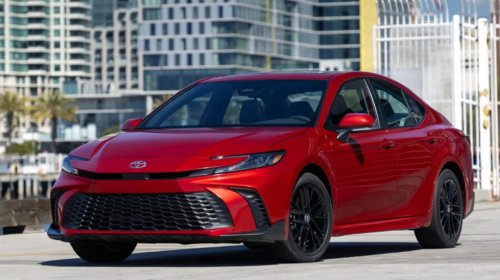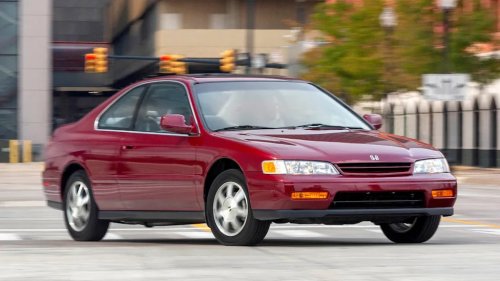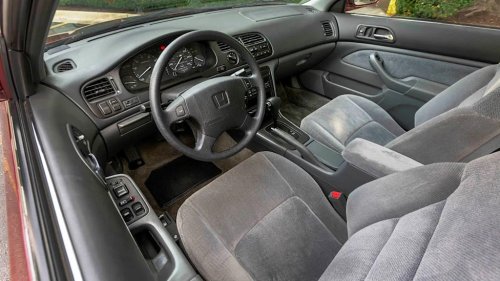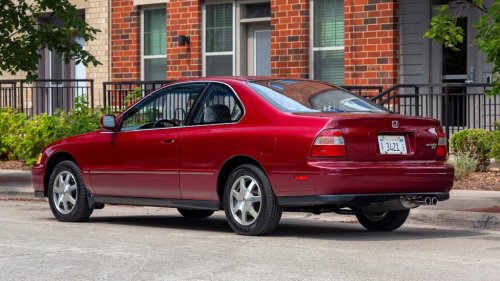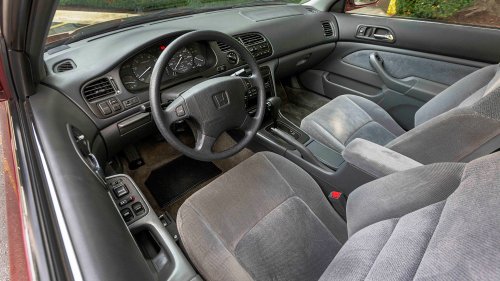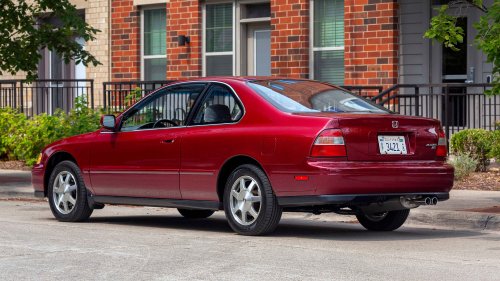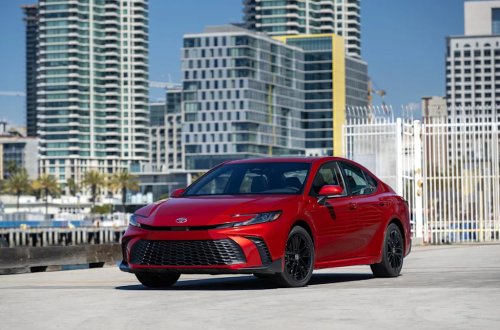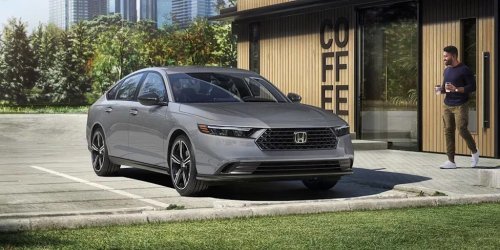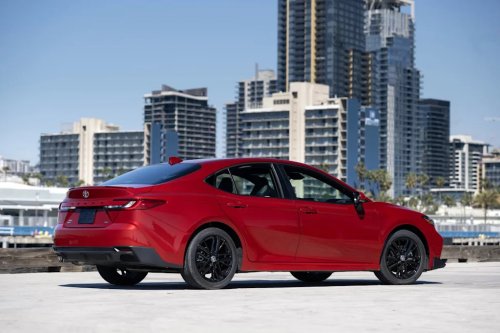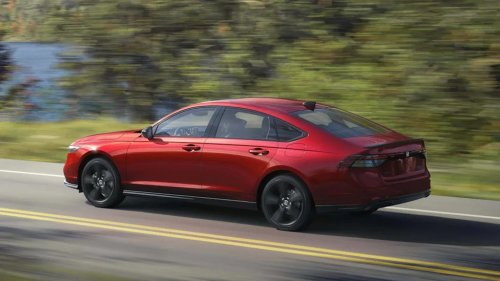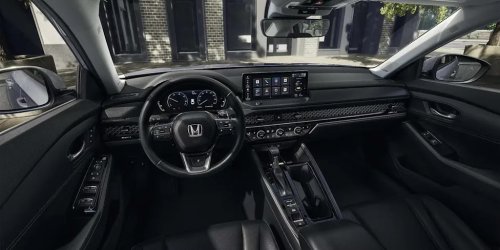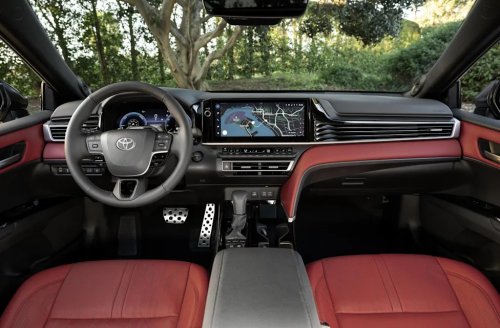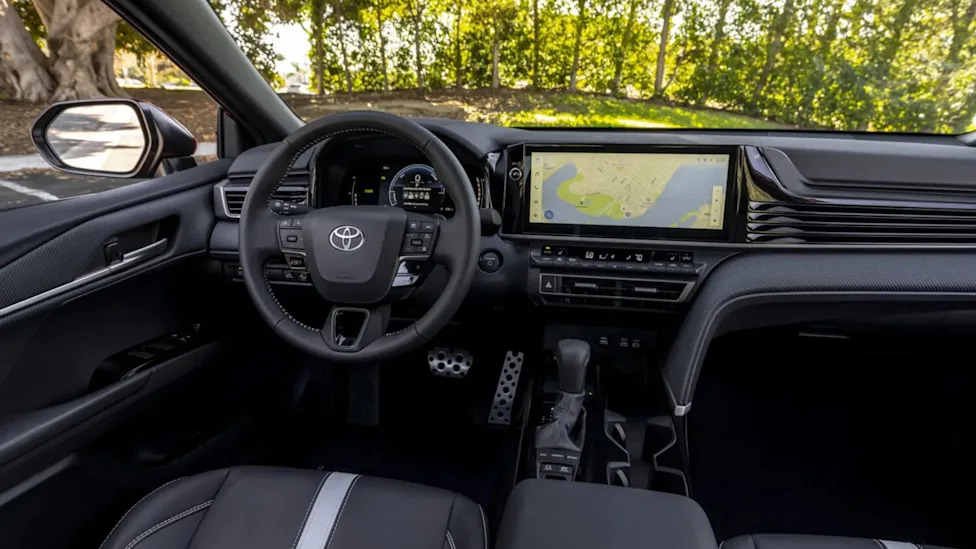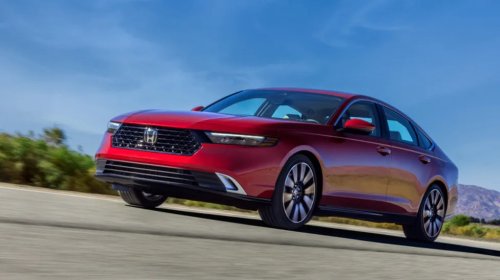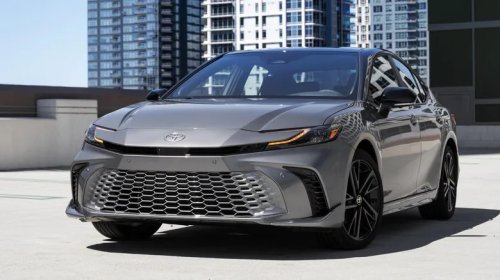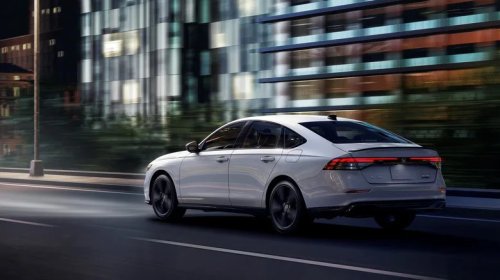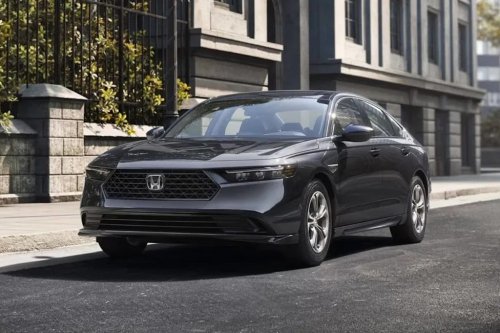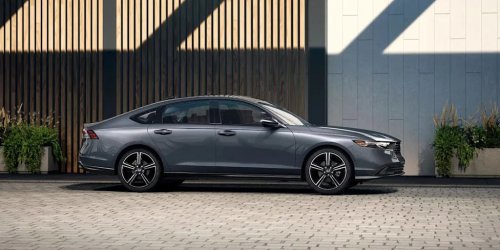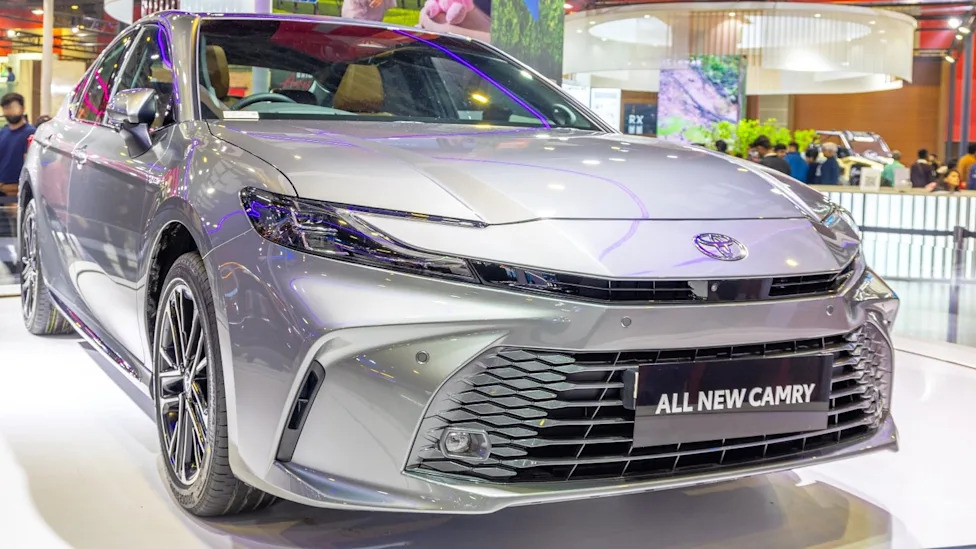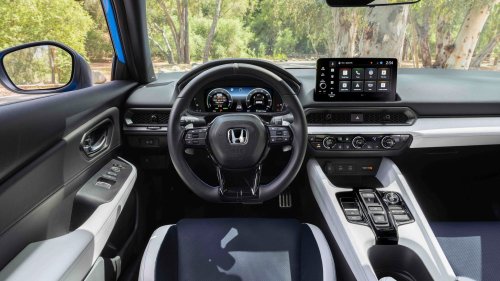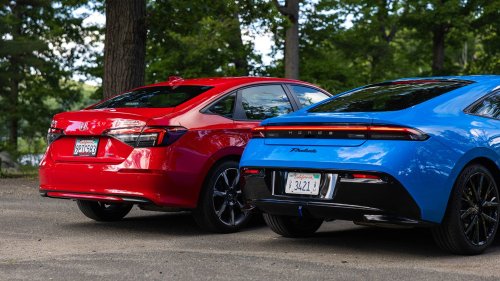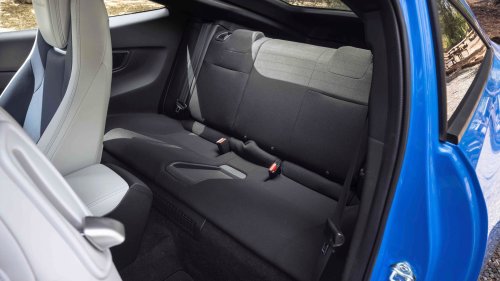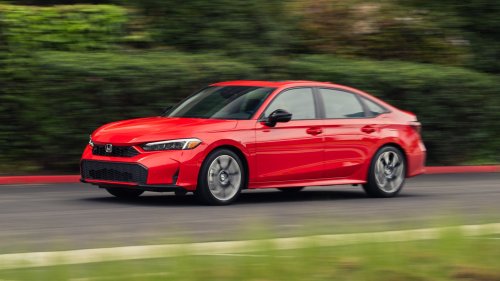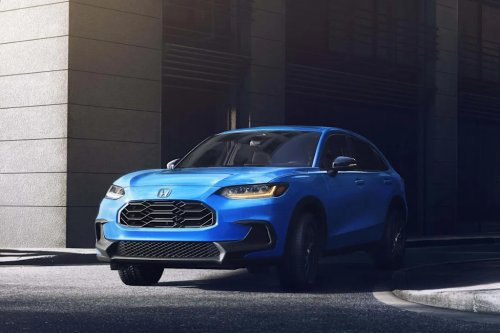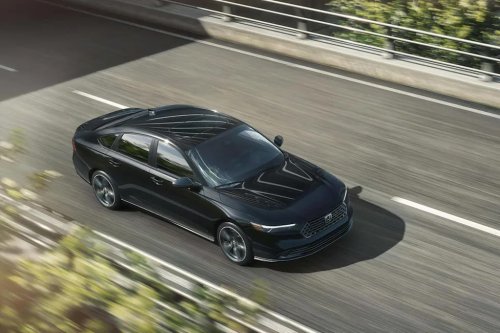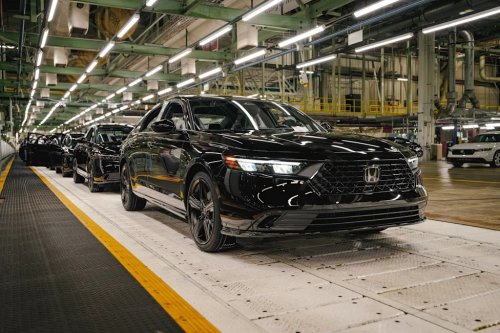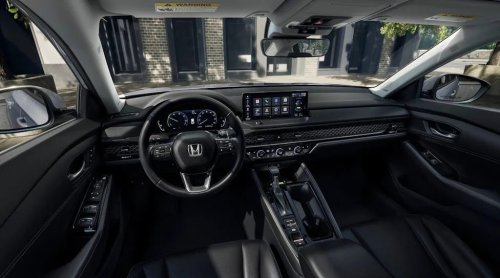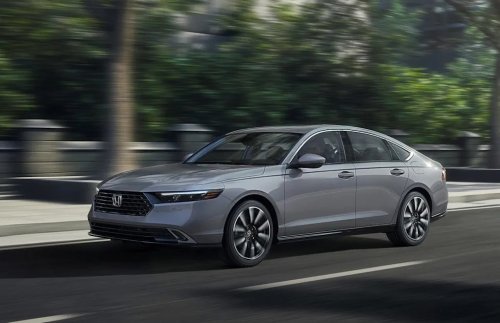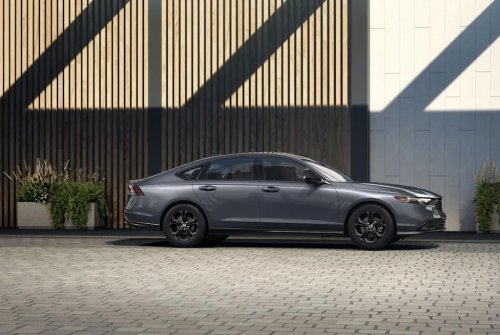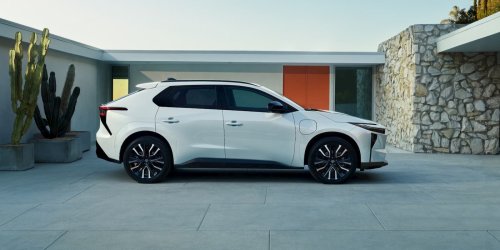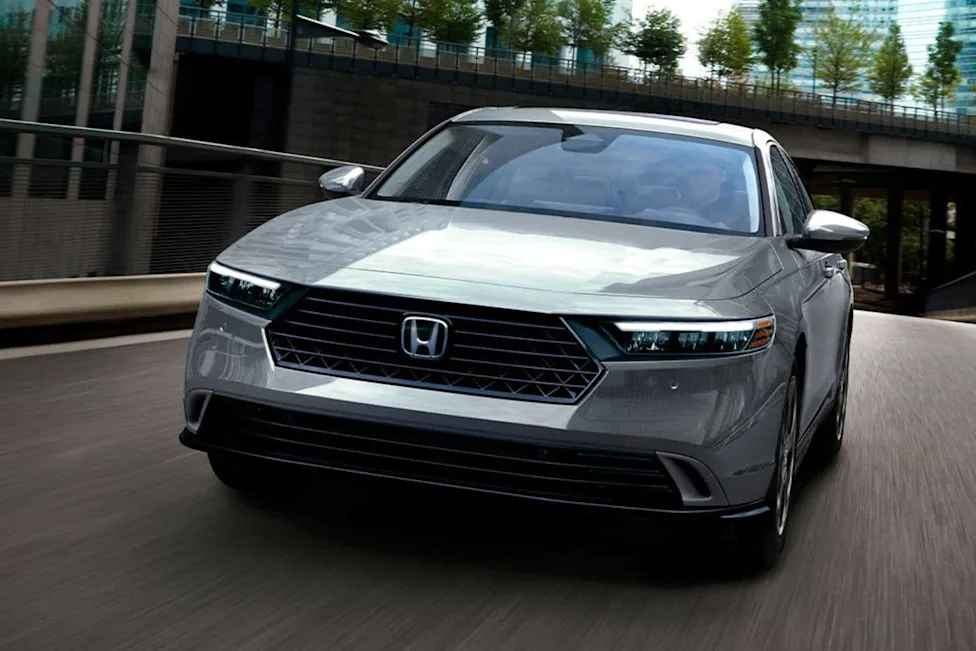
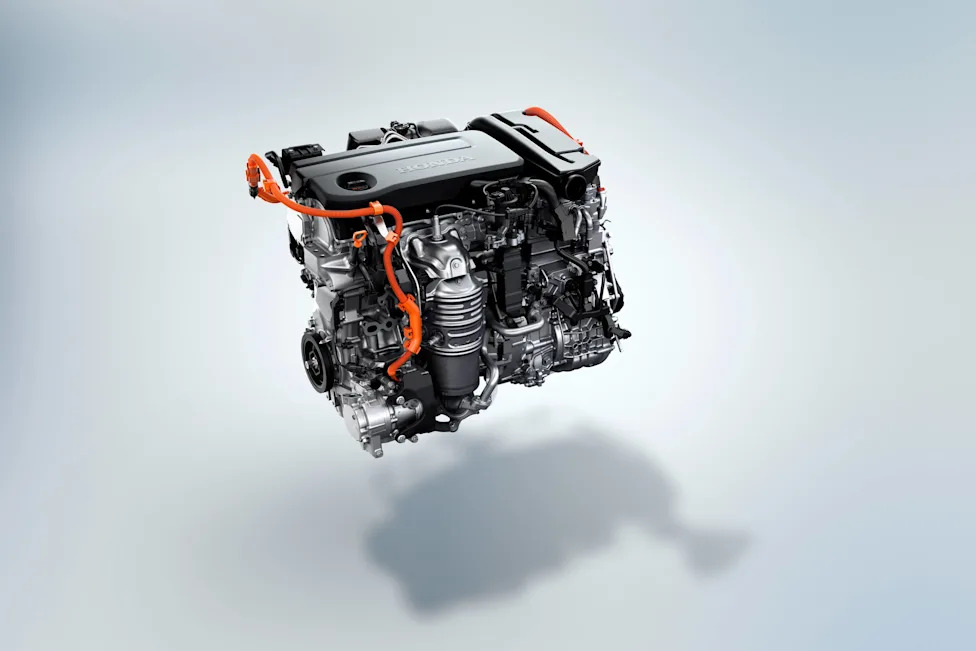
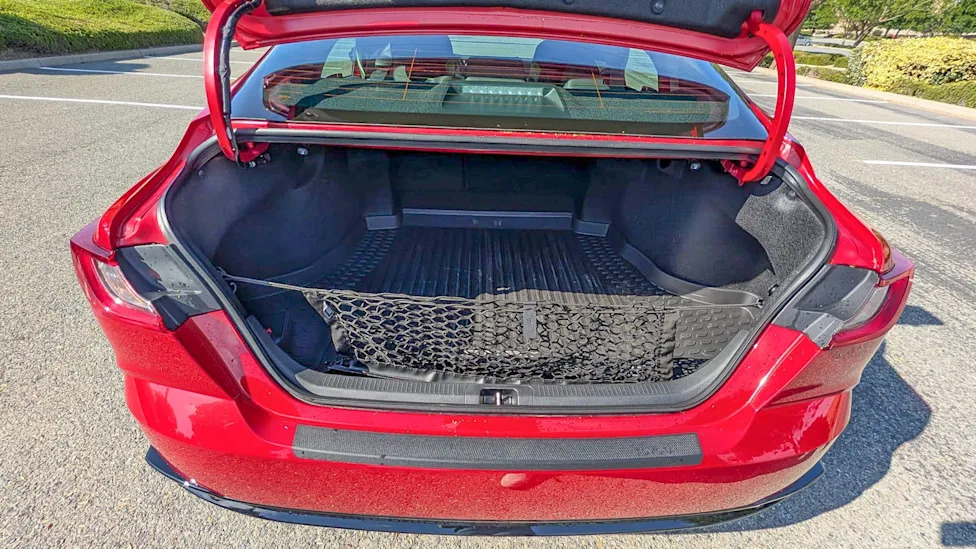



















Autoblog and Yahoo may earn commission from links in this article.America's two best-known midsize sedans no longer agree on what a midsize sedan should be. No 2026 Honda Accord sold here has all-wheel drive. Every 2026 Toyota Camry sold here is a hybrid. Those two facts account for most of what separates them, and neither one shows up in a horsepower argument.The rest of the spec sheet runs close. Both are front-drive four-cylinder sedans of nearly identical size, about $1,200 apart at the entry point, built in the United States. The differences that matter are structural. Here are the five that change the purchase.1. Camry Offers All-Wheel Drive On Every Trim. The Accord Offers None.Toyota makes Electronic On-Demand AWD available across the full Camry range, using a dedicated electric motor on the rear axle that engages when the front wheels slip. Honda lists front-wheel drive on all six Accord trims. Not as standard with an option above it. As the only configuration.AdvertisementAdvertisementThis is the largest gap between the two cars and the one that gets the least attention. Midsize sedans have been losing buyers to compact crossovers for a decade, and traction in bad weather is a recurring reason those buyers give. Toyota built an answer into the Camry. Honda did not build one into the Accord.All-wheel drive runs $1,525 on every Camry trim and costs fuel economy on top: the LE drops from 51 mpg combined to 50, the SE and XLE hold at 46, and the XSE falls from 46 to 43. Cheap on the LE, expensive at the top of the range. Winter tires on an Accord close some of the gap and cost far less than a car payment. But if all-wheel drive is on your list, this comparison ends here.2026 Honda Accord LXHondaView the 2 images of this gallery on the original article2. There Is No Gas-Only Camry AnymoreAll five Camry trims run the same thing. LE, SE, Nightshade, XLE, and XSE each get a 2.5-liter four paired with Toyota's fifth-generation hybrid system and an ECVT, rated at 225 net combined horsepower with front-wheel drive and 232 with the rear motor added.AdvertisementAdvertisementThe Accord still splits in two. The LX and SE use a 1.5-liter turbocharged four rated at 192 horsepower and 192 lb-ft, driving through a CVT. The four hybrid trims (Sport Hybrid, EX-L Hybrid, Sport-L Hybrid, Touring Hybrid) pair a 2.0-liter Atkinson-cycle four with Honda's two-motor system for 204 total system horsepower and 247 lb-ft.There is no gas-only Camry, and there has not been one since the 2025 redesign. A Camry shopper picks equipment. An Accord shopper picks a powertrain, and that choice decides which half of the lineup is even available.That split is not a legacy holdover. Hybrids were more than half of Accord sales in 2025, by Honda's own count. In the company's first-half 2026 report they account for 43% of the Accord mix, while Accord sales are up more than 32% year to date.The gas half of the lineup has gone from minority to majority of the mix, in a year when Toyota has no gas Camry to sell at any price. Honda said in January it would increase production of more value-oriented trims of its core models, the Accord among them. Whether that is behind the shift, the company has not said.3. The Accord Is Cheaper To Buy. The Camry Is Cheaper To Run.The Accord LX starts at $28,395. The Camry LE starts at $29,600. Both carry a $1,195 destination charge, so the real gap at the entry point is $1,205, and it favors Honda.AdvertisementAdvertisementThe LX is rated at 29 city, 37 highway, 32 combined. The Camry LE returns 52/49/51. At 15,000 miles a year and $3.50 per gallon, that works out to about $1,641 of fuel for the Honda against $1,029 for the Toyota, which erases the $1,205 head start in about two years.Fuel is the only column in that sum. Insurance, depreciation, maintenance, financing and resale each run their own way, and none of them are in it.Neither is the fact that MSRP is not what anyone pays. Incentives and dealer discounts move both cars, and $1,205 is a small enough gap to disappear inside a single negotiation.The gas Accord sells on something other than fuel economy. The lowest entry price on a new midsize sedan counts on its own, and so does a turbo torque curve that holds 192 lb-ft from 1,700 rpm, which some drivers prefer to the way a hybrid meters out power. Those are real reasons to buy the LX. None of them are money.AdvertisementAdvertisementThe SE makes the math worse. It costs $30,695 and drops to 28/36/31.4. Accord Hybrid Vs Camry Hybrid: Two Systems With Almost Nothing In CommonHorsepower compares cleanly. The Camry makes 225 with front-wheel drive and 232 with all-wheel drive. The Accord hybrid makes 204. Both are net combined system figures, measured the same way.Torque does not compare cleanly, and that is worth saying rather than papering over. Honda's 247 lb-ft belongs to the propulsion motor, which the company rates at 181 horsepower on its own; the Accord's 2.0-liter engine contributes 134 lb-ft. Toyota's full specifications for the Camry print no torque figure at all. They give hybrid system net horsepower, and they rate the electric motors in kilowatts: 100 at the front, and 30 more at the rear on all-wheel-drive cars. The 163 lb-ft that circulates in place of a Toyota figure gets quoted inconsistently, sometimes as the engine's output and sometimes as the whole powertrain's. Setting 247 against 163 would compare two differently measured numbers and call the gap meaningful.The hardware is where the difference is real. The Accord's hybrid trims have no conventional transmission or CVT at all, using a direct drive unit instead, while every Camry runs an ECVT. Two hybrids, two entirely different pieces of engineering.AdvertisementAdvertisementFuel economy goes back to Toyota, and by more than most spec comparisons admit. The Camry LE returns 51 mpg combined. The best Accord hybrid, the EX-L, manages 48. The Sport Hybrid, Sport-L Hybrid, and Touring Hybrid all sit at 46/41/44.ScreenshotHondaView the 2 images of this gallery on the original articleHonda quietly charges you for wheels. The EX-L Hybrid hits 48 mpg combined on 17-inch wheels, while the three Accord hybrids on 19s return 44. The Camry lineup splits the same way, 51 mpg on the base LE against 46 on everything above it. The efficiency leader in each lineup is also the plainest car in it.The cheapest hybrid Accord is the Sport Hybrid at $33,795. The cheapest hybrid Camry is the LE at $29,600. That is $4,195 to get into a Honda hybrid, before any of the equipment differences.5. The Accord Has 2.8 Inches More Rear LegroomThe Accord is the bigger car where it counts. Honda lists 16.7 cubic feet of trunk volume against the Camry's 15.1, and 40.8 inches of rear legroom against 38.0. That 2.8-inch gap is the single largest dimensional difference between the two cars, and it is the one passengers notice within a minute.AdvertisementAdvertisementThe Accord is also longer at 195.7 inches versus 193.5, on a wheelbase of 111.4 inches versus 111.2. Nearly the same footprint, better packaged.What you get back for those inches is 51 mpg where Honda's best hybrid gets 48, and all-wheel drive on any trim you want.Kristen BrownView the 2 images of this gallery on the original articleThe VerdictIf you want all-wheel drive, the Camry is the only car in this comparison.If you want the most fuel-efficient midsize sedan for the least money, that is the Camry LE at $29,600 and 51 mpg combined, and nothing in the Accord range answers it. Toyota also covers the hybrid battery for 10 years or 150,000 miles against Honda's 8 years or 100,000 miles.AdvertisementAdvertisementThe Accord earns its place in two specific cases. If you drive very few miles and want the cheapest new midsize sedan on the lot, the LX at $28,395 does that job, and the fuel penalty stays theoretical at low mileage. And if you regularly carry adults in the back, the Accord's rear seat and trunk are worth the $4,195 walk from a Camry LE to a Sport Hybrid.For most buyers, the Camry LE wins on cost and the Camry range wins on capability. The Accord wins the moment someone tall sits behind you.This story was originally published by Autoblog on Jul 19, 2026, where it first appeared in the Features section. Add Autoblog as a Preferred Source by clicking here.