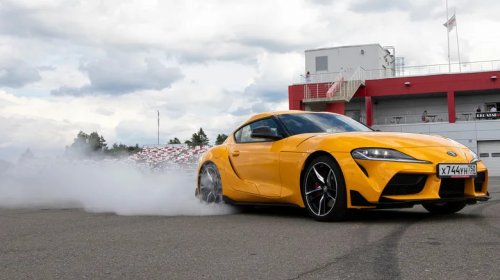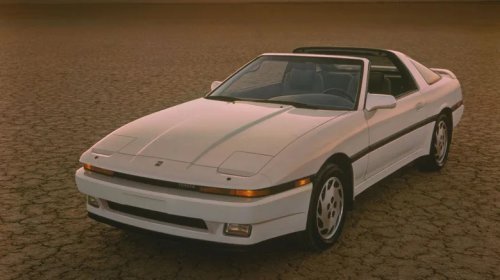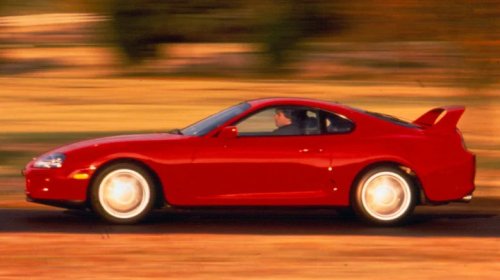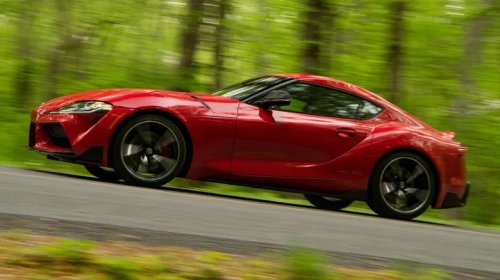
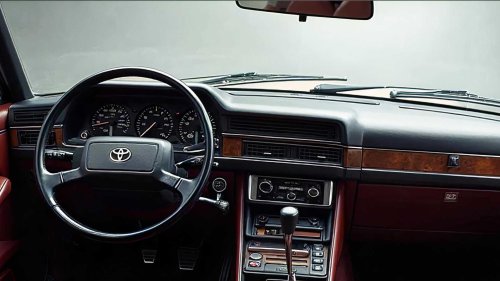
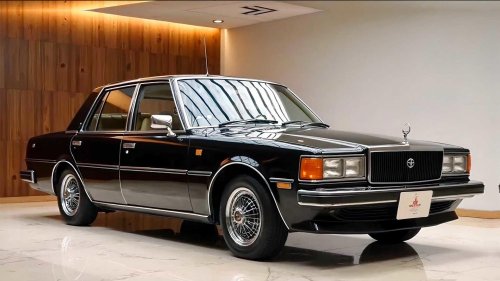
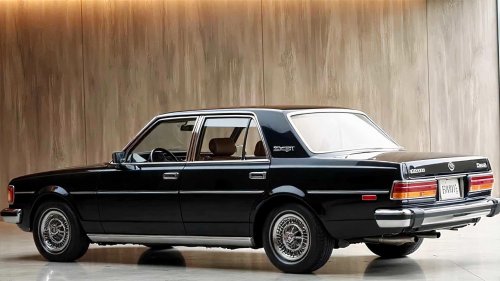
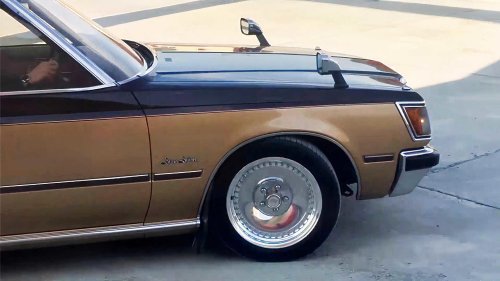
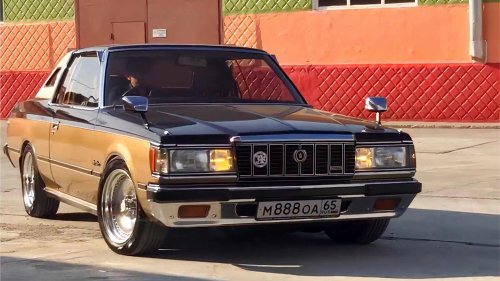
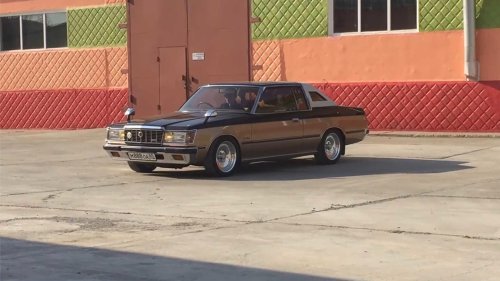



















Ask most enthusiasts when Toyota first put a turbocharger on a production car and the answer will involve a Supra. That answer is wrong by six years. In October 1980, a turbocharged Toyota went on sale in Japan with a twin-sensor knock control system, a rear-wheel-drive platform, and a press conference to announce it. The car was not a sports car. It was an executive saloon aimed squarely at government officials and business buyers who wanted performance without paying the Japanese displacement tax on a larger engine. It has never appeared in a single serious conversation about turbocharged Toyota history. The Supra gets the credit. This is the car that was there first. Toyota's Turbocharged Timeline Has A Missing Chapter Toyota Gazoo Racing / YouTube The Supra's reputation as the beginning of Toyota's turbocharged performance story is built on real achievements. The 7M-GTE that powered the A70 Supra from 1986 in Japan and 1987 in the US was a genuine performance engine, producing 230 hp and establishing the turbocharged inline-six as the template for everything that followed it in the Toyota performance hierarchy. The 2JZ-GTE that eventually replaced it became one of the most celebrated turbocharged engines in automotive history, capable of producing four figures of horsepower on stock internals and still regarded by the tuning community as the benchmark for straight-six turbo architecture. That lineage is real and well-documented.What the same timeline skips is the turbocharged Toyota that was on sale during the first Reagan administration, before the A70 Supra had been designed, before the 7M-GTE had been conceived, and before any turbocharged Toyota engine had been reviewed in a Western publication. A production Toyota with a turbocharged engine went on sale in Japan in October 1980. The Supra did not receive a turbocharged engine in Japan until 1986. The missing chapter is six years long, and it belongs to a car that wore a crown on its hood. Japan Had Different Priorities In 1980 Via Auto Excellence YouTube Channel The Japanese tax system in 1980 penalized engine displacement, which made the 2.0-liter bracket particularly attractive for buyers of larger, more prestigious cars. A full-size executive saloon with a 2.0-liter engine sat in a lower tax class than the same car with a 2.8-liter unit, which mattered considerably to the government officials and corporate buyers who were the Crown's primary market. The problem was that a 2.0-liter engine in a large executive saloon was not especially fast, which created a tension between the tax benefit and the performance expectation that came with the prestige segment.Turbocharging resolved that tension. A 2.0-liter turbocharged engine could produce output comparable to a larger naturally aspirated unit while remaining in the lower tax classification, improving fuel efficiency at the same time. The post-oil-crisis pressure to demonstrate improved consumption made the fuel economy case equally important. Toyota's solution was not simply to bolt a turbocharger to the existing naturally aspirated 2.0-liter M engine. It was to develop a knock control system that could protect the engine reliably under boost on the fuel quality available at Japanese filling stations in 1980. That was the engineering problem that made the whole program possible, and solving it was not straightforward. Meet The 1980 Toyota Crown Turbo Via Auto Excellence YouTube ChannelThe Crown Turbo went on sale on October 21, 1980, making it the first turbocharged Toyota ever sold to the public. It was available in 4-door sedan, 4-door hardtop, and 2-door hardtop body styles, exclusively in the Japanese domestic market, with a 4-speed automatic and no manual option. The M-TEU 1,988cc turbocharged inline-six produced 145 hp and 159 lb-ft of torque at 3,000 rpm. The turbocharged Supra would not arrive until 1986. The Crown Turbo beat it by six years.Toyota did not keep the M-TEU in the Crown for long before putting it to wider use. The Soarer Turbo received it in June 1981. The Mark II, Chaser, and Cresta followed that same year. By February 1982 it was in the Celica XX. What started as an executive saloon engine became the backbone of an entire turbocharged program, expanding across five model lines in under two years. This was not a cautious experiment. It was a commitment, and the Crown was where it started. The Knock Control System That Made It Viable Via Auto Excellence YouTube Channel The technical challenge of running a turbocharged engine reliably on Japanese pump fuel in 1980 was not trivial. Turbocharging raises cylinder pressure, which increases the risk of detonation, which destroys engines. The conventional solution was to retard ignition timing as a blanket precaution, which protected the engine but compromised power output and efficiency.Toyota's solution was a twin-sensor knock control system that detected detonation as it happened and adjusted ignition timing in real time, cylinder by cylinder, rather than applying a conservative fixed retard across all operating conditions. The original press release describes this as detecting "even the most minute knock for optimum control of ignition timing," which allowed the engine to run a more aggressive timing map across a wider range of conditions than a fixed-retard system would permit. The result was 145 hp and 159 lb-ft from 2.0 liters in 1980, more than the naturally aspirated 2.0-liter M engine produced by a margin that justified the engineering investment. This was not a simple forced-induction conversion. It was a managed combustion system, and it was developed and owned by Toyota. The Intercooled Version And What Came Next Via Артем М YouTube Channel The seventh-generation Crown launched in August 1983 retained the M-TEU alongside the new 5M-GE, now in an upgraded form. The intercooled M-TEU produced 160 hp (162 PS) at 5,600 rpm and 170 lb-ft at 3,000 rpm, a meaningful step from the original 143 hp and 156 lb-ft. The intercooler reduced intake charge temperature, allowing more boost without detonation risk, and the knock control system continued to manage combustion under the increased pressure. The engine that resulted from these three years of development carried directly into the turbocharged engine capability that would underpin the 1JZ-GTE and 2JZ-GTE in the decades that followed. Both of those engines used variations of the same M-family architecture, the same cast-iron block with aluminum head construction, and the same fundamental approach to managing boost pressure through electronic ignition control. The 2JZ-GTE that made the Supra famous was the endpoint of a development lineage that the Crown Turbo began. What A Crown Turbo Is Worth Today Via Артем М YouTube ChannelPricing the Crown Turbo today is no easy task. The car was never sold outside Japan, which means no established collector market has formed around it in the West. What the 25-year import rule has created is a small but real supply of examples reaching the US market through JDM importers. A 1981 MS110 Crown Sedan with the M-TEU 2.0-liter engine is currently available in Japan at $12,190, which gives a real-world reference point for what an original example costs before shipping and import fees. Clean, documented M-TEU Turbo examples are genuinely scarce, and the shaken inspection system has reduced the number of older cars surviving in Japan considerably. The supply of importable examples is not growing.The honest assessment is that the Crown Turbo is too obscure outside Japan for a meaningful Western market to have formed around it. The shaken inspection system, which requires increasingly expensive vehicle inspections as a car ages, has reduced the survival rate of older Japanese cars considerably. Clean S110 Crown Turbo examples in Japan are genuinely rare, and the ones that exist tend to remain there. For a buyer willing to navigate the import process, the 25-year rule makes every example from 1983 and earlier legal for US registration, and the pricing reflects a market that has not yet understood what it is looking at. The Turbo Toyota Nobody Remembers Via Артем М YouTube Channel The Supra earned its reputation. The 7M-GTE and the 2JZ-GTE are genuinely extraordinary engines, and the turbocharged Supra became a cultural touchstone for reasons that have nothing to do with revisionist history. None of that is being challenged here. What is being added to the record is the car that built the technical foundation those engines stand on. Toyota announced a turbocharged production car in October 1980, held a press conference to describe its knock control system, put it on sale that same day, and then expanded the same engine across five separate model lines over the next two years. The engineering that made the 2JZ-GTE possible did not arrive fully formed in 1986. It was developed over the preceding six years in an executive saloon that sold to government ministers and company directors in Japan and was never reviewed in a single Western publication. The Supra became the icon. The Crown Turbo built the road that led there.Sources: Toyota, BE FORWARD, okanojidousha YouTube Channel, Артем М YouTube Channel, AUTO-EXCELLENCE YouTube Channel.