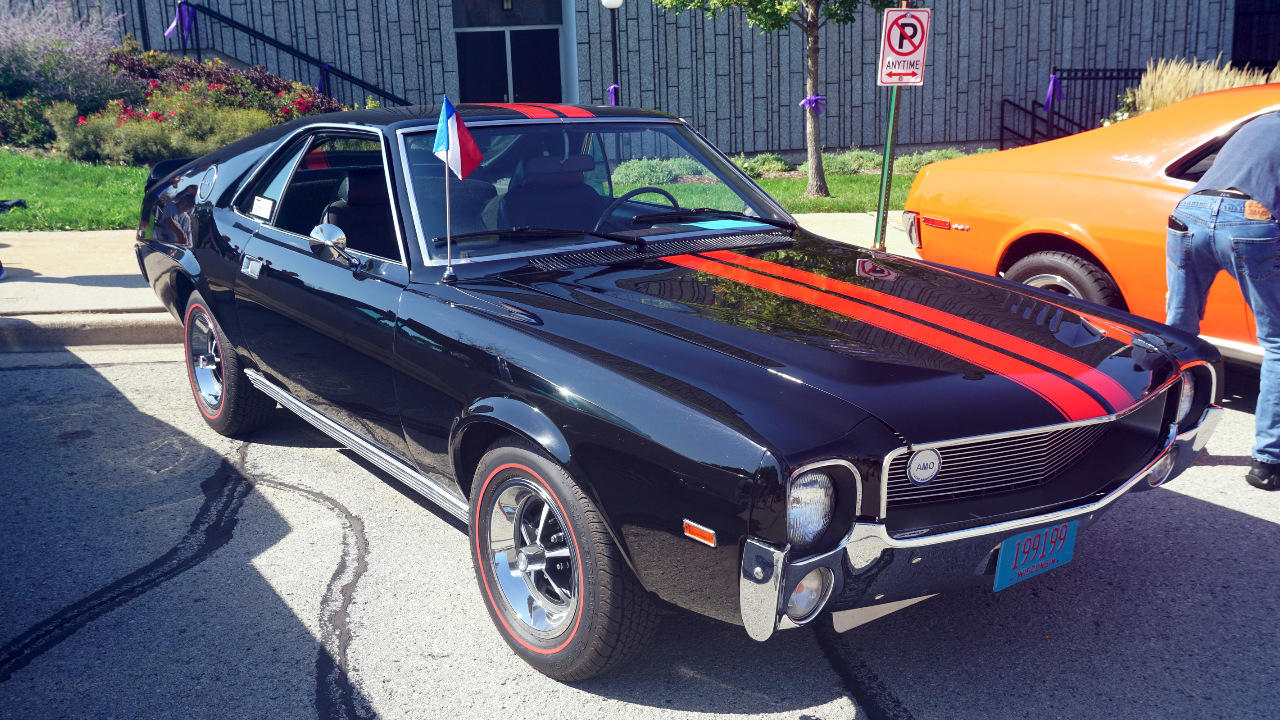
The 1969 AMC AMX stood out but its two-seat design limited its appealThe 1969 AMC AMX arrived as a compact, two-seat muscle car that looked like nothing else in American showrooms. It was fast, relatively affordable, and rare, yet its strict two-passenger layout meant it never threatened the sales dominance of four-seat rivals. That tension between standout design and limited practicality still shapes how enthusiasts and historians judge the AMX today. The underdog from American Motors American Motors Corporation entered the late 1960s as the scrappy alternative to Detroit’s Big Three. While Ford, Chevrolet, and Chrysler fought volume battles with cars like the Mustang, Camaro, and Charger, AMC tried to carve out an identity with smaller, more focused performance models. The AMX grew out of that strategy as a short-wheelbase, two-seat spin-off of the Javelin, aimed at buyers who wanted something more exotic than a typical pony car. Everyone remembers the Mustang, Camaro, and Charger, but hardly anyone talks about the AMC AMX. Contemporary coverage describes the AMX as a bit of an underdog that still earned serious respect on the street and strip, with its rarity and performance making it a genuine performance machine during the muscle car heyday. That underdog status made it hard for the AMX to gain traction in that period, yet it also helped cement a cult following that has only grown stronger. Later analysis of how the car was received argues that the AMX became one of America’s most underrated muscle machines. One detailed look at how the AMX notes that its two-seat layout, though distinctive, also limited its market appeal and kept production relatively low compared with mainstream rivals. The same reporting points out that AMC never built the same mythology around the AMX that Chevrolet created for the Camaro or that Ford built for the Mustang, which further muted its impact at the time. A rare two-seat American muscle car Among American performance cars of the era, the two-seat formula was rare. The Corvette had long occupied that space at the upper end of the market, but Detroit’s muscle and pony cars overwhelmingly offered four seats. A period description of the 1969 AMC AMX calls it a rare two-seat American muscle car that proved AMC could deliver something genuinely different from the usual formula. That same account emphasizes how the car stood apart from typical muscle designs through its compact footprint and two-passenger cabin, while still delivering the straight-line punch buyers expected. Another enthusiast summary frames the 1969 AMC AMX as American Muscle, Compact and Unapologetic. It describes the car as a unique two-seat American muscle car with a short wheelbase and a bold attitude, and credits American Motors with taking a real risk in putting such a focused product into showrooms. The AMX was positioned as a halo car that would pull young buyers into dealerships, even if many of those shoppers ultimately drove away in more practical models. Production figures underline that rarity. One account of 1969 production notes that the 14000 AMC AMX that had been in production since the car’s launch was built with safety glass that was chemically hardened to crumble into small granules upon impact in order to reduce injuries. That same summary, labeled as Production The AMX, reinforces how limited the overall run was compared with the hundreds of thousands of Mustangs and other pony cars sold each year. Short wheelbase, big V8, and challenging manners Mechanically, the AMX combined a short wheelbase with serious V8 power. Later market analysis of the 1968 to 1970 run notes that the short wheelbase, combined with diabolically quick power steering and a big V-8, proved challenging for many drivers. That assessment of the 1968 to 70 cars, which have been identified as a Bull Market pick, suggests that the AMX demanded more respect at the limit than some of its longer, more forgiving competitors. Period road tests and later retrospectives describe the car as raw and involving. One feature on the 1969 AMC AMX points out that there is no power steering, no power brakes, and not much in the way of accessories, but that this simplicity is part of its charm. That same piece, which appears under the banner 1969 AMC AMX, Muscle Car Memories, notes how easy it is to forget what unfiltered performance feels like after decades of more insulated cars. The absence of power assists meant heavier controls, yet it also created a more direct connection between driver and machine. Enthusiast videos reinforce that impression. One walkaround and drive invites viewers to jump into the seat of one of these cars and discover some things that make it special, while also explaining how AMC later turned its automotive operations into the Jeep Eagle division in 1987. That clip of Jeep Eagle history uses the AMX as a lens on the broader evolution of the company and highlights how different the analog experience of a late 1960s performance car feels compared with modern vehicles. Another video essay calls the AMC AMX the ultimate halo car of its time, designed to deliver jaw-dropping supercar performance at a fraction of the cost. The narrator of that piece, titled The SHOCKING Truth Behind AMC AMX Taking On The Giants, frames the AMX as a bold move to take on much larger competitors with a focused, two-seat package. That same video on AMX performance stresses how the short wheelbase and big engines created a car that rewarded skilled drivers and punished careless ones. Pricing the AMX against the Corvette, Mustang, Camaro, and Charger For all its performance, the AMX was not priced as a luxury item. One detailed comparison of 1969 pricing explains that the AMX was less than the Corvette by $1,500, the Mustang by a couple of hundred, the Camaro by almost $1,000, and the Charger by a similar margin. Those exact figures, $1,500 and $1,000, underline how aggressively AMC positioned the car against its rivals. Buyers could get a two-seat American performance car that undercut the Corvette significantly and still landed below the major pony cars. That same pricing analysis argues that AMC used the AMX to build a solid reputation for building top-of-the-line muscle cars, even if the company never matched the sales volumes of its bigger rivals. The car’s value proposition was clear on paper: serious power, distinctive styling, and a low price. Yet the two-seat layout meant that families and younger buyers who needed to carry friends or siblings often walked past the AMX to a Javelin, Mustang, or Camaro. Enthusiast commentary from groups focused on the 1969 AMC AMX emphasizes that the car was a distinctive American muscle car known for its unique two-seater design. Those fans highlight how the car set itself apart from typical muscle machines, yet they also acknowledge that this same configuration inevitably narrowed the audience. For a buyer cross-shopping a Mustang fastback or a Camaro coupe, the absence of a rear bench in the AMX could be a dealbreaker. Dealer traffic, excitement, and missed opportunities Contemporary coverage of AMC’s late 1960s lineup describes how, after the launch of the Javelin and AMX, dealers saw record amounts of traffic, especially young buyers. The AMX and its four-seat sibling clearly succeeded in drawing attention to showrooms and in shifting AMC’s image toward performance. But for all that excitement, the two-seat car never converted traffic into large-scale sales, largely because buyers needed more versatility. That same Muscle Car Memories feature on the AMX notes that But for a relatively small company like AMC, the cost of developing and marketing such a specialized model was significant. The AMX functioned as a rolling billboard for the brand, yet the real volume still came from more conventional models. In that sense, the two-seat layout did its job as a halo, but it also limited any chance of the car becoming a mainstream hit. Another retrospective on Kenosha’s performance cars describes how the 1969 model year is something of a watershed in AMC history. It saw the SC/Rambler, the end of Rambler production, and the larger rollout of new AMC performance models like The Machine. In that context, the AMX appears as one part of a broader push to reposition the company, rather than as a stand-alone project. The two-seat coupe helped signal a new attitude, even as AMC phased out older Rambler products and introduced more aggressive models. From underrated to Bull Market favorite Modern collectors have reassessed the AMX with fresh eyes. A detailed market analysis of the 1968 to 70 cars notes that the run rose to Bull Market status in 2023, where analysts observed that interest from younger generations had nearly matched that of older enthusiasts. That same review of how the AMC AMX was more successful than many remember points out that the car’s limited production and distinct personality have become assets in the current market. Another deep dive into the car’s legacy argues that It (1969 AMC AMX Interior Mecum) also makes the AMX one of the most rare cars ever produced by AMC. That comment on the Interior Mecum car reinforces the idea that rarity, once a liability in terms of parts availability and recognition, now drives collector interest. The same assessment notes that AMC shifted the AMX concept after 1971 into different body styles, which further isolates the original two-seat cars as a special chapter in the company’s history. Social media communities dedicated to the AMX echo that sentiment. One post that describes the 1969 AMC AMX as American Muscle, Compact and Unapologetic celebrates the car’s short wheelbase and unapologetic stance. Another group post that calls the car a rare two-seat American muscle car, proving AMC could build something distinctive, shows how modern fans embrace precisely the trait that once limited its appeal. The two-seat gamble that cut both ways Looking back, the two-seat configuration sits at the heart of the AMX story. It gave the car a clean, athletic profile and aligned it more closely with the Corvette than with the pony car herd. At the same time, it removed the flexibility that many buyers expected from a relatively affordable performance car. The AMX ditched the back seats completely and went full two-seat muscle, a decision that made it one of the rarest muscle cars of the era but also kept volumes modest. One enthusiast summary of the period notes that while Ford was selling hundreds of thousands of Mustangs, AMC was quietly making one of the rarest muscle cars of the era. That same description of AMC and AMX highlights how Total underdog energy defined the car’s place in the market. It was fast, distinctive, and relatively inexpensive, yet it simply could not compete for shoppers who needed to carry more than one passenger. The two-seat decision also affected racing and marketing. The AMX served as a halo and a statement that AMC could build something as daring as anything from Detroit, but it did not feed into the same youth culture that surrounded four-seat pony cars. The Javelin and AMX pairing meant that enthusiasts who wanted AMC performance with rear seats had a clear alternative, and many took that path. The AMX remained the more focused, almost exotic choice. More from Fast Lane Only Unboxing the WWII Jeep in a Crate 15 rare Chevys collectors are quietly buying 10 underrated V8s still worth hunting down Police notice this before you even roll window down



















 +18 others