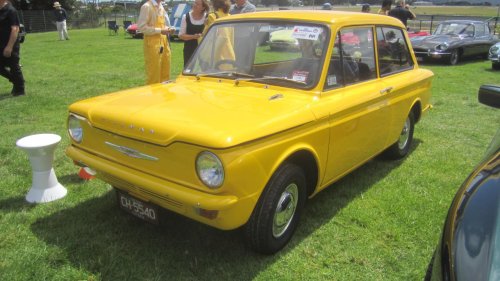


















Few people remember the 1965 Hillman Imp but it was engineered differently from the startThe 1965 Hillman Imp rarely comes up in casual conversations about classic small cars, yet it embodied a very different kind of British engineering ambition. Conceived as a technically advanced answer to the Mini, it combined an aluminium racing-derived engine, a rear-mounted powertrain and independent suspension in a package that looked modest but hid radical thinking. While rivals chased simplicity and cost cutting, Rootes engineers treated the Imp as a clean-sheet laboratory on wheels. That decision produced a car that was ingenious, fragile and ultimately overshadowed, but it also left behind one of the most interesting engineering stories of the 1960s. A British experiment in miniature When the Hillman Imp was revealed in the early 1960s, it arrived with fanfare as a bold small car from Britain, intended to take on the Mini and continental rivals. The name “Imp” had been used internally for earlier projects, but the production car was the first British mass-produced model with its engine block and cylinder head cast entirely in aluminium, a significant break from the cast-iron norm of the period. That aluminium unit was a water cooled four cylinder engine inspired by the Coventry Climax FWMA, a racing and fire pump design that had already proved its lightness and willingness to rev. The engineering team, led by figures such as Leo Kuzmicki, Craig Miller and Peter Ware, treated the powerplant as a serious technical project rather than a cheap commuter motor. Development papers on the Hillman Imp engine describe how the Coventry Climax concept was adapted to 875 cc road use, with attention to strength, cooling and refinement. The result was a light, compact unit with an overhead camshaft that could spin freely, a world away from the side valve and pushrod engines that still powered many small cars. Packaging was just as unconventional. Instead of following the Mini’s transverse front engine layout, Rootes opted for a rear engine, rear drive configuration. A contemporary buying guide points out that a rear engined design was not unusual at the time, given the success of the Volkswagen Beetle, but Rootes pushed the idea further with a lightweight aluminium engine and a focus on handling. Engineered from the back forward Much of the Imp’s character flowed from that unusual layout. The aluminium engine sat behind the rear axle at a 45-degree angle in order to fit within the compact shell, an arrangement described in Scottish coverage of the car’s basic specifications. Positioning the engine at a 45-degree incline allowed a low rear deck and practical luggage space, while the aluminium gearbox helped keep weight off the tail. The chassis team did not simply copy other rear engined cars. Early documentation on the Imp suspension credits much of the excellent handling to the way the rear wheels were located. Instead of crude swing axles that afflicted cars such as the Chevrolet Corvair, the Imp used a semi trailing arm independent rear suspension system. According to the main history of the Hillman Imp, engineers deliberately chose this layout to avoid the sudden camber changes and tuck under behaviour that could make swing axle cars unpredictable at the limit. To make the rear engine concept work for everyday drivers, the team paid close attention to weight distribution and geometry. The same historical account explains how the water cooled four cylinder unit, still rooted in the Coventry Climax FWMA concept, was paired with carefully tuned pivot points in the rear suspension. By lowering the pivot, engineers reduced the jacking effect that plagued other rear engined designs and produced a car that testers praised for nimble, forgiving handling. Inside, the engineering story continued. Period brochures described The Hillman Imp as Britain’s newest mini car, with comfortable seating for four and an aluminium power unit that stood out in its class. The rear mounted engine allowed a surprisingly airy cabin, and the light controls gave the small car an agile, almost sporty feel. The combination of compact size, advanced engine and independent suspension meant the Imp felt more sophisticated than its modest badge suggested. From Mark I troubles to Mark II refinement The technical ambition came at a cost. Early Mark I Imps suffered from teething problems that quickly damaged the car’s reputation. Warranty records and owners’ recollections compiled in enthusiast forums describe coolant leaks, overheating and assorted reliability issues. A detailed Facebook discussion on whether the Imp was truly terrible or simply unlucky notes that warranty claims against the Imp were said to be a major factor in the Rootes Group’s financial difficulties in the mid sixties, and that these costs raised questions about the future of the Linwood plant in Scotland. Rootes responded by refining the design. The main production history records that the Mark II Imp, built from 1965 to 1968, followed the initial problems that affected the Mark I. The Rootes Group reintroduced the traditional choke control, modified the engine for better durability and addressed water pump and gasket issues that had plagued early cars. Exterior details such as the position of the badges on the side of the doors also changed, signalling incremental improvements even if most buyers never noticed the visual differences. Engineering papers from the period show how the development team kept iterating on the Coventry Climax based engine. The design study by Leo Kuzmicki, Craig Miller and Peter Ware describes how the all aluminium unit was strengthened in key areas, with revised cooling passages and improved sealing. These changes did not erase the early reputation for fragility, but they did turn later Imps into much more dependable machines. Production outside Britain added another layer to the story. A detailed account of Imps in Australia notes that locally assembled cars retained the rear engine layout, with the aluminium unit mounted ahead of the rear wheels, and that enthusiasts there admired the car’s distinctive engineering even as sales remained modest. That pattern, serious fans but limited mainstream appeal, would follow the Imp throughout its life. Why the Imp felt different on the road Owners who experienced a well sorted Imp often came away impressed. The National Motor Museum lists the Hillman Imp with key facts that underline its engineering: Year 1963, Country Great Britain, Capacity 875 cc, Cylinders in line 4 with an overhead camshaft. Those figures translate into a light nose, quick steering and a rev happy character that contrasted sharply with heavier, front engined rivals. Contemporary descriptions of the Imp’s suspension highlight how much care went into the rear geometry. Technical notes on the Imp explain that much of the excellent handling characteristics came from the good location provided to the rear wheels by the semi trailing arms. Where a swing axle car could feel nervous as the outside wheel tucked under, the Imp’s layout kept the contact patches flatter and the breakaway more progressive. Drivers noticed that the car could be hustled along twisty roads with confidence, despite the engine’s modest output. Modern video retrospectives echo that view. A recent YouTube feature that brands The Hillman Imp as a misunderstood classic describes it as one of the most underrated small cars of its era, with the hashtags #HillmanImp, #BritishRocket and #ClassicBritishCars used to underline its lively nature. Another video essay on the car’s secrets argues that it was Britain’s boldest experiment in small car design, a machine that dared to challenge the Mini in the early 1960s and offered a different flavour of agility and refinement. Even basic road tests picked up on the same themes. Period brochures for Britain’s newest mini car, the Hillman Imp, stressed comfortable seating for four, light steering and an aluminium power unit that delivered responsive performance. The car’s low weight and short wheelbase made it quick to change direction, while the overhead cam engine gave it a willingness to rev that many contemporary drivers had never experienced in a budget model. The reputation gap and the legacy For all that cleverness, the Hillman Imp never shook off the shadow of its early problems. A detailed Facebook discussion on whether the car was truly as bad as some critics claimed suggests that the Imp was as much a victim of circumstance as of design flaws. Warranty claims against the Imp, combined with the cost of setting up the Linwood factory, strained the finances of Rootes at a time when competition in small cars was intense and the Mini dominated public imagination. Rootes’ own development story confirms that the company had aimed high. Engineers took the Coventry Climax concept and, as one account puts it, In the meantime, the Coventry Climax engine was developed into something far more suitable for road use, expanded to 875 cc and adapted for mass production. The team studied rivals at Simca, Renault and Fiat, then chose a path that combined advanced materials with a compact rear engine package. That strategy produced a car that was technically impressive but operationally complex for a manufacturer of Rootes’ size. The Imp’s story has been revisited in modern media. A video titled as a list of 13 shocking facts about the Hillman Imp frames it as one of the most misunderstood and underrated British small cars, arguing that early quality control problems at the Linwood plant, especially in body and trim fitting, planted the seeds of its poor reputation even though later cars were significantly improved. That analysis aligns with the shift from the troubled Mark I to the more mature Mark II Imp and later derivatives. Today, the Imp’s engineering choices look less eccentric and more ahead of their time. Aluminium engines are now common, independent rear suspension is expected in performance cars and compact packaging is celebrated. The Imp combined all three in the early 1960s, in a car marketed simply as a practical family runabout from Great Britain. For enthusiasts, that contrast between modest image and ambitious engineering is exactly what makes the 1965 Hillman Imp so compelling. It was engineered differently from the start, with a water cooled Coventry Climax inspired engine, rear mounted layout and semi trailing arm suspension that gave it a driving character all its own. The fact that few people remember it today only sharpens its appeal as a hidden chapter in Britain’s small car story, a reminder that innovation does not always win the sales race but can still leave a lasting technical legacy. More from Fast Lane Only Unboxing the WWII Jeep in a Crate 15 rare Chevys collectors are quietly buying 10 underrated V8s still worth hunting down Police notice this before you even roll window down The post Few people remember the 1965 Hillman Imp but it was engineered differently from the start appeared first on FAST LANE ONLY.