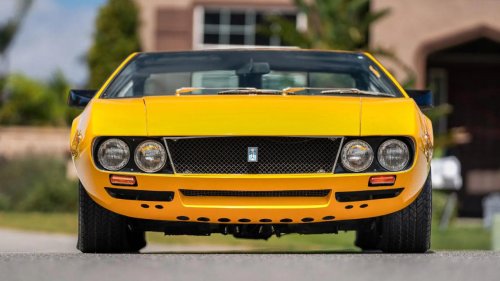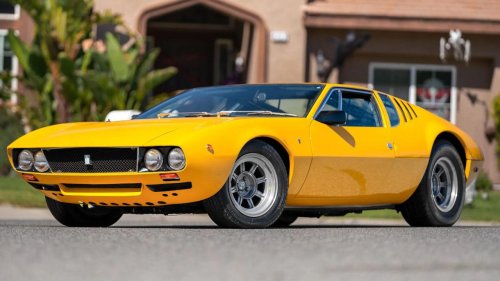


















Few people recognize the 1969 De Tomaso Mangusta but it helped shape supercarsOn a modern highway filled with familiar badges, the 1969 De Tomaso Mangusta can slip past almost unnoticed. Yet this low Italian coupe, with its American V8 and origami-sharp bodywork, quietly rewrote the rules for how a supercar could look, feel, and even behave. Temperamental, flawed, and sometimes frightening, it helped sketch the template that later exotic cars refined. Few outside dedicated enthusiast circles can identify a Mangusta on sight. For designers, racers, and collectors who follow its story from Modena workshops to American garages, however, the car stands as a missing link between 1960s race prototypes and the modern supercar era. The wild idea behind an Italian American hybrid The Mangusta grew out of Alejandro De Tomaso’s determination to build his own line of race cars after leaving Argentina for Italy to work for Maserati in the OSCA factory. That move from Argentina to Italy exposed Alejandro to Italian craftsmanship and competition engineering, convincing him that a small company could punch far above its weight. From the start, De Tomaso’s vision for the Mangusta was to create a sports car that could compete with Ferrari by blending raw muscle with cutting-edge design and race-inspired engineering. Contemporary coverage described how De Tomaso’s vision was ambitious, even if the finished car was challenging to handle at the limit. Under its Italian skin beat a reliable and powerful American heart. Period descriptions emphasize that beneath the body of a De Tomaso Mangusta sat a Ford V8 engine that delivered strong performance but was also known to be tricky for inexperienced drivers, a mix captured in later reflections that explained how beneath its Italian there was a distinctly American powertrain. The car’s name carried the same confrontational spirit. The De Tomaso Mangusta was famously given its name because a mongoose kills a cobra, a pointed reference to the rivalry with Carroll Shelby’s Cobra and GT40 programs. Later commentary has underlined that the Mangusta name was a direct jab at Carroll Shelby, since the Mangusta was supposed to be a rival to the Cobra, with sources explaining that direct jab at and his earlier deal with De Tomaso that fell through. From failed Shelby project to “mongoose” revenge The backstory that led to the Mangusta is as dramatic as the car’s stance. Earlier in the decade, De Tomaso and Carroll Shelby had collaborated on a mid-engine racing project known as the P70. That program never reached its goal. Shelby withdrew from the project by late 1965 so he could refocus on Ford’s GT40 Le Mans program, and without his backing and Ford connections the project fizzled, a sequence later summarized in accounts of why it never. That breakup shaped the Mangusta’s personality. One detailed video history frames the rivalry in stark terms, describing how if the 1960s had a rivalry it was Carol Shelby versus Aleandro the Thomas, one the American muscle car king and the other an Argentinian transplant who embraced Italian craft. The same source notes that Carol Shelby versus became a shorthand for two very different visions of performance. Another documentary-style account of the car’s origins calls it one of the most distinctive Italian sports cars of the late 1960s and describes it as a crucial step in the transformation of De Tomaso from a small constructor into a brand with global ambitions. That video explains that the Damaso Mangusta represented a turning point in how Italian boutique makers approached the American market. Even the nickname “mongoose” reinforced this rivalry narrative. Later enthusiasts have repeated that the Mangusta was supposed to be a rival to the Cobra, and that its very name signaled De Tomaso’s frustration with how the P70 program ended. The car that finally reached the street carried that score-settling attitude into its styling and mechanical layout. Giugiaro’s sculpture on wheels If Alejandro De Tomaso supplied the grudge and the engineering direction, Giorgetto Giugiaro supplied the shape. The Mangusta’s body was drawn by Giorgetto Giugiaro for Ghia at a time when De Tomaso had become president of the coachbuilder. Contemporary design commentary highlights that Giorgetto Giugiaro for created muscular, wide-shouldered bodywork that sat on a chassis known to flex more than ideal. The official history of the model describes how the Mangusta’s aggressive yet reserved design had many signature features outside of the chassis. Those elements included rear engine covers that opened in dramatic fashion over both the engine and the rear storage compartment, a layout that the company summarizes by noting that Mangusta’s aggressive yet relied heavily on those distinctive covers. Viewed from the side, the car was almost impossibly low. One detailed sales listing for a restored example notes that it was only 43 inches tall and that its flowing body line and centrally hinged gullwing engine covers made a spectacular presentation. The same description emphasizes that only 43 inches, the Mangusta looked stunningly good and ready to show even when standing still. Those gullwing panels were not just a party trick. A detailed Facebook post by owners describes how the production Mangusta was a unique design amongst its competitors because it featured very unusual gullwing doors for the hood. That same account stresses that production Mangusta was precisely because of those rear opening panels. Period road tests captured the effect. One archive piece described the 1968 De Tomaso Mangusta by Ghia as pure automotive theater, bold, aggressive, and exhilarating, and added that from its inception it was defined by razor-sharp edges with a wide, planted stance. The same retrospective recalled that 1968 De Tomaso delivered more visual drama than driving polish. A beautiful car with dangerous manners The Mangusta’s styling and stance promised race car reflexes, but its dynamics were more complicated. One modern video feature bluntly calls it one of the most dangerous sports cars ever made and recalls that in 1967 Italian coach builder Gia unveiled a sports car so beautiful it made audiences gasp, designed by a 27-year-old genius. That same piece highlights how the Italian coach builder creation could be unforgiving when pushed, especially in inexperienced hands. Under the rear deck, the car typically carried a 4.9 liter Ford V 8 with around 230 horsepower and a claimed top speed of 155 mph. A detailed specification reel describes a MIGHTY MONGOOSE 1969 DE TOMASO MANGUSTA with ENGINE: 4.9-liter Ford V-8, HORSEPOWER: 230, and TOP SPEED: 155 mph, and presents that 4.9-liter Ford V-8 package as representing De Tomaso’s reach for supercar territory. The combination of short wheelbase, rear weight bias, and a chassis that flexed too much meant that the car could feel nervous at speed. The same design analysis that praised Giorgetto Giugiaro for Ghia also noted that the Mangusta sat on a chassis that flexed too much, which affected high-speed stability and made the car harder to handle. That critique is embedded in the description that the chassis flexed too for the power it carried. Owners still talk about the car as a handful. One enthusiast who spent a day exercising a collection wrote that the Mangusta is a powerful beast, a simple statement that captures both its appeal and its intimidation factor. That impression is summed up in the comment that Mangusta is awesome after being driven on the street alongside other classics. Later retrospectives acknowledge that there were other cars drivers might have preferred on a twisting road, but few they would rather be seen in. The Mangusta’s balance of beauty and danger became part of its legend, and that mix is exactly what many collectors now seek. How a niche coupe helped define the supercar idea Production numbers for the Mangusta were modest, and the car has always lived in the shadow of more famous exotics. One detailed market analysis points out that the Mangusta has always lurked in the shadows of Marcello Gandini’s Bertone masterpiece for Lamborghini, even though in reality the Mangusta shared more conceptual ground with one-off showpieces like the Alfa Romeo Carabo. That comparison is captured in the observation that Mangusta has always behind the better known Lamborghini, even while sharing its avant garde spirit. Yet the car’s influence runs deeper than its sales figures. Enthusiast histories describe the Damaso Mangusta as one of the most distinctive Italian sports cars of the late 1960s and argue that it represented a crucial step in the transformation of De Tomaso from a niche builder into a company that could sell road-going supercars. That argument is laid out in detail in the video that calls the Damaso Mangusta a key part of that transition. The Mangusta also helped popularize the idea of an Italian-bodied car with American power as a viable alternative to purebred exotics. A detailed feature on a restored example calls it a 1969 De Tomaso Mangusta – The Rare American Powered Italian Supercar and explains how the De Tomaso Mangusta combined an Italian chassis with a Ford V8, creating a new kind of hybrid that later appeared in other Italian cars. That story explicitly labels the rare American powered as a template that influenced later hybrids of Italian design and American engines. Compared to the Ford GT40 concept, with which it shared many conceptual and engineering similarities, the Mangusta was more subtle in some ways but no less serious. A historical comparison notes that compared to the Ford GT40 concept, the Mangusta was more subtle and that similar ideas later appeared in other Italian hybrid cars. Owners and restorers treat surviving Mangustas as rolling art. One restoration story recounts how a De Tomaso Mangusta linked to Dean Martin’s sons was crashed, stripped, forgotten, and then rebuilt piece by piece to match exactly how it left Italy. That narrative calls the Mangusta a wild design and a piece of automotive art, and concedes that the Mangusta had its issues, was tough to drive, and had quirks, but remained irresistible. Those reflections emphasize that Mangusta had its wilder backstory than most yet still might be the most beautiful Italian sports car many enthusiasts have never heard of. On video, the car still captivates. One enthusiast channel that documents classic machines describes the Damaso Mangusta as one of the most distinctive Italian sports cars of its era and places it in the context of late 1960s design experiments that shaped later supercars. That same presentation of the Italian sports car highlights how its combination of low roofline, wide stance, and exotic detailing set a pattern that later cars refined rather than replaced. More from Fast Lane Only Unboxing the WWII Jeep in a Crate 15 rare Chevys collectors are quietly buying 10 underrated V8s still worth hunting down Police notice this before you even roll window down