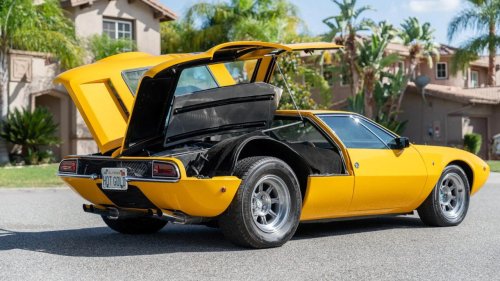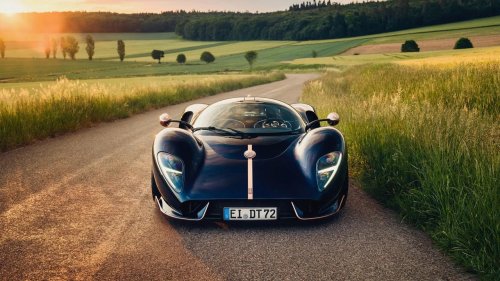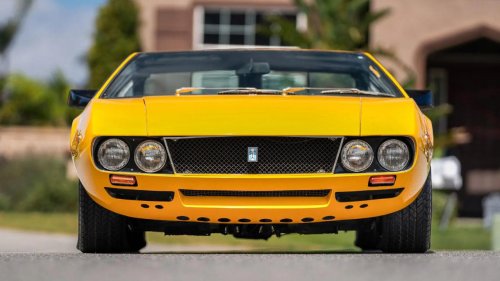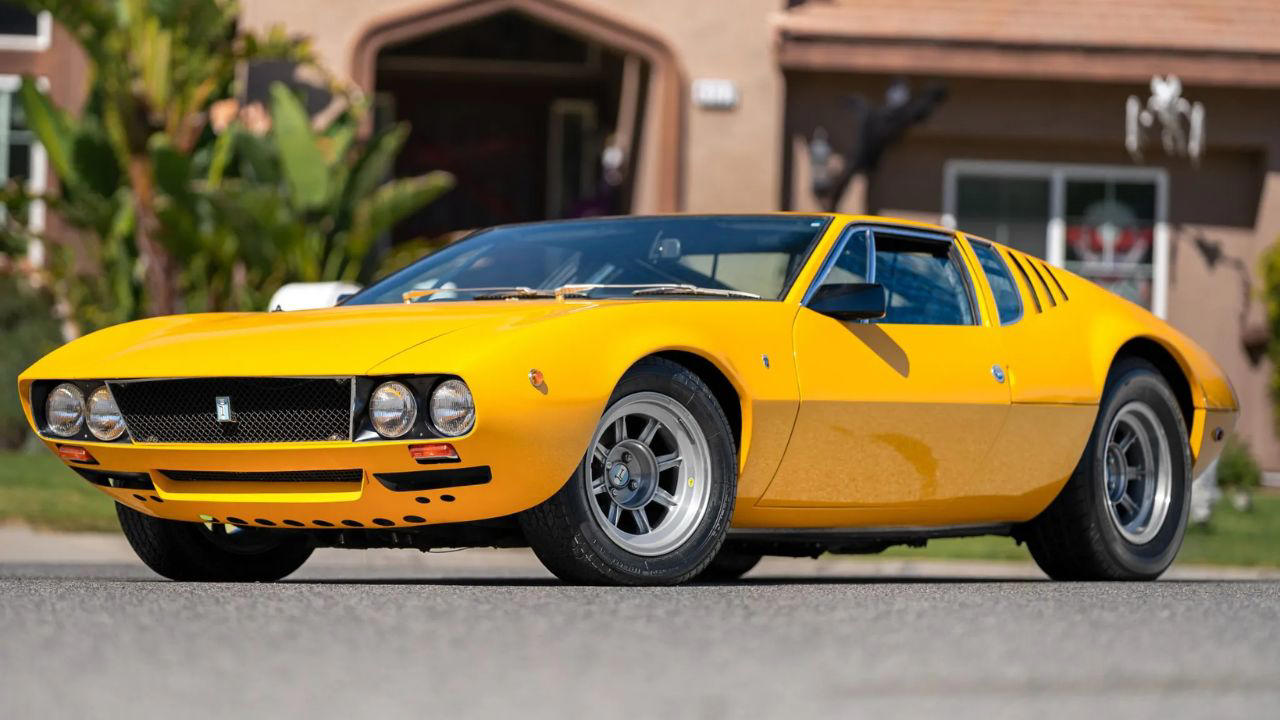



















The 1969 De Tomaso Mangusta looked wild because it truly wasThe 1969 De Tomaso Mangusta did not just look like a fantasy sketch accidentally put into production. It behaved like one too, with exotic proportions, theatrical bodywork and a chassis that sometimes felt at war with physics. That tension between visual drama and flawed engineering is exactly why the car still fascinates enthusiasts more than half a century later. Built in tiny numbers and split between Europe and North America, the Mangusta fused Italian styling with American V8 muscle in a way that felt both visionary and slightly unhinged. Its wildness was not an accident of age or nostalgia; it was baked into the design, the drivetrain and even the way the doors opened. The Italian American hybrid that never played it safe On paper, the Mangusta was a rational product of its time. It was an Italian sports car with an American heart, conceived for buyers who wanted Latin style and Detroit reliability. A period description calls it an exotic outlaw with Italian flair and American muscle DNA, a phrase that still captures the car’s split personality, with the word DNA used quite literally in that context. Production figures underscore how rare it was. A total of 401 cars were built, with about 150 made for Europe and the remainder for North America, according to period data on the 401 units. That small run alone would have guaranteed a certain mystique, but the Mangusta added a design and engineering package that felt more like a concept car that escaped the show stand. Several contemporary summaries describe it as an Italian American sports car produced between 1967 and the early 1970s, a bridge between European coachbuilding and the booming American performance scene. One archive feature goes as far as to call the 1969 De Tomaso Mangusta The rare and striking Italian American sports car, underlining how unusual this cross-Atlantic mix looked in period, with the phrase De Tomaso Mangusta used to introduce it. Giorgetto Giugiaro’s wedge from another planet The Mangusta’s styling is the first reason it still stops people in their tracks. Designed by Giorgetto Giugiaro at Ghia and built by Ghia, the car wears a low, sharp nose, a glassy cabin and a long rear deck that makes it look almost impossibly flat. Contemporary sales literature notes that it was Designed by Giorgetto Giugiaro at Ghia and built by Ghia, which placed it squarely in the lineage of Italian show cars of the mid 1960s. One detailed profile ranks The De Tomaso Mangusta among Italian designer Giorgetto Giugiaro’s most outstanding efforts, a statement that carries weight given his later work on icons like the original Volkswagen Golf and various Maseratis. In that context, the De Tomaso Mangusta “Mongoose” nickname feels apt. The body is a study in tension, with razor edges, delicate glass and muscular haunches that look ready to pounce. The factory itself leans into this identity. Official material from De Tomaso describes The Mangusta’s aggressive yet reserved design, and notes that The Mangusta had signature features outside of the chassis, including a distinctive rear engine cover and other details that set it apart from more conservative grand tourers. That official description of The Mangusta reinforces how the company saw the car as a design statement first and a conventional sports car second. The gullwing engine cover that stole every show Nothing about the Mangusta’s bodywork was more theatrical than its engine bay. Instead of a simple rear deck, the production Mangusta was a unique design amongst its competitors because it featured very unusual gullwing doors for the hood. Contemporary owners’ discussions stress that the Mangusta used this double-hinged arrangement over the engine, which opened like a pair of metallic wings. Those panels did more than draw crowds at fuel stops. They turned every maintenance stop into a small performance, revealing the V8 and the rear chassis in a way that few road cars attempted. Later commentary describes the gullwing-style doors over the engine bay as perhaps the single most famous feature of the Mangusta, because they offered unfettered access to the mechanicals and created an unforgettable silhouette when raised. That emphasis on the Perhaps the most famous feature shows how central this design flourish remains in the car’s legend. The headlamps also had their own eccentricity. A detailed design study notes that later Mangustas received new headlamps that functioned through a crude lever-and-cable arrangement, which fed into the cabin. Only an estimated 50 cars were produced with this specific setup, a tiny subset within an already small production run, and the description of those 50 cars underlines how experimental the lighting solutions were. A mid-engine layout that fought its own hardware Under the Mangusta’s skin, the story becomes even more extreme. The car used a mid-mounted American V8, which promised balance and traction, but the execution was compromised. Since the bulk of its mid-mounted 302 is cast iron, the Mangusta suffers from a wonky 32/68-weight distribution that does nothing for stability. That blunt assessment of the Since the mid-mounted 302 and the 32/68-weight split is not an exaggeration; it describes a car with nearly two thirds of its mass over the rear axle. Another technical critique spells out why. First of all, the engine and heads and intake manifold of the Ford 302 were all cast iron, described memorably as the stuff of boat anchors. That heavy Ford hardware, sitting behind the driver, created a pendulum effect that could punish any driver who treated the car like a forgiving grand tourer. The phrase First of all, followed by the description of the Ford 302, sets the tone for a long list of compromises. Restoration specialists who have spent years working on these cars echo the same theme. One workshop, reflecting on decades of Italian sports car restoration, introduces a section with the line When Italian Style Meets Physics and notes that throughout their years doing Italian sports car restoration work, they have learned that the Mangusta can be demanding underneath its glamorous surface. The phrase Throughout our years doing Italian sports car restoration work, we have learned that the Mangusta hints at a car that needs respect as much as admiration. Power from Detroit, attitude from Modena Part of the Mangusta’s wild character came from its drivetrain mix. European market examples used different specifications, but the American focus on torque and sound gave the car a personality that felt closer to a muscle car than a typical Italian exotic. One description of a 1969 DeTomaso Mangusta highlights it as the exotic outlaw with Italian flair and American muscle DNA, and notes that underneath those dramatic gullwing doors sat a burly V8. That emphasis on Underneath those dramatic gullwing panels was American power captures the contrast. Another period snapshot of a 1969 example describes it simply as an Italian sports car known for its striking design and impressive performance, and adds that it was Powered by a 4.7-lit V8. That figure, given as 4.7-lit, reflects the displacement of the Ford small block in certain configurations and underlines that this was no underpowered showpiece. Other technical write ups focus on the Ford 302 cubic inch configuration. They reiterate that the 302 block, heads and intake were all cast iron, and that this choice made the rear of the car very heavy. The criticism of the Ford 302 as boat anchor material is not just rhetorical flourish; it is an attempt to explain why a mid-engine layout that should have produced balance instead delivered a 32/68-weight distribution that could bite the unwary. Built to fight a Cobra, named for a mongoose The Mangusta’s name and mission added another layer of drama. European market coverage points out that the name Mangusta means “mongoose” in Italian, the animal famous for killing cobras. One detailed history of the 1967 to 1971 De Tomaso Mangusta explains that European buyers understood this reference, and that the Mangusta name in Italian carried a clear implication of a cobra killer. Another in depth feature makes the connection explicit by describing The De Tomaso Mangusta as The Car That Was Designed To Kill The Shelby Cobra. In that telling, The De Tomaso Mangusta first appeared in 1967, just as the Shelby Cobra was fading from the scene, and it was intended as a spiritual successor in the rivalry between Italian chassis builders and American engine suppliers. That narrative of Car That Was fits with the era’s fascination with cross-Atlantic competition. Later commentary on the broader rivalry frames it as a contest between Carol Shelby and Aleandro the Thomas, with one presented as the American muscle car king and the other as an Argentinian born figure shaping Italian exotic cars. That colourful description of Carol Shelby versus Aleandro the Thomas may simplify the personalities involved, but it captures the sense that the Mangusta was born into a culture of transatlantic one-upmanship. On the road: thrilling, flawed, unforgettable Contemporary road tests and later retrospectives tend to agree on one thing. The Mangusta is not the easiest car to drive quickly, but it is one of the most memorable. A Classic Ride feature on a 1969 De Tomaso Mangusta emphasizes again that since the bulk of its mid-mounted 302 is cast iron, the car suffers from that 32/68-weight distribution, which can lead to tricky handling at the limit. The same piece notes that the Mangusta rewards smooth inputs but punishes sudden moves. Another archive reflection on a 1969 example admits that there are other cars drivers might prefer to hustle down a back road, but insists that few offer the same sense of occasion. That source introduces the 1969 De Tomaso Mangusta as a rare and striking Italian American sports car produced between 1967 and the early 1970s, and implies that the quirks are part of the appeal. The phrasing in that De Tomaso Mangusta description suggests that the car’s flaws have become part of its charm. Modern observers echo this sentiment. A social media post from a major automotive outlet, written while admiring a 1967 De Tomaso Mangusta at a show, describes The De Tomaso Mangusta as a striking Italian sports car known for its exotic design and powerful performance and notes that it was Produced from 1967 to the early 1970s. That short observation about Produced years later shows how the car continues to pull attention away from newer machinery. Why the Mangusta still matters In an era when many classic cars blend into a sea of nostalgia, the Mangusta still looks like a visitor from a more daring age. Its combination of Italian style, American power and unapologetically compromised engineering would be almost impossible to replicate under modern regulations and corporate risk calculations. The car exists in a narrow space between concept fantasy and viable product, and that tension is exactly what keeps enthusiasts talking about it. More from Fast Lane Only Unboxing the WWII Jeep in a Crate 15 rare Chevys collectors are quietly buying 10 underrated V8s still worth hunting down Police notice this before you even roll window down