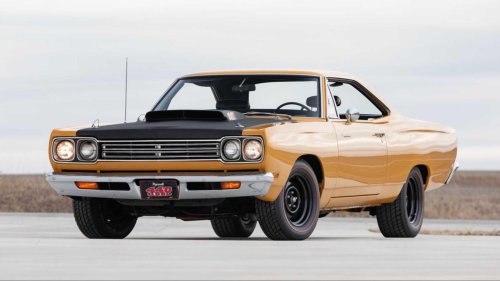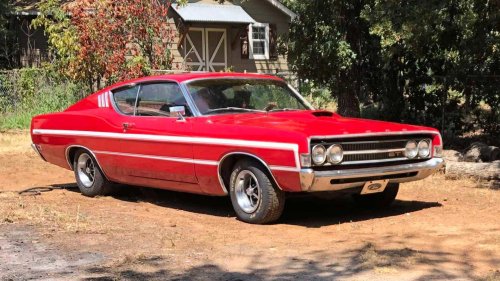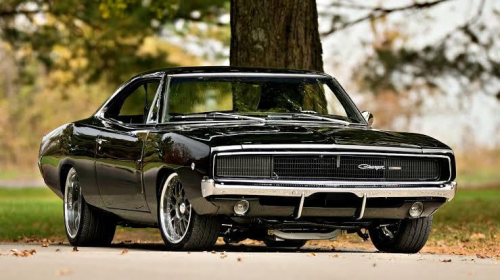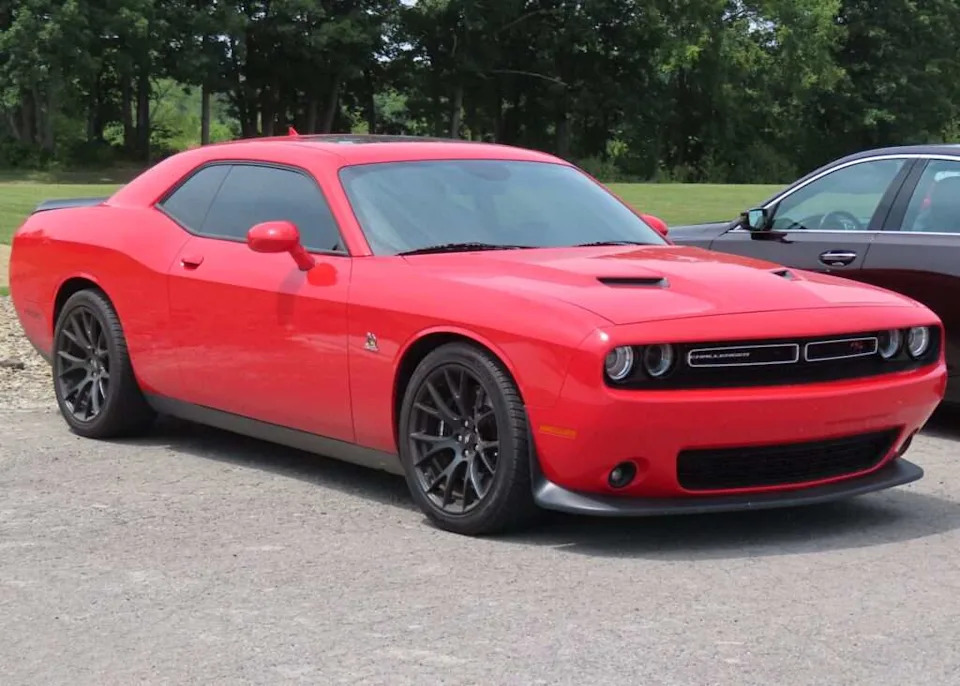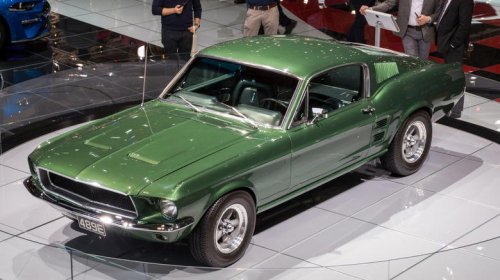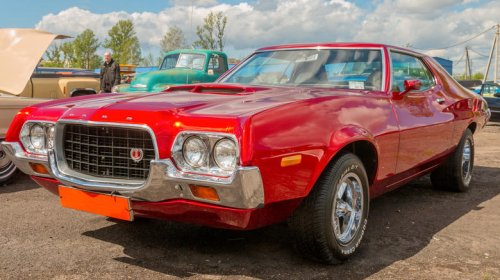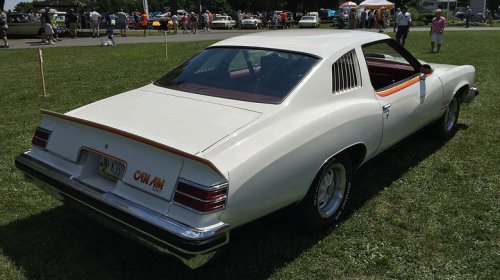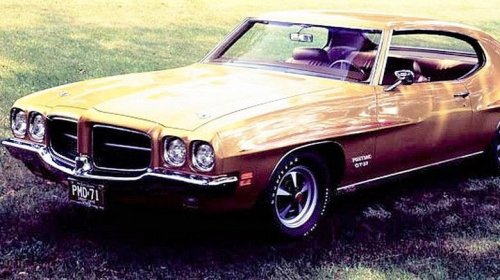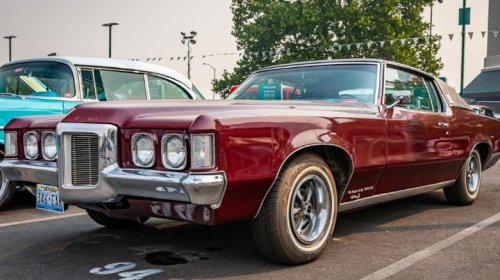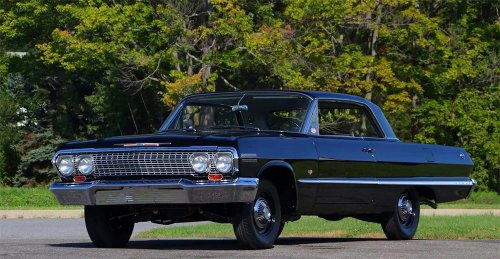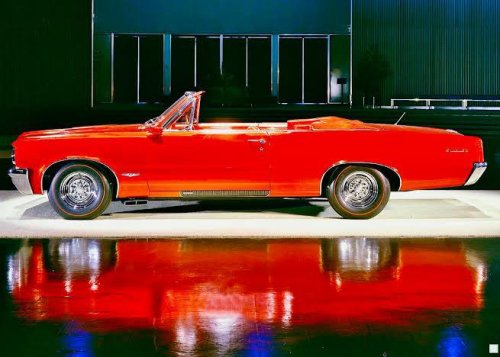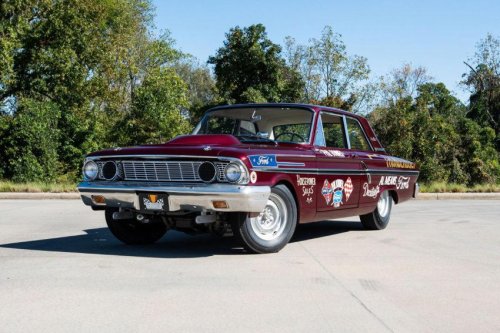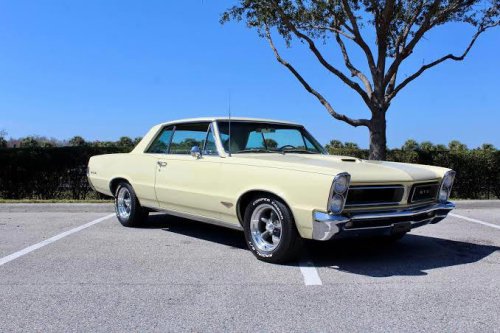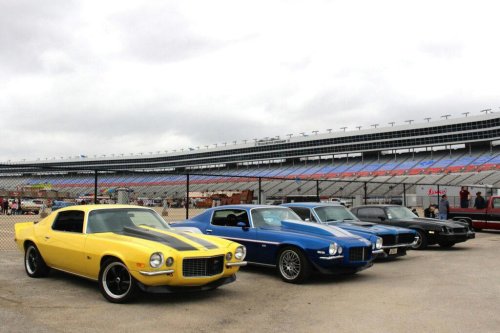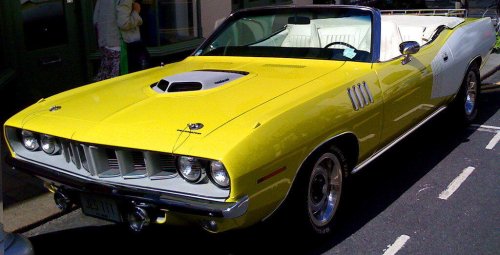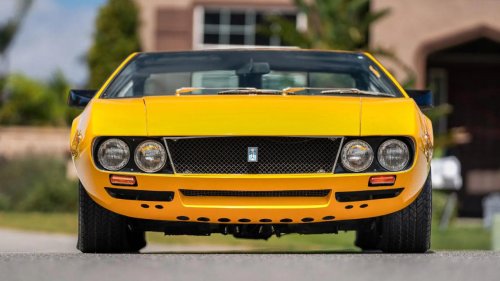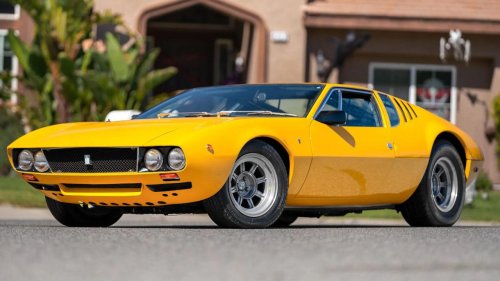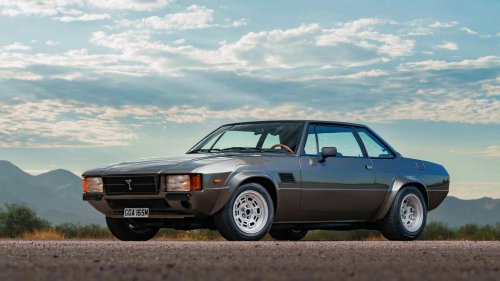
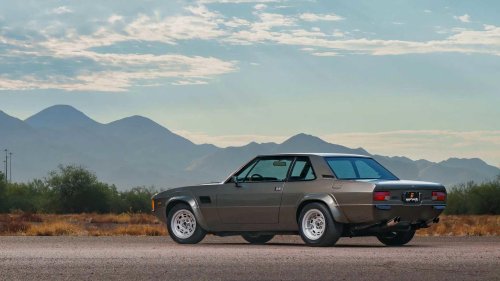
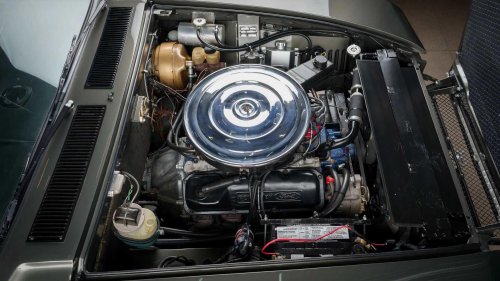

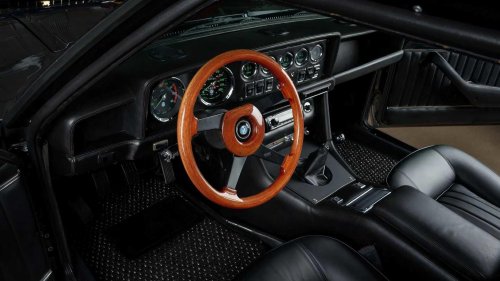



















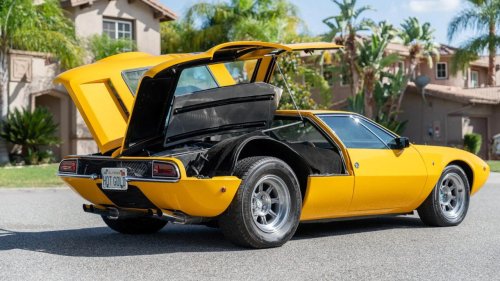

The muscle car was king in the '60s. Ever since the Pontiac GTO kicked off the muscle scene, manufacturers had scrambled to bring their own take on the brawny V8 American sports car to the market, with engine horsepower growing quicker than the size of bell-bottoms during the era. This was a golden time for American automobiles, with a young, affluent clientele wanting to get away from the hand-me-down sedans of their parents, and get a set of wheels that shouted youthful exuberance. Muscle cars were everywhere, and nothing could stop them in the '60s – that is, apart from the '70s.If the Swinging Sixties were the keg party for the muscle car, the '70s were the parents coming home to find the house wrecked. The hangover began when emissions regulations put an end to the horsepower race, and the oil crisis meant that no one wanted to use a gas station's worth of fuel just to go and buy a bottle of milk. As quickly as it started, the muscle car golden era ended, and in the early '70s, American manufacturers were in disarray, stuck trying to make muscle cars that weren't that muscular, and with engines that they could no longer practically use. With powerful muscle cars in decline in the USA, one Italian exotic brand took up the mantle and started manufacturing an American-powered muscle car itself – it just wasn't sold in America. The De Tomaso Longchamp Is An Italian Muscle Car With American Power Bring A TrailerSpaghetti Westerns get their names for a fairly obvious reason. From the mid-'60s to the mid-'70s, these films depicted the American West but were made in Europe, most famously by Italian director Sergio Leone. But Spaghetti Westerns weren't the only thing that mixed American culture with Italian manufacturing during the time. Alejandro de Tomaso was an Argentinian racing driver and industrialist who decided to build exotic cars in Modena, found in his ancestral homeland of Italy, and he was fond of using reliable and powerful American V8s in the engine bay. The Longchamp Built On The Success Of The De Tomaso Pantera The pretty De Tomaso Pantera arrived in the early '70s, taking on the likes of Maserati and Ferrari. Under the exotic European skin was a 5.8-liter Ford Cleveland 351C pumping out 330 horsepower. De Tomaso loved the easy-revving engine and had an idea for a more conventional two-door sports car that could also utilize this mill. This car would be the Longchamp, named after a French racecourse and launched in 1973. From a distance, the model looked a lot like an American muscle car, with a silhouette not that dissimilar to a Plymouth Cuda or a Dodge Challenger. The Longchamp Arrived Just As Muscle Cars Were Dying Off Bring A TrailerWith the 5.8-liter Cleveland 351 slotted under the hood, it had the soundtrack to go with the looks, too. Ironically, around the time of the Longchamp's arrival, Ford was reshuffling its muscle car engine range. In 1972, Ford scrapped the 351 Boss and semi-replaced it with an R-code 351 H.O. performance engine, which was essentially a downtuned Boss with lower-compression open-chamber heads and a milder cam. By 1974, Ford had stopped making the 351C small block altogether in America, replacing it with the more economical long-stroke 351M and 400, two engines that were based on the Cleveland. The Mustang had also become a dramatically downsized compact with an inline four-cylinder as standard. The Italian Muscle Car Was Without An Engine De Tomaso's new Italian muscle car, which sported Ford Granada front lights and a chunky look and stance that seemed to carry on where the US models had left off, wasn't going to be using a 351M. This engine was rated at around 150 horsepower – less than half of what it once had – so it wouldn't be much use in a huge coupe.Luckily, there was a solution. When Ford USA wrapped up Cleveland production in 1974, De Tomaso turned to Australian-produced 351C engines for the Longchamp, meaning that the Italian car really did continue the Ford muscle car upwards trajectory when the USA was killing them off. A Closer Look At The De Tomaso Longchamp Bring A Trailer The Longchamp was designed to take on the likes of the Mercedes SLC, which was attracting upmarket customers in Europe and America. The idea was to create a boxy, imposing luxury coupe that used V8 power for effortless performance. The design, penned by Tom Tjaarda of Ghia, was reminiscent of both the Lancia Marica and the angular Maserati Kyalami, but it wasn't a far stretch from the three-box designs of the muscle car heyday.The four-barrel Holley-carbureted 351 Cleveland V8 from Australia had large valves and free-breathing head porting for 330 horsepower, meaning that the Longchamp can hit 60 mph in 6.4 seconds and has a top speed of 149 mph. Pretty much every Longchamp featured a Ford C6 auto gearbox connected to the rear wheels via a limited-slip differential, but there were a few ZF manuals also made. The De Tomaso Longchamp Looked Like A Next Generation Ford Mustang Bring A Trailer The suspension is double wishbones, coil springs, and telescopic dampers. The 4,000-lb two-door also had twin fuel tanks and twin fuel pumps. At the start of the '80s, De Tomaso introduced the Longchamp GTS and GTS-E, which feature huge, protruding fiberglass wheel arches, Campagnolo alloys, and quad headlights, the effect being an even more muscular look. Sadly, for anyone in America noticing that Italy had started making a Ford-V8-powered muscle car, they were sadly out of luck. The Longchamp was made up until 1989, with 409 examples being built, but it wasn't made available officially in the US. It is estimated that 20 were brought over as gray imports to the US. Buying A De Tomaso Longchamp In 2025 Bring A Trailer The De Tomaso Longchamp is one of those rare exotic cars that is difficult to pinpoint when it comes to price. There are custom spyders around, along with early cars that have been updated with newer wheels and paint, and also good original examples, all with wildly different prices. The average price for Longchamps, according to Classic.com, is $40,278, but that doesn't really tell the whole story. One nice-looking GTS-E went for just $28,415, but that was in 2013, while a great-looking GTS failed to sell for $117,500 in 2024. Expect To Pay Around $40,000 For A Good Longchamp If You Can Find One Probably the best guide to prices is a yellow, highly original 1976 car with 42,000 miles on the clock that sold in Italy in 2024 for $40,278. This seems to be the ballpark that you can expect to pay for a decent Longchamp in 2025 – if you can find one, that is. For a similar-looking grand tourer from the '70s, try the Maserati Kyalamis, which features the company's V8 engine, available in either 4.2-liter or 4.9-liter guises. This car was even rarer than the Longchamp (just 200 built) and has an average used price of $50,251.Source: Classic.com.