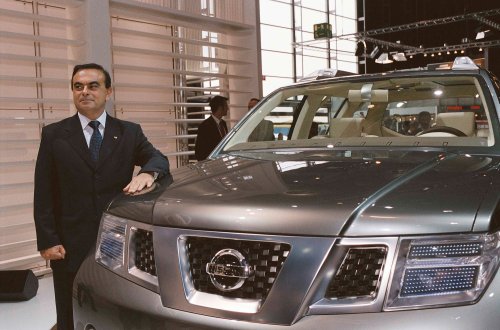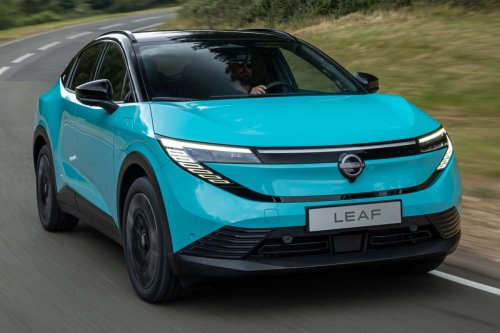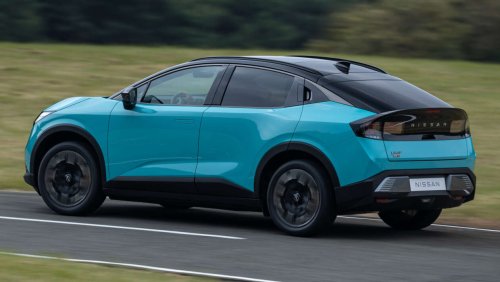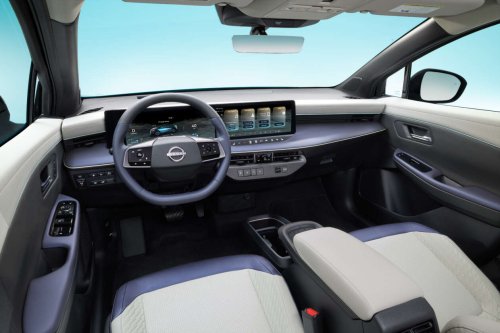


















I am writing this story because today, April 25, marks seven years since Ghosn walked out of a Japanese jail for a second time after posting bail of ¥500 million (about $4.5 million at the time). He had been arrested in 2018 and charged with multiple counts of financial misconduct, primarily involving the underreporting of his compensation, breach of trust, and alleged misuse of company funds. After initially posting a higher bail, he was re-arrested, released again in 2019, and later fled Japan to Lebanon in December of that year, where he has maintained his innocence, claiming he was the victim of a corporate conspiracy. It is not necessary to resolve the legal or ethical questions for this article. And for a person who has personally met and engaged with Mr. Ghosn, while working as a junior executive at Nissan, I felt his presence, candor, and energy. I am writing this piece not to defend the man. This article focuses on his contribution to the shift toward a zero-emissions future — an industrial transition that has rarely been led by consensus builders alone, but by personalities willing to challenge norms, absorb risk, and move faster than institutions typically allow. Ghosn did not invent the electric car. He did not pioneer lithium-ion chemistry or design breakthrough software architectures. What he did, at a time when most global automakers were still hedging their bets, was make a clear, expensive, and highly visible commitment to battery-electric vehicles as a core business strategy. That decision, made through Nissan Motor Co. and the Renault–Nissan Alliance, fundamentally altered the trajectory of the industry. In 2010, Nissan launched the Nissan Leaf, the first mass-produced, globally available electric vehicle from a major automaker. It was not glamorous. It was not fast. It did not aspire to redefine performance or luxury. Instead, it was deliberately ordinary. Ghosn’s insight was that the electric vehicle would not succeed as a novelty; it had to become a normal car. That meant affordability, practicality, and scale. This was a radical position at the time. Battery costs were high, charging infrastructure was nearly nonexistent, and consumer awareness was limited. Many competitors viewed EVs as compliance tools, built in small numbers to satisfy regulatory requirements. Ghosn, by contrast, pushed for volume. He invested in battery plants, supply chains, and dedicated platforms. He effectively forced the issue, accelerating cost reductions through production rather than waiting for market conditions to improve. That is where his claim to being a visionary is strongest. He recognized early that electrification was inevitable and that scale, not experimentation, would determine who led the transition. In doing so, he proved that a legacy automaker could build and sell electric vehicles in meaningful numbers. Yet, even at the height of that early success, the limits of his vision were already visible. Ghosn approached electrification as an extension of the existing automotive model. Replace the internal combustion engine with a battery and motor, integrate it into familiar vehicle formats, and leverage existing manufacturing expertise. This approach made the Leaf accessible, but it also constrained its evolution. Early issues with battery degradation, particularly in hot climates, exposed gaps in thermal management. The reliance on the CHAdeMO charging standard limited interoperability in some markets. More broadly, the vehicle lacked the kind of software integration and continuous improvement that would later define the most competitive EVs. At the same time, a very different philosophy was taking shape in Silicon Valley. Elon Musk, through Tesla, treated the electric vehicle not as a modified car but as an entirely new system. Software was central, not peripheral. Charging infrastructure was vertically integrated. Vehicles improved over time through over-the-air updates. Performance and design were used to reshape consumer perception. In hindsight, these two approaches — Ghosn’s industrial scale and Musk’s systems reinvention — were not mutually exclusive. They were complementary. Ghosn demonstrated that electric vehicles could be manufactured and sold globally. Musk demonstrated what those vehicles could become when software, infrastructure, and branding were fully integrated. Chinese automaker were at the stage of mentoring when this was all happening and they saw that by building based on a combination of these two approaches, they can build better electric vehicles, faster. There is another layer to Ghosn’s foresight that has become clearer over time. Long before it became industry consensus, he pointed to China as the market getting electrification right. What he recognized was not just demand potential, but alignment. China was building an entire ecosystem around EVs — industrial policy, battery manufacturing, supply chains, and urban incentives designed to accelerate adoption. At a time when Western automakers were still cautious, China was scaling. Subsidies, local manufacturing mandates, and aggressive infrastructure buildout created conditions for rapid cost reduction and adoption. Companies such as BYD would later emerge as global forces, and the concentration of battery production in China would help drive down costs worldwide. Ghosn saw that early. Through the Renault–Nissan Alliance, he aligned with the idea that electrification would accelerate fastest where governments and industry moved together. In that sense, his vision extended beyond the vehicle itself to the geopolitical and industrial dynamics shaping the market. Take the Renault Zoe as an example. The Europe-focused EV shared underlying technological foundations with the Leaf. The alliance enabled collaboration on batteries and electric drivetrains, allowing both vehicles to emerge around the same period while targeting different markets. But in practical terms, they diverged. The Zoe was smaller and designed primarily for urban European driving, emphasizing efficiency and compactness. The Leaf was larger, more global in scope, and positioned as a family-friendly hatchback. Their battery strategies also differed early on, with Renault initially offering battery leasing in some markets while Nissan sold the Leaf with the battery included. Still, recognizing the right direction is not the same as controlling the outcome. Ghosn’s story cannot be separated from its abrupt and dramatic interruption. His 2018 arrest in Japan and subsequent departure from Nissan removed a central strategic force from the alliance. The leadership vacuum that followed, compounded by internal tensions and governance challenges involving figures such as Hari Nada, shifted focus away from long-term technological bets toward internal restructuring. As a result, Nissan’s early advantage was not fully capitalized. While it remains active in the EV market, it no longer defines the pace of innovation. That role has largely shifted to Tesla and rapidly scaling Chinese manufacturers. The company that once set the benchmark for accessible electric mobility became one participant among many. For observers of the industry, Ghosn’s legacy remains deeply relevant. I remember even attempting to connect with him on LinkedIn, a small but telling gesture that reflected how visible and influential he was during that period. He was not just a corporate executive; he was one of the few leaders willing to publicly stake his reputation on an electric future when the outcome was far from certain. So, was Carlos Ghosn truly an EV visionary? The answer depends on how one defines vision in an industry as complex and capital-intensive as automotive manufacturing. Vision can mean technological foresight, product innovation, or the willingness to commit billions of dollars to an uncertain future. In Ghosn’s case, it is the latter that defines his place in the electric vehicle story. He was a visionary in recognizing the inevitability of electrification, in committing the resources necessary to bring it into the mainstream, and in identifying early that China would become a central force in the EV transition. He accelerated the shift by proving that scale was possible. But he was not the architect of the EV era as it ultimately unfolded. He did not fully anticipate how decisive software, user experience, and integrated infrastructure would become in defining leadership. His legacy is foundational rather than dominant. He helped move electric vehicles from the margins to the marketplace, and he saw where the center of gravity was heading. Others, building on that foundation, defined what the future would look like. Yes, Carlos Ghosn is truly an EV visionary. Note: CleanTechnica tried to reach out to Carlos Ghosn before this article was published.