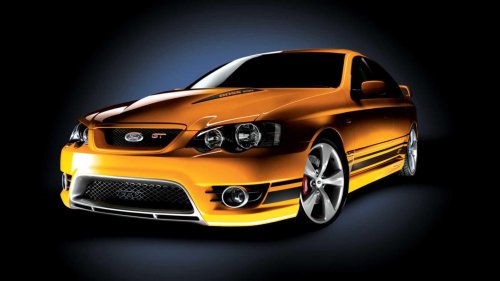
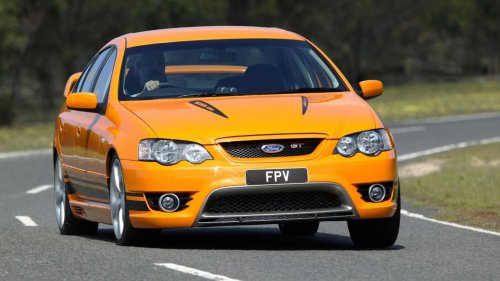
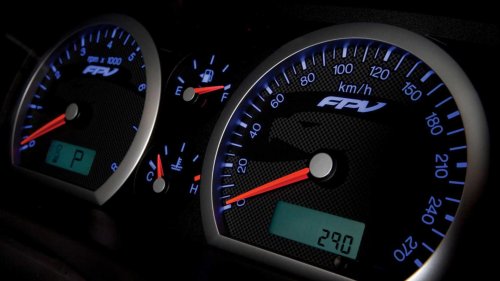
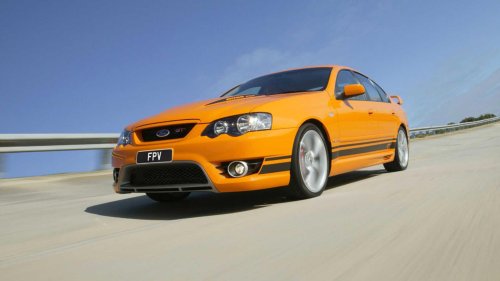
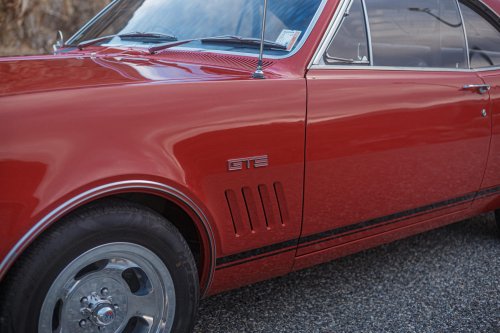
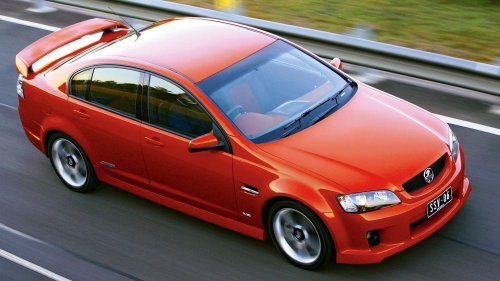
In Australia, Holden is red and Ford is blue and if you're a dyed-in-the-wool, partisan enthusiast, there's never going to be any purple in between. For decades, this colorful rivalry was never just about clever marketing, but it was generational, tribal, and it was certainly loud enough when you were around weekend racetracks.By the early to mid-2000s, Ford and Holden were really leaning into this perceived war, with in-house divisions FPV and HSV acting as factory-backed accelerants. Holden folks may have thought that they had an edge, but Ford had other ideas when it introduced the FPV BF GT as a very well-formed and complete performance sedan. This was more than just an evolution of the BA-based Falcon formula, and it was credible, consistent, and competitive enough to trouble all those Holden loyalists. The BF GT Was The Moment FPV Threatened HSV's Street Dominance FordWhen the BF GT first showed its face, HSV was on a high, making the most of its LS2 era with cars such as the VZ Clubsport R8. This had a 6.0-liter Gen IV V8 under the hood, produced 297 kW (398 hp) and 530 Nm (391 lb.-ft), which proved to be industry-leading figures in that category. This meant that Holden fans could wave those spec sheets around whenever Ford fans came near, and they expected that dominance to continue. However, the new FPV machine changed the narrative, as here you had the Boss 290 5.4-liter quad-cam V8 under the hood, which had very similar output figures, putting it on roughly equal footing with the Gen IV V8. Even better, the BF GT delivered its power in a very different way and one that took this rivalry to another level.The FPV also had a transmission system with a T56 six-speed manual at base level but, importantly, an available ZF six-speed automatic. This unit had smarter ratios and a far more modern feel than the older four-speed era and in the real world it felt like a revelation. The BF GT could get to 100 km/h (approximately 62 mph) in roughly the mid-five-second range, which is what you might expect from a serious mid-2000s muscle sedan. But it was no longer in the shadows compared to its Holden rival and Ford seemed to have nailed the formula when trying to make a really fast four-door family car without losing the point of it. HSV owners came to the quiet realization that their car was no longer the only game in town. The Boss 290 Wasn't An LS Clone But FPV's Own Kind Of Muscle Ford HSV may have taken the predictable but expected route when crafting its LS2. Here you had an engine with big displacement and strong torque, with a hard-edged exhaust note to accompany that pushrod V8 action. But FPV saw things differently and cut the Boss 290 from a different cloth, giving the BF GT a 5.4-liter modular V8 with a DOHC 32-valve layout, as a different technical interpretation of Australian muscle. Ford had leaned into engine revs rather than relying purely on displacement and didn't try to outperform Holden by creating another American-style torque monster. Holden loyalists quietly acknowledged Ford's stroke of genius and realized that this new player was not only fast and stable but accommodating enough to use every day.Ford also positioned the BF GT carefully by introducing styling and trim distinctions across the BF Mk 2 range. It explicitly framed the Boss 290 V8 as a strong and independent entity within FPV's performance line-up, and it also added the GT badge for significant symbolism. Those GT letters mean a lot down under and there's a certain amount of mythology alongside them, which matters more than some people on the other side of the fence were prepared to admit. While HSV certainly had a formidable product line, it didn't have any GTs in its family and couldn't lean on that storyline in the same way that Ford did. The Mid-2000s Were The Last Time Australia's V8 Rivalry Felt Truly Alive Ford As it turns out, the arrival of the BF GT marked a high-water mark in the Australian muscle wars. That famous rivalry between two domestic giants wouldn't last much longer, and they wouldn't continue to build big fast sedans for an enthusiastic and tribal home market forever. Those were heady days if you were a true automotive and sports enthusiast, and you could argue that FPV versus HSV wasn't simply about lap times, as the rivalry really defined what kind of Australian you were. Holden people argued that Ford could never quite get it all together, and Ford people countered by framing Holden as the louder but much more basic solution. And when the BF GT came along, it significantly narrowed any gaps in that conversation as Ford emphasized that its new car, with that Boss 290 specification, was going to be much sharper and far more resolved than anything that had come before.In hindsight, you can also see Ford's introduction of the ZF six-speed auto as part of a wider modernization push. Clearly, the company wanted to ensure that its BF-era Falcons couldn't just go hard in a straight line but could work particularly well as a daily driver. And that meant that Ford had redefined the entire argument, as the BF GT was now a complete package and a strong muscle sedan that didn't behave like a prima donna. Suddenly, Holden owners weren't losing sleep because the BF GT was objectively unbeatable but because this car, in its new guise, forced them to pay closer attention. There was no longer any clear delineation between red and blue, and the BF GT made mastery conversations very inconvenient for the Holden tribe. The BF GT Now Looks Like A Modern Classic And Not Just A Used Performance Sedan Ford Many people look back longingly at any real V8 era in today's world, which tends to champion restraint over analog performance. There's very good reason to look back at the BF GT through rose-colored glasses, because it represents a specific interpretation of features that the market no longer loves. After all, it's got that large displacement, naturally aspirated V8 engine with a genuine manual option and rear-wheel drive, and it represents a uniquely Australian type of performance engineering. The BF Mk 2 era also has a certain amount of historical clarity as the BF Falcon morphed into the Mk2 form in late 2006, with the BF GT sitting cleanly inside that timeline as a mature expression of the formula. And it doesn't matter whether you choose the pre-facelift BF or the Mk 2, as the essential appeal is the same. You're going to get a big, fast, and locally sourced sedan with plenty of engineering personality to set it apart from its rivals.Collectors may be particularly attracted to BF-era FPV GT models. While these vehicles are certainly not rare exotics, they do represent cars that signify a form of national identity that is nowhere near as prevalent anymore. And that means that the legacy of the BF GT is likely to be far broader than a simple "Ford versus Holden" battle may suggest.The BF GT comes from a time when Australia built some homegrown, flawed but charismatic performance sedans for people who tended to buy with their heart rather than their head. And in that kind of environment, it's easy to understand why Holden owners lost sleep over its presence. It was never the case that Ford had somehow engineered a perfect car, but the BF GT was certainly good enough to significantly threaten the status quo. And as it had started to make automatic loyalty very risky, the BF GT's appearance really lit a fire under that red versus blue rivalry once again.