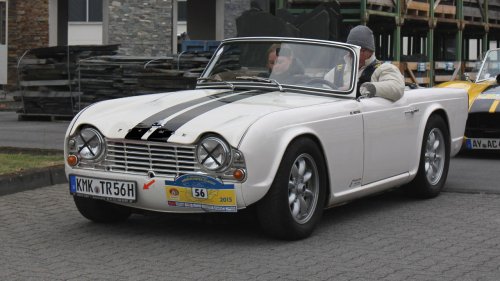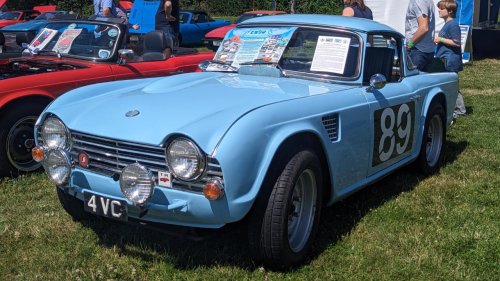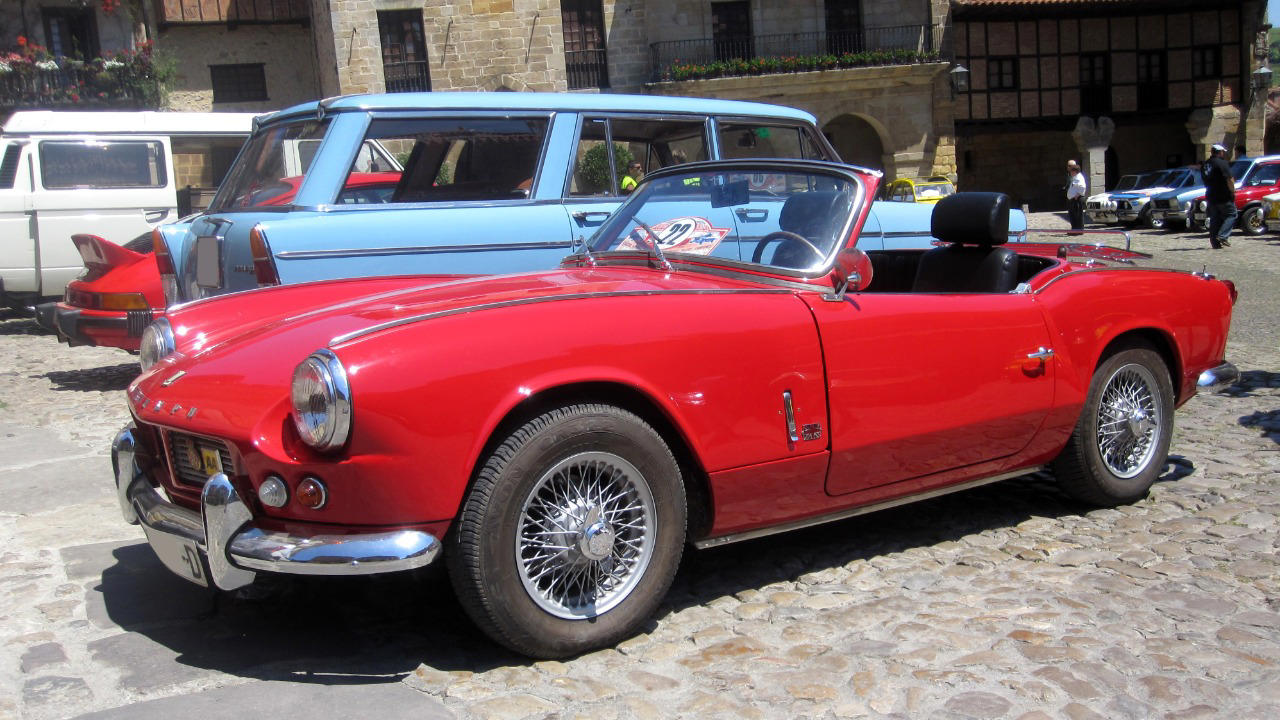



















Few recognize the 1962 Triumph Spitfire for how much fun it packed into a small frameThe 1962 Triumph Spitfire arrived as one of Britain’s smallest open sports cars, yet it delivered a level of character and involvement that far exceeded its modest footprint. Light, low and mechanically simple, it turned basic components into an unusually vivid driving experience that many modern enthusiasts still underestimate. Styled by Italian designer Giovanni Michelotti and built in significant numbers, the original Spitfire packed style, agility and mechanical accessibility into a car that could almost disappear in modern traffic. Its blend of cheeky looks, modest power and a communicative chassis helps explain why the first generation still inspires fierce loyalty among owners who know how much fun is hiding inside that tiny frame. From sketch to showroom: how the Spitfire was born small but bold The first Triumph Spitfire was conceived as a compact reply to rival British sports cars, particularly the Austin models that defined the affordable roadster template. According to period histories, the project aimed to give Triumph a lightweight open two seater that could sit below larger models in price and size, yet still feel like a “proper” sports car in layout and driving position. The result was a front engined, rear wheel drive machine with a separate chassis and simple mechanicals that prioritized feel over raw numbers. Key to its appeal was the decision to make the car visually distinctive rather than just shrunken. Styled by Italian designer Giovanni Michelotti, the Spitfire carried long, flowing lines, a low nose and a pert tail that gave it a cheeky, sporty character. Contemporary descriptions highlight how the sleek body sat tightly over the steel chassis, with minimal overhangs and a cockpit pushed far back to emphasize the rear driven stance. That Italian flair helped the car stand out in a segment filled with more conservative shapes. Under the skin, the construction was straightforward. A steel backbone supported a steel body, with an all iron, pushrod 1147 cc four cylinder engine mounted up front. The early specification data lists the first series as sold between 1962 and 1964, with a total of 45,753 examples built in that initial run. Those figures, presented in the contemporary Factfile under the headings “Sold” and “Construction,” underline that although the car looked exotic in miniature, it relied on tried and tested components. Design details: why the first Spitfire still turns heads Visually, the 1962 Triumph Spitfire balanced elegance and mischief. The bonnet stretched forward in a long clamshell that incorporated the front wings, creating a clean, uninterrupted line from the nose back to the doors. When opened, that entire front section tilted up to reveal the engine, suspension and steering in one sweep, a layout that made maintenance easy and also showcased the car’s mechanical honesty. The side profile showed how effectively the designers used proportion to suggest speed. The waistline sat low, the glass area was slim, and the rear deck rose just enough to give the car a purposeful stance without looking bulky. Descriptions of the early cars emphasize the “cheeky, sporty” attitude that came from this combination of long bonnet, short tail and compact cabin, a theme repeated in both styled references to the Italian influence and later enthusiast accounts. Inside, the design continued the theme of simple fun. The dashboard on the first cars was basic but driver focused, with clear instruments and minimal ornament. Early Spitfire seats were slim and low backed, designed more to keep weight down than to provide long distance comfort. Modern buyers discover that original early Spitfire seats are almost impossible to find in good condition, and that correct seat tracks are getting harder to source for cars of any year, as highlighted in a detailed buyer’s guide. That scarcity hints at how many of these cars were used hard rather than stored as fragile collectibles. Engineering on a budget: light weight over big numbers From the outset, Triumph’s engineers pursued lightness and simplicity rather than headline power. The all iron 1147 cc four was shared with other Triumph models, tuned for usability rather than extremes. Performance figures from period tests describe the car’s acceleration as modest, with Most contemporary road tests reporting 0 to 60 times of around 15 seconds and a top speed that suited brisk touring rather than outright racing. Those numbers, preserved in an evaluation of early, show that the car was never intended to chase high performance exotics. The chassis layout, however, was more ambitious. The steel frame carried independent front suspension and a swing axle rear, a configuration that promised good ride and grip at modest speeds but could become tricky when pushed. Later assessments note that, on the downside, handling in early cars was seriously hampered by the swing axle rear suspension, just like the early Spitfire models described in technical retrospectives. Things improved with later revisions, but the first series already delivered a lively, communicative feel that many drivers found engaging rather than intimidating. Weight was the key figure that made the package work. With such a small body and compact drivetrain, the Spitfire weighed significantly less than larger British sports cars. That low mass allowed the modest engine to feel eager, especially in lower gears, and contributed to the car’s reputation as a nimble, tossable machine on tight roads. The layout also made the car easy to work on, with the clamshell bonnet giving unimpeded access to the front end and the simple rear suspension being within reach of home mechanics. On the road in period: refinement in miniature Period testers often approached the tiny Triumph with low expectations, only to be surprised by how grown up it felt. Testing the car in November 1962, Autocar praised a “refined car with a number of advanced features” and described appropriately good performance for its class. That verdict, preserved in later commentary that cites Testing the original model, shows that contemporary reviewers saw more than just a budget toy. Reports from the time highlight the car’s relatively smooth ride, well weighted steering and willingness to cruise at speed without undue strain. The small engine worked hard but remained tractable, and the gearbox ratios suited both town use and open road driving. Although the 0 to 60 figure around 15 seconds left the Spitfire behind larger sports cars in outright acceleration, the sensation of speed in such a low, open cockpit made every legal journey feel more dramatic than the stopwatch suggested. Owners also appreciated the car’s practicality relative to its size. The boot could accommodate weekend luggage for two, the folding roof offered reasonable weather protection if properly adjusted, and the heater was adequate for year round use in Britain. The cabin was snug but not impossible for average height drivers, and the simple controls meant that anyone familiar with conventional manual cars could adapt quickly. Over time, these qualities helped the Spitfire build a reputation as one of Britain’s most famous little sports cars and an able rival to the MGB, a status that later commentators on the Triumph Spitfire story have emphasized. Small size, big personality: why the Spitfire feels faster than it is Part of the fun packed into the 1962 Triumph Spitfire comes from the way its physical dimensions amplify every input. The car sits so low that drivers look up at modern hatchbacks, and the seating position places them close to the rear axle, which exaggerates the sense of rotation in corners. Even at moderate speeds, the combination of light steering, direct responses and wind noise creates an impression of pace that outstrips the raw figures. Enthusiast accounts often compare the Spitfire’s character to later compact sports cars. Some describe it as Triumph’s answer to the MX5 before the MX5 even existed, cheap, cheerful and with just enough attitude to feel special. That comparison, drawn in modern video commentary on Triumph sports cars, underlines how the early Spitfire anticipated the formula of an accessible, small roadster that prioritizes involvement over brute force. The light clutch, short gear lever and eager engine encourage drivers to use every rev and every ratio, turning even short commutes into something engaging. On narrow British B roads, the car’s compact width allows it to fit comfortably within the lane while still giving the driver room to position it precisely. The suspension, though compromised at the limit by the swing axle design, offers a supple ride over typical surfaces and communicates grip levels clearly enough for drivers who respect its boundaries. The first generation in numbers: how the Mk1 carved its niche The initial run of Triumph Spitfire Mk1 cars established the template that later generations would refine. The Factfile for the early series lists the model as sold from 1962 to 1964, with 45,753 units built in that period. Those figures show that the car was not a niche experiment but a significant production effort, especially for a specialist open sports car. Mechanically, the Mk1 specification centered on the all iron 1147 cc four cylinder engine, a four speed manual gearbox and rear wheel drive. The steel chassis and steel body construction provided enough rigidity for spirited driving while keeping costs under control. Period evaluations, such as the profile that records Most tests with 0 to 60 times around 15 seconds, confirm that performance stayed within expectations for a small displacement car but did not limit its appeal among drivers who valued feel over force. The Mk1 also introduced styling and packaging cues that would become Spitfire signatures. The clamshell bonnet, low scuttle, compact cabin and minimal overhangs all appeared in this first generation and remained through later revisions. The combination of Italian design flair from Giovanni Michelotti and British engineering pragmatism gave the Mk1 an identity that distinguished it from rivals, including the MGB and various Austin based sports cars that shared its era. Living with a tiny classic: practicality and quirks For modern enthusiasts considering a 1962 Triumph Spitfire, daily useability is part of the car’s quiet charm. The front engined, rear wheel drive layout follows a straightforward pattern that many mechanics understand, and the simple carburetion and ignition systems make basic maintenance accessible to owners with modest skills. Guides aimed at prospective buyers emphasize that the car rewards honesty about one’s mechanical talent, but they also stress that the layout is a recipe for straightforward work if approached methodically, a point made in a detailed buying guide. Some quirks come with the territory. Early Spitfire seats, as already noted, are hard to source in good condition, and correct seat tracks have become scarce. Enthusiast oriented publications point buyers toward specialist suppliers such as Moss Motors, spitbits.com, Victoria British and the North American Spitfire community at nasshq.org, all of which are referenced in the context of supporting Triumph Spitfire owners who want to keep their cars on the road. Bodywork condition matters more than mechanical mileage, since the steel chassis and body can suffer from corrosion if neglected. The clamshell bonnet, while convenient for access, can be expensive to repair or replace if damaged. Electrical systems are simple but can show age related issues like brittle wiring and intermittent connections. Yet the very simplicity of the car means that many of these problems can be addressed with patience, a workshop manual and parts from specialists such as the outlets linked through the classicmotorsports store. Driving dynamics: strengths, weaknesses and the swing axle story The early Spitfire’s handling has become part of its legend. On the positive side, the car feels light on its feet, with quick steering and a willingness to change direction that suits tight, twisting roads. The low seating position and open top experience make every input feel amplified, which many drivers interpret as a direct connection to the road. The swing axle rear suspension, however, introduces complexity. Technical analyses point out that, on the downside, this layout can be seriously hampered by camber changes at the limit, just like the early Spitfire described in the engineering focused on the review. Things improve with careful setup and appropriate tires, but the basic geometry means that sudden weight transfer or mid corner lifts can provoke dramatic reactions if the driver is careless. Enthusiasts who respect these traits often praise the car’s communication and adjustability at sensible speeds. The chassis talks to the driver through the seat and steering wheel, giving clear feedback about grip and balance. On wet or uneven surfaces, the Spitfire’s light weight helps it skip across imperfections rather than bludgeon through them, which contributes to its reputation as a playful companion rather than a blunt instrument. For many owners, this combination of strengths and quirks is exactly what makes the early car so entertaining. How the Spitfire fit into Britain’s sports car scene Within Britain, the Triumph Spitfire quickly joined a crowded field of small sports cars, yet it managed to carve out its own identity. Commentators looking back describe it as one of Britain’s most famous little sports cars and an able rival to the MGB, a comparison made explicitly in the Sturdy Spitfire documentary. That rivalry played out on roads, in club motorsport and in the hearts of enthusiasts who debated the merits of each model. The Spitfire’s smaller size gave it an edge in tight spaces and made it slightly less intimidating for new drivers. Its Italian styling, courtesy of Giovanni Michelotti, gave it a flair that contrasted with the more conservative lines of some competitors. At the same time, its mechanical simplicity and shared components with other Triumph models meant that it could be maintained and modified without extraordinary expense, a factor that appealed to younger buyers and club racers. In export markets, the car served as an accessible introduction to British sports car culture. The low driving position, open roof and direct controls offered a distilled version of the experience that enthusiasts associated with larger and more expensive roadsters. For many, the Spitfire became the first taste of classic motoring, a role that helped cement its status in the broader story of postwar sports cars. Market perception and values: from cheap runabout to cherished classic Over time, the 1962 Triumph Spitfire shifted from everyday fun car to recognized classic. Valuation tools that track early Spitfires describe how the first series debuted as 1963 models and were low even by British sports car standards, so low that Drivers who parked carelessly found other cars looming above them in traffic. That vivid description appears in the Spitfires valuation entry, which also outlines how condition and originality now play major roles in pricing. Profiles of the 1962 to 1967 Triumph Spitfire Mk I and Mk II segments emphasize that, as one would expect from the displacement, performance is modest, with Most tests recording 0 to 60 in around 15 seconds. Yet those same profiles highlight the car’s enduring appeal as a lightweight, open sports car that delivers a pure driving experience at relatively attainable prices, as seen in the market analysis. Collectors now look for rust free chassis, correct interior trim and original mechanical components, especially in early cars that retain their factory features. Buyer guides aimed at enthusiasts often stress that the Spitfire remains one of the more affordable routes into classic British sports car ownership. They caution, however, that restoration costs can quickly exceed purchase price if a project car suffers from extensive corrosion or missing unique parts such as early seats. The balance between low entry cost and potential restoration expense encourages prospective owners to inspect carefully and, when possible, to buy the best car they can afford. What modern owners love: voices from the community Contemporary video reviews and club discussions reveal a consistent pattern in how owners talk about their early Spitfires. They celebrate the car’s simplicity, its eagerness to rev and its ability to make modest speeds feel special. One enthusiast focused buying guide, for instance, walks viewers around a well preserved car and points out how a proper soft top should look, with an uncreased back window, no rips, no tears and a tight fit, a standard demonstrated in the Triumph Spitfire buying video. Owners also share tips on sourcing parts, adjusting the swing axle suspension for more predictable behavior and maintaining the engine for reliability. Clubs and online groups provide support networks where newcomers can learn from long term custodians. The sense of community around the car, reinforced by resources such as the North American Spitfire association at nasshq.org and various Classic & Sports Car related platforms discovered through the Triumph Spitfire Alpine citation trail, adds another layer of enjoyment to ownership. Many owners frame the car as a reminder of a different era of motoring. The lack of power steering, driver aids or complex electronics means that every journey requires attention and involvement. For drivers accustomed to modern vehicles, the experience of guiding such a small, direct machine can feel refreshing, even liberating. That emotional connection explains why so many early Spitfires survive in active use rather than as static display pieces. The 1962 legacy: why the first Spitfire still matters Looking back, the 1962 Triumph Spitfire did more than fill a gap in Triumph’s lineup. It demonstrated that a small, affordable car could deliver genuine sports car engagement without relying on large engines or complex technology. By combining Italian styling from Giovanni Michelotti with British engineering pragmatism and a focus on light weight, it created a template that later roadsters would echo. More from Fast Lane Only Unboxing the WWII Jeep in a Crate 15 rare Chevys collectors are quietly buying 10 underrated V8s still worth hunting down Police notice this before you even roll window down The post Few recognize the 1962 Triumph Spitfire for how much fun it packed into a small frame appeared first on FAST LANE ONLY.