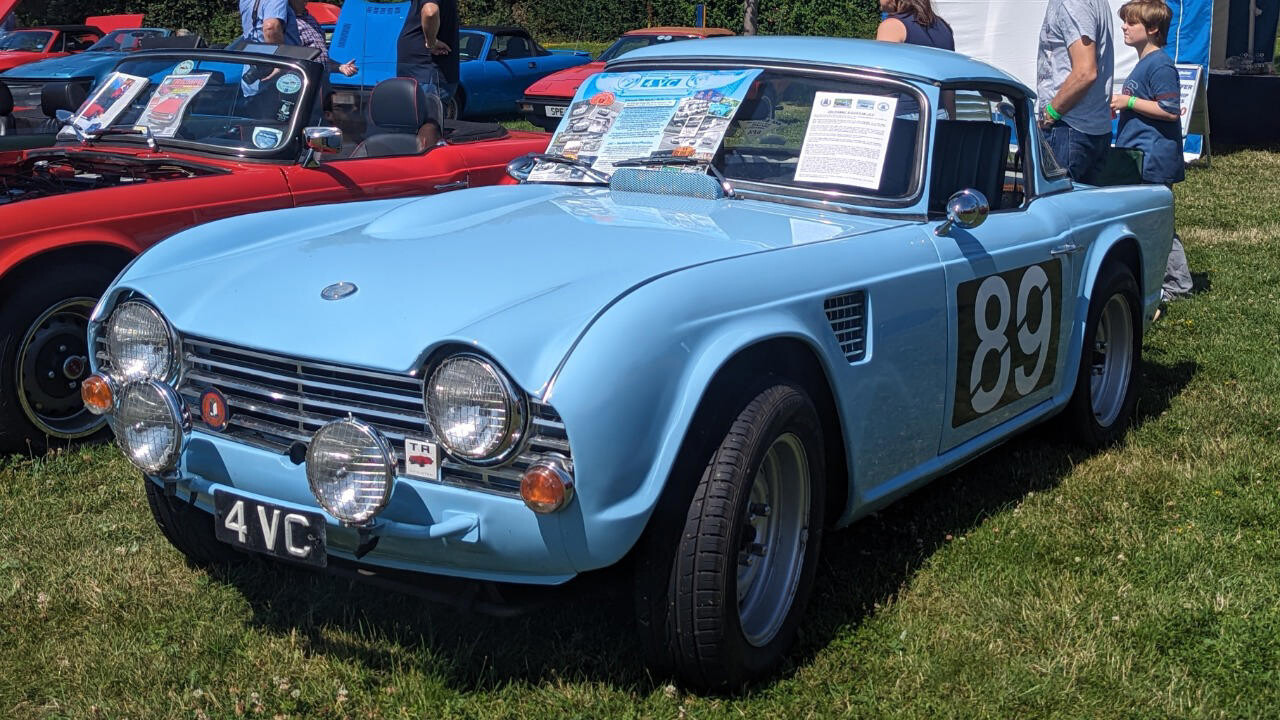
Built for drivers the 1962 Triumph TR4 kept things simple and engagingThe 1962 Triumph TR4 arrived at a moment when sports cars were starting to chase comfort and complexity. Triumph’s answer was different: give drivers just enough refinement to make long journeys bearable while keeping the mechanical honesty that made earlier TRs so engaging. More than sixty years later, that balance of simplicity and involvement still defines why the TR4 feels built around the person behind the wheel. From rugged TR to modern roadster The Triumph TR line had already built a reputation for tough, straightforward sports cars by the time the TR4 appeared. The new model, introduced in the early 1960s, marked what one period description calls the initial shift in the TR series from a rugged, straightforward sports car to something a little more refined, without losing its essential character. That evolution is highlighted in a detailed TR4 overview that treats the car as a bridge between eras. Underneath, the TR4 did not abandon its roots. It retained a separate chassis and a strong, almost agricultural engine that had powered earlier Triumph models. At the same time, the body, styled by Giovanni Michelotti, brought clean, modern lines, a wider track and a proper trunk. This combination of old-school hardware and new design set the tone for a car that would feel familiar to traditionalists but more usable for everyday drivers. Mechanical honesty and the so-called tractor engine At the heart of the 1962 Triumph TR4 is a four-cylinder engine that enthusiasts sometimes call a tractor motor, a nod to its origins in Standard-Triumph’s utility powerplants. A detailed driving guide notes that while a tractor engine does not sound like the most inspiring powerplant for a sports car, in practice it delivers a muscular, flexible character that suits the TR4’s personality. That point is made clearly in a driving review that treats the engine’s workmanlike roots as a virtue. Another enthusiast description of a 1962 car describes it as a classic British sports car that combines style and performance, and specifies that it is powered by a 2.1-lit engine. The exact phrase “2.1-lit” appears in a Facebook post about a 1962 Triumph TR 4, which underlines how owners still focus on that engine’s capacity and character when they talk about the car. In that post, the author calls the 1962 Triumph TR 4 a classic British sports car and notes that it is powered by a 2.1-lit unit, language preserved in the 1962 Triumph TR4 entry. On the road, owners and dealers describe a power delivery that is strong in the mid-range rather than at the top end. In a video walkaround, Mike from Michael’s Motorc Cars in Lancaster Pennsylvania talks viewers through an early Triumph TR4, focusing on how the engine pulls cleanly and sounds eager without needing to be thrashed. That commentary appears in a clip where Mike introduces himself as being from Michael’s Motorc Cars in Lancaster Pennsylvania, which can be seen in the 1962 TR4 drive video. Chassis, steering and the feel through the seat If the engine provides the soundtrack, the chassis supplies the conversation. A detailed description of a 1962 car on a specialist site calls the Triumph TR 4 a real British roadster, pure and honest. It notes that the TR 4 is built with a sturdy separate chassis with independent front suspension, which gives the car a blend of toughness and responsiveness. That language appears in a profile that introduces The Triumph TR 4 as a real British roadster and explains that The TR is built with a separate chassis and independent front suspension, as shown in the ClassiCarGarage archive. The steering is unassisted and relatively heavy at parking speeds, but once moving it becomes direct and communicative. Period-style buyer’s guides point out that the car’s simple suspension and steering geometry allow the driver to feel what each wheel is doing. That trait is a key part of why the TR4 still appeals to people who want involvement more than outright grip. On bumpy roads, the combination of a separate frame and independent front suspension means the car moves around, but in a way that keeps the driver alert rather than isolated. A modern insurance-backed review describes how the TR4’s chassis, while not as sophisticated as some rivals, rewards smooth inputs and a measured pace. The same guide that talks about the tractor engine also explains how the chassis encourages a driver to work with the car rather than against it, a point made in the TR4 buyer’s guide. Michelotti styling and the optional hard top Visually, the TR4 marked a clear break from the rounded forms of the TR2 and TR3. The body designed by Giovanni Michelotti introduced straight lines, a higher beltline and a more substantial presence on the road. The car’s proportions, with a long hood and short rear deck, signaled a move toward a more modern sports car silhouette. One of the most distinctive options was a hard top that combined a fixed glass backlight with an integral rollbar and a detachable center panel. This unusual arrangement allowed owners to enjoy a semi-open experience without giving up the security and structure of a hard roof. The design is described in detail on the main Triumph TR4 reference, which explains how the fixed backlight and removable panel created a flexible solution between full coupe and soft-top roadster. Contemporary enthusiasts often highlight how this hard top gave the TR4 a purposeful, almost competition-ready look. With the center panel removed, the driver could enjoy open air while retaining a solid rear structure. With the panel in place, the car became a snug two-seater suitable for long-distance touring in bad weather. A cockpit built around the driver Inside, the 1962 Triumph TR4 remained simple, but it was a step up from its predecessors. Owners discussing 1962 Triumph TR4 interior and dashboard details describe a classic British roadster experience that represented a significant evolution in the TR series. One enthusiast post calls the 1962 Triumph TR4 a classic British roadster and emphasizes how the revised dashboard layout and improved seating moved the car forward, as reflected in the interior discussion. The dashboard placed large, clear instruments directly in front of the driver, with secondary gauges and simple toggle switches within easy reach. There were no digital distractions, no layered menus and no complex driver aids. Instead, the cockpit was arranged so that the driver could focus on the road, the rev counter and the gear lever. Period catalog material for the 1962 Triumph Tr4 highlights performance and features in a straightforward way. An entry labeled as a 1962 Triumph Tr4 Catalog and Classic Car Guide uses the term Performa in its descriptive text, and includes an image of a 1962 Triumph Tr4 with a note that these illustrations use artistic license and may differ from actual historical models. That language appears in a guide that mentions Dec, Image of, Triumph, Note and Performa in the context of a 1962 catalog, which is preserved in the classic car guide. A related catalog entry, also focused on the 1962 Triumph Tr4, stresses that specifications for classic cars are given to the best of the publisher’s ability, considering the limited and variant data available. The text explicitly uses the phrase “Specifications for” and repeats the Note about the nature of the information. That careful wording appears in a guide that references Dec, Note and Specifications for in connection with the 1962 Triumph Tr4, as seen in the second catalog listing. Driving impressions from modern roads Modern video features give a vivid sense of how the TR4 feels in traffic and on country lanes. In one clip, Mike from Michael’s Motorc Cars located in Langston Pennsylvania introduces a really cool early Triumph TR4 that he would like viewers to see. He talks over the engine note, the way the gearbox snicks into gear and how the car tracks down the road. That introduction, where Mike identifies himself as being from Michael’s Motorc Cars in Langston Pennsylvania and describes the Triumph TR4, can be viewed in the Langston Pennsylvania video. Another drive, again featuring Mike from Michael’s Motorc Cars in Lancaster Pennsylvania, focuses on the sensory side of the experience. With the top down, the driver hears the intake roar and exhaust note more clearly. The wind buffets the cabin, the steering wheel writhes slightly in the hands over bumps and the long hood points toward the next bend. That on-road commentary is part of the Lancaster Pennsylvania drive that showcases a 1962 Triumph TR4. These modern drives echo what period testers often said: the TR4 is not the fastest car in a straight line, but it feels alive at legal speeds. The relatively low weight, the responsive steering and the open cockpit create a sense of speed and involvement that more insulated modern cars struggle to match. Community, catalogs and the afterlife of a 1962 sports car The 1962 Triumph TR4 survives today not just as a collectible, but as a living part of enthusiast culture. Online groups dedicated to Triumph and other classic British cars share photos, restoration tips and driving stories. One such group post describes the Triumph TR4 as a classic British sports car that combines style and performance, repeating the description of the 1962 Triumph TR 4 as a British icon. That phrasing appears in a community entry that mentions Dec, Triumph, Triumph TR and British in the context of a 1962 car, as seen in the muscle cars museum. Parts suppliers support this ecosystem with detailed catalogs and guides. The 1962 Triumph Tr4 Catalog and Classic Car Guide, which appears across multiple entries, is backed by a support site that explains how information is compiled and how enthusiasts can get help. That support presence is visible on a page labeled as a cited source from help.metroparts.com, which refers to Discovered, Triumph, Catalog and Classic Car Guide and Ratings in its description, as shown in the Metro support page. The same catalog and guide also extends into social media, where a corporate Facebook page and Pinterest account share images and notes about classic parts. One entry describes itself as Discovered via citation trail from 1962 Triumph Tr4 Catalog and Classic Car Guide, Ratings and appears on a Facebook page that again references Discovered, Triumph, Catalog and Classic Car Guide and Ratings. That connection is visible on the Metro Moulded Parts, which ties modern parts supply back to the original cars. Even on platforms like Pinterest and X, the same organization presents itself with references to Discovered, Triumph, Catalog and Classic Car Guide and Ratings, showing how a once everyday sports car now lives in a digital ecosystem of images, part numbers and shared enthusiasm. One example is a Pinterest profile labeled metromouldedpartsinc that includes the same cluster of terms, visible at the Metro Pinterest account. More from Fast Lane Only Unboxing the WWII Jeep in a Crate 15 rare Chevys collectors are quietly buying 10 underrated V8s still worth hunting down Police notice this before you even roll window down