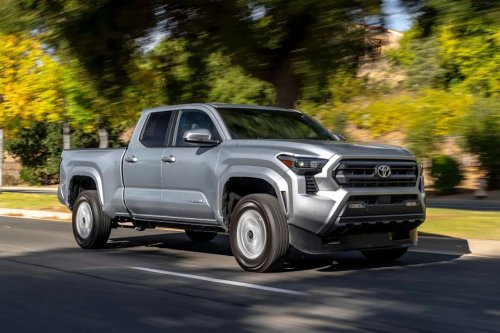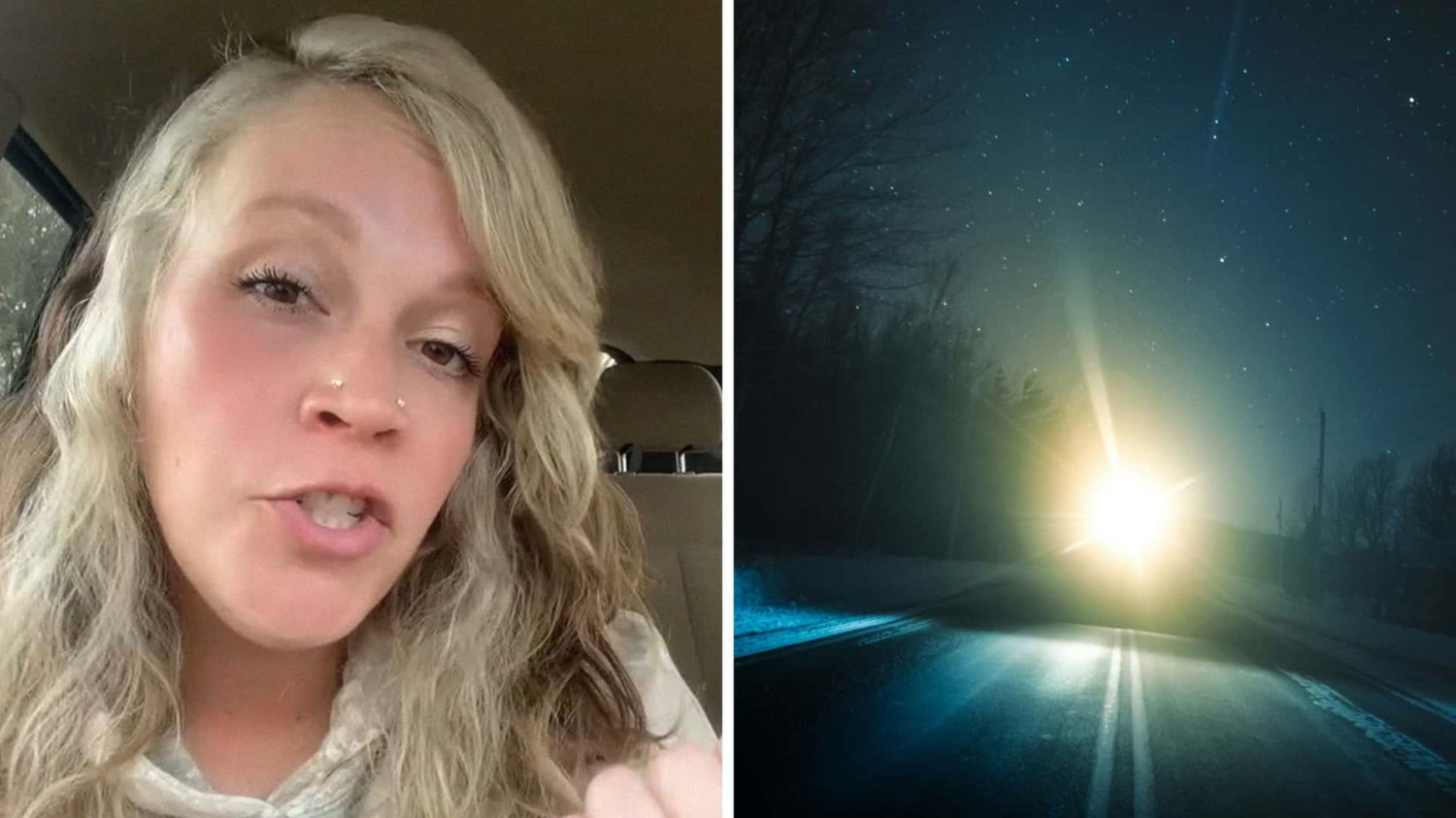


















A woman fed up with a truck driver’s bright headlights recorded them getting way too close for comfort behind another person’s car. TikTok user Rogue (@theonlyrogue91) uploaded a clip where she complains about overly bright headlamps from inconsiderate commuters. Some folks who replied suggested a revenge tactic. But others were quick to shut down the idea. Rogue begins her clip with footage of a large, white Chevrolet pickup truck tailing another vehicle. "You see this dude with his lights right there? See how close he is to this person? This mother trucker was literally just right behind me. And when I tell you his lights—I had to turn all my mirrors away from me because I could not see," she says. She’s one of many people who’ve complained about the brightness of today's headlights. YouTuber Dr. Joseph Allen, who runs the popular channel Doctor Eye Health, published a video discussing this phenomenon. He says that many of his patients have complained about driving at night. He’s heard recurring complaints from people who believe modern headlights are brighter than their turn-of-the-century counterparts. Dr. Allen points out that at night, our eyes adjust to better perceive details in the dark. This allows us to keep on the lookout for any hazards that could threaten our well-being. However, this adaptation affects our depth of focus. Shining a light in our eyes in this altered state causes our pupils to constrict rapidly. This sudden change can cause pain as our eyes try to compensate for the shift in available light. Photo Retinal Bleaching Dr. Allen also says that night-driving eye pain can be attributed to modern headlight engineering. He says that today's bulbs can "bleach the photoreceptors" in the back of your retina. This leads to an afterglow effect that can essentially stain your vision for a few seconds, even after you've stopped looking at the light. Further, he says this problem has been compounded by the newer car lamps’ tendency to cause glare. Older cars, he points out, were primarily outfitted with halogen bulbs. And while halogen bulbs remain a prominent choice, many automakers and third-party bulb makers sell xenon units. Carifex reports that xenon bulbs are more energy-efficient, produce a more powerful glow, and last longer than halogen bulbs. LED headlights also emit a bright light that some drivers may feel is too powerful. In fact, some want LED lights completely banned—and not just in car headlights, but also in street lamps and household bulbs. Bright Blue Light Dr. Allen opines that xenon and LED lighting in cars have led to an uptick in concerns about night driving. He advocates banning xenon and LED headlights. The eye specialist says the blue light from these types of headlamps not only affects our visual biology, but also our neurological system. Dr. Allen says that, because our bodies and neurological systems process blue light, it can create real-time visual artifacting and glare. This distorts images and makes it difficult to see pedestrians, animals, road lines, and potential hazards whilst driving. The doctor recommends properly aligning one’s headlights to avoid blinding other drivers, i.e., keeping them from being angled too far up. Additionally, he advises folks to clean their headlamps so their light doesn’t scatter and cause more glare. For drivers looking to mitigate discomfort while driving at night, Dr. Allen suggests getting an anti-reflective coating on their eyeglasses. Keeping one’s eyeglasses clean can also help. As for blue-light-blocking glasses, he says this solution can be hit or miss for his patients, but they may be worth trying. Bright Headlight Revenge: Are Rear-Facing Light Bars Legal? Some folks who replied to Rogue’s TikTok echoed Dr. Allen’s recommendations. One said that folks who don’t adequately service their bulbs should be ticketed. One person said there's an easy way to stop someone from tailing you and flooding your ride’s interior with blinding light. "Mount a rear facing light bar. They work wonders on demand," they wrote. The idea is to install a vengeance light on the back of your vehicle. Then if someone blinds you from behind, you turn the light on to send a not-so-subtle signal to them to back off. Another cautioned people against taking this route: "That’s illegal on the roads, in most states you can’t have white light on the rear," they said. Legalities surrounding light installations on vehicles do boil down to state legislation. For instance, in California, the law requires rear lights to be red because red light has a minimal effect on night vision. And in North Carolina, spot lamps are illegal when placed "on the rear of any vehicle," according to KC Hilites. Motor1 has reached out to Rogue via TikTok direct message for further information. This story will be updated if she replies. We want your opinion! What would you like to see on Motor1.com? Take our 3 minute survey. - The Motor1.com Team