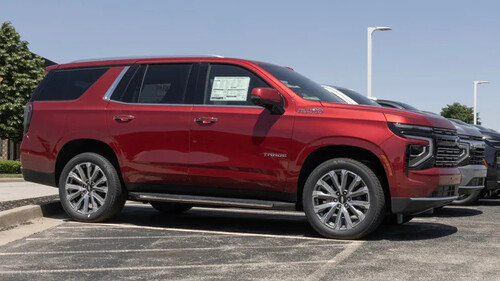
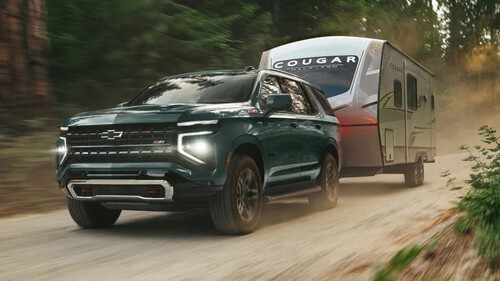
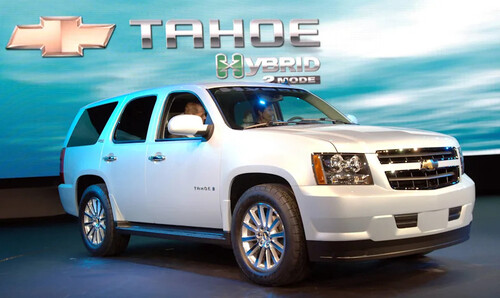
Why police fleets kept buying Chevrolet Tahoes long after rivals changed designsThe Chevrolet Tahoe has remained a staple in police fleets for decades, even as competitors redesigned their SUVs and shifted toward newer platforms. While law enforcement agencies have access to many modern options, the Tahoe continues to stand out for its balance of durability, practicality, and predictable performance under demanding real-world conditions. Chevrolet built the Tahoe to handle heavy-duty fleet punishment When General Motors developed the Chevrolet Tahoe, it was engineered on a proven full-size truck platform shared with other heavy-duty vehicles. This gave it a structural advantage in police use, where vehicles are expected to endure long idling hours, rapid acceleration, and constant weight from equipment. Under the Chevrolet nameplate, the Tahoe was designed with body-on-frame construction, making it more resilient in high-stress situations compared to many unibody SUVs. This structure is especially important for police work, where durability often matters more than comfort or fuel efficiency. Predictable performance matters more than maximum speed For law enforcement agencies, consistency is often more valuable than outright speed. The Chevrolet Tahoe delivers steady acceleration, stable handling, and reliable braking under load, which makes it ideal for patrol duties, highway enforcement, and pursuit situations. Unlike some rivals that shifted toward more complex drivetrains or heavily revised platforms, the Tahoe maintained a familiar mechanical layout across generations. This consistency allowed fleet maintenance teams to service vehicles more efficiently, reducing downtime and keeping units operational for longer periods under General Motors fleet programs. Interior space and utility gave the Tahoe a major advantage Police work requires more than performance—it demands space for equipment, communication systems, and sometimes detainee transport. The Chevrolet Tahoe offers a large interior that can be easily upfitted with sirens, radios, weapon storage, and partition systems without compromising functionality. Under the Chevrolet lineup, the Tahoe consistently provided one of the most adaptable interiors in the full-size SUV segment. This flexibility made it easier for agencies to standardize their fleet builds, regardless of regional requirements or specialized law enforcement roles. Maintenance simplicity helped reduce long-term fleet costs One of the biggest reasons the Chevrolet Tahoe remained popular is its relative mechanical simplicity compared to more heavily redesigned competitors. Many police departments value vehicles that can be repaired quickly and cost-effectively without requiring specialized tools or training. Through General Motors fleet support networks, parts availability and service procedures for the Tahoe have remained stable over multiple generations. This consistency reduces operational costs and allows departments to keep vehicles in service longer before replacement cycles become necessary. Rivals changed faster, but fleets preferred stability While competitors experimented with radical redesigns and new architectures, the Chevrolet Tahoe maintained a more evolutionary development path. That steady approach gave police fleets confidence that each new generation would behave predictably in extreme conditions. Under the Chevrolet and General Motors umbrella, the Tahoe became less about chasing trends and more about delivering dependable, repeatable performance. For law enforcement agencies, that reliability often outweighed the appeal of newer but less proven alternatives. The Tahoe remains a benchmark for modern police utility vehicles Today, the Chevrolet Tahoe continues to serve as one of the most widely used police SUVs in North America. Its combination of durability, space, and consistent engineering keeps it relevant even as the industry evolves. Within Chevrolet’s lineup, it represents a long-standing philosophy: build a platform that can survive years of punishment without losing its core capabilities. That approach is exactly why many police fleets kept choosing the Tahoe long after rivals changed designs—and why it remains a familiar sight in patrol duty today. More from Fast Lane Only Unboxing the WWII Jeep in a Crate 15 rare Chevys collectors are quietly buying 10 underrated V8s still worth hunting down Police notice this before you even roll window down