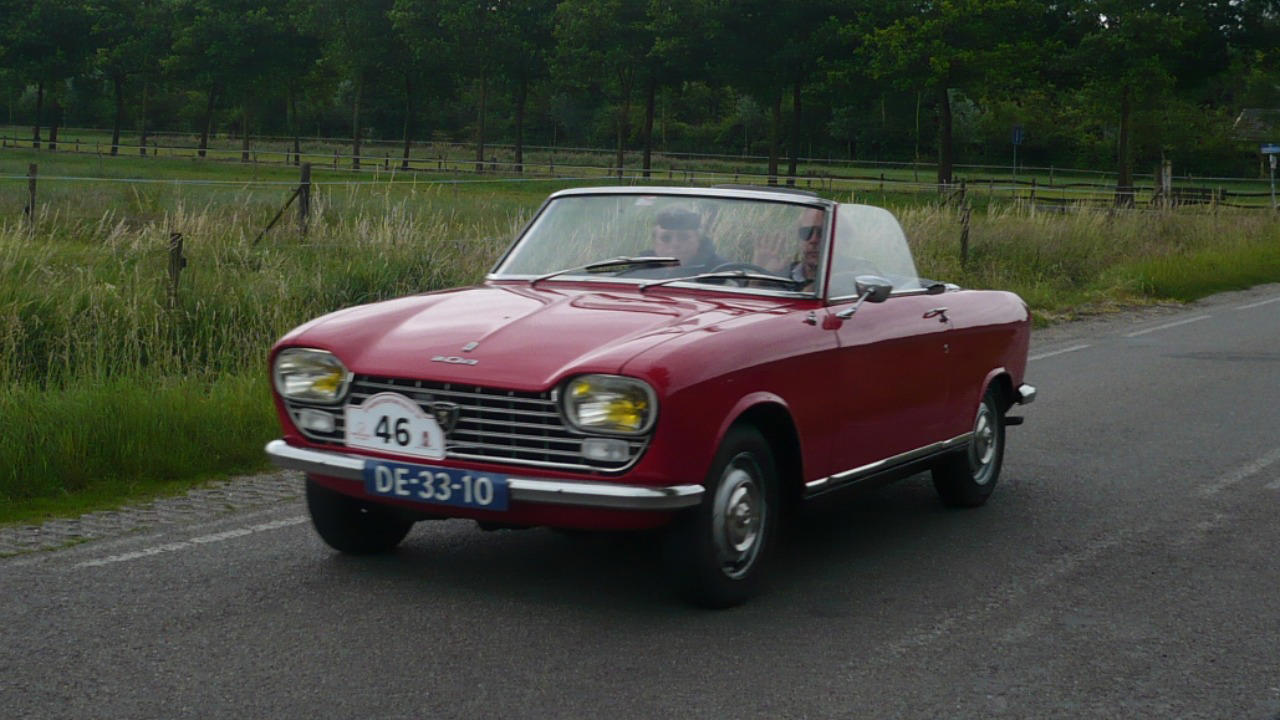



















The 1967 Peugeot 204 wasn’t flashy but it helped define practical designThe 1967 Peugeot 204 never tried to dazzle with chrome or brute power, yet it quietly reset expectations for what a small family car could do. By prioritising packaging, usability and an honest, rational style, it helped define a template for practical design that still feels surprisingly modern. Seen from today’s crossover-filled streets, the 204 looks modest, even shy. Look closer, though, and it becomes clear how many of its ideas have become standard practice and how a supposedly unflashy saloon, estate and coupé family anticipated the way people actually live with cars. A radical step for a cautious brand For most of its early postwar history, Peugeot built conservative, rear‑wheel‑drive saloons that appealed to buyers who valued durability over novelty. That is why the decision to create the Peugeot 204 as a front‑wheel‑drive small family car in the mid‑1960s represented such a break from habit. It arrived as a compact model with transverse engine and independent suspension, a technical package that moved Peugeot beyond the traditional layout that had defined its Sochaux output for decades. According to period histories, the Peugeot 204 sat in the emerging C‑segment and was intended as an accessible step below larger Peugeots, yet it carried several firsts for the company. It was the brand’s first mass‑market front‑drive saloon, its first car with all independent suspension and one of its earliest to use front disc brakes as standard. These choices were not made to chase performance headlines but to improve stability, safety and interior space, all qualities that would matter to families more than top speed. Commentary on the model’s development notes that the 204 was “launched” as a deliberate departure for Peugeot, whose Sochaux production had usually been rather traditional. One detailed retrospective describes how the project team accepted the risk of abandoning the old longitudinal engine and live rear axle format in order to meet stricter expectations for comfort and space inside a compact footprint, a balance that would later define many European family cars. The car’s official history within the company also places it in a longer lineage. Following the first 2 series model, the PEUGEOT 201 that appeared in 1929, the PEUGEOT 204 was launched in April 1965 as the next major step in the brand’s numbered family. That corporate framing underlines how seriously the firm took this compact car: it was not a side project but the core of Peugeot’s strategy to reach more urban and cost‑conscious buyers while still projecting engineering seriousness. Design that divided the crowd yet aged gracefully When Peugeot presented the 204 at the Palasport di Parigi Peugeot show in the mid‑1960s, the reaction was mixed. Contemporary accounts and later analyses agree that the design did not please everyone. One video history of the model describes how, at that Palasport di Parigi Peugeot unveiling in Feb of its anniversary coverage, the car immediately split opinion. Some observers found the proportions slightly upright and the detailing too restrained compared with more flamboyant Italian and British rivals of the period. The 204’s styling was intentionally low drama. The body sides were flat and unadorned, the glass area generous, the front grille simple and horizontal. That restraint gave the car an unpretentious presence but also opened it to criticism from buyers who equated modernity with excess chrome or aggressive lines. Peugeot instead pursued a kind of visual modesty that aligned with its reputation for sensible engineering. The result was a car that blended into French streets rather than dominating them, which likely helped it feel familiar and trustworthy to the families it targeted. Yet the basic shape proved adaptable. The original saloon’s clean roofline and short overhangs allowed Peugeot to spin off a series of body styles without awkward compromises. A detailed fan history notes that the 204 was offered as a town car and a country cruiser, with the sedan positioned as a versatile base for daily use. That same account on a classic enthusiast site refers to the model as a “forgotten hero of 1960s” motoring and points out that the 204 sedan was engineered to serve both urban and rural France with equal ease, a design brief that influenced its understated exterior. Peugeot’s own commemorative material later celebrated the 204 as the model that brought style, versatility and innovation together. A 60th anniversary message highlights the 1968 Peugeot 204 Coupé as a “Stylish French Classic The Peugeot” and describes how this two‑door version translated the basic 204 package into something sleeker without losing its practical core. That official description of the 204 Coupé as a stylish French classic shows how the once‑controversial lines eventually gained affection, especially in their more graceful two‑door form. Engineering for everyday life, not the test track Under the modest bodywork, the 204’s engineering was quietly ambitious. The transverse four‑cylinder engine and front‑wheel‑drive layout liberated cabin and boot space that would have been impossible with a bulky driveshaft tunnel. The car used independent suspension on all four wheels, a rarity in its class at the time, and combined that with front disc brakes that improved stopping power and resistance to fade during repeated braking. Technical retrospectives point out that the 204 drove with equal length driveshafts, with the front suspended by MacPherson struts and front disc brakes provided as a first for Peugeot. Those choices were not about chasing sports car handling. Instead they aimed to keep torque steer under control, improve ride comfort on poor rural roads and offer more predictable braking in wet or mountainous conditions. The equal length shafts in particular show how Peugeot’s engineers thought through the side effects of front‑wheel drive and tried to neutralise them for ordinary drivers. The 204’s engine family was also tuned for real‑world use. For certain export markets, compression ratios and power on the petrol engines were reduced to accommodate lower octane fuel. That compromise sacrificed a little performance but ensured that the car could run reliably in regions where fuel quality was inconsistent. It reflected a practical mindset: a car that starts every morning on marginal petrol is more valuable to its owner than one that squeezes out a few extra horsepower in ideal conditions. One long‑form analysis of the car’s development argues that this approach fit Peugeot’s broader philosophy. The same source that describes how the model was launched as a departure for the Sochaux carmaker also explains that the engineering team focused on durability and serviceability. Components were laid out to ease maintenance, and the drivetrain was designed to handle the rougher roads still common in parts of France and export markets. In that reading, the 204 was not a technological showpiece but a carefully judged tool, engineered to survive hard use without drama. The result was a car that felt modern to drive yet did not intimidate its owners. Reviews and owner recollections often mention light steering, predictable understeer and a comfortable ride. The MacPherson front suspension and independent rear helped the 204 soak up bumps that would unsettle older, leaf‑sprung rivals. Front disc brakes provided reassurance on long descents or in emergency stops, particularly when the car was loaded with passengers and luggage. Packaging that set a template for small family cars Practical design is where the 204’s influence becomes most obvious. By combining a compact footprint with front‑wheel drive and careful packaging, Peugeot created a small family car that felt much larger inside than its external dimensions suggested. The cabin offered generous headroom and legroom for four adults, and the boot was deep and square, which made it genuinely useful for weekly shopping or holiday luggage. Later commentary on the model’s practicality singles out the interior layout and rear space. One enthusiast video describes how The Peugeot 204 was a practical car with a well‑designed interior and a capacious back end, making it very functional. That assessment, delivered decades after the car left production, underlines how thoroughly the design met everyday needs. The rear bench could accommodate adults without contortions, and the boot opening was shaped to accept bulky items with minimal lifting effort. The 204 range expanded that usefulness with multiple body styles. In addition to the saloon, Peugeot offered an estate, a van and the 1968 Peugeot 204 Coupé. The official anniversary message that calls the coupé a Stylish French Classic The Peugeot also reminds readers that the model family brought style and versatility together. Buyers could choose a version that matched their lifestyle while retaining the same core mechanical package and sensible ergonomics. For families in provincial towns, the estate or van variants effectively combined personal transport with light commercial capability. Contemporary marketing emphasised that the 204 was both a town car and a country cruiser. An enthusiast piece that looks back on the model notes that the sedan was positioned as a car that could handle narrow city streets during the week and longer rural trips at the weekend. That dual‑role character was supported by its compact size, good visibility and comfortable suspension. The car’s relatively upright seating position and large glass area made it easy to place in tight spaces, while the compliant ride reduced fatigue on longer journeys. From a modern perspective, the 204’s packaging priorities look familiar. Many current compact hatchbacks and crossovers follow the same formula: transverse engine, front‑wheel drive, maximised interior space, simple and versatile boot. The difference is that the 204 achieved this with a restrained design and without the raised ride height or visual bulk that define many contemporary models. Its practicality was not dressed up as adventure or lifestyle; it was simply built in. From bestseller to “forgotten hero” In its home market, the 204 was more than just a sensible choice. It became a sales success that helped redefine Peugeot’s image. One detailed video history describes the car as so groundbreaking that it became France’s bestselling car and argues that it deserves more appreciation than it usually receives. That characterisation of the model as a forgotten Peugeot that changed everything reflects how thoroughly the 204 met the needs of French buyers in the late 1960s. Part of that success came from timing. France’s cities were growing, and more households were buying their first or second car. A compact, economical model that still felt comfortable on longer trips fit that moment perfectly. The 204’s efficient packaging and reliable engineering made it an attractive proposition for families moving from scooters or microcars to something more capable. Its front‑wheel‑drive layout also helped in wet or snowy conditions, which mattered in many regions. The car’s production figures underline its impact. One enthusiast account notes that Over 11 million vehicles have fallen off the production lines in 1,6 years in the broader context of Peugeot’s output, and within that story the 204 sedan was presented as a key contributor. While that particular phrasing mixes company‑wide numbers with the model’s own production, it reflects the perception among fans that the 204 played a central role in Peugeot’s growth during the decade. Yet despite its success, the 204 gradually slipped from public memory as newer Peugeots and rival models arrived. That same enthusiast piece refers to the Peugeot 204 as a “Forgotten Hero Of 1960s” motoring, a phrase that captures the car’s strange status. It was once ubiquitous in French towns and villages, then faded from view as rust, accidents and changing tastes thinned their numbers. Today it occupies a quieter place in automotive history, appreciated by specialists and owners but rarely mentioned alongside more glamorous icons of the era. Peugeot itself has tried to correct that amnesia. Corporate anniversary material highlights the PEUGEOT 204 as a milestone that followed the PEUGEOT 201 and helped modernise the brand. The company’s celebration of the 60th anniversary of the 204 nameplate, which singled out the 1968 Peugeot 204 Coupé as a Stylish French Classic The Peugeot, is part of that effort to remind enthusiasts and the broader public that this modest car carried significant innovation. How enthusiasts keep the 1967 spirit alive If the 204 no longer fills French streets, it has found a second life among collectors and restorers who value its understated character. Classic car communities in Europe and beyond have embraced the model as an accessible entry point into vintage motoring, particularly in sedan and coupé form. The 1967 Peugeot 204, sitting near the middle of the production run, combines early purity of design with incremental improvements that arrived after launch, which makes it especially appealing to some owners. Videos and blogs dedicated to the model show how that affection plays out. One detailed restoration series follows a 204 sedan as it is stripped, repaired and rebuilt, with the presenter greeting viewers with “hello guys this is eunice” and walking through the practical challenges of renovating vintage cars. The focus on rust repair, interior refurbishment and mechanical refresh highlights both the car’s age and its basic robustness. Panels and mechanical parts can be brought back to life with patient work, which suits hobbyist restorers. Another enthusiast channel introduces a “gorgeous 1967 Peugeot 204” with the host opening with “Hello everybody and welcome to Classic Car Chitchat My” as he walks around the car’s exterior and interior. That presentation emphasises how the 204’s design details, from its simple dashboard to its slim pillars, now read as charming rather than plain. The car’s compact size, once a practical necessity, has become an aesthetic asset in an era of bloated modern vehicles. Social media posts also keep the story alive. One widely shared message begins with “Happy 60th anniversary to the #Peugeot204!” and goes on to celebrate the model that brought style, versatility and innovation, highlighting specifically the 1968 Peugeot 204 Coupé as a Stylish French Classic The Peugeot. That kind of language, coming from the brand itself on a contemporary platform, shows how the company now leans into the car’s heritage appeal and tries to connect it with younger enthusiasts who may never have seen one on the road. Enthusiast blogs that label the Peugeot 204 as a Forgotten Hero Of the 1960s provide another layer of preservation. One such piece on a LiveJournal community describes how the model served as both a town car and a country cruiser, and how its sedan variant met the needs of families who wanted a single vehicle for all tasks. The article’s presence on a platform better known for personal diaries than automotive history reflects the grassroots nature of the 204’s modern fan base. It is kept alive not by corporate museums alone but by scattered individuals who document their cars and memories. Why the 204 still matters to modern car design Looking back from 2026, the 1967 Peugeot 204 offers a clear lesson in how practical design can outlast fashion. Its styling was contentious at launch, as the Palasport di Parigi Peugeot audience in Feb of its unveiling made clear, yet the underlying ideas that shaped the car have become standard practice. Front‑wheel drive, compact external dimensions, maximised interior space, independent suspension and disc brakes are now expected in even the most basic family cars. The 204 shows that innovation does not always arrive wrapped in aggressive styling or marketing hyperbole. Peugeot’s engineers and designers focused on making everyday life easier for owners: more space for passengers, a capacious boot, predictable handling in bad weather, reliable operation on variable fuel and a range of body styles that could cover both personal and light commercial needs. One later video that compares the car to current models argues that The Peugeot 204 was more practical than some modern cars, precisely because of this focus on function over form. That perspective resonates in an era where some compact vehicles prioritise visual drama or complex infotainment over basic usability. The 204’s dashboard was simple, its controls clear, its visibility excellent. There were no giant screens or layered menus to distract from driving. Instead, the car delivered what owners needed most: dependable transport that felt comfortable and easy to live with. In that sense, its design philosophy aligns more closely with contemporary discussions about right‑sized, efficient mobility than many of its more glamorous contemporaries. The model also illustrates how a company can reinvent itself without abandoning its core values. Peugeot moved from conservative rear‑drive saloons to a technically advanced front‑drive compact, yet it kept its emphasis on durability and rational engineering. The 204’s success as France’s bestselling car and its later reputation as a forgotten hero show that such a shift can resonate deeply with buyers if it is grounded in their real needs. For designers and engineers working on modern small cars, the 1967 Peugeot 204 remains a quiet reference point. It proves that practicality can be aspirational in its own way, that a car built around space, comfort and reliability can leave a lasting mark on automotive history. The 204 did not shout for attention, yet its ideas have echoed through decades of family car design, from later Peugeots to countless competitors that adopted similar layouts and priorities. That legacy explains why enthusiasts continue to restore, celebrate and share stories about this modest French saloon. In a market that often rewards spectacle, the Peugeot 204 stands as a reminder that thoughtful, user‑centred design can be just as influential, even when it arrives without fanfare. More from Fast Lane Only Unboxing the WWII Jeep in a Crate 15 rare Chevys collectors are quietly buying 10 underrated V8s still worth hunting down Police notice this before you even roll window down