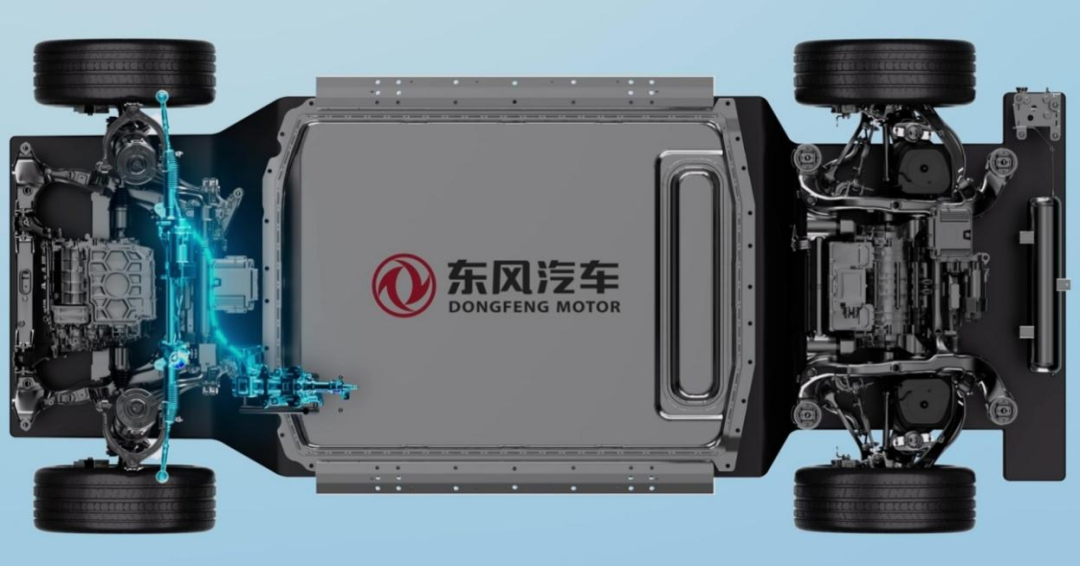
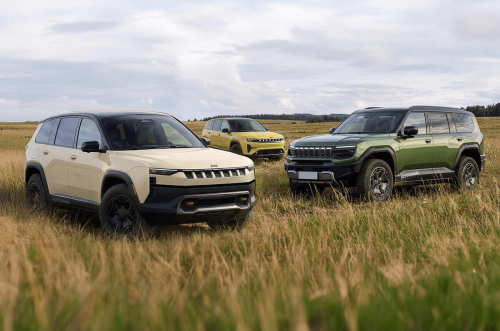
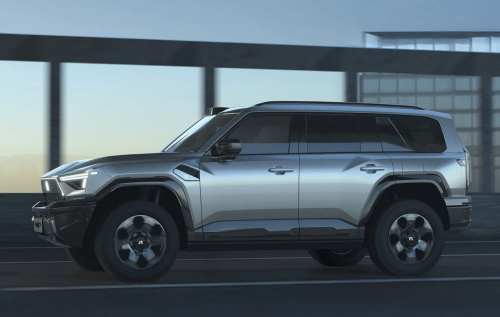
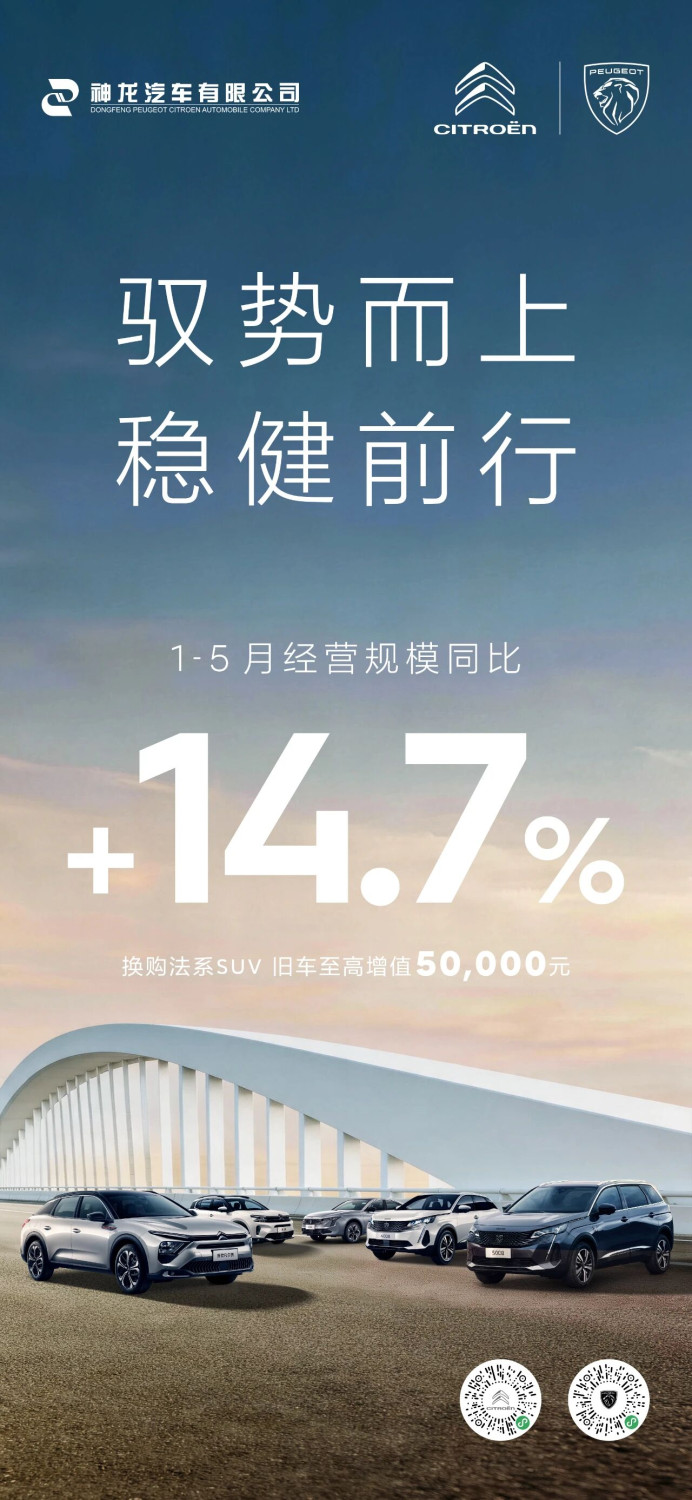
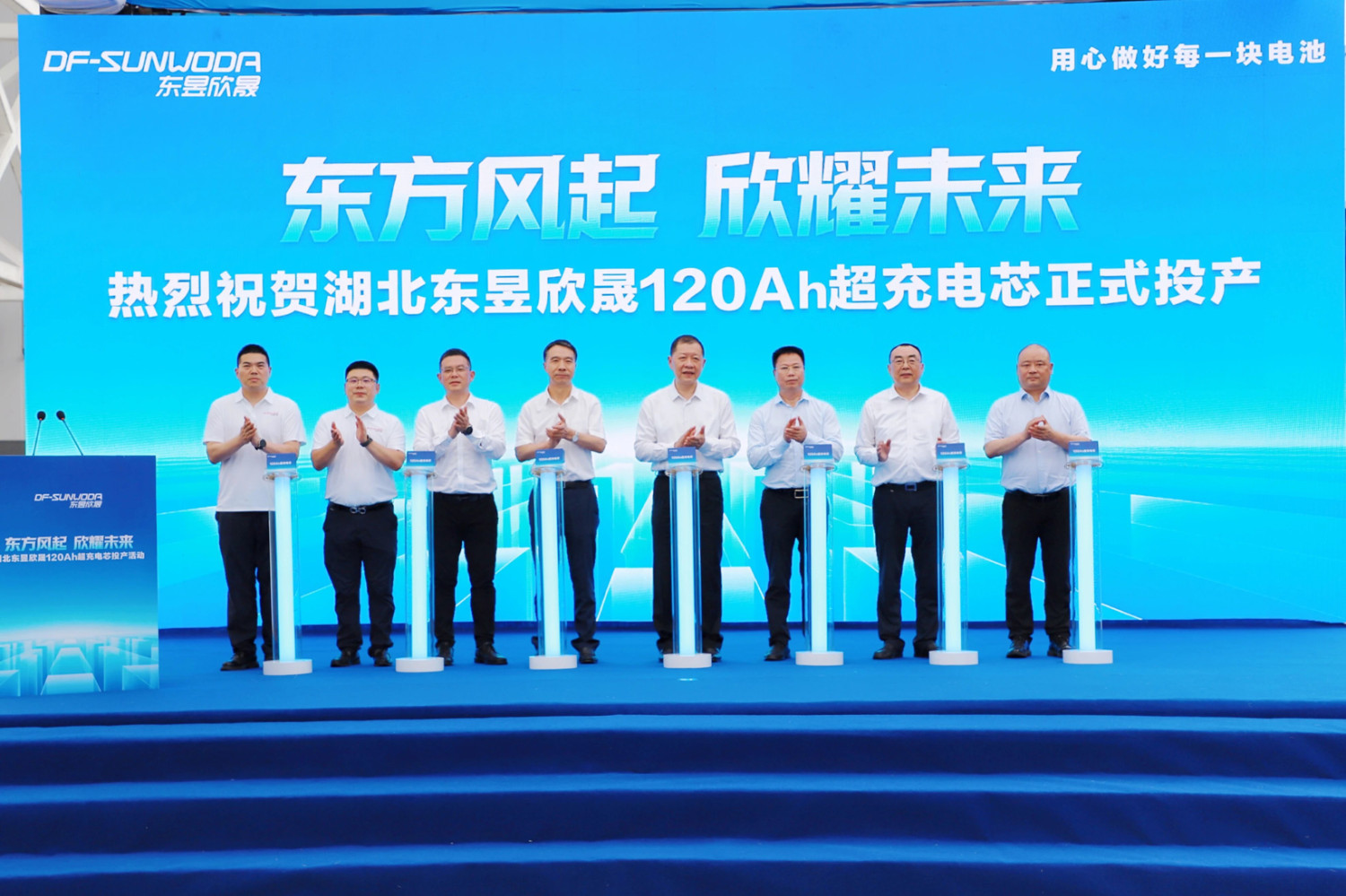
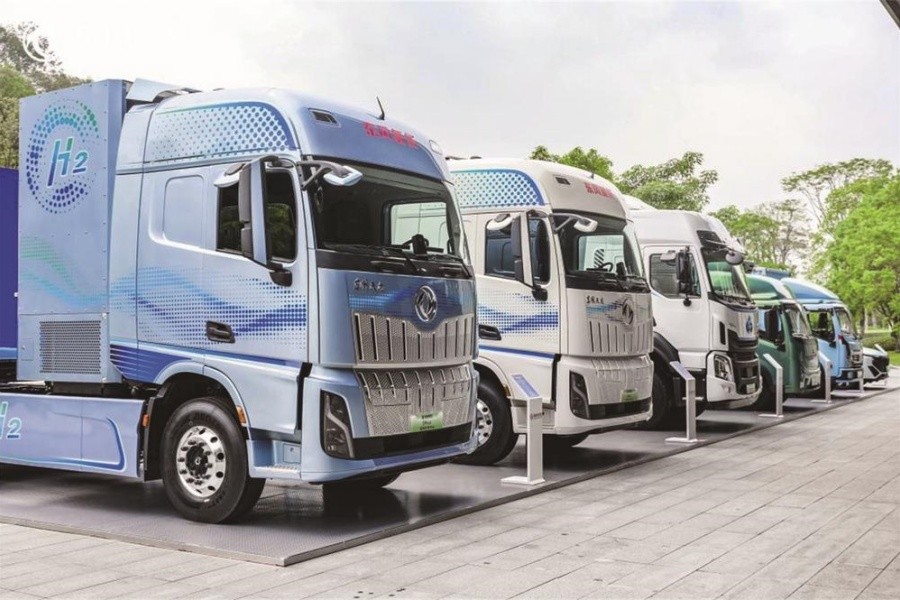
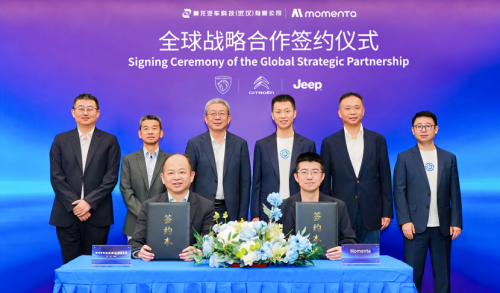
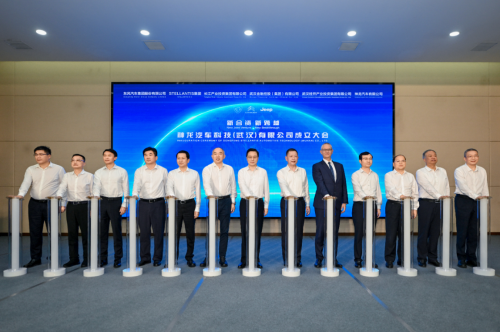
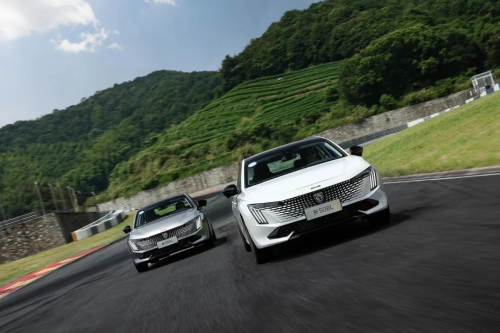
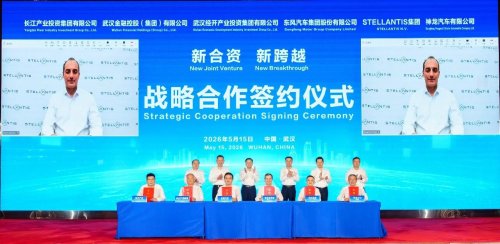
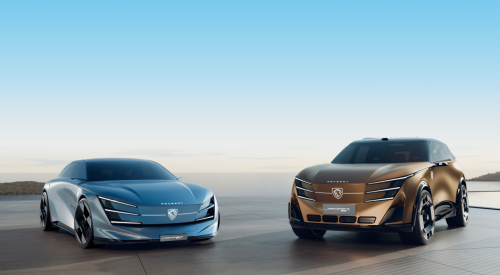
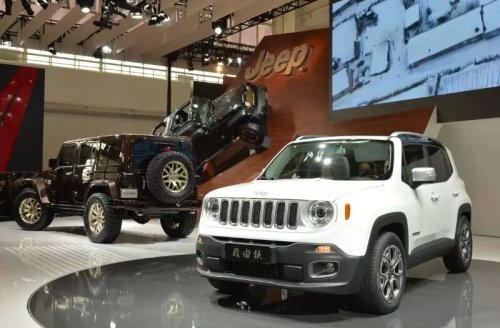
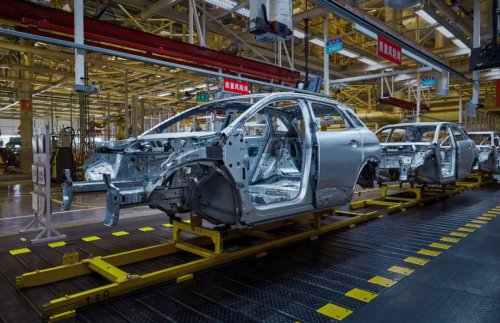
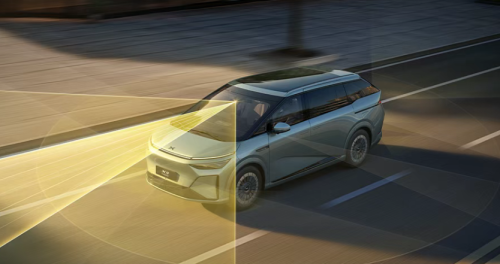
Gasgoo Munich- On May 15, 2026, a strategic investment exceeding 8 billion yuan thrust a long-dormant French joint venture back into the spotlight.Under the banner of "New Joint Venture, New Leap," Dongfeng Motor teamed up with Changjiang Industrial Investment Group, Wuhan Financial Holding Group, Wuhan Economic Development Industrial Investment Group, Stellantis, and Dongfeng Peugeot-Citroën Co. Ltd. to formally sign a strategic cooperation agreement in Wuhan. Dongfeng and Stellantis simultaneously inked a non-binding strategic memorandum of understanding aimed at further integrating their strengths in scale, R&D, and industrial synergy.For Dongfeng Peugeot-Citroën, the significance of this move is unmistakable. Since its sales peak in 2015, the joint venture—once selling 710,000 units annually in China—has endured nearly a decade of contraction.With Dongfeng’s proprietary brands now accounting for over 60% of sales and Stellantis grappling with global losses, this injection of more than 8 billion yuan opens a new window for Dongfeng Peugeot-Citroën.Behind the 8 Billion Injection: A Power Reshuffle in Joint Venture 2.0Of the 8 billion yuan strategic investment, Stellantis is contributing approximately 130 million euros, representing a roughly 13% stake.Image Source: Dongfeng Peugeot-CitroënAccording to the agreement, the funds will be used to "empower innovation in new energy and intelligent connected technologies through industrial capital." By leveraging the synergistic advantages of the industrial chain and integrating global brand and market resources, the investment aims to comprehensively drive Dongfeng Peugeot-Citroën’s transformation toward "intelligence, internationalization, and green development." In other words, the capital is directed primarily at reshaping technical capabilities rather than expanding production scale.Official statements indicate that the parties will draw on the strategic resources of Dongfeng and Stellantis across branding, technology, and global markets. By fully leveraging China's speed of innovation and supply chain advantages, they aim to enhance Dongfeng Peugeot-Citroën’s market competitiveness and sustainable development capabilities, further driving the high-quality growth of Hubei’s automotive sector. The presence of Li Donghui, Vice Governor of Hubei Province, and other provincial and municipal leaders at the signing ceremony underscores the local government's commitment to the project.Image Source: Dongfeng PeugeotOn the product front, Dongfeng Peugeot-Citroën has laid out a clear roadmap. Starting in 2027, the Wuhan plant will initially produce two all-new Peugeot new energy models. These vehicles will be built using the latest design language from the Concept 6 Lion and Concept 8 Lumière concepts unveiled at the 2026 Beijing Auto Show. Simultaneously, the same facility will begin mass production of two Jeep new energy off-road models, directly targeting the global off-road segment. All new models are destined not only for the Chinese market but also for export, supporting the global growth plans of both Peugeot and Jeep.A deeper shift lies in the restructuring of the division of labor. In this partnership, the roles of the Chinese and French sides have been recalibrated. Dongfeng will provide the electric powertrain, intelligent driving systems, and local supply chain, while Stellantis contributes the brand equity of Peugeot and Jeep, chassis tuning expertise, and the global distribution network. At the signing, Dongfeng Group Chairman Yang Qing emphasized that the deal aggregates Hubei’s industrial strengths, Stellantis’s global layout, and Dongfeng’s smart-electric technology advantages—creating a new path for mutual benefit and injecting fresh momentum into Dongfeng Peugeot-Citroën’s transformation.This division—where the Chinese side leads on technology and the French side controls brands and channels—bears structural similarities to the previous partnership between Leapmotor and Stellantis, yet marked differences remain. In 2023, Stellantis acquired a stake in Leapmotor for approximately 1.5 billion euros and established "Leapmotor International," a joint venture 51% owned by Stellantis, to handle export sales outside the Greater China region.The Leapmotor model is essentially a financial investment coupled with channel cooperation; Leapmotor retains control over product definition and technology, aiming to rapidly globalize its brand through Stellantis. The Dongfeng Peugeot-Citroën model, however, adjusts technical leadership within the shell of a traditional joint venture. Relying on an established JV, it seeks to revitalize existing capacity by implanting Chinese technology, with the core objective of breathing new life into the Peugeot and Jeep brands.For Stellantis, this strategic partnership is a crucial piece in its overall "China game." Beyond Dongfeng Peugeot-Citroën and Leapmotor, Stellantis is collaborating with CATL on battery operations and Pony.ai on autonomous driving systems. The materialization of this new round of strategic cooperation with Dongfeng Peugeot-Citroën further deepens Stellantis’s layout in the Chinese market.To understand the deeper motivation behind Stellantis’s heavy bet, one must look at its financial health. For the full year 2025, Stellantis reported a staggering net loss of 22.3 billion euros—with more than 20 billion euros of that coming in the second half alone. This loss stemmed largely from 25.4 billion euros in exceptional charges related to strategic adjustments, including realigning product plans to match customer preferences and U.S. emissions regulations, as well as scaling back the electric vehicle supply chain.Stellantis CEO Philosa acknowledged at the earnings briefing that the results reflect the cost of the group having "overestimated the pace of the energy transition." Between late 2025 and early 2026, Stellantis shares tumbled roughly 25% following the news of these impairments.Image Source: Jeep ChinaAgainst this backdrop, Stellantis’s "China strategy" has pivoted from "light assets" to "heavy investment." Former CEO Carlos Tavares pursued aggressive cost-cutting measures that included halting Jeep’s localized production, even sparking speculation that the company was exiting the Chinese market.With new CEO Philosa at the helm, the Chinese market has been reassessed. Just over a month into his tenure, Philosa led a delegation of more than ten senior executives to Wuhan. There, he met with Dongfeng Motor Chairman Yang Qing, inspected the Wuhan Economic Development Zone and State Grid battery-swap facilities, and explicitly stated a commitment to accelerating Stellantis’s layout in China alongside Dongfeng. This new cooperation with Dongfeng Peugeot-Citroën is the concentrated expression of that strategic shift.For Dongfeng, the role of Dongfeng Peugeot-Citroën has also shifted subtly. In 2025, sales of Dongfeng’s proprietary brands surpassed 1.5 million units, accounting for over 60% of the group’s total. Conversely, the contribution of the joint venture segment has steadily declined—by the first quarter of 2026, the JV share had fallen to 48.6%, down from roughly 70% a decade earlier. Dongfeng Peugeot-Citroën is no longer Dongfeng’s primary profit engine, yet it has gained a new positioning: a testing ground to verify whether "reverse empowerment" technology can be replicated across Dongfeng’s other joint ventures.Yang Yanding, Dongfeng Motor’s spokesperson and general manager of strategic planning, has indicated that the ratio between proprietary brands and joint ventures will likely settle between 6:4 and 7:3. This implies that proprietary brands will carry a base of over 3 million units, while the joint venture sector must undergo a profound inside-out transformation. Yang also revealed that Dongfeng is exploring a path of "technological back-feeding" for its JVs—whether the technological accumulation of its proprietary brands in new energy and intelligence can successfully "transfuse" the joint venture sector will determine the boundaries of Dongfeng’s leverage in this new era of cooperation.The participation of three local capital players gives this collaboration a different industrial policy character than in the past. In 2025 alone, Changjiang Industrial Investment Group completed investments totaling 30.6 billion yuan, a 34% year-on-year increase, with a focus on core industries like automotive components, optoelectronics, and BeiDou navigation. The involvement of Wuhan Economic Development Investment and Wuhan Financial Holding signals that local governments are shifting from being traditional providers of land and tax incentives to becoming active participants in industrial restructuring with real capital.A Decade of Ups and Downs: From Peak to Inflection PointTo assess the feasibility of this "Joint Venture 2.0 experiment," it is necessary to review the specific trajectory and underlying causes of Dongfeng Peugeot-Citroën’s decline over the past decade.In 2015, Dongfeng Peugeot-Citroën’s annual sales peaked at 711,000 units, making China the largest single market for France’s PSA Group globally. In the decade that followed, however, sales fell off a cliff. Full-year 2024 sales stood at just 68,319 units, a 35.81% year-on-year drop. By 2025, retail sales of French vehicles in China had further slipped to 42,561 units—an annual total that lagged behind the monthly sales of a single popular model from a mainstream brand. Dongfeng Peugeot-Citroën sold approximately 51,500 units in 2025, capturing less than 0.2% market share.This contraction is not merely numerical; it reflects systemic strategic failures. During the industry's two most critical transition windows—the SUV boom and the new energy explosion—Dongfeng Peugeot-Citroën failed to position itself in time. Between 2018 and 2022, as domestic brands accelerated their push into electrification and intelligence, Dongfeng Peugeot-Citroën clung to its internal combustion engine advantages. Its converted electric models lacked dedicated EV platforms, and intelligent features lagged behind those of domestic rivals at similar price points. The Peugeot brand’s insistence on a "French design first" philosophy also misaligned with Chinese consumers' preferences for space, features, and value for money.Image Source: Dongfeng Peugeot-CitroënAn even more critical factor lies in governance. From 2016 to 2025, Dongfeng Peugeot-Citroën’s core management underwent at least eight major reshuffles, with internal management issues frequently reported. Simultaneously, long-standing divergence in strategic direction between Dongfeng and Stellantis—one prioritizing profit, the other chasing market share—created tension between shareholders. This caused multiple self-rescue plans to remain superficial, failing to generate synergy. In reality, as early as 2022, Dongfeng Peugeot-Citroën was already operating with severely underutilized capacity, with several models selling only a few hundred units monthly.A key turning point emerged in 2023. Driven by the Chinese marketing team, the "Made by Dongfeng Peugeot-Citroën, Sold Globally" strategy was established. This broke a governance deadlock that had persisted for years and explicitly elevated exports to a core corporate strategy—an adjustment that may well have laid the groundwork for today’s investment and cooperation.Yet a question remains: Is Dongfeng Peugeot-Citroën’s plight the result of universal pressures from industry transition, or the outcome of long-standing strategic divergence between its shareholders? The answer is likely a mix of both: industry transition amplified internal governance weaknesses, while governance disarray prevented the company from capturing external shifts in time—a dynamic that may well be the profound root of the company’s decline.Above a New Starting Line: Three Hurdles Still to ClearAlthough the 8 billion yuan injection and the "Joint Venture 2.0" narrative send positive signals—acting as a shot in the arm for Dongfeng Peugeot-Citroën—whether this capital and strategic blueprint can translate into genuine market competitiveness remains to be seen. Several key variables require careful observation.First comes the challenge from the market itself. China’s new energy vehicle market has already shifted from incremental expansion to zero-sum competition, with penetration rates nearing 60% and rivalry intensifying like never before.Image Source: XPENGAcross core technology dimensions—batteries, fast charging, smart cockpits, and autonomous driving—brands have long entered an "arms race." 800V high-voltage platforms, 5C ultra-fast charging, and full-scene city NOA coverage have become the baseline entry requirements for mainstream models.Domestic brands and new entrants continue to lead in product definition and technological iteration, placing the joint venture camp under broad pressure. Against this backdrop, it remains highly uncertain whether the new products planned under Dongfeng Peugeot-Citroën’s new cooperation system can match the first tier in technical specifications and user experience, or whether the company can effectively harness the technological resources of both parents to translate them into grounded competitiveness.Analysts at Gasgoo Auto Institute remain cautious, projecting that the overall market share of joint venture brands in China could hover around 20% by 2030—a figure that underscores the urgency and necessity of their transformation. In their view, exports are a "potential breakthrough" for Dongfeng Peugeot-Citroën’s current strategic shift, but this path faces threefold uncertainty: first, whether the new products’ pricing and technical competitiveness truly stand up globally remains to be tested by the market upon launch; second, the extent of support Stellantis’s global channels will provide to Peugeot and Jeep—and how many resources will actually be committed—is an open question; third, the inherent organizational efficiency and decision-making flexibility of a joint venture remain a long-term challenge for Dongfeng Peugeot-Citroën, one that will heavily influence its future trajectory.Secondly, French vehicles have faded from the mainstream spotlight for years, with their presence in the consumer market diminishing. Brand awareness among China’s younger generation of consumers is limited; even with a return in the form of new energy vehicles, rebuilding brand power will require significant time and investment.Regarding the path to rebuilding French brands, Gasgoo analysts believe that while a loyal niche following exists in China, breaking the current market structure to expand the consumer base is difficult in a zero-sum game. They further suggest that it would be more pragmatic for Dongfeng Peugeot-Citroën to focus on export operations—prioritizing overseas markets with relatively lower regulatory barriers, where the probability of success is higher. Additionally, the analyst noted that beyond utilizing the capacity of the Wuhan plant, Stellantis’s idle overseas capacity could form a dual-layout with domestic production. This "overseas plus domestic" synergy could become an effective way to further boost scale.For the Jeep brand, the situation is even more unique. Since localized production halted in 2022, the brand’s user base and pricing power in China have eroded. While its return as a new energy off-road vehicle precisely targets a niche segment, the off-road market itself has been rapidly captured by domestic brands like Tank and Fangchengbao over the past two years. Whether Jeep can regain the approval of its target users remains to be tested by the market.Gasgoo analysts are relatively optimistic on this point: compared to Peugeot, Jeep holds unique advantages in its segment, particularly its high acceptance in overseas markets. However, in the fiercely competitive domestic market, Chinese consumers have composite demands—"off-road capability, daily comfort, and intelligence all in one"—which places higher demands on Jeep’s product definition capabilities.As Gasgoo’s analysis suggests, while exports may be a "potential breakthrough" for Dongfeng Peugeot-Citroën’s strategic transformation, they face significant headwinds in the current global economic climate. Stellantis possesses a mature global distribution network—a major advantage for Dongfeng Peugeot-Citroën’s overseas push—yet the external policy environment is tightening. The risk of tariff barriers on Chinese electric vehicles in Europe and the United States continues to rise. Although Stellantis’s localized production layout may partially hedge this risk, exporting still faces numerous uncertainties. In this context, whether exports can truly become a stable growth engine for Dongfeng Peugeot-Citroën depends largely on the direction of trade policy rather than the company’s own efforts.Conclusion:This transformation of Dongfeng Peugeot-Citroën by Dongfeng and Stellantis is not a simple capital injection to save the day; it is a profound adjustment involving power structures, the division of technical labor, and market positioning. The injection of 8 billion yuan opens new development space for Dongfeng Peugeot-Citroën, but whether it can leverage genuine change depends on the ability of three forces to synergize: Dongfeng’s technological output, Stellantis’s global channels, and the industrial support of local government. All are indispensable.The rollout of new vehicles in 2027 is a visible milestone. Before then, Dongfeng Peugeot-Citroën must make steady progress in brand recognition, technological iteration, and export layout. These challenges are the very questions that the Joint Venture 2.0 model must answer.



















 +65 others