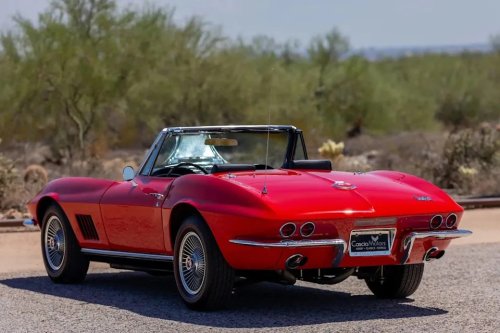
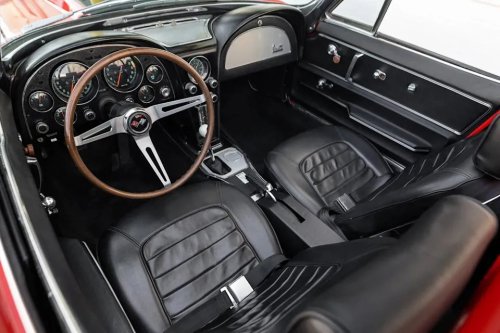
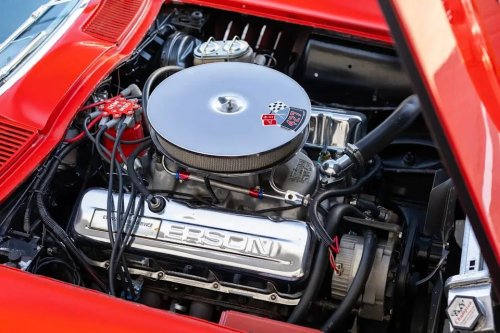
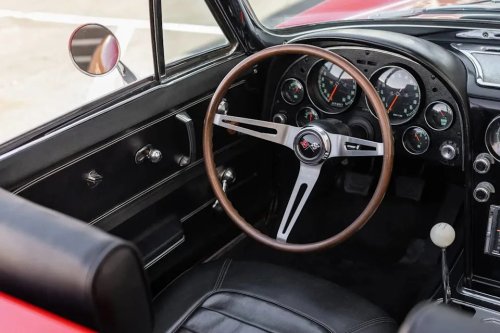
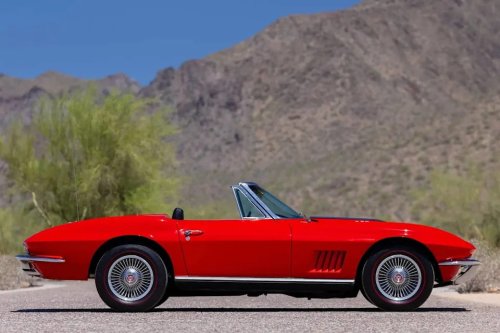
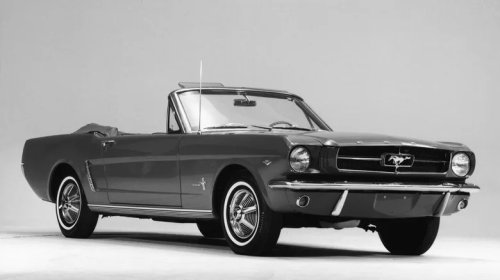
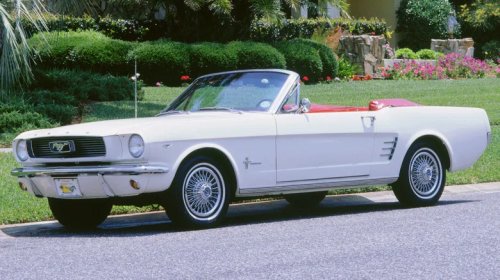
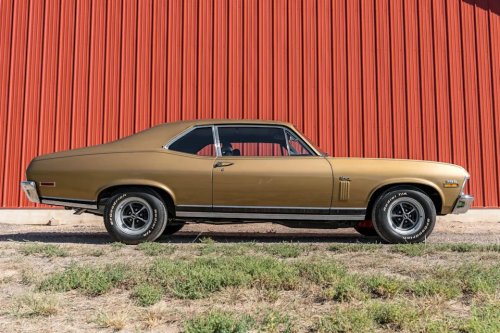
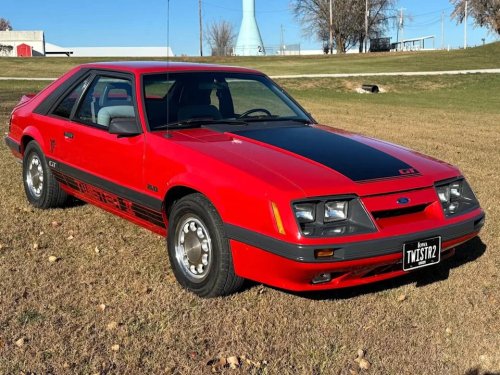
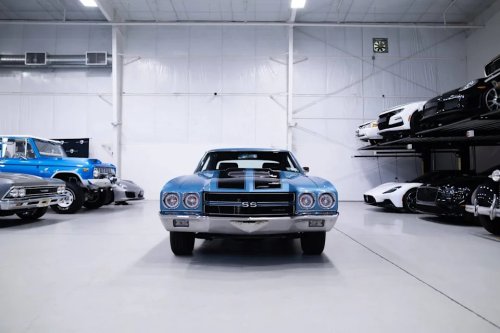
The 1965 Chevrolet Corvair and 1965 Ford Falcon arrived from opposite ends of Detroit thinking. One tried to reinvent the American compact, the other doubled down on convention. Only one of them would end up in a bestselling consumer-safety book, congressional hearings, and a decades long argument over what counts as a dangerous car. Looking back at these two mid sixties compacts shows how a single model can change the conversation for reasons its engineers never intended. The Falcon quietly set the template for mainstream success, while the Corvair became a symbol of risk, regulation, and the limits of engineering ambition. Two very different answers to the compact-car question The story really begins earlier in the decade, when The Corvair and the Ford Falcon first appeared as rival compact ideas. The Corvair was revolutionary for Chevrolet, with a rear mounted, air cooled flat six and fully independent suspension that broke from the front engine, water cooled formula that had defined American family cars for decades. Contemporary accounts describe how The Corvair forced Chevrolet to rethink everything the American auto industry believed about how to build a car, a theme that later video histories of Chevrolet and its controversial compact repeat in detail. Ford chose the opposite path. The Falcon kept a front engine, water cooled layout that felt immediately familiar to buyers trading in full size sedans. One enthusiast discussion that compared a 1965 Falcon Futura to a Corvair Monza captured the mood in plain language. Commenter Steve Mark Neither dismissed both as uninspiring but added that at least the Falcon was water cooled and had an engine up front to absorb impact in a crash, a simple argument that resonated with buyers who equated conventional engineering with safety and durability. A separate thread in the same enthusiast community called the early Falcon a kind of reverse engineered answer to Chevrolet’s compact, claiming that the Falcon sold 326,000 units and outpaced the Corvair by roughly 20,000 units in one early sixties model year. That sales edge mattered. It told Detroit executives that familiar hardware, not radical engineering, was the safer business bet. Even before the safety controversy exploded, the market was already rewarding the Falcon’s conservatism over the Corvair’s experimentation. How a book turned the Corvair into a national target The turning point came when Ralph Nader published his consumer safety polemic, later known widely through English, Spanish, Italian, Russian and Swedish editions such as unsafe at Any. The book did not only criticize one model, but its opening chapter focused on the first generation Corvair and its swing axle rear suspension. Nader argued that this layout, combined with a rear mounted engine, created unstable handling that could lead to sudden loss of control. On Nov. 30, 1965, the book landed in the middle of a broader public debate about traffic deaths and regulation. One later historical summary notes that on that November day, Nader’s work framed the Corvair as the prime example of what he called designed in danger in the American car. Another commemorative account of that same moment explains that, in the book, Nader targeted one car in particular, the Chevy Corvair, describing it as a sporty compact with a swing axle and rear mounted engine that could behave unpredictably in emergencies. The Corvair became shorthand for corporate indifference to safety, and the model’s reputation never recovered. Over time, the story hardened into a simple narrative. As one retrospective put it, on Nov 30 the Corvair became synonymous with dangerous, or even deadly design, and the car was discontinued in 1969 as the controversy and market pressure mounted. The nuance of the engineering debate faded behind the power of that symbol. In the public mind, Corvair equaled risk, while more conventional compacts like the Falcon seemed like the sensible alternative, even if their actual crash performance had not been scrutinized with the same intensity. Was the Corvair really that unsafe? The question of whether the Corvair truly deserved its reputation has never fully gone away. A later enthusiast discussion bluntly titled its debate Was the Corvair Really That Unsafe and reminded readers that in the 1960s Ralph Nader took the American auto industry by storm with his book Unsafe, singling out General Motors and its compact as an emblem of neglect. The same discussion pointed out that the controversy centered on the early swing axle cars, not the 1965 redesign that introduced a very different rear suspension. Owners and historians have pushed back for decades. The Corvair Society of America devotes a significant section of its history to the question, asking Are Corvairs unsafe at any speed and recalling that Ralph Nader said YES in 1965. The group notes that in 1972, after reviewing Nader’s evidence and conducting its own tests, a federal safety agency concluded that the later Corvairs performed comparably to similar compact cars of the era. That summary, hosted by the Corvair Society, gives enthusiasts a central reference point when they argue that the car was judged more harshly in the court of public opinion than in instrumented testing. Other materials linked from that same community, including a dedicated museum site and archival images, underline how owners have tried to reclaim the car’s legacy. The presence of a museum devoted entirely to the model, reachable through a link on the Corvair Society page, signals how strongly some enthusiasts feel that history treated the car unfairly. Yet even among fans, there is a recognition that Nader’s book, and the publicity around it, permanently changed how regulators and consumers think about automotive safety. Falcon: the car that stayed out of trouble While the Corvair became a lightning rod, the 1965 Ford Falcon mostly stayed out of the headlines. That did not mean it was perfect. One enthusiast in the earlier comparison thread described both the Falcon and the Corvair Monza as neither expensive, or very good, a curt verdict that captured the workaday nature of the Falcon. The car was designed to be simple to build, easy to maintain, and familiar to American drivers who were used to front engine, rear drive sedans. Video histories of early sixties compacts often mention that Lark, Falcon and Valiant were Detroit’s conventional answers to the compact boom, while Motors, meaning General Motors, had tried something more radical with the Corvair. In that framing, the Falcon is the baseline, the car that did what it said on the tin without attracting lawsuits or best selling critiques. It sold strongly, spawned sportier variants, and quietly evolved into the platform that would underpin the first Mustang, a lineage that Old Cars Weekly highlighted when it ran an owner’s perspective comparing a 1965 Mustang to a Corvair. In that owner story, writer Aaron Toth Though the described living with both a mid sixties Mustang and a Corvair, treating them as an odd couple that represented different branches of Ford and Chevrolet thinking. The Falcon does not appear as a character in that piece, but its engineering DNA runs through the Mustang. Where Chevrolet tried to leapfrog with a rear engine compact, Ford used the Falcon’s bones to create a sporty coupe that kept all the mechanical familiarity of a traditional sedan. The absence of controversy around the Falcon had consequences. Regulators did not focus on it, consumer advocates did not single it out, and the car quietly exited the market as Ford’s attention shifted to more profitable nameplates. In hindsight, that anonymity looks like a kind of success. The Falcon met its brief and then vanished, while the Corvair became a case study in product liability, corporate ethics, and the politics of safety. Engineering ambition versus public trust Comparing the 1965 versions of these cars highlights the trade off between innovation and trust. By 1965, Chevrolet had already responded to criticism of the early Corvair by redesigning the rear suspension with a modern independent layout that addressed many of the handling complaints. Enthusiasts often praise the 1965 Corvair for its improved road manners and argue that it should be judged separately from the earlier swing axle cars that Nader attacked. Some video retrospectives on the rise and fall of Chevrolet’s most controversial car stress how much the 1965 redesign improved stability and ride quality. Yet public perception lagged behind the hardware. Once the narrative of an unsafe compact set in, the details of the redesign struggled to break through. Consumer advocates and journalists continued to cite the Corvair as a symbol of risk, even as internal and external tests began to show parity with other compacts. The Corvair Society’s summary of the later federal findings, which concluded that the car was not uniquely dangerous compared with its peers, arrived too late to save the model’s reputation or its sales. By contrast, the Falcon’s very lack of ambition insulated it from similar scrutiny. Its front engine layout, conventional suspension, and water cooled inline six looked like every other sedan on the road. When Steve Mark Neither praised the Falcon for having an engine up front to absorb impact, he was not citing crash data so much as echoing a common sense belief that familiar designs are safer. That belief, repeated across thousands of dinner table conversations and showroom visits, helped steer buyers toward cars that felt predictable, even if their engineering was less advanced. The irony is that the Corvair’s engineering choices helped inspire competitors as well as critics. One later video essay on the most influential American cars quotes a recollection that liakoka saw the Corvair and had a light bulb moment. If Chevrolet could make the Corv, the argument went, perhaps a different kind of sporty compact was possible. That line of thinking fed into the creation of the Mustang and other pony cars, many of which rode on humble Falcon or Falcon derived platforms while adopting some of the Corvair’s flair for style and marketing. How the debate reshaped car safety The legacy of this Corvair versus Falcon contrast goes far beyond sales charts. Nader’s work, spread across editions in English and translations like the Spanish Peligroso a cualquier velocidad, the Italian version of Unsafe at Any Speed, the Russian Opasen na lyuboy skorosti and the Swedish Den livsfarliga bilen, helped push the United States toward stricter safety regulation. The Corvair, rightly or wrongly, became the poster child for why federal oversight was necessary. That shift had real consequences for how cars were engineered and marketed. Manufacturers began to emphasize features like seat belts, energy absorbing steering columns, and crumple zones. They also became more cautious about radical layouts that might confuse drivers or create unusual handling traits. The Falcon’s formula, front engine, rear drive, simple suspension, looked safer not only to buyers but to executives worried about liability. More from Fast Lane Only Unboxing the WWII Jeep in a Crate 15 rare Chevys collectors are quietly buying 10 underrated V8s still worth hunting down Police notice this before you even roll window down The post 1965 Chevrolet Corvair vs 1965 Ford Falcon one changed the conversation for the wrong reasons appeared first on FAST LANE ONLY.




















 +67 others