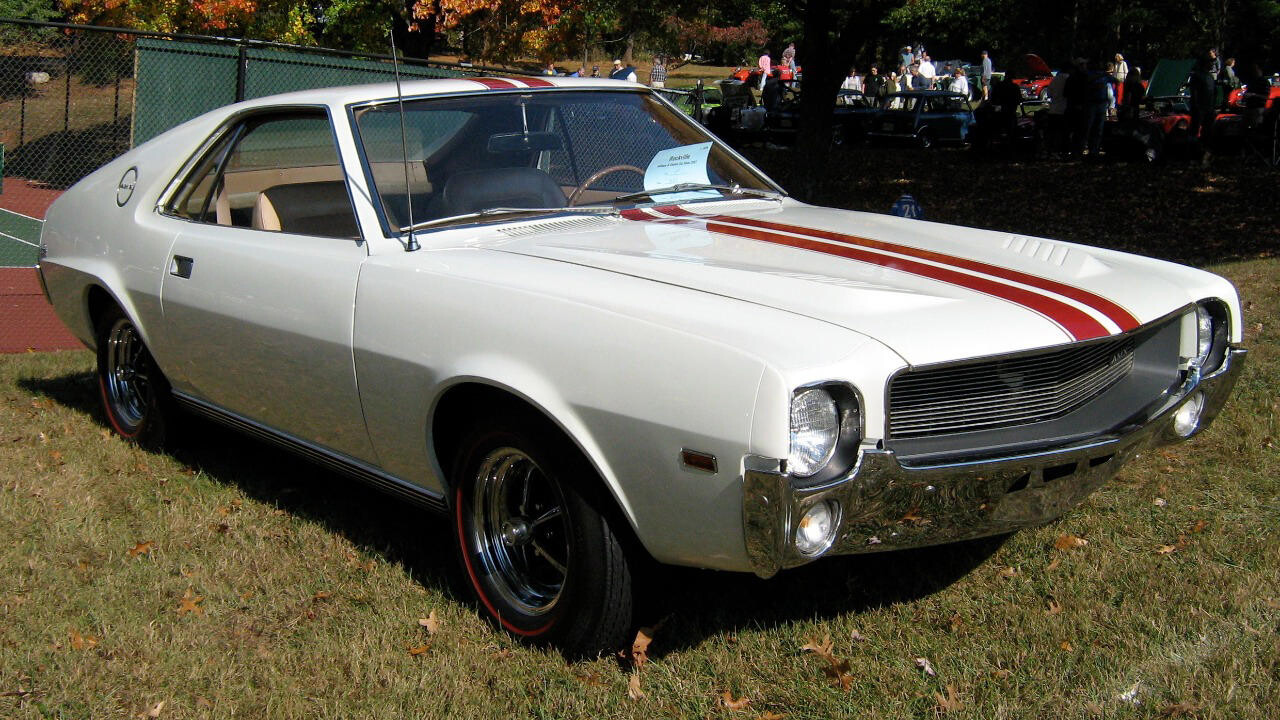
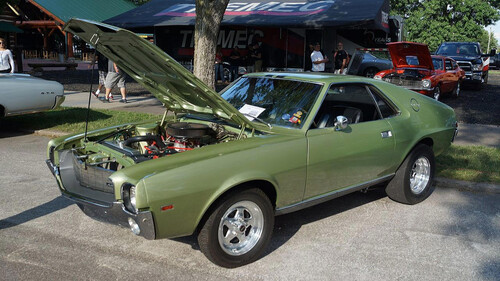
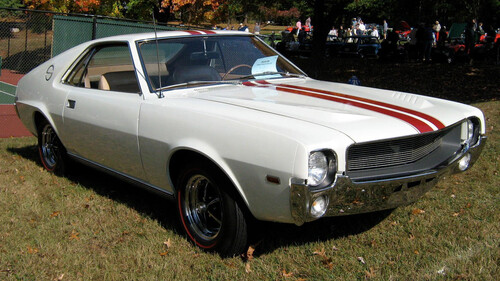
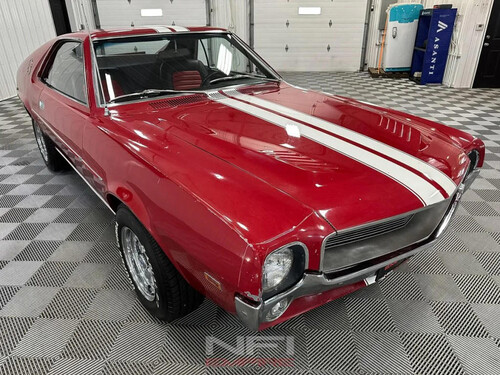
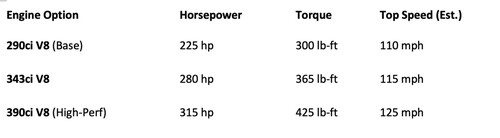
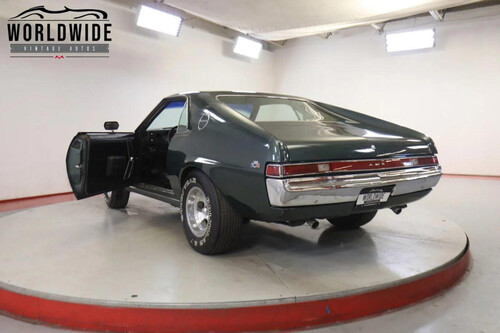
Two seats and a V8 made the 1968 AMC AMX feel different from the startThe 1968 AMC AMX arrived as a two-seat V8 coupe at a time when Detroit muscle usually meant four passengers and a long wheelbase. By slicing out the rear bench and compressing the body around a powerful engine, AMC created a car that felt more like a brash American sports car than a traditional pony car. That decision to build a short, focused two seater is what still makes the first AMX stand out in muscle car history. From Javelin sibling to short-wheelbase rebel The AMX did not start from a blank sheet of paper. Engineers began with the AMC Javelin pony car, then literally cut it down to create something more compact and aggressive. To remove the back seat, AMC shortened the Javelin by a full foot, which produced a wheelbase of 97-inch and dramatically changed the car’s proportions. The AMX interior largely mirrored the Javelin, but the missing rear bench and tighter cabin gave it an entirely different attitude. The change in stance was more than cosmetic. A shorter wheelbase tends to sharpen responses, and period reviewers noted how the AMX felt more eager to turn than many contemporary intermediates. The chopped dimensions also signaled intent. Where the Javelin tried to compete with mainstream pony cars, the AMX pointed itself at a smaller club of performance coupes and sports cars that prioritized the driver over practicality. A two-seat American muscle experiment In the world of classic American performance, the expectation has long been four seats, or at least a token back bench. The AMC AMX broke that pattern by embracing a strict two-seat layout, something more often associated with European sports cars. Contemporary enthusiasts still describe The AMC AMX as a short-wheelbase, two-seat American muscle car that arrived with an unconventional formula in 1968. Owners and fans repeatedly call the 1968 AMC AMX a rare gem in American muscle history, emphasizing how it combined a short wheelbase with a tight cockpit and bold styling. One enthusiast group describes the 1968 AMC AMX as a rare, two-seater powerhouse that broke the mold, with its short wheelbase and compact body setting it apart from the usual big coupes of the era. That two-seat decision, more than any styling flourish, is what made the car feel different from the moment a driver opened the door. Power choices: three V8s and one mission AMC did not pair its two-seat experiment with modest power. At launch, Three engines were, all of them V8s. The base engine was a 290 CID V8 rated at 225 hp, aimed at buyers who wanted the AMX look and handling without the highest insurance bills. Above that sat a 343 CID V8 with 280 hp, which delivered stronger midrange punch and made the car a genuine threat in street stoplight contests. The top choice was the big 390 CID V8, which produced 315 hp and transformed the lightweight two seater into a serious straight line weapon. Later commentary on AMC performance often highlights the second-generation 390 cubic inch AMX V8 as the heart of the most feared versions, with period coverage describing how a compact 2 seater equipped with a 390ci engine became a menace on the drag strip and in highway pulls. A separate enthusiast writeup on the 1968 AMC AMX also emphasizes that the car was Powered by a 390 V8 in its most desirable form, reinforcing how central that engine was to the car’s identity. Transmissions and the “Shift-Command” personality The AMX powertrain story went beyond displacement. Buyers could pair the big V8s with manual or automatic gearboxes, and AMC tried to inject some sportiness into its slushbox option. Period material describes a “Shift-Command” three-speed automatic transmission that allowed manual shifting through a floor console selector. That feature let drivers treat the automatic more like a manual on twisty roads or at the drag strip, while still offering full automatic convenience in traffic. The manual options gave purists what they wanted, but the Shift Command unit showed AMC understood that many buyers wanted involvement even when they chose an automatic. The branding itself, with the capitalized Jan, Shift, and Command terms in promotional material, signaled that the company saw the gearbox as part of the car’s performance character rather than a mere convenience feature. Chassis, brakes and the feel from behind the wheel The AMX chassis combined the shortened wheelbase with a relatively wide track and stout suspension hardware carried over from the Javelin. The result was a car that felt stable at speed yet more agile than the typical intermediate muscle machine. Surviving factory literature lists front disc brakes and rear drums on many configurations, along with power assist options that helped the car stop as confidently as it accelerated. Details from an original specification sheet show how AMC paid attention to durability and everyday use. The front brake swept area was quoted at 167.5 square inches, and the car used in-tank and fuel pump mounted Fuel filters, All Season engine coolant and Anti smog positive crankcase ventilation. That mix of performance hardware and practical engineering reflected AMC’s need to sell the AMX to real commuters as well as weekend racers. Styling: short, sharp and unmistakably AMC Visually, the 1968 AMC AMX combined muscular haunches with a fastback profile that hinted at the Javelin underpinnings but looked more compact and aggressive. The long hood and short rear deck emphasized the V8 up front and the lack of rear seating. Side sculpting and a distinct C pillar treatment helped the car stand apart from more common competitors. Paint charts from the period show that buyers could order the AMX in bold finishes such as Classic Black, Matador Red and Saturn Blue, each tied to specific color codes for the 1968 AMC AMX. Those hues, combined with optional stripes and mag style wheels, made it easy to spot an AMX in a crowded cruise night lineup. The car’s proportions, especially in darker colors, made it look almost like a scaled down exotic rather than a typical American coupe. Inside the cabin: sports car intimacy While the dashboard and general layout borrowed heavily from the Javelin, the AMX cabin felt very different because of what was missing. There was no rear bench, no extra legroom to brag about, and no pretension of family duty. Instead, two bucket seats, a center console and a simple rear shelf created an environment focused on the driver and a single passenger. Contemporary owners often describe the 1968 AMC AMX interior as tight but comfortable, with enough room for two adults and their weekend luggage. The short wheelbase and close rear bulkhead placed the rear axle and fuel tank closer to the occupants than in many larger cars, which contributed to a more direct sense of motion over bumps and through corners. That intimacy is part of why some enthusiasts liken the AMX to European sports coupes of the era rather than to its domestic muscle peers. Taking on the giants at a fraction of the cost From the start, AMC pitched the AMX as a way to get near supercar performance without supercar money. Later video retrospectives describe the AMX as a halo car designed to deliver jaw dropping supercar performance at a fraction of the cost, with the narrator calling the AMX the ultimate halo car of its time. In that framing, the two-seat layout was essential. It allowed AMC to claim sports car credibility while still leveraging shared components with the Javelin and other models. Muscle car historians have since argued that the AMX was one of the few cars from a smaller American manufacturer that genuinely made the Big Three sweat. A detailed feature on AMC performance in 1968 points out that by that time many small block muscle cars already pushed well over 300 hp and were running 14 second quarter miles, while NASCAR bred big blocks dominated the top of the market. Into that environment, AMC dropped a compact 2 seater with a strong 390 V8 and pricing that undercut some rivals, which gave buyers a compelling alternative to more familiar badges. “America’s other sports car” and its short run Some enthusiasts have taken to calling the 1968 AMC AMX America’s other sports car, a nod to its two-seat layout and performance intent. That label reflects how the car straddled the line between muscle coupe and sports machine. With a 290, 343 or 390 V8 under the hood and a body barely larger than some European GTs, it offered a mix that few other American brands attempted at the time. The AMX’s production run as a true two seater was brief, yet its impact has lasted. Later discussions of AMC history often highlight the AMX alongside the Javelin, but the two seat version tends to receive a special kind of affection. Enthusiast posts describe the 1968 AMC AMX as a unique American muscle car that combined power with a short wheelbase sports coupe design, and another group calls the 1970 AMC AMX a Unique American Muscle Car that was often overshadowed by its bigger rivals. That sense of being both distinctive and underappreciated adds to the model’s current appeal. Real world stories and collector interest Surviving owners provide some of the most vivid context for how the 1968 AMC AMX felt to live with. In one video interview titled “1968 AMC AMX – Short-lived and memorable,” a former young owner recalls working after school at a supermarket for about a year and a half, saving 2500 dollars to buy his AMX. His story highlights how the car managed to capture the imagination of regular working teenagers, not just affluent enthusiasts. Another walkaround video with Stephen at High Octane Classics in Auburn Massachusetts shows a well preserved 1968 AMC AMX and emphasizes how compact and purposeful the car looks in person. The presenter points out details such as the stance, the engine bay layout and the interior condition, which help modern viewers understand why the AMX still turns heads. A separate feature on a Super Rare Original 1968 AMC AMX in Chip’s Garage underscores how unusual it is to find these cars in largely untouched condition, and how different they appear compared with more common muscle machines. Why the two-seat formula still matters Looking back, the AMX experiment raises an obvious question that enthusiasts often debate. Why did the two-seat American muscle formula not catch on more widely? Part of the answer lies in simple practicality. Families wanted back seats, dealers preferred volume models, and insurance companies were already starting to clamp down on high performance coupes. In that environment, a car that sacrificed two seats for style and agility faced an uphill battle. Yet the very qualities that limited the AMX in the showroom are what make it compelling today. Collectors who seek something different from the endless rows of Chevelles and Mustangs see the AMX as a way to stand out. Market analysts have even identified the 1968 to 1970 AMC AMX as a rising collector car, in part because its 97-inch wheelbase, two seat layout and muscular V8 options create a driving experience that no other American brand duplicated in quite the same way. More from Fast Lane Only Unboxing the WWII Jeep in a Crate 15 rare Chevys collectors are quietly buying 10 underrated V8s still worth hunting down Police notice this before you even roll window down The post Two seats and a V8 made the 1968 AMC AMX feel different from the start appeared first on FAST LANE ONLY.