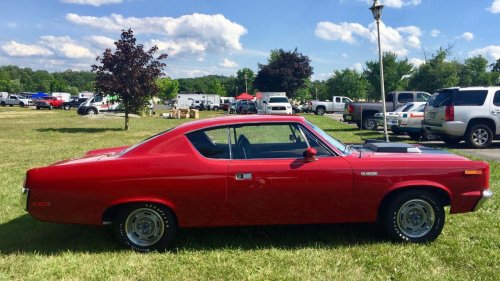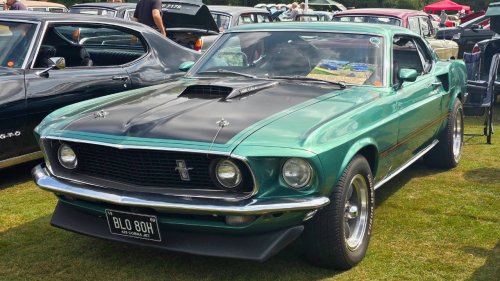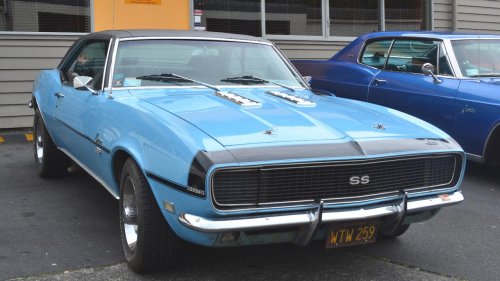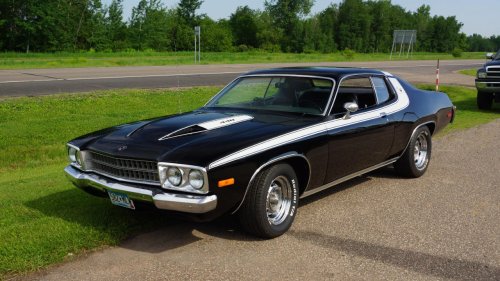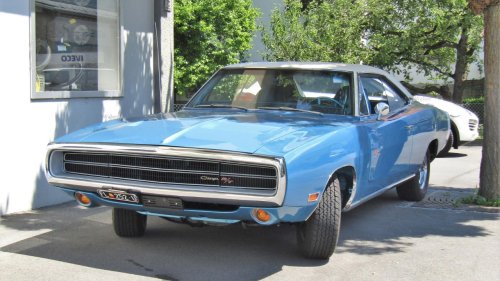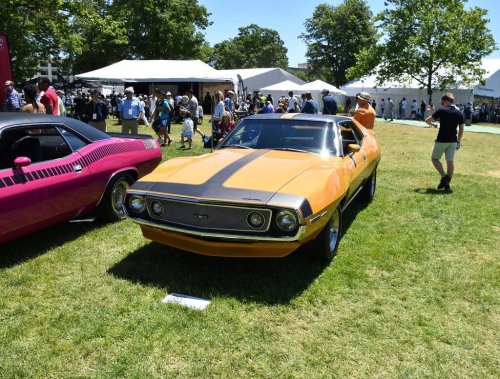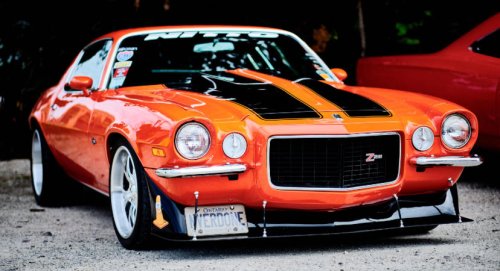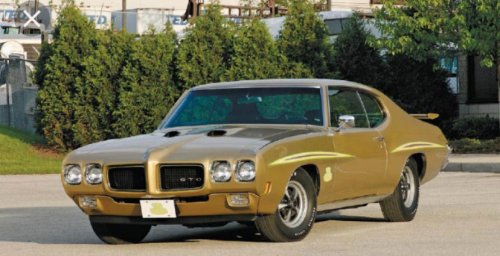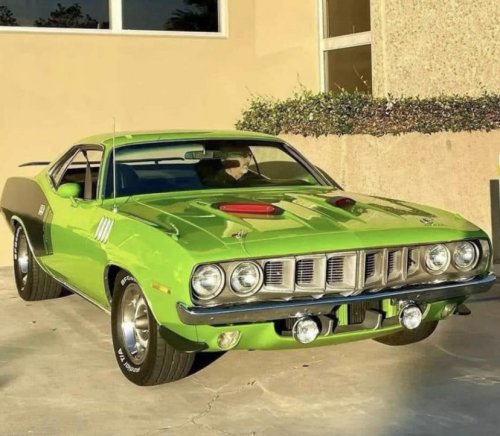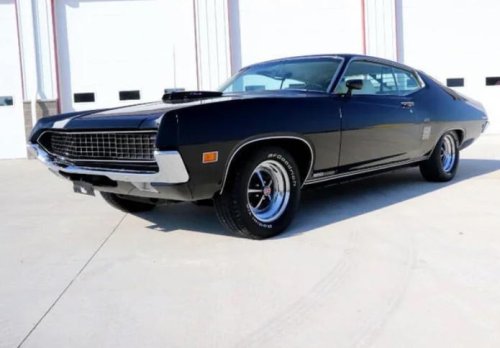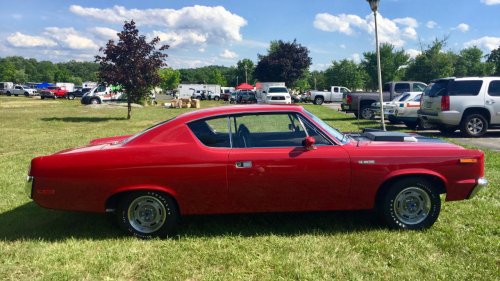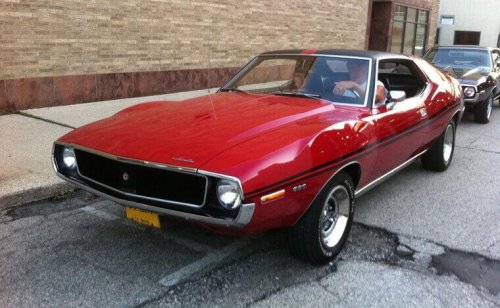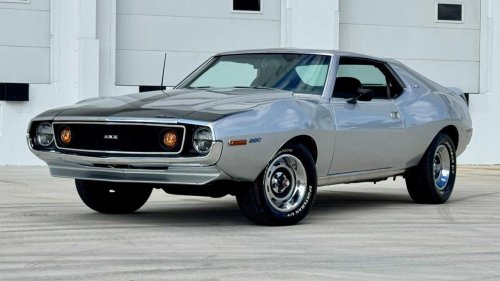
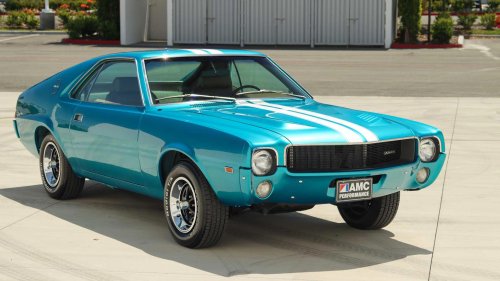
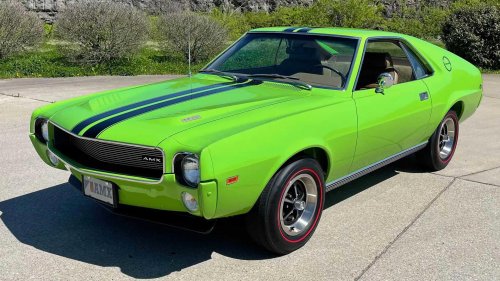
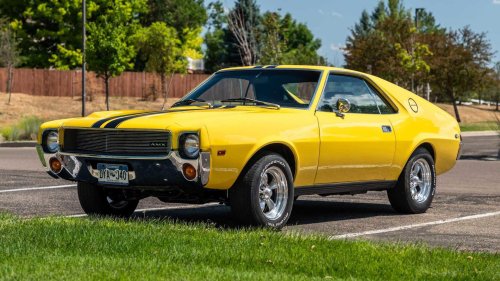



















Jump LinksIn the late 1960s, American enthusiasts were living in muscle car heaven. After all, you had a great cast of characters across the performance car spectrum, including Mustang, Camaro, Charger, GTO, and Corvette, with those being default references that spring to mind in any conversation about performance during the era. But there's also an outlier to consider in the form of the AMC AMX, a definitive muscle car in its own way, even though it never seemed to make that first cut list.Perhaps the problem for the AMX came down to its manufacturer rather than its outright capability. After all, American Motors Corporation (AMC) wasn't one of the Big Three. The AMC AMX was a two-seater that enjoyed only a short production run and appeared in comparatively small numbers, so it struggled to tell its story behind the cultural megaphone of Ford or GM. The AMC AMX Is A Rare Muscle Car Most People Overlook Bring A TrailerAMC manufactured its two-seat AMX for only three model years, from 1968 to 1970. The sales amounted to 6,725 units in 1968, 8,293 in 1969, and 4,116 in 1970. For comparison, Ford moved 190,727 examples of the 1970 Mustang.The figures help change the car's entire historical footprint. After all, when a company only produces such a small output, people aren't going to see many AMXs at your local mall, neighbor’s driveway, or even at the drag strip. This rarity certainly trickled down into the second-hand market later, and as the decades went by, the visibility gap compounded. Far from becoming a household name, the AMX just became a footnote of its era.AMC was also pushing the envelope a little if it was trying to really compete in the muscle car world. Many buyers back then loved the idea of a muscle car because it didn't force them into a dedicated sports-car lifestyle, by offering features like room for five passengers and enough trunk space to haul groceries. AMC completely missed the point here if it wanted to attract that type of customer, because the AMX had only two seats.The development team purposely eliminated the AMX's rear seat to offer a proper two-seat sports car. To accomplish this, the crew cut roughly a foot away from the existing AMC Javelin. To argue in its favor, the AMX had a layout broadly similar to a Corvette's and should have been a less expensive alternative for a customer looking for that type of machine. However, the two-seat layout pushed many mainstream buyers back toward more practical muscle or pony cars instead.Plus, that market definition may be at the heart of the car's obscurity. The AMX now sat somewhere between two markets, yet was so rare that many people didn't even see it. The cars that went on to define muscle culture weren't simply fast, but they were also everywhere. That was not the case with the AMX. The AMX Made A Two-Seat American Performance Statement BringATrailerAMC didn't lack ambition when it sold its AMX, but instead emphasized a unique approach that marketers thought would appeal to both muscle-car and sports-car buyers. The AMX debuted in February 1968 at the Chicago Auto Show, and its name stood for “American Motors Experimental.”The coupe had a short 97-inch wheelbase to help reduce its curb weight, which was around 3,100 pounds in stock form. The result was a more compact performance tool, and it should have had a much better rhythm on the road than some competitors due to the shorter wheelbase. And while its 60-mph pace at just under seven seconds is only okay by modern standards, it was still a strong result for the late 1960s.AMC was trying to prove a point with its experimental car and get some attention for it. In early 1968, it made a record attempt by employing land-speed legend Craig Breedlove to set 106 class-based world speed records with the car. The stunt showed that the AMX could display measurable performance far beyond any loud styling cues.These records were a direct appeal to credibility and surely meant the AMX should have received more attention in the historical conversation. After all, AMC had purposely configured this as a performance car and not as just a half-hearted response to any trends. The company went out of its way to attach the car to real-world achievements. But while you can't fault AMC for its serious approach, the company still failed to make the AMX a mainstream hit. Power, Packages, And Variants RM Sotheby's For those who understand the AMX, the engine is probably the biggest part of the story. After all, it came with the renowned “390,” a 390-cubic-inch (6.4-liter) V8 that made 315 horsepower and a healthy 425 pound-feet of torque. The powerplant produced the kind of soundtrack that muscle culture thrives on. You could also get a Hurst-shifted four-speed to complement the torque-rich power and lightweight body.There were plenty of factory options, too, to help your car stand out and, in the modern era, shift the collector’s conversation. For example, models with the Go Pack performance upgrade tend to be worth more today. It included power front disc brakes, an upgraded suspension, a limited-slip differential, and an improved cooling system.But when it comes to really special versions, the California 500 Special is where it's at. A 1969 AMC AMX California 500 Special is one of the rarer and more coveted examples. AMC only built 32 of them in 1969, and they were all bright green.Here, you've got something that is scarce in an already broadly scarce environment anyway. This type of car is way more exclusive than most of the other muscle cars that people talk about at shows. What An AMC AMX Costs Today And Why Collectors Are Finally Paying Attention BringATrailerJust because a car is relatively obscure doesn't mean that it's necessarily valuable, as plenty of such cars stay in the shadows because they never gain collector momentum. Yet the AMX tends to be a bit different. It has genuine performance credentials alongside the truly scarce numbers, and those ingredients may be slowly waking the market up.Going back to 2018, a 1969 AMX went for $19,000 on Bring a Trailer, which seems to be a bargain price because many more famous muscle cars of that vintage would cost much more. Another example changed hands for $43,500 in 2020, so maybe presentation, condition, and configuration matter a lot as well.Fast-forward to the present, and you can also see the other end of the spectrum. At Mecum's 2026 Kissimmee auction, a 1970 AMC AMX with the 390 V8 and Go Pack sold for $115,000. An impressive number, but this sale also shows that a car like this can appear at some of the biggest and most mainstream collector-car auctions in the US. It suggests that the AMX can and does turn up at major sales, belying its fringe car status. There are enough buyers and sellers, and enough general confidence in the model, to keep them circulating.In the end, the AMX adequately represents the muscle car era if you see it through a different lens, which is why the car deserves more love today. The weird sports coupe tells us that the golden age wasn't simply about big corporations making a lot of noise, but emphasizes that a smaller company like AMC could often make a mark. And with the AMX, American Motors swung for the fences and built something that's now turning into a real discovery decades later.