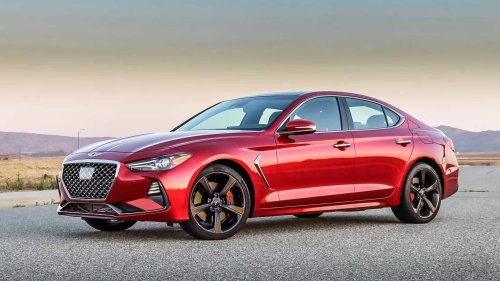
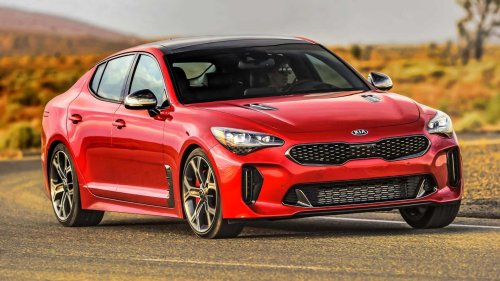
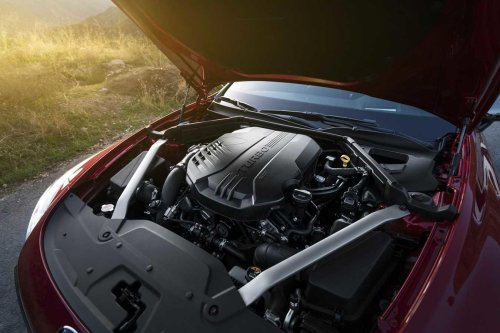
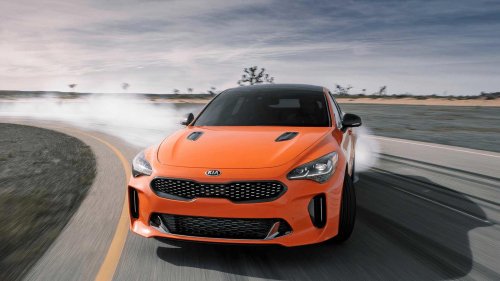
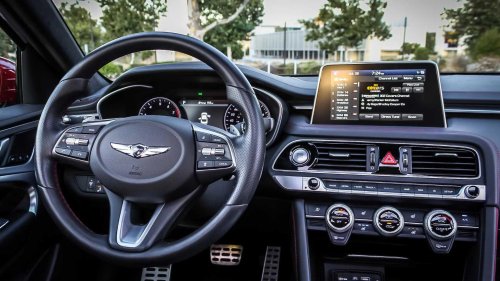
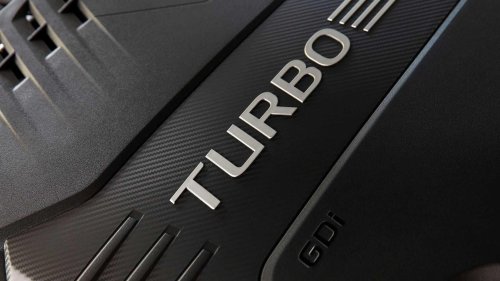
Jump LinksAs the performance car market morphs from a world of brute force into something more sophisticated, it's hard to predict where the next wave of collectibles may come from. After all, it used to be easy to find loud, aggressive cars with BMW M badges, Mercedes-AMG plaques, or Porsche crests, but the modern market is now far more subtle and arguably much duller than it used to be.Future collectors may need to turn to the likes of the Hyundai Motor Group (HMG), which includes the brands Hyundai, Kia, and Genesis, and begin to appreciate its 3.3-liter twin-turbo V6 as a fantastic performing powerplant. In recent years, models from this South Korean automotive giant are challenging the sports sedan establishment. While the company’s work may still be relatively invisible from a collectible perspective today, that may not be the case forever. Korean Performance Stopped Being Theoretical Carbuzz / ValnetFor a long time, Hyundai and Kia were basic auto manufacturers, turning out cars that were more reliable than desirable. They had a range of sensible cars that improved markedly in quality over time, and the companies won over buyers with warranties, equipment, and sensible pricing. But the bold Genesis G70 and in-your-face Kia Stinger changed that conversation because they were rear-wheel-drive performance cars that made a very bold statement to a surprised market.The Stinger was especially dramatic as a long, low, fastback grand tourer. In comparison, the G70 was a more traditional compact luxury sports sedan. Genesis launched the 2019 G70 with rear-drive as standard or available all-wheel drive, an eight-speed automatic transmission, and a 3.3T engine that could deliver 365 hp and 376 lb-ft of torque. Customers could also get performance-focused equipment such as Brembo brakes, dual exhausts, a sport-tuned suspension, variable-ratio steering, and a multi-plate limited-slip differential on rear-drive models. The Reason The 3.3T Looks Like A Future Classic Kia The 3.3-liter twin-turbo V6 could yet become a future classic, thanks to strong tuning potential and serious factory output. In the G70, the V6 engine featured dual continuously variable valve timing, gas direct injection, an aluminum block and head, and a 10:1 compression ratio. It connected to an eight-speed electronic automatic transmission that had Shiftronic manual-shift mode and a lockup torque converter as well.Meanwhile, the version of the 3.3-liter engine in the Kia Stinger GT had 368 hp and 376 lb-ft, with a 10:1 compression ratio. Some of the biggest selling points of this powerplant were around its performance and usability. Torque arrived early and stayed broad, giving the G70 and the Stinger a muscular mid-range feel for satisfying everyday driving. While the 3.3T was certainly quick enough in stock form, designers had left plenty of room for tuners to wave the magic wands, which may be the most important factor when assessing any future classic, in case buyers want to extract more performance. The Engine Was Not The Only Thing Doing The Work Kia While the engine may be the headline here, Genesis put a lot of effort into the G70 3.3T setup to transform it from a soft-ish sedan into a real sports model. For example, the G70 had front McPherson strut suspension and rear five-link suspension, with rack-mounted, motor-driven power steering and variable gear ratios. The car featured 19-inch wheels on rear-drive models and huge Brembo brakes, with 13.8-inch front ventilated discs and 13.4-inch rear discs.Genesis also trimmed curb weight to respectable figures for this type of sports sedan, with the rear-drive 3.3T at 3,774 pounds and the all-wheel-drive version at 3,887 pounds. And that's perfectly fine for a compact luxury sedan that has a twin-turbo V6, an automatic transmission, a significant equipment load, and available all-wheel drive.Kia also had the same basic approach, but with a different kind of car. The Stinger had a longer fastback body, which made it more visually distinctive and perhaps more practical, and that may help it develop a strong enthusiast identity. But of the two, the G70 is probably the purer sleeper, and it may age more gracefully than the Stinger. The Tuning Scene Has Already Found What The Market Missed Kia In the aftermarket, the 3.3T is now a familiar platform for those who want more than stock performance. For example, you can buy a 450-hp package for the Stinger or the G70, which centers on a revised tune and supporting parts. Other available upgrades include improved intercoolers, transmission coolers, and differential braces. The existence of a strong tuning ecosystem shows that the 3.3T is already more than just an adequate factory engine, but more of a platform for something more spectacular. Depreciation Has Created A Window That Buyers May Later Miss Carbuzz / Valnet The G70 3.3T deserves a lot of attention in the current used-car market, not because it's cheap in the literal sense, but because it's inexpensive relative to what it offers. A 2021 example has a nationwide average price of around $27,000, according to the CarBuzz Marketplace, and a 2019 3.3T Design Edition sedan could fetch just under $20,000, even with its original MSRP of $49,745.These figures indicate that the G70 3.3T still comes across as more of a used luxury sedan than a future enthusiast object, making it an interesting value proposition going forward. A clean 3.3T is surely no longer just a cheap used Genesis, but a solid, twin-turbo V6 sports sedan from the moment that Korea broke through the glass ceiling. HMG had decided that it was ready to challenge the old guard on its own terms, and the G70 was the visible result.Meanwhile, used prices for the Stinger look interesting as well, but perhaps for a slightly different buyer. The nationwide average for a 2022 Kia Stinger GT1 is approximately $29,370, while for a 2023 range-topping GT2, you could be looking at around $36,550, which is below its original MSRP of $51,290. And while the G70 3.3T may be the stealthier luxury sedan play, a Stinger GT could yet be the more expressive enthusiast pick. The 3.3T's Real Legacy Is Bigger Than Horsepower Genesis The 3.3T engine matters because it represents a brief, fascinating period when HMG came of age. The group had clearly taken care of its bread-and-butter business by rapidly developing much better mainstream cars, and it now needed to prove that it could build emotional ones as well. So, the G70 3.3T and Stinger GT were far more than just appliances but were statements of intent. It's just ironic that they arrived when the industry was starting to move away from the very format they celebrated.In the current era, a sports sedan is no longer the default system of attainable performance. After all, electrification has changed the very meaning of acceleration, and software has become central to any car's capability. Crossovers dominate showrooms, and sedans are an increasingly rare breed, so the G70 and the Stinger GT increasingly feel like markers from an inevitably closing chapter.Genesis still sells the G70 in its current US lineup, but it hasn't made any definitive statements about its long-term future. Some industry analysts suggest that the car won't get another generation after the 2027 model year, and this may be due to diminishing sales. After all, the G70 sold only 11,127 units in the US in 2025, trailing the brand's SUVs by a significant margin.Meanwhile, the Kia Stinger has already reached the end of its road, with the company discontinuing it after the 2023 model year. So, this rear-wheel-drive fastback halo car, with genuine grand-touring attitude, isn't around any longer to give the G70 any support.But still, a closing chapter doesn't automatically guarantee collectibility, even though it may sharpen the context. Instead, it suggests that if the G70 does disappear, the 3.3T will be seen as part of a short-lived experiment. It might signify that a Korean luxury brand could take a proper swing at the traditional compact sports sedan market, before everyone turned their attention elsewhere.And as the performance market turns increasingly electric, this kind of compact luxury sedan, with rear-drive roots, that twin-turbo V6, and real tuning potential, can't really stay ordinary forever.



















 +13 others