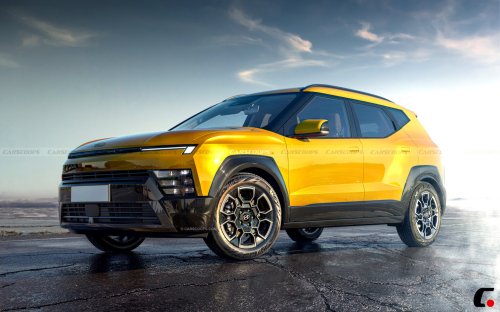
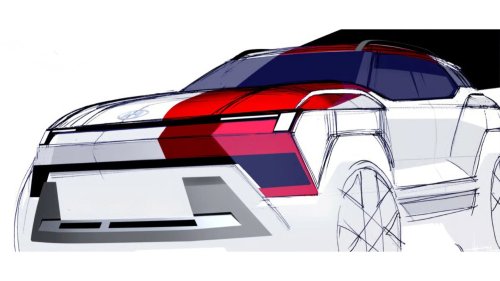
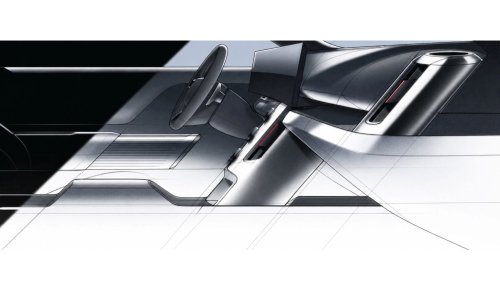
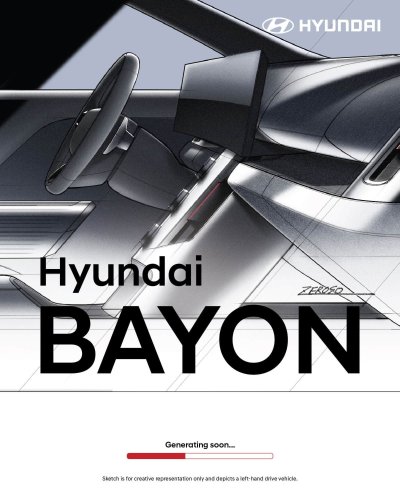
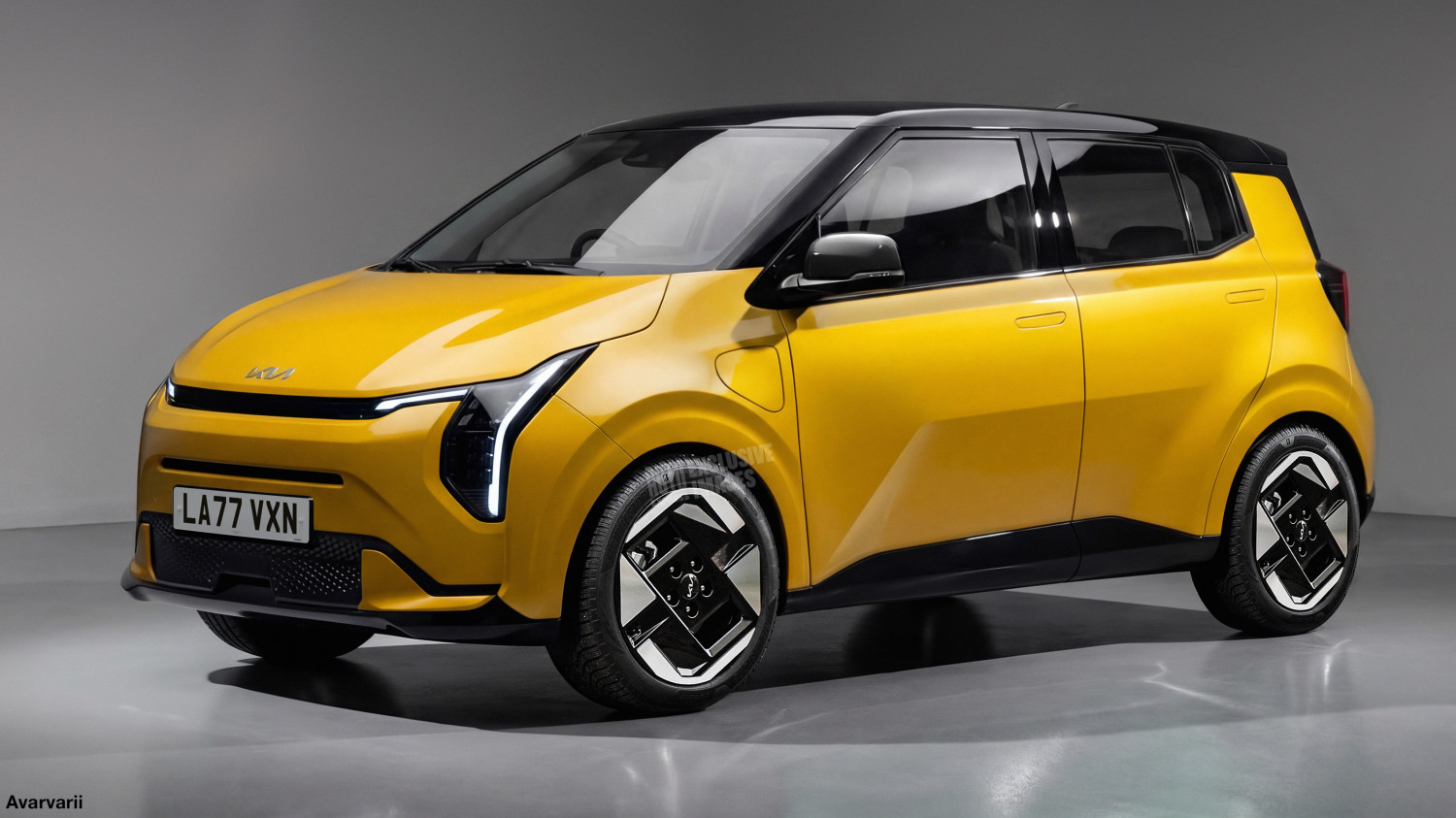
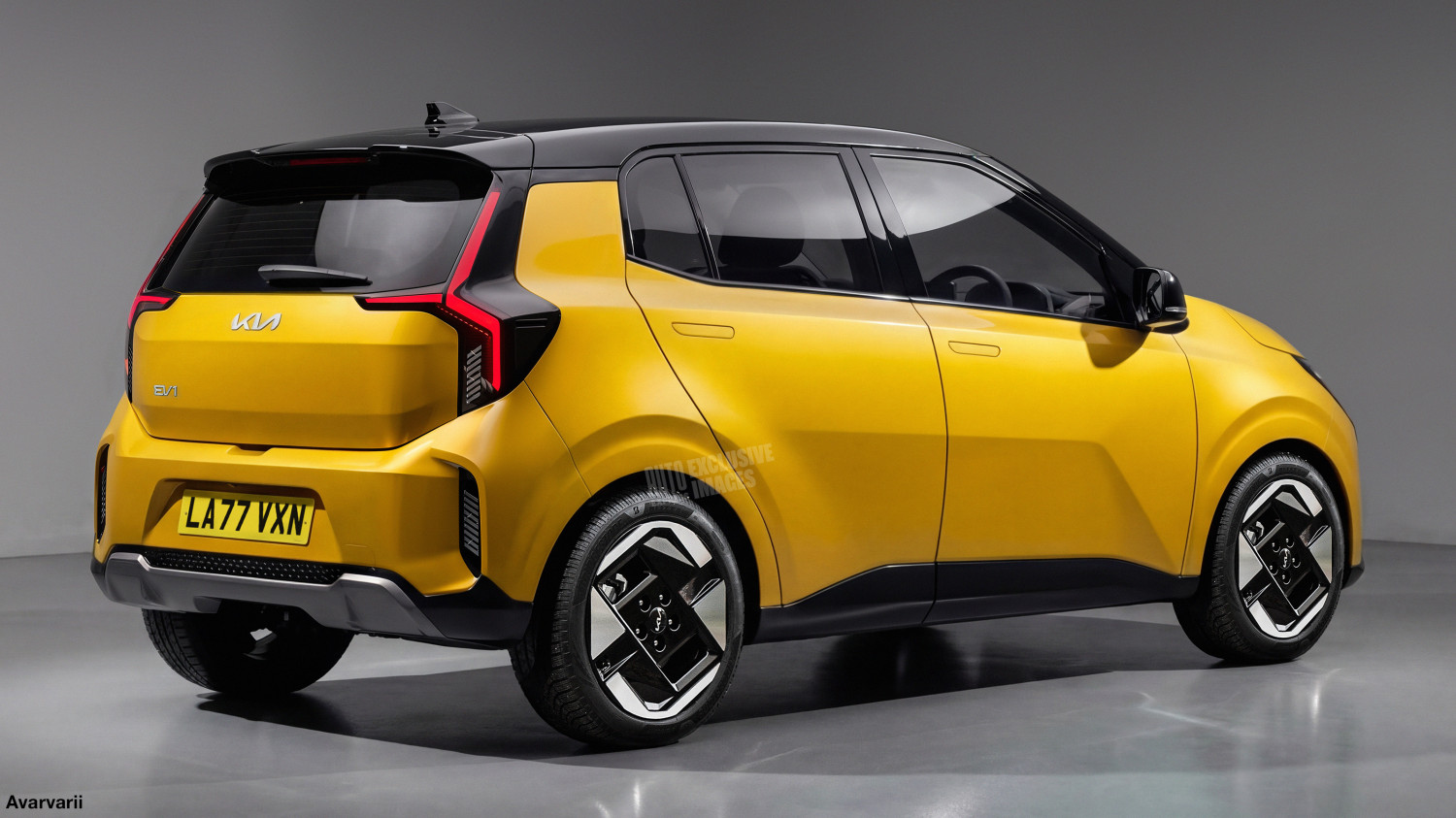
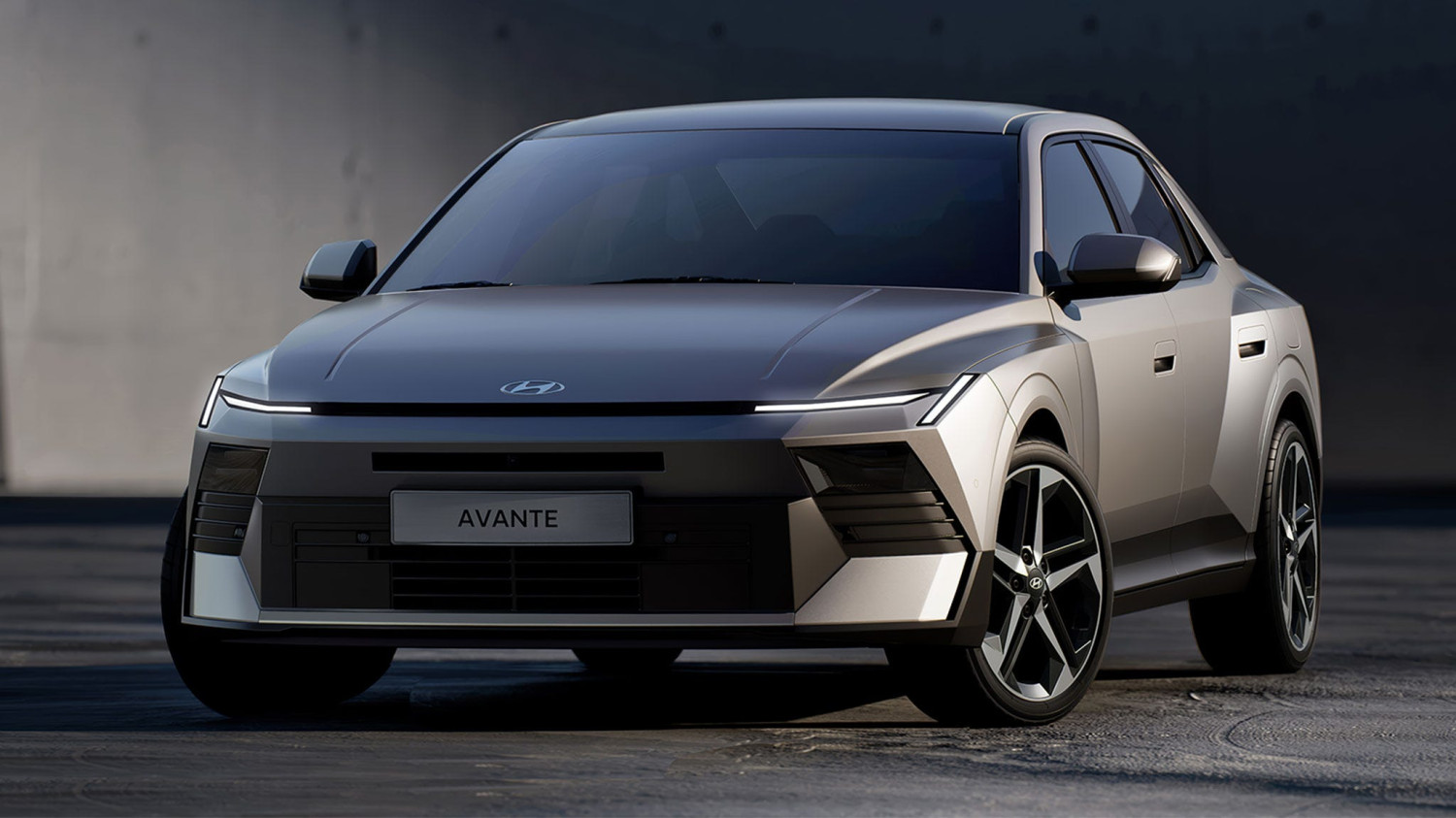
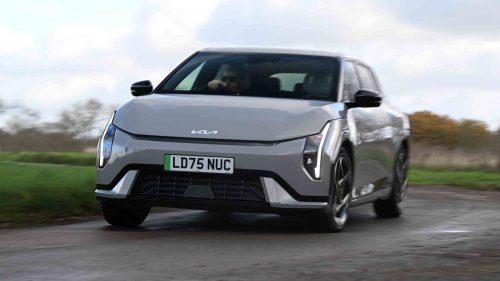
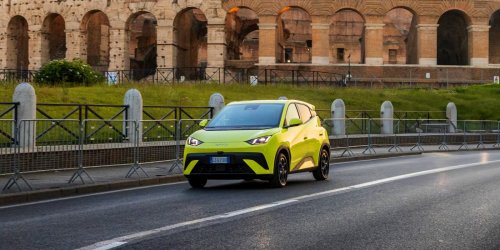
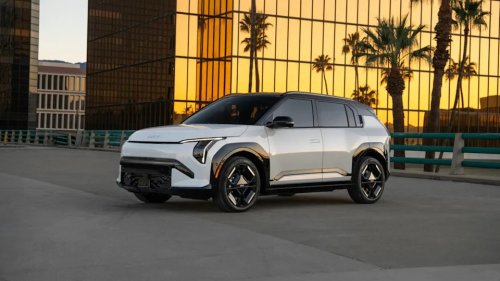
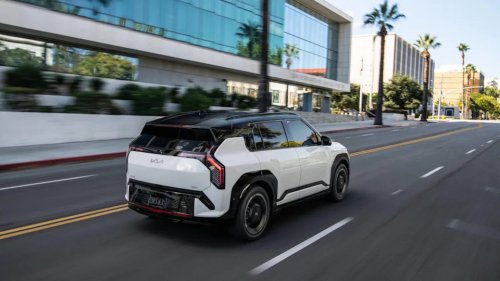
Auto Express can exclusively reveal that the all-new Kia EV1 – the brand’s answer to the Renault Twingo – will be launching in 2028 with a proposed price tag of around £17,000 and it’s going to spawn a surprise sister car from Hyundai. Ted Lee, Executive Vice President and Head of Global Operations Division at Kia, told Auto Express that Kia and Hyundai are working together on a bespoke EV architecture that will underpin the two firms’ new entry-level electric cars coming soon. It makes sense that the two brands would work together on this project, and not just because they are both part of the Hyundai Motor Group. Developing a brand-new platform is not cheap, so being able to spread the cost of that and sharing various parts between their cars will help make them as affordable as possible. And they’ll need to be in order to match the reborn Twingo. The French fancy starts from just under 20,000 Euros in mainland Europe, and is also expected to cost in the region of £17,000 when it goes on sale here later this year. The Volkswagen ID. Lupo arriving in 2027 is expected to cost about the same. Lee told us the Kia EV1 will be highly competitive when it comes to price, rivalling both EVs and petrol-powered small cars with a starting price of somewhere in the range of 20,000 to 22,000 Euros. Importantly, he noted, that’s without any kind of government grant. At the current exchange rate, even the highest estimate would still have the EV1 skirting under the £20k mark on our side of the Channel, and would make one of the cheapest cars on the market. However, a lot could happen between now and 2028. For context, the new Kia EV2 that has just been launched, which is the brand’s smallest electric car to date, starts from a little under £25,000. But you can save nearly £5,000 on the boxy and rather brilliant supermini by ordering yours through the Auto Express Buy A Car service. Meanwhile the Kia Picanto city car, for which the sub-four-metre-long EV1 will essentially be the all-electric replacement, now starts from more than £17k and prices reach up to nearly £21k for a top-flight version. It may be the Korean firm’s tiniest and cheapest EV, but Lee was adamant that the EV1 is not going to compromise on the quality, dynamics or futuristic design that customers now expect from a Kia. It’s even going to feature the brand’s next-generation tech and is set to be its first software-defined vehicle, integrating autonomous driving functions for highway driving. Kia isn’t trying to rush the car out the door either, because it’s already been in development for about two years, according to Lee. So the company clearly isn’t trying to match Renault, who turned the Twingo from a cute concept to a production-ready car in just 100 weeks, or rivals from China, who seem to be able to develop a new car in the time it takes most legacy brands to name theirs. Our exclusive image previews what the EV1 could look like. But we expect to see a concept model sometime in 2027, about a year before the finished car is revealed, as was the case with the EV2, EV3, EV4 and EV5. These all looked nearly identical to their respective concepts, and it’s likely the same will be true for their baby brother. We’ve been told that the EV1 will have a sportier edge to its design than the cubic, SUV-inspired EV2, and interestingly the designers apparently didn’t look to or use the long-serving Picanto as a base. This is a new model from the brand’s EV line-up, so like its siblings, it will have a fresh identity. Meanwhile, its mysterious Hyundai twin, which we’re confident will be called the Ioniq 1, is sure to go in a different direction – just as the Hyundai Ioniq 5 is very different to the Kia EV6, despite both cars being built on the same platform. The same goes for the Kia EV3 and Hyundai Ioniq 3. The Ioniq 1 will serve as the successor to Hyundai's petrol-powered i10 city car that was recently discontinued, and probably the replacement for its Inster EV, too. The astonishingly spacious little car may have only arrived last year, but starting at nearly £24k, it’s in the same price bracket as the Renault 4 and, we suspect, the new, more advanced Hyundai Ioniq 3 coming soon. The Kia EV1 will be designed to appeal to global audiences, but its primary target is Europe and it could be built here as well - potentially at the same plant in Slovakia where the EV2 is produced. Earlier this year, Kia’s head of advanced design, Jochen Paesen, reaffirmed how significant the city-car segment is for the Korean brand, and that any electric entrant will be a car that firmly aligns with its values. “We are very conscious that the small-car market is really important, so I think we need to keep working on it,” Paesen told Auto Express, “We’ll do it in the Kia way. I think we want to make sure that we will be noticed. There’s a lot happening in that space.” We expect the EV1 to be one of the models that pushes its maker’s design into a new phase. The minimalist, ultra-contemporary language that Kia is known for has largely spread across different market segments, but Paesen acknowledged that the firm is now transitioning towards a new design generation. “We’ve built a good foundation, I think now we’ve got a good presence, but how do we become more aspirational, and how do we get people to walk in the showroom and say, ‘I want that Kia’?. That’s part of our strategic thinking,” he said. “And we’re doing that from a design point of view, so that we have a stronger leverage to keep that momentum. EVs obviously lead our Kia values most.” There are then the physical aspects of designing a small, entry-level EV, the size and cost restrictions, plus the fact that the larger EV2 has obvious crossover or SUV influences. As our exclusive images show, we think Kia will shape the EV1 as a more urban-focused car. This could manifest itself in the silhouette, which has more of a monobox shape closer to that of the short-nosed EV4’s. Kia’s use of black plastic on the bumpers and sills is intended to give the electric city car a sense of urban toughness rather than suggest any off-road ruggedness. Elements such as non-radial wheel designs and vertically orientated LED lighting will also be integrated, but potentially including more curves and fewer creases, as previewed in the firm’s Meta Turismo concept. Paesen also gave us an insight into Kia’s future interior designs, telling us: “We are looking at what’s working well, what’s getting a good response, what’s getting a bad response. Where can we improve, where are the things we can improve on? “As our digital system gets stronger and better, we still have work to do there. How do we slide these learnings into one another and make sure the system is future-proof, but the system carries you along and doesn’t mean you need to learn new things.” In contrast to its exterior design, Kia’s interior design has been subject to some criticism for being too similar across its various models. All of its electric vehicles incorporate the same triple-screen layout, but as the manufacturer moves forward, this set-up could change, especially for the value-focused EV1 which may receive a more simple set-up. It’s no secret that Kia is developing a hot GT version of each of its all-electric, EV-branded cars. The most recent of these were the EV5 GT and EV3 GT, shown off at the 2026 Brussels Motor Show. Given the positioning of the EV1, a GT model seems unlikely to gain a dual-motor set-up, which in the EV3 GT at least produces 288bhp. Expect to see a modest power bump, though perhaps no more than the 147bhp produced by the front-wheel-drive EV2. As for design, we’re used to seeing Kia’s neon green accents on its sporty GT cars. Despite the EV1 GT being the baby of the range, the Picanto GT-Line S showed us Kia can still bring aggressive bumpers and big wheels to even its smallest models. Kia isn’t alone in wanting to bring an electric city car to market, but given the razor-thin margins in this segment, there are only a few rivals. Renault’s new Twingo comes with more than a hint of nostalgia and cool that European buyers have already responded to favourably in the marque’s larger Renault 5. This model has also been developed in record time, with the French company outsourcing to Chinese-based technical partners much of the time-intensive development work that is required to bring any new model into mass production. The upcoming Volkswagen ID. Lupo could also be a big player in this market, because it’s not just a stripped-out version of the larger ID. Polo. It also introduces a new hardware and software platform from VW’s joint venture with US EV maker Rivian. The Smart #2 could pose a threat to the EV1 as well, although not when it comes to practicality. The successor to the brand’s famous ForTwo city car will be a two-door, two-seater, and is likely to be more expensive than the Kia, but should be a more premium product overall.



















 +36 others




![Hyundai, Hyundai Ioniq, Hyundai Ioniq 6, Hyundai's IONIQ 6 N looks ready for its US launch [Image]](https://cdn.topcarnews.net/thumb/id/aHR0cHM6Ly9pMC53cC5jb20vZWxlY3Ry-ZWsuY28vd3AtY29udGVudC91cGxvYWRz-L3NpdGVzLzMvMjAyNi8wOS9IeXVuZGFp-LUlPTklRLTYtTi1VUy1sYXVuY2gtMS5q-cGVnP3c9MTUwMCZhbXA7cXVhbGl0eT04-MiZhbXA7c3RyaXA9YWxsJmFtcDtzc2w9-MQ/e25ca12388b88f2eff0fe729e5bf28a1.jpeg?t=20260920&post_id=61807)
![Hyundai, Hyundai Ioniq, Hyundai Ioniq 6, Hyundai's IONIQ 6 N looks ready for its US launch [Image]](https://cdn.topcarnews.net/thumb/id/aHR0cHM6Ly9lbGVjdHJlay5jby93cC1j-b250ZW50L3VwbG9hZHMvc2l0ZXMvMy8y-MDI1LzExL0h5dW5kYWktSU9OSVEtNi1O-LUVWLWludGVyaW9yLVVTLmpwZWc/8b4d28a7c9fe71755e893ae7655465a8.jpeg?t=20260920&post_id=61807)
![Hyundai, Hyundai Ioniq, Hyundai Ioniq 6, Hyundai's IONIQ 6 N looks ready for its US launch [Image]](https://cdn.topcarnews.net/thumb/id/aHR0cHM6Ly9lbGVjdHJlay5jby93cC1j-b250ZW50L3VwbG9hZHMvc2l0ZXMvMy8y-MDI1LzExL0h5dW5kYWktSU9OSVEtNi1O-LUVWLXNwb3J0cy1jYXIuanBlZw/834ae2c25a7978c0eb29933e6899e9d9.jpeg?t=20260920&post_id=61807)
![Hyundai, Hyundai Ioniq, Hyundai Ioniq 6, Hyundai's IONIQ 6 N looks ready for its US launch [Image]](https://cdn.topcarnews.net/thumb/id/aHR0cHM6Ly9lbGVjdHJlay5jby93cC1j-b250ZW50L3VwbG9hZHMvc2l0ZXMvMy8y-MDI1LzExL0h5dW5kYWktSU9OSVEtNi1O-LUVWLTUuanBlZw/2c8908ffa1da556176e2ba3758ab0497.jpeg?t=20260920&post_id=61807)









![Kia, Kia's new PV7 EV van shows up in the US [Image]](https://cdn.topcarnews.net/thumb/id/aHR0cHM6Ly9pMC53cC5jb20vZWxlY3Ry-ZWsuY28vd3AtY29udGVudC91cGxvYWRz-L3NpdGVzLzMvMjAyNi8wOS9LaWEtUFY3-LVVTLmpwZWc_dz0xNTAwJmFtcDtxdWFs-aXR5PTgyJmFtcDtzdHJpcD1hbGwmYW1w-O3NzbD0x/aaf5d3ab118b7bb439057bc51a88b2ba.jpeg?t=20260920&post_id=62751)
![Kia, Kia's new PV7 EV van shows up in the US [Image]](https://cdn.topcarnews.net/thumb/id/aHR0cHM6Ly9lbGVjdHJlay5jby93cC1j-b250ZW50L3VwbG9hZHMvc2l0ZXMvMy8y-MDI2LzA5L0tpYS1QVjctRVYtZGVidXQu-anBlZw/ee480f0f0710031129813e03bae3527e.jpeg?t=20260920&post_id=62751)
![Kia, Kia's new PV7 EV van shows up in the US [Image]](https://cdn.topcarnews.net/thumb/id/aHR0cHM6Ly9pMC53cC5jb20vZWxlY3Ry-ZWsuY28vd3AtY29udGVudC91cGxvYWRz-L3NpdGVzLzMvMjAyNi8wOS9LaWEtUFY3-LUNhcmdvLWludGVyaW9yLXNwYWNlLmpw-Zz9zdHJpcD1pbmZvJmFtcDt3PTE1MDAm-YW1wO3NzbD0x/036025fce965f60f7ba06db0ef352b81.jpg?t=20260920&post_id=62751)
![Kia, Kia's new PV7 EV van shows up in the US [Image]](https://cdn.topcarnews.net/thumb/id/aHR0cHM6Ly9pMC53cC5jb20vZWxlY3Ry-ZWsuY28vd3AtY29udGVudC91cGxvYWRz-L3NpdGVzLzMvMjAyNi8wOS9LaWEtUFY3-LUVWLXZhbi1yZWFyLmpwZz9zdHJpcD1p-bmZvJmFtcDt3PTE1MDAmYW1wO3NzbD0x/66bfaabaadf7e430ce46f0bd340495ba.jpg?t=20260920&post_id=62751)
![Kia, Kia's new PV7 EV van shows up in the US [Image]](https://cdn.topcarnews.net/thumb/id/aHR0cHM6Ly9pMC53cC5jb20vZWxlY3Ry-ZWsuY28vd3AtY29udGVudC91cGxvYWRz-L3NpdGVzLzMvMjAyNi8wOS9LaWEtUFY3-LUNhcmdvLWludGVyaW9yLmpwZz9zdHJp-cD1pbmZvJmFtcDt3PTE1MDAmYW1wO3Nz-bD0x/2dbe98b67618e2093d9ed6efb546d404.jpg?t=20260920&post_id=62751)
![Kia, Kia's new PV7 EV van shows up in the US [Image]](https://cdn.topcarnews.net/thumb/id/aHR0cHM6Ly9pMC53cC5jb20vZWxlY3Ry-ZWsuY28vd3AtY29udGVudC91cGxvYWRz-L3NpdGVzLzMvMjAyNi8wOS9LaWEtUFY3-LVBhc3Nlbmdlci1zZWF0aW5nLmpwZz9z-dHJpcD1pbmZvJmFtcDt3PTE1MDAmYW1w-O3NzbD0x/62f449ae1198f8926a03465d2e1a6a56.jpg?t=20260920&post_id=62751)