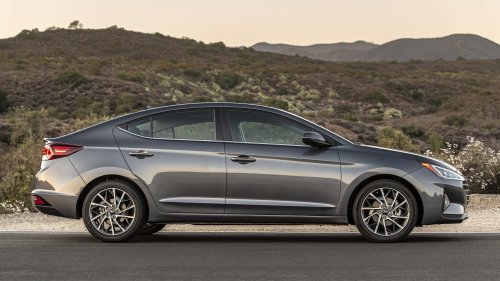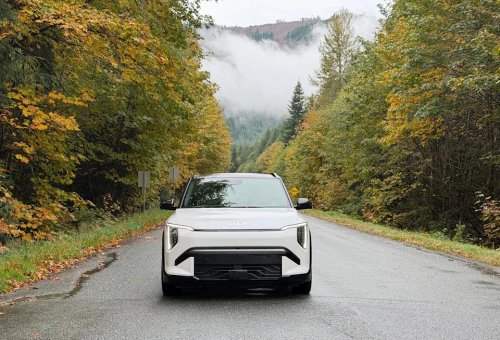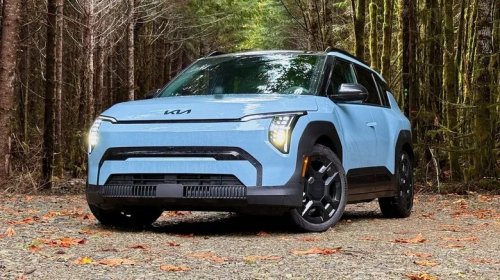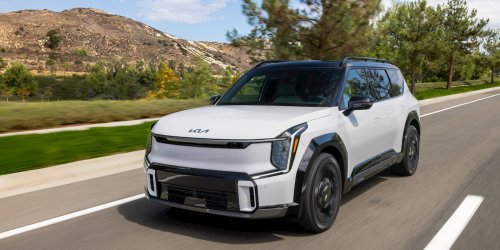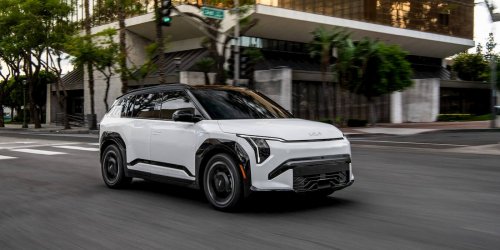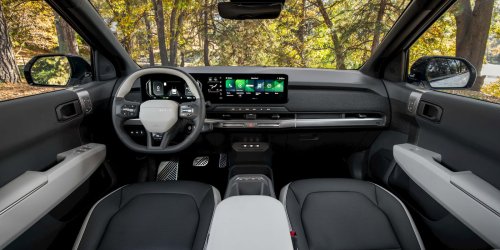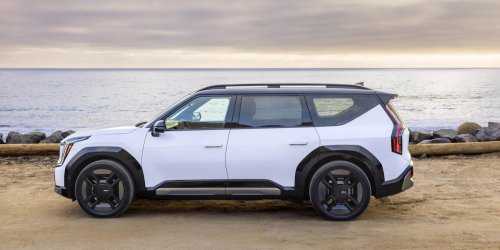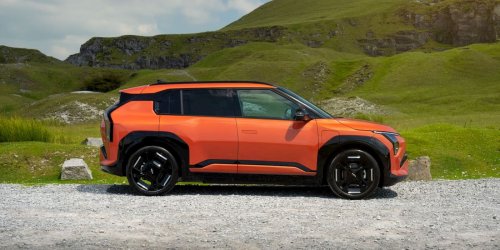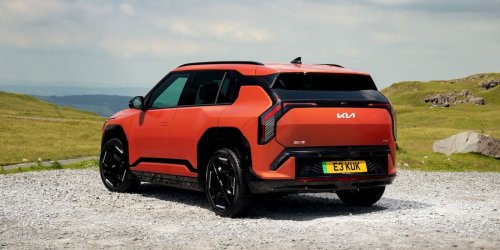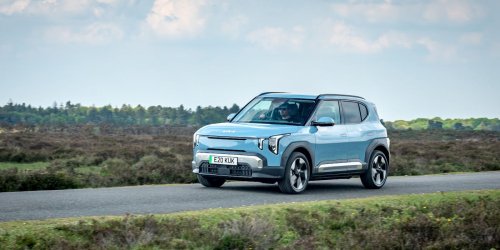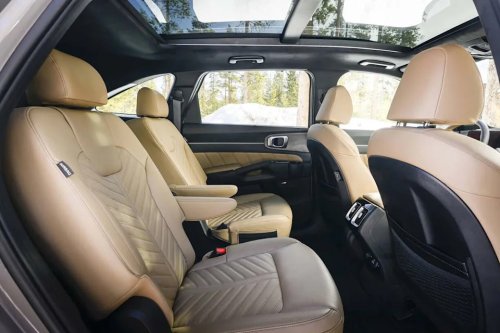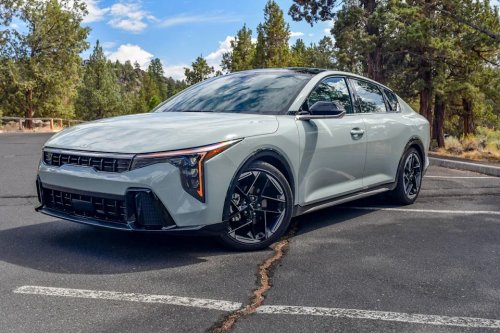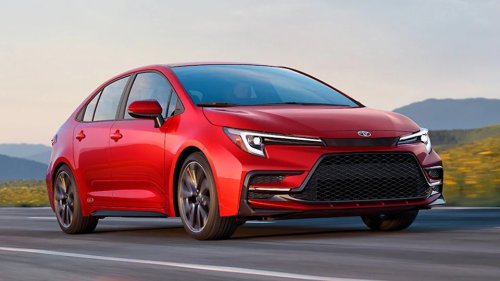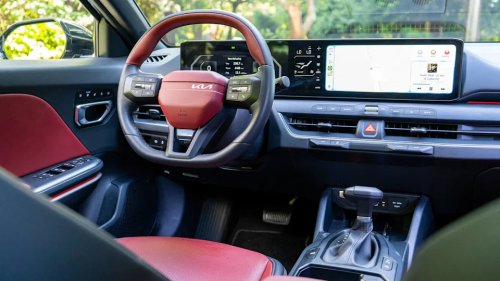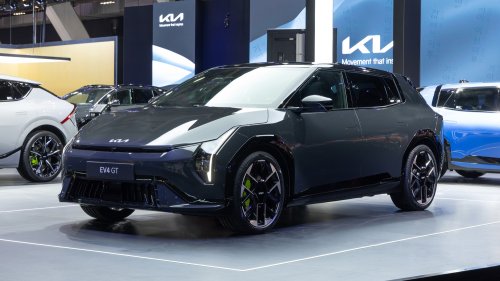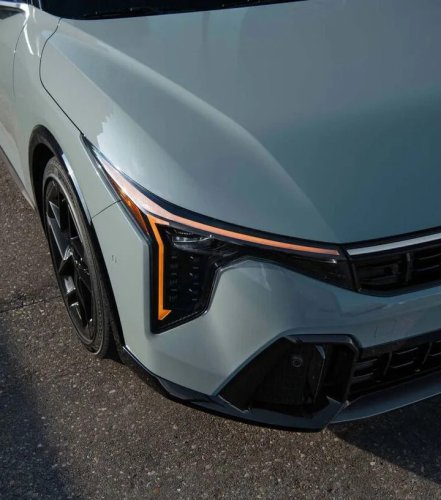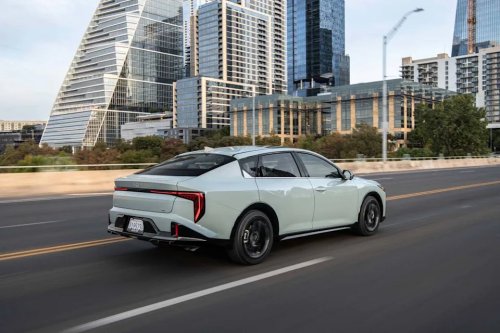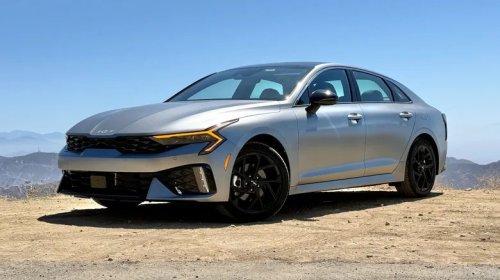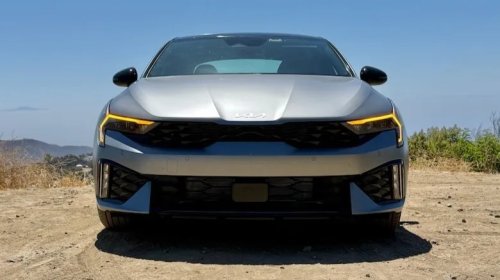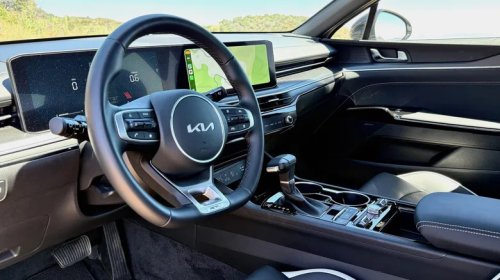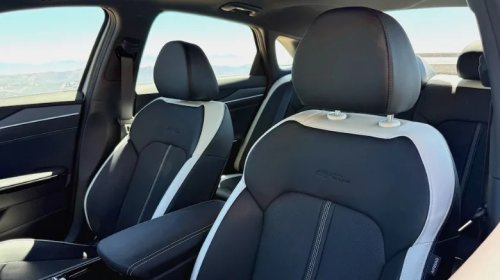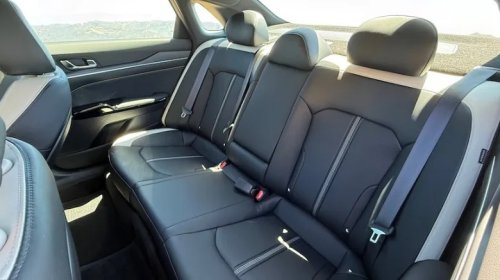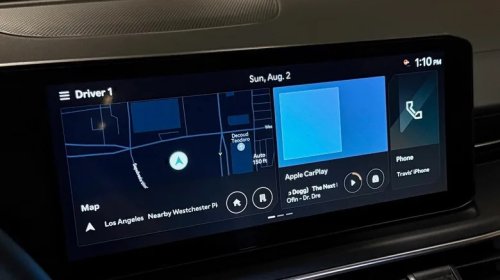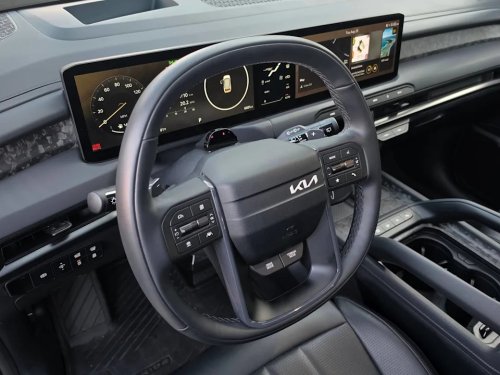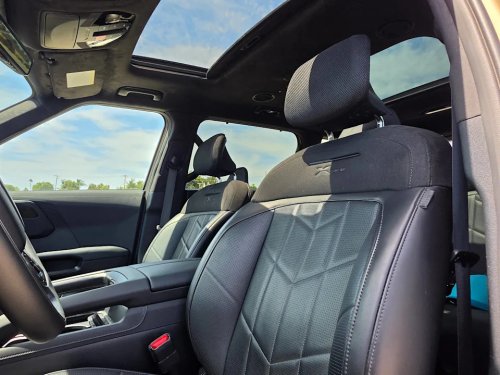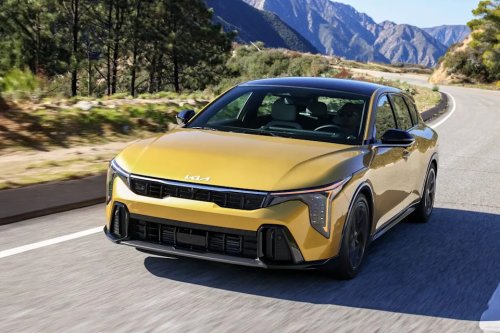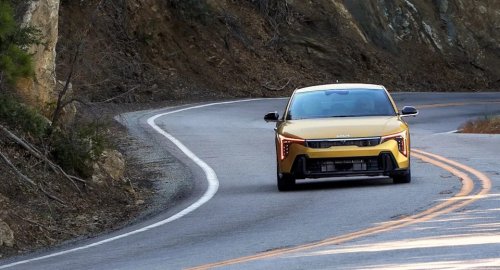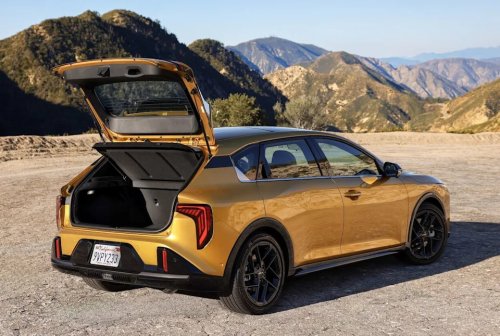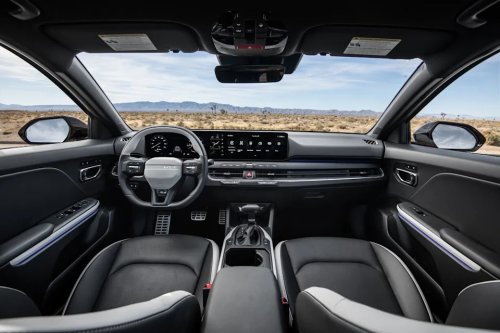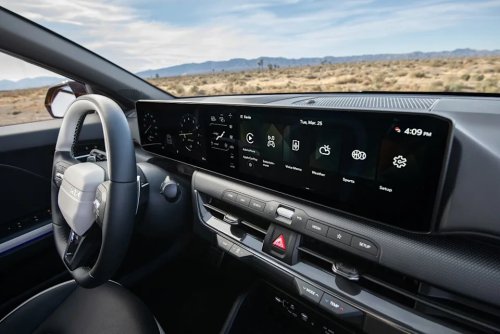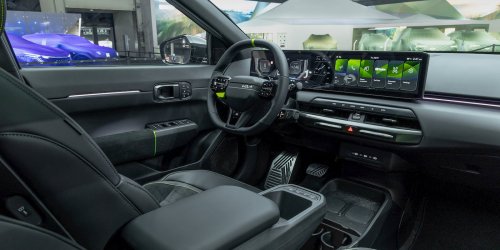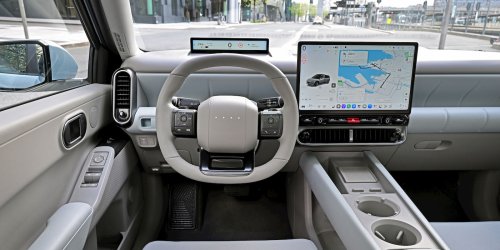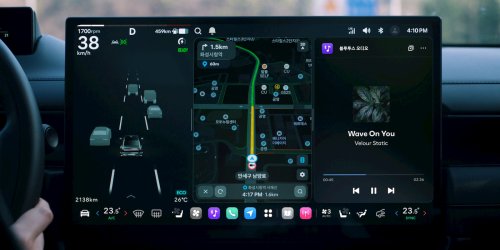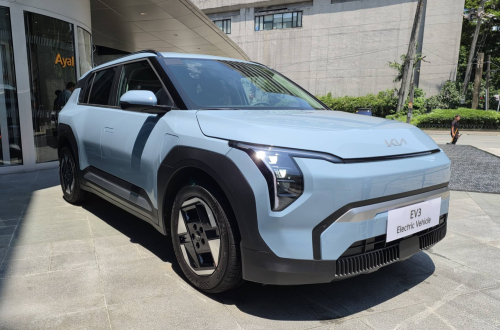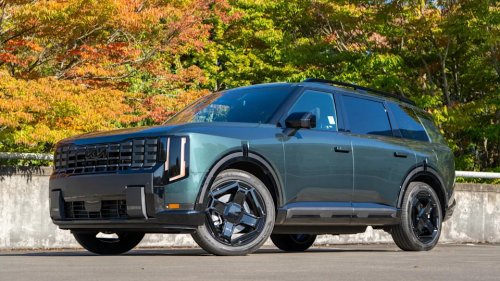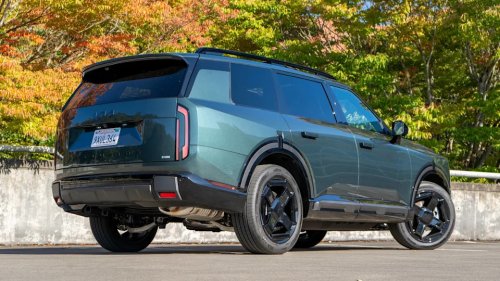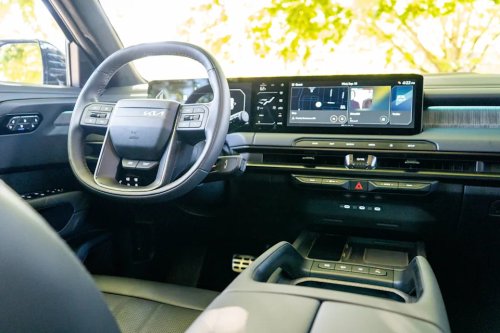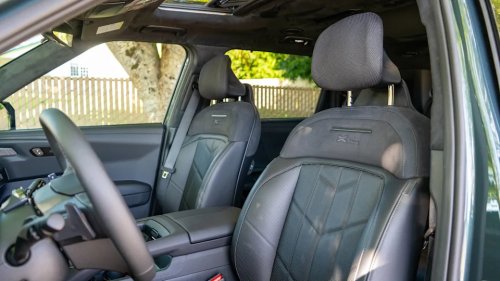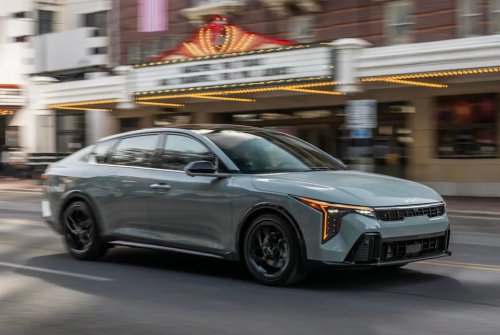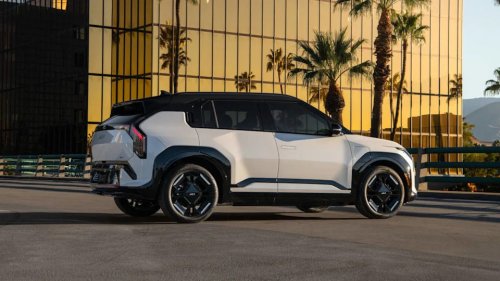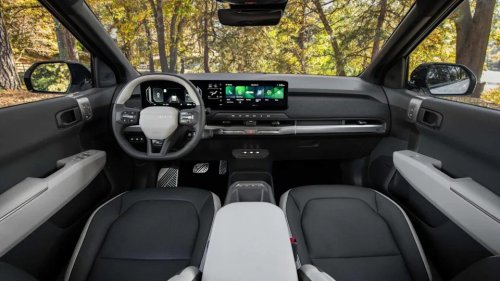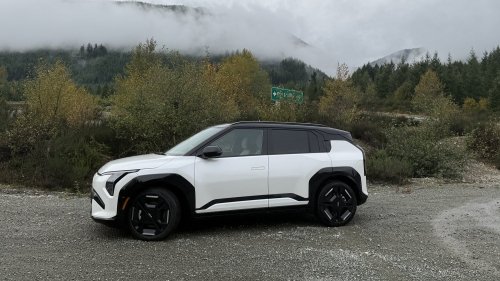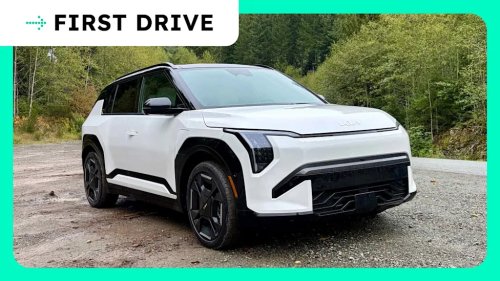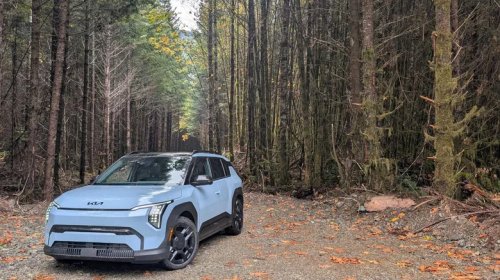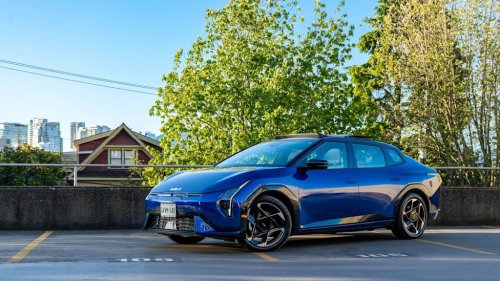
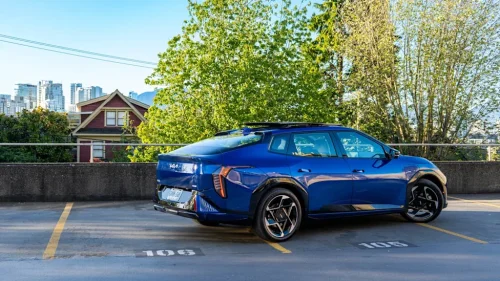
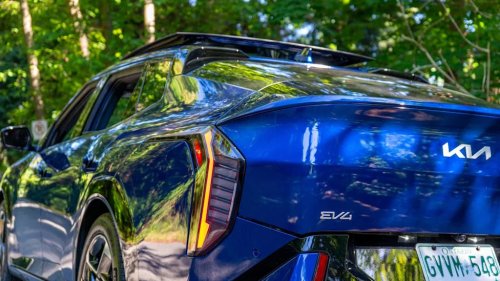
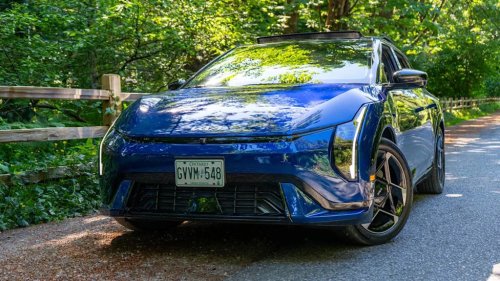
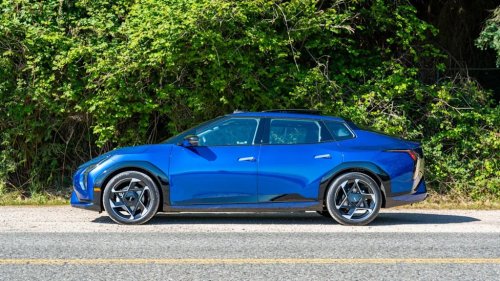
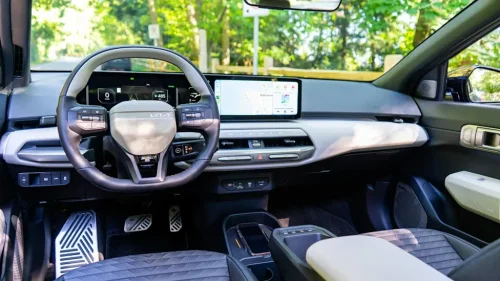
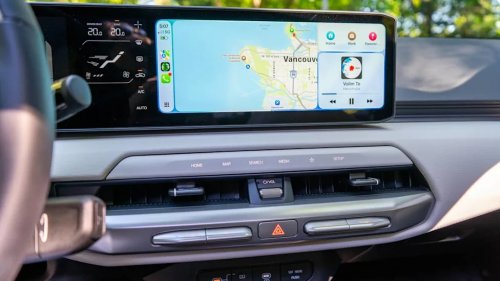
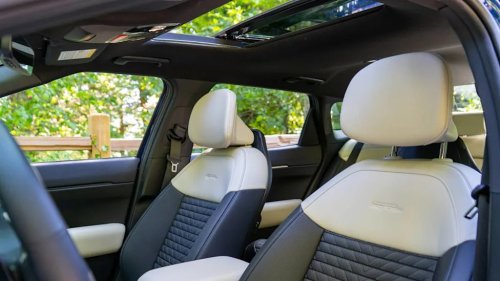
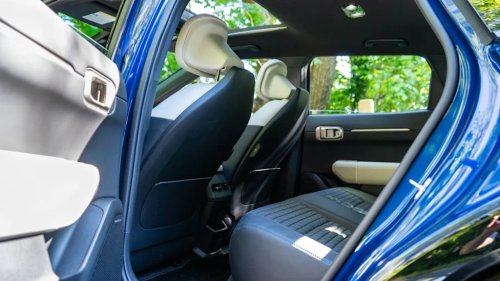
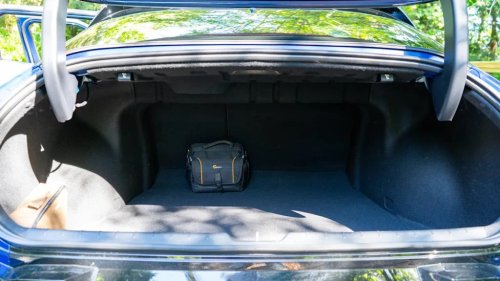
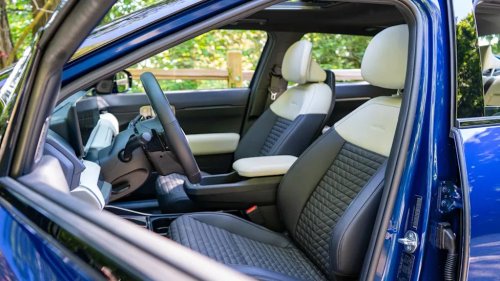
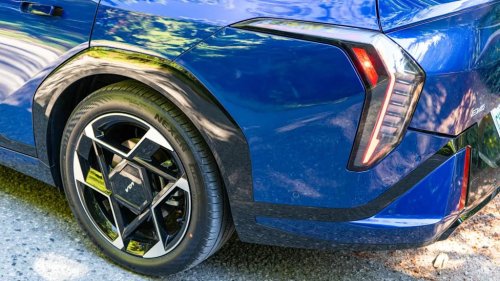
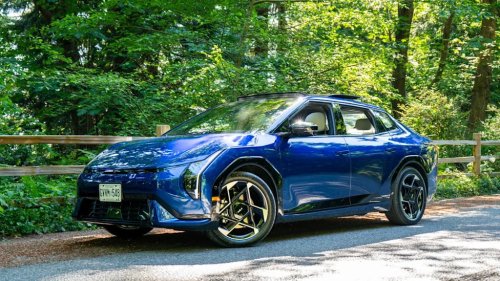
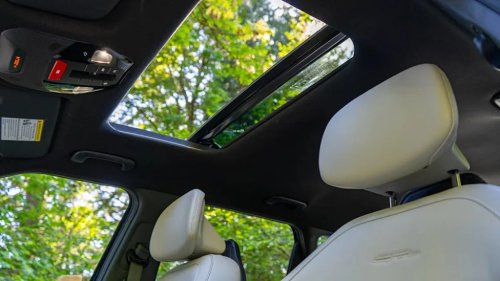



















Autoblog and Yahoo may earn commission from links in this article.The 2026 Kia EV4 was expected to be one of Kia's most attainable EV entries, but its American launch was delayed "until further notice" as market conditions changed. Reports tied that uncertainty to factors like the loss of federal EV incentives and the ever-moving goalposts of import/tariff complications, while Canada still moved ahead with the model.Kia advertises the EV4 with up to 552 km of range (roughly 343 miles), with the GT-Line achieving up to 488 km (roughly 303 miles) while Canadian pricing starts at $38,995 CAD, with the GT-Line at $48,495 CAD and the GT-Line Limited at $51,995 CAD. Converted to American dollars, the base EV4 costs the equivalent of roughly US$28,200—several hundred dollars less than a base 2027 Chevrolet Bolt LT, which is the least expensive new EV you can buy in America.AdvertisementAdvertisementDespite its unfortunate absence in the American market, when Kia offered me the keys to their new EV4 GT-Line, I decided to take them up on the offer—both out of genuine interest in the merit of its affordable new electric sports sedan, and out of curiosity for what exactly the U.S. market is missing out on, if anything at all, really. The truth, it turned out, was quite compelling: The EV4 delivered impressive range for the money, felt genuinely entertaining to drive, offered a pleasant cabin, and came across as seriously competent in nearly every area that matters. It isn't perfect, but that might only add to the frustration of its absence from the U.S. market, because America isn't missing out on some high-tech, hyper-powerful fantasy EV. Instead, it might be missing out on the kind of normal, attainable EV it needs most right now.2026 Kia EV4 GT-LineCole AttishaThe Affordable EV America Was Supposed To GetAs fuel prices remain unpredictable and cost-conscious American buyers look for ways to lower their daily driving expenses, now should be an ideal moment for affordable, compact EVs in the U.S. marketplace. Instead, several of the small electric cars once expected to diversify the segment have either disappeared from America or never fully found their footing there. Vehicles such as the Volvo EX30, Kia Niro EV, Hyundai Kona Electric, and Mazda MX-30 have all bowed out of the American market, leaving shoppers interested in lower-cost EV ownership with far fewer choices than they otherwise might have had.That's what makes the EV4's absence feel so unfortunate, especially as a Canadian who has begun to see these things increasingly roaming the streets here at home. It's not just another oversized, luxuriously-priced electric SUV built for buyers who "just wanted to try something different and trendy." It is a stylish, reasonably priced compact Kia with a legitimately useful range, a normal cabin with actual buttons and switches, and which offers the everyday practicality that could have made EV ownership feel less hypothetical for many American shoppers. In Canada, it now exists as a real product with competitive pricing and actual marketplace relevance. In the United States, for now at least, it exists only as a spiritual reminder that the affordable EV market isn't just about what automakers can produce, but also about what the market, policy environment, and business case will actually justify selling.2026 Kia EV4 GT-LineCole AttishaWhat It's Like To Drive The EV4 GT-LineIn the city, the EV4 earned its GT-Line badging differently from Kia's similarly badged combustion-powered models. Instead of a torquey, turbocharged four-cylinder burbling through downshifts, the EV4 GT-Line makes its case with a different kind of playfulness—more like meandering along Vancouver's picturesque seawall at full throttle on a rented Lime scooter, carving through the traffic of cyclists and roller skaters as if they were sitting still. The EV4 GT-Line uses a 81.4 kWh battery pack and a single front-mounted electric motor to produce its 201 horsepower and 209 lb-ft of torque, with power sent exclusively to the front wheels. As tested, in GT-Line Limited guise, the EV4 gains futuristic-looking 19-inch alloy wheels, exclusive exterior styling elements, heated and ventilated front seats, heated rear seats, V2L (vehicle-to-load), blind view monitor, a Harman Kardon premium sound system, and more.AdvertisementAdvertisementSo obviously this isn't some dual- or triple-motor EV that launches forward with utterly neck-snapping force, and frankly, it's all the better for it. The EV4 is quick enough to dart through city traffic, merge confidently onto highways, make use of small gaps without feeling like the car reacts faster than you do, and even felt fun on my favourite twisty sections of road. Its acceleration is progressive rather than violently instantaneous, and it feels more like a well-sorted sporty compact car that just happens to equip an electric powertrain. It reminded me quite nostalgically of the Hyundai Elantra GT N-Line I once owned, only without the ostentatiousness of a sawed-off muffler and exhaust bangs that sounded like pistol fire, and, of course, without a clutch pedal.2026 Kia EV4 GT-LineCole AttishaIts relatively modest power output works well with its size and mass. At roughly 4,200 pounds in GT-Line form, the EV4 is certainly no featherweight by old compact-sedan standards, but it is lighter than many modern EVs. Around town, it feels spry, easy to place, and nimbler than its battery-packed nature might otherwise suggest. The steering is light but accurate, the throttle response is easy to judge, and the low center of gravity gives it a planted quality without feeling overly stiff or uncomfortable. On quicker roads outside the city, the EV4 doesn't suddenly transform into a backroad missile, but it remains composed and eager to hustle. The front-drive layout means there is only so much drama it can endure before torque steer catches up with it, yet the chassis feels tight, predictable, and confident. The GT-Line name adds some visual attitude and a sportier character, but the driving experience is more about accessible enjoyment than it is about outright performance.It's not entirely flawless, though, and some of the EV4's quirks became more obvious the more time I spent with it. Rearward visibility is hindered by the tiny rear windscreen and the car's almost Saab-like angular roofline, which looks fantastic from the outside but doesn't do the driver many favours when backing up or checking over the shoulder. Some of the interior switches also felt like they should've been inverted, such as the "next song" switch on the steering wheel, which requires moving a switch in a downward motion, as if their physical direction did not always match the mental command my hand expected to make. Then there were the flush door handles, which occasionally neglected to deploy when I approached the car, leaving me standing beside it, wondering if it was angry at me for having facetiously compared it to the Ferrari Luce in conversation. None of these issues was a dealbreaker whatsoever, but they did remind me that the EV4's cleverness occasionally comes with the same small pragmatic compromises that afflict many design-centric modern automobiles.The EV4's ride quality was another pleasant surprise. Many affordable EVs try to feel futuristic and sporty by being unnecessarily firm, or do so to mask the extra weight during hard cornering. The EV4 mostly avoids that feeling and has enough body control to feel alert, but it doesn't beat you up around town or lose its composure over disjointed surfaces. Combined with the quietness of the electric powertrain, the result is a car that feels easy to live with in the exact environments where affordable EVs need to make their strongest cases: through urban commutes, errand-running, and the romanceless weekday driving that a finely tuned car makes feel a little less tedious and a bit more fun.2026 Kia EV4 GT-LineCole AttishaRange, Charging, And Real-World UsefulnessOfficially, the EV4 GT-Line is rated for up to 488 km of range, or roughly 303 miles, but the car itself was more optimistic than that. When fully charged, my tester displayed a maximum estimated range of just over 600 km (roughly 373 miles), even in Sport mode with the air conditioning running on a warm summer day. More importantly, it also showed a "minimum range" estimate of just over 400 km, which I appreciated far more than the usual single-number guessing game. EV range estimates in instrument clusters can often feel like sick jokes, dropping much faster than the actual distance driven, but Kia's range display gave me a realistic spread instead of pretending one perfect number could account for traffic, temperature, driving style, number of occupants, and climate.AdvertisementAdvertisementMy confidence in its range helped shape how I used the car. During my week with the EV4, I drove it from Vancouver to Vancouver Island, left it "running" on the ferry so I could play music, ventilate the seat, and get some work done on my laptop, then spent several days driving significant distances around the island before returning home to Vancouver. I never needed to stop for a public charge, but just to be safe, I plugged it into a standard household outlet each night. Even with that very modest top-up, the battery never dropped below 80% during my entire three-day trip. For an EV that isn't even positioned as the maximum-range version of the lineup, that offered me serious peace of mind.2026 Kia EV4 GT-LineCole AttishaBack home in Vancouver, the EV4 continued to behave less like a car that required its own block in my daily planner and more like any other normal daily driver that just so happened to be powered by electricity. I used it around town, met up with friends, ran errands, and briefly trekked up the coast, and I never found myself scheduling my time around charging stations. It wasn't until my final night with the car that I plugged it into a semi-private Level 2 charger in my apartment's visitor parking area. From just under 65% to full, charging the EV4 took a little over three hours and cost roughly $14 Canadian. I admit that this is hardly laboratory-grade data, but it does seem useful, as real-world charging experiences often are. For the way most people would actually use a car like this (commuting during the week, plugging in occasionally at home or work, and taking the odd weekend trip), the EV4 felt comfortably within the zone where EV ownership feels more convenient than performative.2026 Kia EV4 GT-LineCole AttishaInterior And TechInside the cabin, the EV4 makes perhaps its strongest argument for why Kia has become such a problem for other mainstream brands these days. It's not that the cabin feels expensive in a traditional luxury-car sense, because of course it doesn't. There are still enough hard plastics and cost-conscious surfaces to remind you that this is far from a Mercedes S-Class. The biggest advantage is that Kia understands where to spend money most effectively, where to simplify, and how to make an affordable interior feel modern without being cold, sterile, or generally unwelcoming.2026 Kia EV4 GT-LineCole AttishaThe basic layout is clean and familiar in the best possible way. The dashboard is dominated by Kia's wide digital display arrangement, which gives the EV4 the same general tech-forward atmosphere as the brand's more expensive electric models. The graphics are crisp, response times are quick, and the menus are logical enough that I never had to watch a YouTube tutorial just to change basic settings. Kia also deserves credit for keeping enough physical controls in the cabin to make the EV4 easy to use while actually driving. The infotainment system looks modern, but the experience doesn't depend entirely on poking through touchscreen submenus for every small task. Between the steering-wheel controls, the shortcut buttons, and the more conventional interfaces for frequently used functions, the EV4 avoids the modern-day EV tendency to confuse inconvenience with minimalism.2026 Kia EV4 GT-LineCole AttishaAdvertisementAdvertisementThe GT-Line trim also helps the EV4 avoid feeling basic. The sportier interior details, comfortable front seats, and generally thoughtful material choices give the cabin enough personality to match the exterior styling without feeling gimmicky or like it's trying too hard to seem more expensive or futuristic than it is. The use of various tones and patterns, as well as smaller details such as embossed "GT-Line" logos on the seats and even seatback-mounted USB-C ports, lends the EV4's cabin an atmosphere that blends visual strikingness with surprising functionality in a way that feels clever and creative, rather than contrived or overly utilitarian.2026 Kia EV4 GT-LineCole AttishaBecause the EV4 isn't packaged like a traditional compact sedan with a bulky gasoline powertrain up front, and because its front-driven nature eliminates the need for a driveshaft connection to the rear wheels, the cabin feels more spacious than its compact footprint might suggest. The rear seat is usable, the floor has plenty of space for legs and feet, and the general sense of openness makes the car feel like less of a spatial sacrifice for buyers priced out of larger EVs. In this case, "affordable" doesn't mean cramped, joyless, or obviously compromised; it just means the car's been on a healthy diet, devoid of useless gimmickry or emotional trickery to justify a wider profit margin.2026 Kia EV4 GT-LineCole AttishaCargo practicality also supports the EV4's real-world use case, offering roughly 14.4 cubic feet of space behind the rear seats, which fold down in a 60/40 split formation. It may wear a sleek, low-slung shape, but it hasn't forgotten that people need to carry bags, groceries, camera gear, or the random assortment of items that somehow accumulates in every car by the end of each week. The EV4's usable space reinforces the same point as its range and driving manners: this isn't just some novelty EV; it's a normal car made more useful—for the right kind of buyer—by being electric.2026 Kia EV4 GT-LineCole AttishaThe Bigger Problem: America Needs More EVs Like This, Not FewerEven as a Canadian, the thing I find frustrating about the EV4's absence from the American market is not simply that U.S. buyers are missing one specific little Kia. Cars come and go all the time, and not every model that works in Canada, Europe, or South Korea is guaranteed to succeed in the United States. The greater issue is what the EV4 represents: the kind of relatively affordable, normal, useful electric car America keeps saying it needs, but that is not always easy for automakers to actually sell. For years, the electric-car landscape in the United States has seemed dominated by extremes. On one end, there are expensive luxury EVs with enormous battery packs, headline-worthy acceleration figures, and price tags that push them beyond the reach of most households. On the other hand, there are cheaper EVs that often possess compromises significant enough to make buyers wonder whether they would be better off with a hybrid or a lightly used gasoline car instead. The sweet spot should be something like the EV4: attainable, stylish, efficient, a pleasure to drive, and functional enough that owning it doesn't feel like an everlasting logistical nightmare.2026 Kia EV4 GT-LineCole AttishaAdvertisementAdvertisementThe future of EV adoption won't be decided only by how many 600-horsepower electric SUVs automakers can sell to people with three-car garages and home charging already installed. More realistically, it will be decided by whether regular buyers can find EVs that feel approachable, affordable, and practical without having to become weathered experts in limited-offer incentives, leasing loopholes, charging curves, tariff structures, and battery supply chains before signing a purchase agreement. The EV4 doesn't solve every problem, but it does make the transition to electric cars feel less intimidating and less like a sacrifice.It also highlights how fragile the lower end of the EV market has become. When incentives disappear, when tariffs change the math, and when automakers get nervous about demand, the first casualties are often the vehicles that needed the most decisive pricing to work in the first place. Expensive EVs inherently have more margin to absorb bad news than affordable EVs do. A few thousand dollars can easily be the difference between a compelling alternative to a compact crossover and a car that suddenly makes absolutely no sense financially. That leaves American buyers in an awkward position, as many are not necessarily opposed to EVs in principle; they are merely opposed to EVs that feel too expensive, too complicated, too compromised, or too poorly matched to their lives. The answer to that problem should be more choice, not less. More body styles, more price points, and more normal cars that just happen to offer electric powertrains under their bonnets. More vehicles like the EV4, which don't ask buyers to reconsider their entire relationship with transportation just to reduce their running costs.2026 Kia EV4 GT-LineCole AttishaVerdict: The EV4 Shows A Glimpse At What America's Affordable EV Market Is MissingAfter a week with the 2026 Kia EV4 GT-Line, I didn't drop it off thinking it was some brilliantly perfect electric car, because it isn't. Rearward visibility is compromised, a few cabin controls could be more intuitive, and some of its design-forward touches occasionally introduce small frustrations into an otherwise easygoing ownership experience. It also is not the kind of EV that will rearrange your internal organs every time you leave a stoplight, nor is it one that your friends will be especially jealous to see you arrive in. In a market where electric car capabilities have become almost absurd, the EV4 feels almost refreshingly modest.That's why its absence from the U.S. market feels unfortunate, even if it is difficult to judge from the outside whether Kia made the right business decision. Automakers have to react to incentives, tariffs, demand, production costs, and a constantly shifting political environment. The EV4 may simply be another casualty of that equation, but for American buyers, the result is the same: it's one more affordable EV that might have expanded their options that is no longer available in the marketplace.2026 Kia EV4 GT-LineCole AttishaAnd the EV4 is not alone here. The U.S. market has already missed out on several compact, lower-cost EVs that continue to make sense and succeed elsewhere. While other markets move ahead with smaller electric hatchbacks, sedans, and crossovers, American buyers are often left choosing between expensive EVs, a shrinking pool of entry-level options, hybrids, or gasoline vehicles that feel easier to justify. That may be understandable from an industry perspective, but it still leaves shoppers with a narrower view of the EV market than they otherwise could have. Even as a lifelong petrolhead who would honestly rather suck it up and spend the money fuelling his 30-year-old, V8-powered Land Rover that gets 9 mpg on a good day than drive something that doesn't soothe his brain with the sounds of contained explosions, I still feel that it's unfortunate when consumer choice and market competition are limited, rather than maximized, even when discussing electric vehicles. Should corporations be allowed to increasingly monopolize at the expense of the consumer, simply as a means to incentivize more local production? Perhaps that's a question better left to economists and philosophers.AdvertisementAdvertisementWhether the EV4 would have succeeded in America is a question I cannot answer from a week of driving one in Canada. Maybe it would have found a loyal audience, or maybe it would have struggled against hybrids, crossovers, and the increasingly complicated logistics of EV ownership. But after living with it, I find it hard to see its absence as anything other than the loss of a possibility. The 2026 Kia EV4 GT-Line isn't the affordable EV that would have solved America's adoption problem on its own—no single car could ever do that—but it is exactly the kind of slightly imperfect, genuinely compelling compact EV that should be part of a healthy market. Instead, for American buyers, it remains another reminder that consumer choice is rapidly becoming an endangered species.This story was originally published by Autoblog on Jun 7, 2026, where it first appeared in the Reviews section. Add Autoblog as a Preferred Source by clicking here.