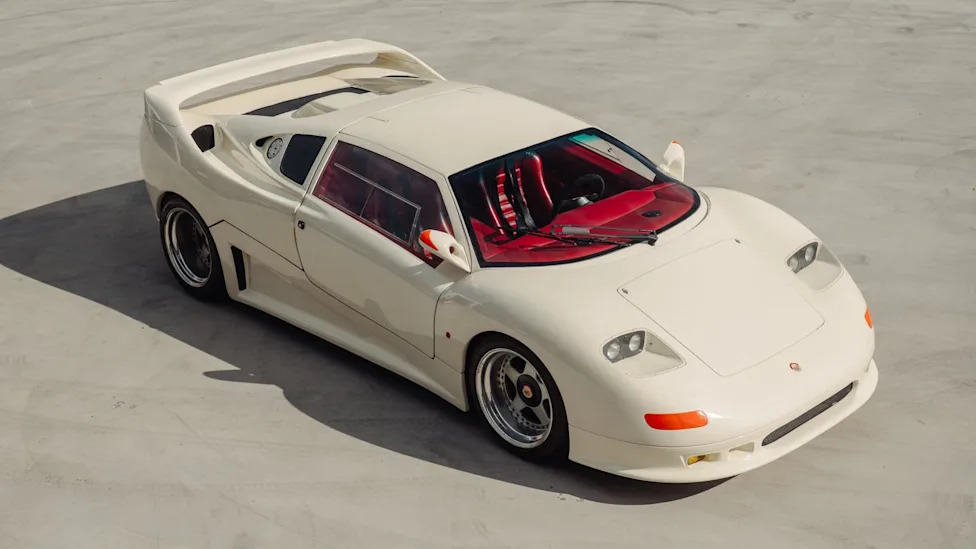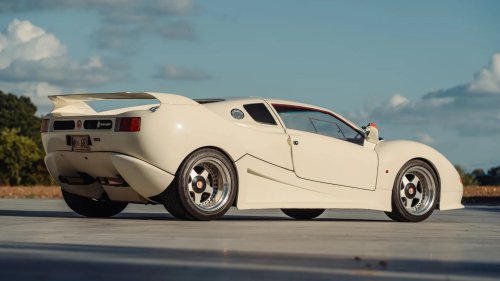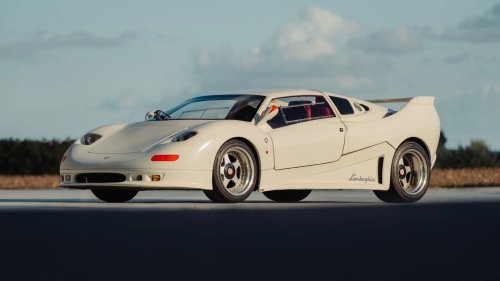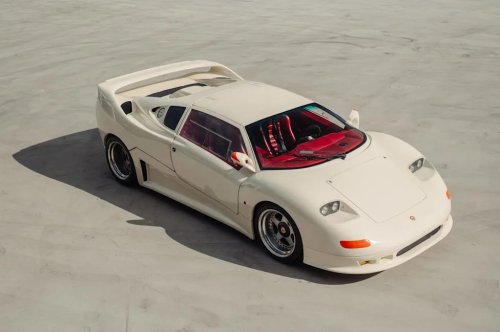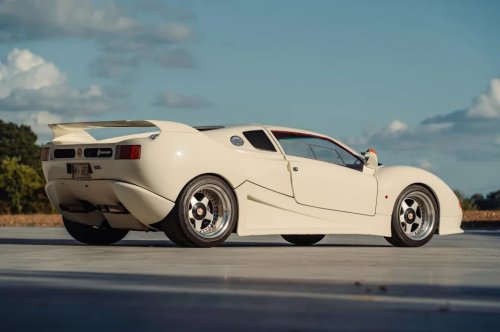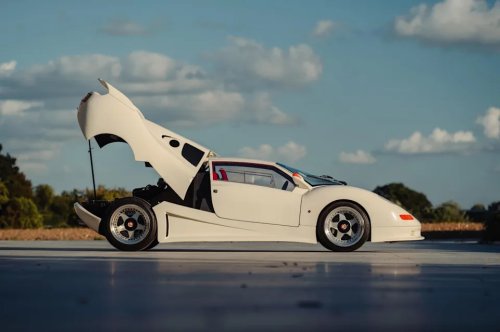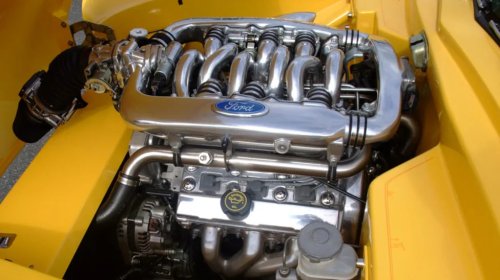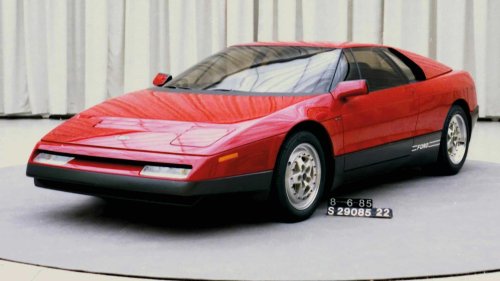
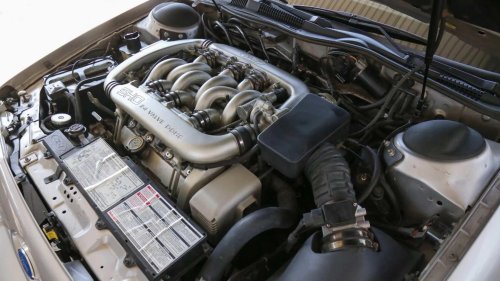
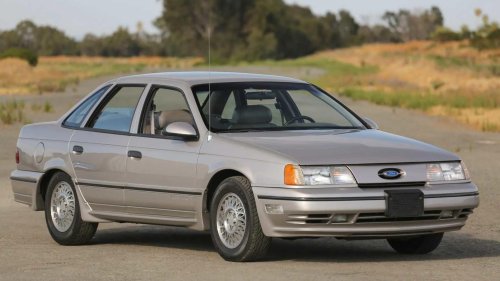
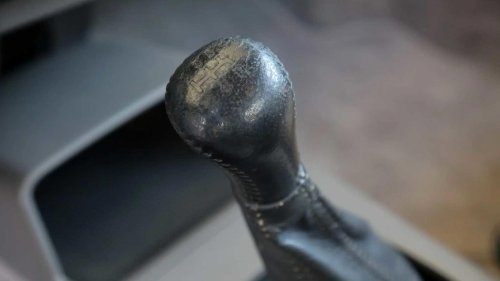
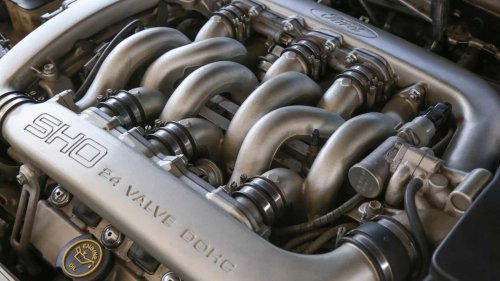
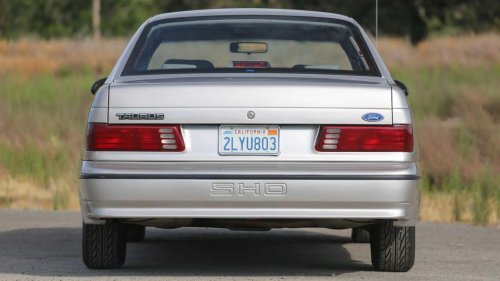
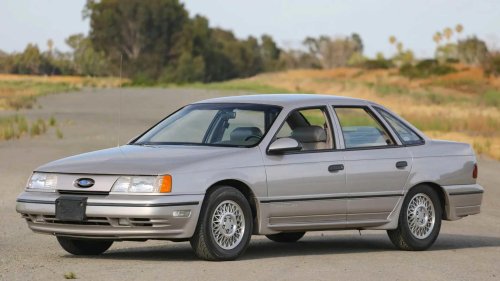
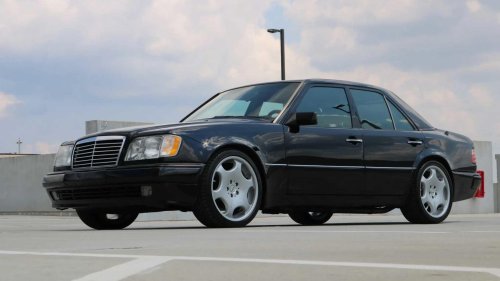
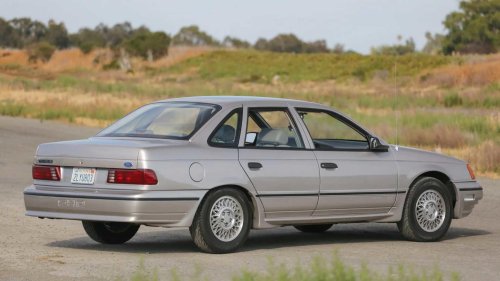
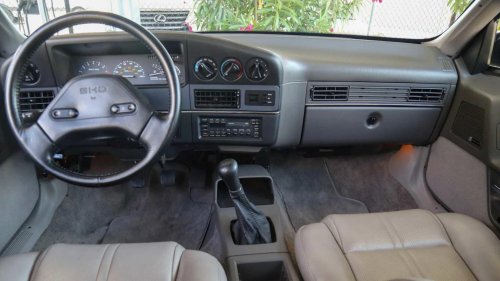















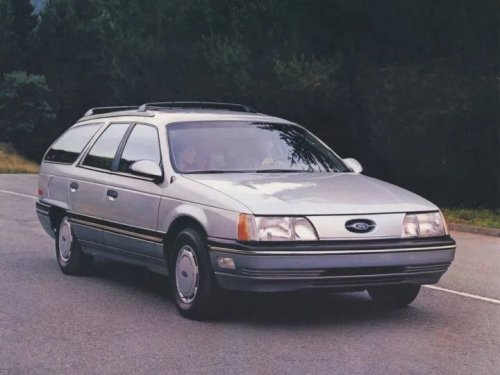
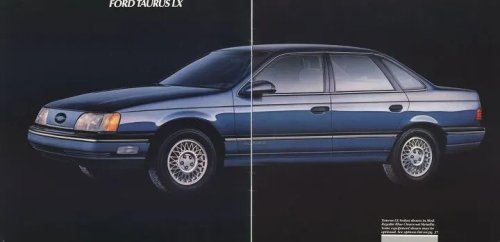
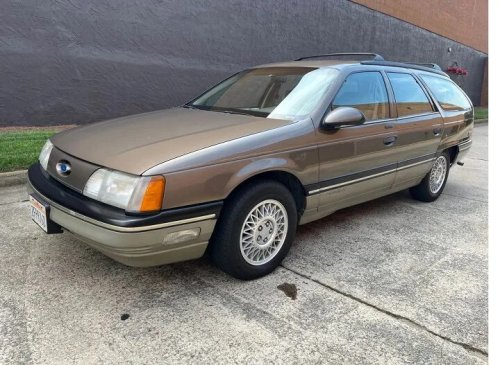
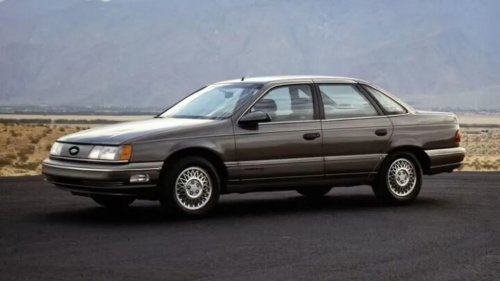
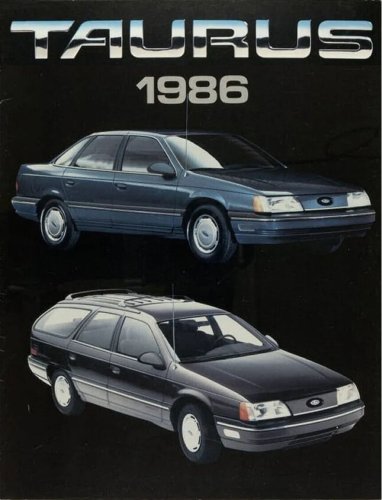
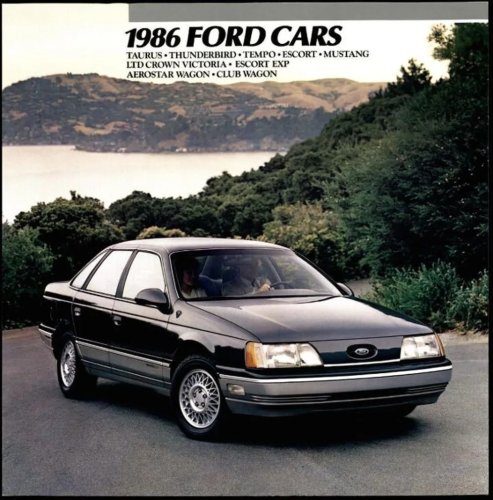
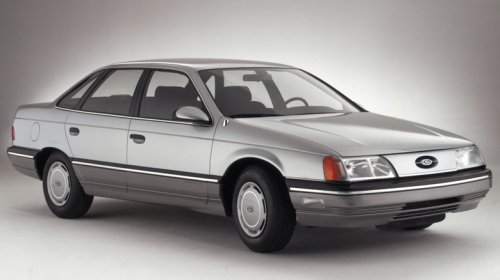
In the mid-1980s, Ford had a secret. Their Special Vehicle Operations division began working on the "GN34," a mid-engine exotic designed to dethrone the legendary Ferrari 328. To power this Ferrari killer, Ford commissioned a bespoke, high-performance engine built for high redlines and silky-smooth power delivery. It was supposed to be the crown jewel of American performance.However, the dream didn't last. As budget priorities shifted toward the growing SUV market, the GN34 project was suddenly axed. Ford was left with a world-class supercar engine and no car to put it in. Most companies would have sent the blueprints to the archives, but Ford had a crazier idea. They decided to hide this racing heart inside the most unassuming place imaginable: a family sedan. The Company Ford Hired Had Never Built A Car Steve Saxty In the mid-1980s, Ford didn’t look toward Detroit for its next great performance engine. Instead, they reached across the Pacific in Japan to Yamaha. While Yamaha was a titan in the motorcycle world, they had never actually built a production car.Over the years, Yamaha has collaborated with several car brands to help develop their engines for their performance cars. Ford knew Yamaha was a master of high-revving cylinder heads. They needed that expertise for the GN34, a secret mid-engine supercar project. Yamaha delivered a mechanical masterpiece: a 3.0L V6 that was decades ahead of its time.This engine used a 60-degree bank angle and a 24-valve DOHC setup. Most American V6s back then were heavy and sluggish. This unit was light, oversquare, and incredibly rev-happy. It breathed through an iconic "Snake" intake manifold. This manifold featured variable-length runners that looked like a bundle of chrome pipes. At low speeds, long runners provided plenty of torque for daily driving. Once the tachometer climbed past 4,000 RPM, short runners opened up. This allowed the engine to scream toward its 7,000 RPM redline.Via: Bring A Trailer The engine produced 220 horsepower, a figure that matched the Mustang GT of the era. However, it delivered that power with a refined, exotic smoothness. It was the perfect heart for a Ferrari rival. Unfortunately, the GN34 project was suddenly axed to save money for SUV development. Ford was left with a massive contract for thousands of high-tech engines. They had a world-class power plant but no car to show it off. The engine was essentially orphaned before it could ever hit the road. Ford’s investment was at risk of becoming a very expensive footnote in history. They needed a new home for Yamaha’s masterpiece immediately. A Heart Transplant For The Suburban Commuter Via: Bring A TrailerTo keep the Yamaha contract from going to waste, Ford’s engineers did the unthinkable. They stuffed the supercar engine into the engine bay of the humble Taurus. This unlikely marriage created the Taurus SHO, or "Super High Output."The early models featured the raw 3.0L V6 paired strictly with a 5-speed manual. This gearbox was sourced from Mazda to handle the high-revving nature of the motor. It was a driver-focused setup in a very family-focused car.Via: Bring A Trailer By 1993, Ford introduced a 3.2L version of the V6 for automatic models. This larger displacement helped maintain performance while working with a torque converter. It ensured the SHO remained a threat even without a clutch pedal.By the late 90s, the collaboration evolved even further. Ford and Yamaha developed a 3.4L V8 for the third-generation "ovoid" Taurus. This was a technical marvel that shoehorned eight cylinders into a front-wheel-drive engine bay.Via: Bring A Trailer The SHO’s success was built on a "function over form" philosophy. It didn't need giant wings or flashy stickers to prove its worth. It relied on a subtle, muscular aesthetic that only enthusiasts recognized.You could spot a legend by its "Slicers" directional wheels and integrated fog lights. The body cladding was clean and purposeful, giving the car a wider stance. These cues separated it from the standard rental-fleet Taurus.Via: Bring A TrailerThe biggest giveaway was the embossed "SHO" lettering on the rear bumper. This was the only warning a tailgating driver would get before the secondaries opened.To most people, it looked like a standard family grocery-getter. But to those in the know, that bumper was a badge of honor. It signaled a racing heart hiding under a sensible sedan shell. It Outran The Most Expensive Sedans In The World Via: Bring A Trailer When the Taurus SHO launched, it didn't just compete with other American cars. It officially claimed the title of the fastest front-wheel-drive car in the world. This shocked critics used to "floaty" and soft American luxury land yachts.The performance numbers were staggering for a family sedan in the late 80s. It could sprint from 0-60 mph in just 6.7 seconds and a quarter mile time of 15.0-15.2 seconds. Even more impressive was its top speed of 143 mph.At the time, those figures put the Ford in the same league as elite European machinery. It was hunting down the BMW M5 and the Mercedes-Benz 500E on the highway. Best of all, it did this for a fraction of their prices.Via: Bring a TrailerThe SHO wasn't just fast in a straight line, either. Ford engineers tuned the suspension to provide a level of mechanical grip that was unheard of for a Taurus. It stayed flat in corners and communicated well through the steering wheel. Critics were stunned by how well it put its 220 horsepower to the pavement. It proved that front-wheel drive didn't have to mean boring or unrefined. It felt like a refined executive sleeper with a dark side. This car changed the perception of what an American sedan could be. It showed that with the right engineering, a practical four-door could offer genuine thrills. The SHO became a giant-killer overnight.Driving an SHO was a unique experience in the early 90s. The sound of the Yamaha V6 at 7,000 RPM was unlike anything else on the road. It combined Japanese precision with American suburban practicality. The car proved that you didn't need to spend six figures to go fast. It democratized performance for the family man who still wanted to drive. It remains one of the greatest "bang-for-your-buck" stories in history. From Radical To Rare: The Legacy In 2026 Via: Bring A Trailer Looking back from 2026, the Taurus SHO is recognized as a pioneer. It proved that family car and supercar performance weren't mutually exclusive ideas. It paved the way for the high-performance sport sedans we see today.As we move further into the digital age, these mechanical icons are seeing more interest. Collectors are hunting for the pure, analog experience that the 80s and 90s models provide. The Yamaha-tuned V6 is now considered a legendary power plant.The market has responded to this newfound appreciation. Recent sales for pristine Gen 1 and Gen 2 models are now reaching toward $20,000. On March 6, 2026, a 1992 manual model even fetched $18,750 at auction.Via: Bring A TrailerPart of this trend is driven by the "Radwood" effect. Enthusiasts who grew up in the 90s now have the means to buy their childhood dream cars. The SHO’s unique styling makes it a star at modern car shows. Even the V8-powered Gen 3 models are finding a new audience in 2026. While they were once overlooked due to cam sprocket issues, enthusiasts are now fixing and preserving them. Their rarity and Yamaha-engineered soundtrack make them highly desirable sleepers. Hagerty’s latest valuation data shows a significant climb in value for these sedans. Pristine examples have seen a 24% jump in value over the last year alone. They are no longer just "old Fords"; but genuine classics.The legacy of the SHO is more than just speed; it’s about the spirit of innovation. It remains a symbol of a time when Ford took a massive risk on a motorcycle engine. It stands as a testament to what happens when engineers have fun. Today, the SHO is a certified classic that still turns heads at every stoplight. It is a reminder of the era when a family sedan could hide a supercar's soul. For the modern collector, it is the ultimate piece of 90s history.Source: Ford, Bring a Trailer, Hagerty