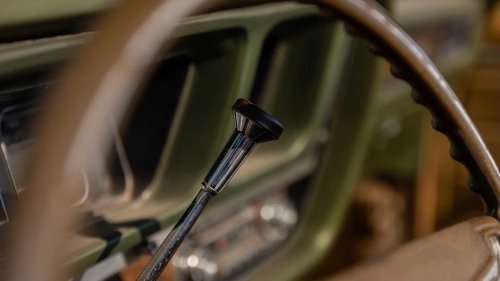
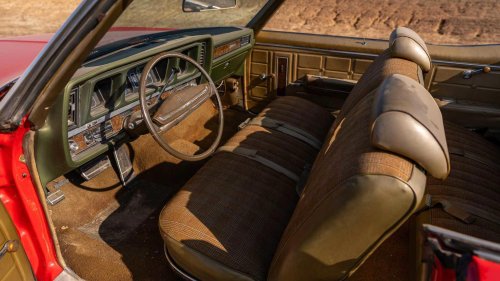
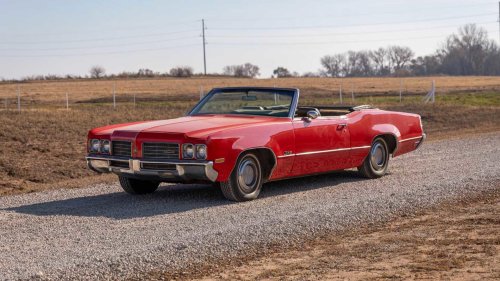
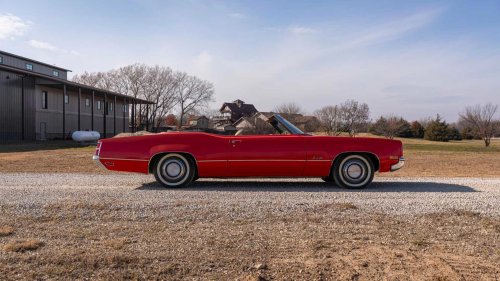
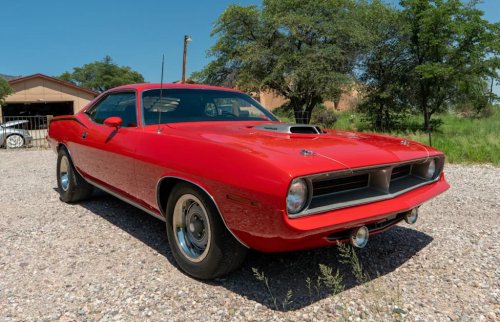
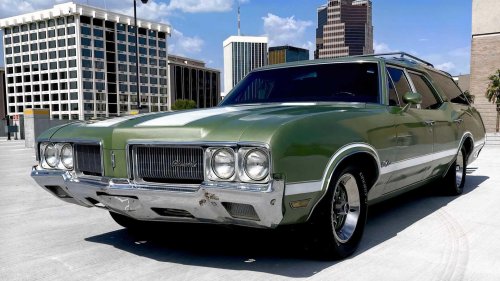
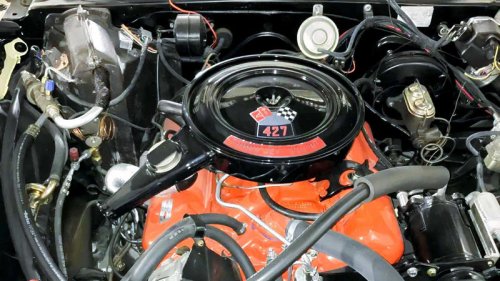
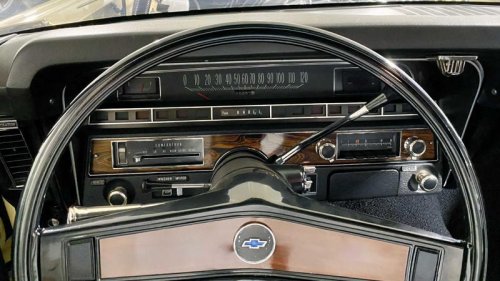
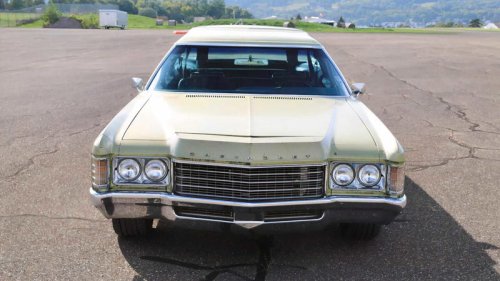
In 1970, you could walk into an Oldsmobile dealership, order what looked for all the world like a comfortable full-size family cruiser, and drive away with one of the most powerful cars on the road. No hood scoop. No racing stripes. No badge on the fender to hint at what was sitting under it. The salesperson might not have fully understood what they had just sold you. The person at the next stoplight almost certainly did not. Oldsmobile built this car for one model year only, offered it to anyone who knew which option box to check, and then quietly discontinued it before most of the industry had even noticed it existed. In 1970, Muscle Cars Wore Their Power On Their Sleeve Mecum The 1970 model year represents the peak of the American muscle car era in terms of raw factory horsepower. General Motors had lifted its internal 400-cubic-inch displacement cap on intermediate-platform engines, which meant performance divisions could finally drop full-size big-block V8s into their mid-size models. The results were loud in every sense. The GTO wore its intentions openly. The Chevelle SS 454 came with a cowl-induction hood. The 4-4-2 with the W-30 package featured a fiberglass hood with a functional Ram-Air snorkel intake and enough visual aggression to leave no ambiguity about what the car was built to do. These cars were marketing as much as engineering. Buyers and onlookers were supposed to know what they were looking at, and the manufacturers made sure they did.That approach defined the segment. Performance cars announced themselves, and the ones that did not announce themselves loudly enough tended to get lost in the market. The muscle car buyer of 1970 expected theater alongside the performance, and the industry largely delivered it. Which makes what Oldsmobile did on the other side of its lineup that year all the more unusual. Oldsmobile Had A Different Idea Mecum Oldsmobile had always positioned itself differently from its GM stablemates. Where volume-chasing divisions pursued market share and youth-focused brands chased the performance image, Oldsmobile aimed at the buyer who wanted genuine performance delivered with a degree of sophistication, and its long-running identity as the smart choice for the performance-minded buyer was not accidental. The Rocket 88 of 1949 had pioneered the template: serious power in a body that did not shout about it. The 4-4-2 was a departure from that philosophy, a full-throated muscle car that competed directly with the GTO and the Chevelle on performance-image terms. But in 1970, with the displacement cap lifted and the 455-cubic-inch Rocket V8 now available across the entire lineup, the brand made a decision that nobody else in Detroit was making.Rather than channel all that new firepower into performance-badged models, the brand quietly made the most potent version of its big-block available as an option on the Delta 88, its full-size family car. The buyer who wanted 390 horsepower without the visual drama of the 4-4-2 could have it. And the key detail, the one that makes this car genuinely extraordinary, is that there was absolutely no way to tell from the outside that they had ordered it. Meet The 1970 Oldsmobile Delta 88 W-33 MecumThe option was called the W-33, and it was available across the entire Delta 88 range for the 1970 model year only. It consisted of a specific tune of the 455-cubic-inch Rocket V8 featuring upgraded cylinder heads, a revised carburetor setup, and improved dual exhaust, producing 390 hp and approximately 500 lb-ft of torque. The W-33 Delta 88 and a base Delta 88 fitted with the standard 350-cubic-inch Rocket V8 making 250 hp were visually identical. The W-33 added no badging, no hood modifications, no distinct exterior cues of any kind. A W-33 car could also be had in any body style the Delta 88 offered, including sedan, Holiday hardtop coupe, and convertible, which amplified the sleeper effect considerably. A four-door sedan with the W-33 was, by any reasonable definition, the least threatening-looking 390-horsepower car ever to leave a General Motors factory.The core contradiction is worth sitting with. The W-33 produced more rated horsepower than the 4-4-2 W-30, the car with the Ram-Air hood and the performance reputation. It did so in a body that weighed more, rode on a longer wheelbase, and was marketed explicitly as a family car. A buyer ordering the W-33 did not get a sports car experience in the traditional sense. The Delta 88 was soft-sprung, bench-seated, and built for comfort. But it was also, in a straight line on a public road, faster than almost anything else a private citizen could buy from a showroom in 1970. And nobody at the stoplight had any reason to suspect it. The Police Interceptor Connection That Makes It Make Sense Mecum The W-33 option did not emerge from nowhere. Its specification closely mirrored the Police Apprehender Package that law enforcement agencies had been ordering on Delta 88s for years. The same 390-horsepower 455 and the rear anti-sway bar that came standard with the W-33 were also found in the police package configuration, though they were separate orderable options rather than a single combined package. A private buyer who knew to tick the W-33 box was, in mechanical terms, ordering very nearly the same hardware that highway patrol fleets were running. The person next to them at the dealership, ordering a standard Delta 88 Custom with the base 310-horsepower, two-barrel 455, was ordering what appeared to be the same car. The difference between the two was invisible from ten feet away and enormous from a standing start. Why The W-33 Disappeared After One Year Mecum The W-33 was a 1970-only option, and its disappearance was driven by forces that had nothing to do with buyer demand. From 1971 onward, the insurance industry began aggressively rating high-powered cars, making coverage prohibitively expensive for anything that could be identified as a performance vehicle. At the same time, emissions regulations started squeezing compression ratios, and GM's own internal policies shifted away from maximizing gross horsepower figures in favor of reduced net ratings that looked better on paper for regulatory purposes.The peak muscle car era compressed into a single model year with extraordinary intensity and then began contracting almost immediately. The W-33 had the misfortune of existing at exactly the right moment to be brilliant and exactly the right moment to become commercially inconvenient. Documented W-33 cars are genuinely rare today, partly because production numbers were low and partly because they were driven as the anonymous transportation they appeared to be, with no particular incentive for owners to preserve them carefully. What The Market Thinks Of The Oldsmobile Delta 88 Now MecumThe W-33 sits at the most interesting point in the 1970 full-size market right now. Build-sheet verified examples are genuinely rare, and market listings show standard 455-equipped Delta 88s in clean driver condition trading in the $25,000 to $35,000 range before any W-33 premium is applied. A documented W-33 commands significantly more, but because the option is so poorly understood outside specialist circles, the spread between what an informed buyer pays and what an uninformed seller asks can be considerable. The W-33 is one of the few cars in this era where provenance documentation does more work than the car's reputation.The comparison to the 4-4-2 W-30 is where the story gets interesting. The W-30 is one of the most desirable muscle cars of the period and its values reflect that reputation clearly. The W-33 outgunned it on paper, is rarer by any measure, and carries a better story, yet it trades at roughly a quarter of the W-30's price. That gap is entirely a product of badge recognition, not engineering. For a collector who understands what the car actually is, that disparity represents one of the stronger value arguments left in the 1970 muscle car market. The Sleeper That History Almost Forgot Mecum The Delta 88 W-33 was designed to be invisible. Oldsmobile did not advertise it, did not race it, and did not build a marketing identity around it. It existed as a line item in the order book for a single model year, available to anyone who knew to ask and invisible to everyone who did not. That quality, the deliberate anonymity that made it such an effective sleeper in 1970, is also what caused the collector market to overlook it for decades.What it represents is something that the muscle car era produced almost by accident: genuine factory performance with no performance tax attached. No premium insurance rating for a car that looked like a taxi. No unwanted attention at a stoplight. Just 390 hp, a Turbo Hydra-Matic 400, and the comfortable absurdity of a full-size family sedan that could embarrass almost anything Detroit was selling that year. The people who ordered them understood exactly what they were doing. The rest of the country never found out.Sources: Hagerty, Mecum.