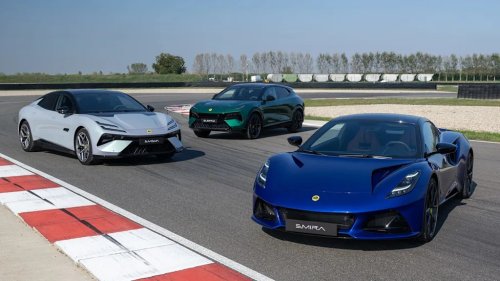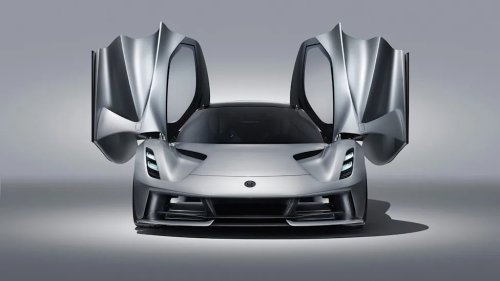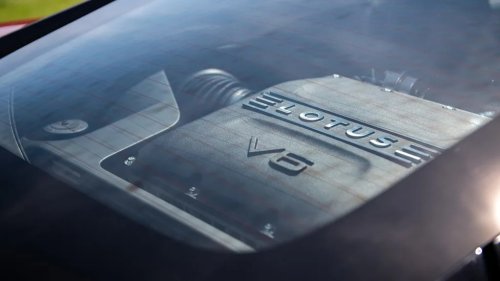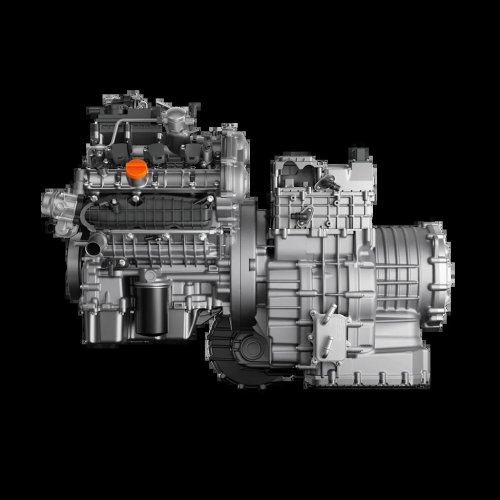
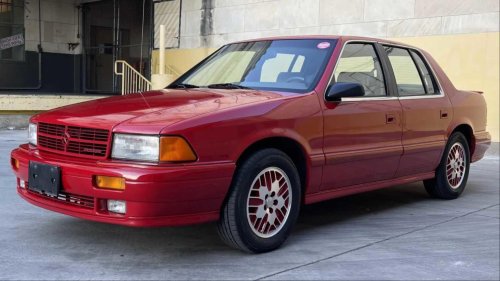
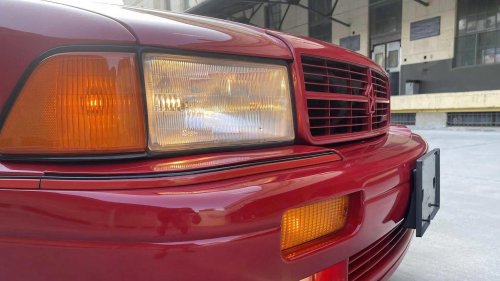
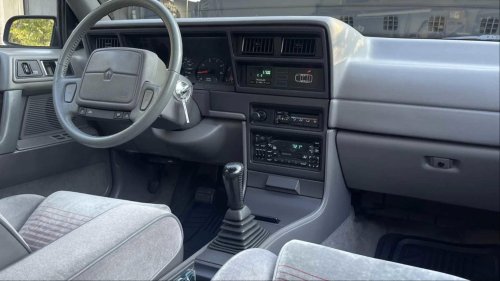
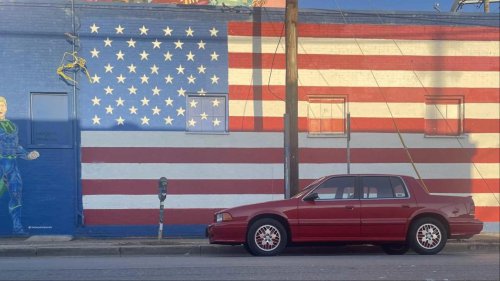



















Every once in a while, you get an instance of a car that wasn't designed for a high-performance engine actually getting one. When that happens, the results can be a bit of a mixed bag. Sometimes, you get a brilliant sleeper car that ends up becoming iconic. Other times, you get a bit of an engineering mess. In the latter of those two situations, you can often easily tell that the chassis was just not built to handle all that extra power. This is something that happened to a model from Dodge's lineup over three decades ago. This infamous piece of engineering weirdness dates back to an odd circumstance involving one of Britain's most legendary automakers. Lotus Once Won A Competition To Help Design A New Engine For Chrysler Ayesh Seneviratne, Claire-Kaoru Sakai / HotCarsBack in the 1980s, Chrysler had a fairly small inline-4 that's known as the Trenton Engine. It was made in both naturally aspirated and turbocharged forms, and in a variety of different sizes. The version we're going to be focusing on here is a 2.2-liter turbocharged variant, known as the Turbo III. It was far from the first turbocharged version of the 2.2-liter Trenton variant. The earlier Turbo II had gained a bit of notoriety by appearing in cars such as theShelby GLH-S and Warren Mosler's Consulier GTP. The Turbo III was different from those engines, though, and that was due to the involvement of Lotus.Lotus beat out Maserati and Hans Herrmann to design a new 16-valve DOHC cylinder head for Chrysler to use in the Turbo III. That Lotus-designed cylinder head is what makes this engine seriously special. It ended up producing 224 horsepower and 217 lb-ft of torque, a fantastic output for an American 4-cylinder engine of that time.If this engine is so great, then why don't we hear too much about it? Well, that's because it ended up being used in one of the oddest cars the Chrysler corporation ever sold to anyone. Why is it so odd? Well, you're going to need a bit of backstory first. The Dodge Spirit Is A Regular Front-Wheel-Drive Commuter Sedan From The End Of The 1980s If you were to get out a pencil and paper and draw the most basic, most generic three-box compact sedan body you could think of, you'd probably end up with something that looks like the Dodge Spirit. It's one of the Chrysler A-body cars that appeared at the tail end of the 1980s, and it shared pretty much all its components with the Plymouth Acclaim and the Chrysler LeBaron sedan (known as the Chrysler New Yorker in Mexico, and also not to be confused with the K-platform LeBaron).Confusingly, it was also badge-engineered into the Chrysler Saratoga for European markets. Fitting in with its fairly disposable commuter car nature, it was typically powered by fairly boring engines. The most exciting engine you could usually get in this car was either a 2.5-liter turbocharged inline-4, which produced 150 hp, or Mitsubishi's 3-liter V6, which produced 141 hp. Whatever engine option you went for, it was front-wheel drive—the most boring and predictable kind of drivetrain in a regular car back then. But, one version of the Dodge Spirit bucked that boring trend, and it's all thanks to that Lotus-assisted engine we mentioned earlier. The Dodge Spirit R/T Was The Result Of A Lotus-Engineered Engine Being Forced Into This Completely Normal Car Bring a TrailerThe Dodge Spirit R/T is the result of what happened when Chrysler decided to put that Lotus-engineered engine into what could rightfully be described as one of the most boring cars in the world. Fitted with that 224 hp engine, the Dodge Spirit R/T was transformed from a boring, boxy sedan into something that had the kind of power that could rival sports cars. To help put that power down to the road, the Spirit R/T exclusively came with a heavy-duty 5-speed manual transmission. This transmission was built by Chrysler's New Process Gear division, and had a gearset that was supplied by Getrag. It also came with heavy-duty ventilated disc brakes on all four wheels, and anti-lock brakes were an optional extra. It Was Almost As Fast As A BMW M5, But It Cost A Third Of The Price Bring a TrailerAll that power in the relatively small and light Dodge body made the Spirit R/T a genuinely competitive performance car. It could go from 0-60 mph in 5.8 seconds. Those figures made it almost as fast as the E34 BMW M5 - the E34 M5's 0-60 mph time was recorded at 5.6 seconds in 1991. The Dodge Spirit R/T managed that kind of performance while costing a third of the price of an M5 brand new, too. An E34 M5 would have cost you around $56,600 back then. The Dodge Spirit R/T, meanwhile? Just $17,820. That made it one of the best performance bargains you could get brand new back then. Its Chassis Could Barely Handle The Power It Was Given Bring a TrailerWhile those performance figures for the Dodge Spirit R/T are impressive on paper, in the real world it was a bit of a handful to achieve that. While that Lotus-designed engine was brilliant and produced a fantastic amount of power for the Spirit's size, the chassis basically wasn't changed at all to handle the extra power. This included keeping the Spirit R/T as a front-wheel drive car. The only real major changes other than the engine were that heavy-duty manual transmission and the heavy-duty ventilated disc brakes.The result of this was a car that was slammed by the automotive press for being awkward and horrible to drive. In a contemporary comparison test between this car, the Ford Taurus SHO and the Chevrolet Lumina Z34, Car & Driver placed the Spirit R/T dead last. Describing it as "a Sugar Ray Leonard engine trapped in a Homer Simpson physique," Car & Driver went on to describe the Spirit R/T's handling as "nervous," "unsettled" and "even clumsy," due to its suspension being basically the same as the regular commuter car it was based on. Ouch. It's Now One Of The Rarest Sports Sedans In AmericaBring a TrailerWith how great its performance was, you would have expected that the Dodge Spirit R/T would have been a runaway success. But, that didn't happen at all. In fact, it barely sold at all, and it's now one of the rarest sports sedans you can find in America. It's estimated that 1,399 total units were built between 1991-1992. Considering that 462,326 units were sold of the Dodge Spirit overall during its entire 1989-1995 production run, that really brings home how much of a sales failure the Spirit R/T was.What if you want one now? Well, it's a bit of a bargain on the used market too. The average used value for a Spirit R/T right now is $8,800, and it's not unusual for them to sell for less than $7,000. Values for the best condition examples are starting to push towards $15,000-$20,000, though. If you've ever wanted one of these oddball Mopars, the best time to buy in could be right now.