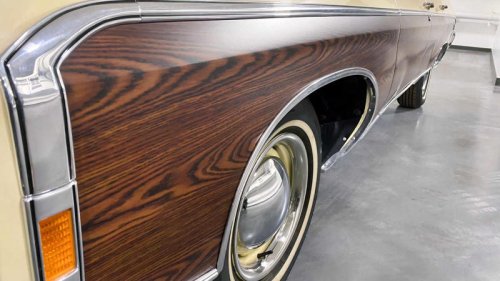
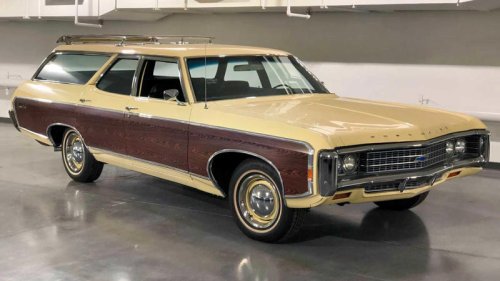
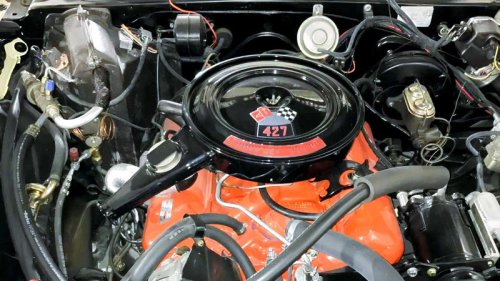
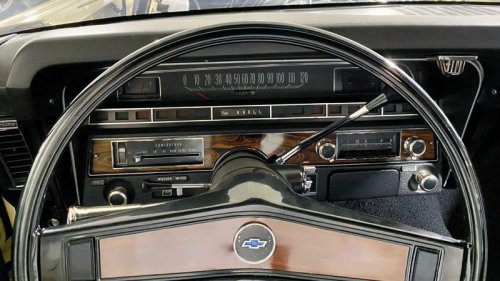
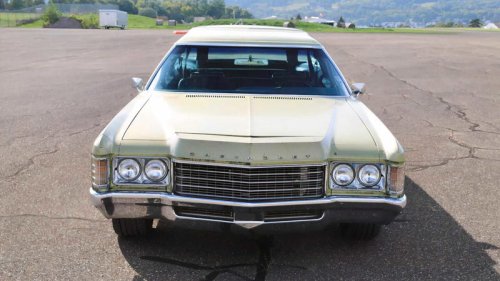
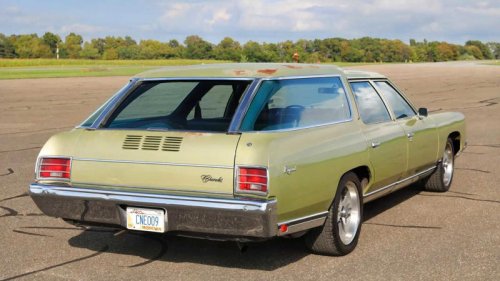
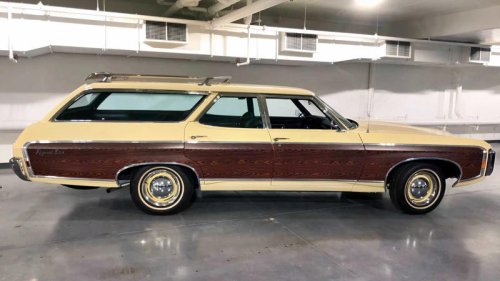
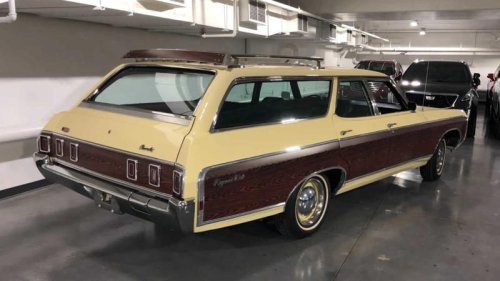



















In 1970, Detroit still thought a family car should do everything – to haul kids, swallow camping gear, tow a boat, and still leap past a slow-moving sedan on a two-lane highway without wheezing as it had just climbed a flight of stairs. That mindset led to one of the stranger side effects of the muscle-car era – big engines found their way into long-roof family wagons, where fake woodgrain and polite trim worked like camouflage.That was the trick. From the curb, these wagons looked built for Little League, luggage, and one very tired dad in penny loafers. Under the hood, some packed enough cubic inches to embarrass cars that spent a lot more time talking tough. That gap between what they looked like and what they could do is what makes one Chevy wagon so fascinating today. It was practical, plush, and just a little (a little?!) absurd, which is usually where the best old-car stories live. Detroit's 1960s Wagon Wars Bring a Trailer By the end of the 1960s, the full-size American wagon had become a rolling argument about who could give a family the most space, the most comfort, and the biggest brag sheet. Chevrolet’s big wagons rode a 119-inch wheelbase, stretched 216.7 inches long, and advertised more than 100 cubic feet of cargo room in the larger models. That was serious real estate, the kind of footprint that made suburban driveways look smaller and gas stations look nervous.But the sales pitch was not just about size. Chevy made a big deal out of the dual-action tailgate, the rear bumper step, the optional third seat, and the little bits of convenience that made a wagon seem clever instead of clumsy. The brochure even bragged about the walk-in rear access and the hidden hinges, because in 1970, the family hauler had to feel modern, not just massive.Bring a Trailer Then came the part enthusiasts still love. These wagons were not stuck with sad little engines. Some of them had V8 power, trailer gear, automatic transmissions, power steering, power brakes, and heavy-duty support equipment. Detroit was building these cars to work hard, move fast on the interstate, and haul families plus toys without breaking a sweat. Somewhere along the way, that sensible brief created genuine sleepers.That is what made the line between practical and powerful so blurry around 1970. A wagon could still wear woodgrain, still carry a rear-facing third-row seat, still look like it belonged next to a ranch house with a swing set, and still hide the kind of engine that made the stoplight crowd do a double take. Chevy's Flagship Full-Size Wagon Was A Beast via Bring A TrailerThe most representative car of that trend was, in no doubt, the 1970 Chevrolet Kingswood Estate, Chevy’s top full-size flagship station wagon. It sat above the regular Kingswood in the lineup, and it was tied to Caprice-level trim and positioning. In plain English, this was the nicest long-roof Chevy family could buy before stepping into another brand’s showroom. The three-seat version was the true nine-passenger family bus, and it wore that role with a lot more swagger than the job description suggests.The best thing about it was that it could be ordered with a 250-horsepower 350 engine as standard, plus a 300-horsepower 350, a 265-horsepower 400, and two 454-cubic-inch Turbo-Jet V8s. At the top sat the 454 rated at 390 horsepower in period gross figures. A nine-passenger wagon with a 390-hp 454 is one of those sentences that still feels like somebody misfiled a muscle-car order form.The wagon came with the luxury tone expected of a flagship, and the brochure piled on conveniences like power disc brakes, power steering, air conditioning, power windows, power locks, Comfortilt steering, and roof-rack gear. The standard engine in the Estate was the 250-hp 350, but the order sheet clearly left room for buyers who thought “family transportation” should also include a lot more thunder. Big-Block Power In A Boring Family Hauler Bring A Trailer The strange beauty of the Kingswood Estate starts with the visual mismatch. Faux wood on the flanks, a grocery-getter profile, and a rear-facing third-row seat said suburbia. The available 454 under the hood said something else entirely. Chevrolet offered it because people wanted towing grunt, easy highway passing, and the ability to load up the whole clan plus a trailer without turning every on-ramp into a prayer circle. The wagon brochure even listed trailer hitches, plug-in wiring harnesses, a heavy-duty battery, and a higher-output alternator among the extras, which makes the big-block option look less like madness and more like Detroit solving a practical problem with a very large hammer.Bring a Trailer Here’s the part we love the most – that practical logic accidentally created a sleeper. The 345-hp 454 version made 500 lb-ft of torque, and modern spec compilers peg that wagon at about 4,696 pounds. Different sources claim 7.9 seconds from 0 to 60 mph and 16.4 seconds in the quarter-mile. For a full-size family wagon in 1970, that was not just quick for what it was. That was quick, period.Then there was the hotter version. Even Chevrolet’s own documents list a 390-hp Turbo-Jet 454 for the Kingswood Estate, though a documented period road test for that exact wagon is impossible to find these days. The numbers on paper alone suggest that if the 345-hp car already brushed real muscle-car territory, the 390-hp version would have shoved this long-roof Chevy even deeper into it. A car that could carry nine people and still threaten somebody’s GTO was peak Detroit. And maybe peak comedy, too. Charming In Theory, Expensive In Practice Bring a Trailer Part of the Kingswood Estate’s appeal today comes from how normal it once seemed. Chevrolet sold 66,980 of them in 1970, which means the wagon was not some hand-built oddball when new. The problem is that families used wagons hard – they hauled people, dogs, lumber, coolers, and probably at least one bike with a bent wheel. Modern market data shows just how thin the herd has become: Classic.com currently shows no 1970 Kingswood Estate for sale and only a tiny trail of recent market activity for the nameplate.The really juicy cars sit even deeper in the shadows. Public sources available now do not give a neat engine-by-engine production count, and that means the exact 454 take rate is fuzzy. Still, the market makes one thing obvious – survivors are scarce, and confirmed big-block wagons are scarcer still.Bring a Trailer It was not exactly cheap when new, either. J.D. Power lists the original MSRP for the nine-passenger 1970 Caprice Classic Kingswood Estate at $3,866, while the six-passenger version sat at $3,753. Using CPI-based inflation data, that puts the three-seat car at roughly $32,000 in 2025 dollars before any meaningful options are added. And this was the sort of car that invited options, from air conditioning and power accessories to roof-rack gear, trailer hardware, and, of course, the larger engines.As a result, the Kingswood Estate occupies such a funny place in the hobby now. It was luxurious enough to cost real money, useful enough to get worked to death, and overlooked enough that few people saved them like they saved coupes. Back then, it was the fancy family wagon, and today, that same everyday role makes it interesting. People are buying a giant slice of American life, plus a 1970 order sheet that quietly allowed one of the dumbest and best ideas GM ever approved. Is It Possible To Find One Today? Bring a Trailer The short answer is yes. But patience is very important, and so is reading the fine print. As mentioned, as of March 2026, Classic.com shows no 1970 Kingswood Estate for sale, even though the broader Kingswood Estate market still tracks occasional activity. What does show up more often are standard Kingswoods, wagons listed under Impala or Caprice headings, or cars that have been modified enough to blur the original spec.The available sales data gives a clearer picture of where values sit. Classic.com pegs the average Chevrolet Kingswood Estate sale price at $27,235. Its recent records include a 1972 Kingswood Estate that sold for $17,525 in 2025, another 1972 that brought $31,750 in 2023, and a 1970 Kingswood wagon that sold for $27,500 at Mecum in 2022. The upper edge can stretch well past that when a rarer or hotter example appears. Classic.com says the highest recorded Kingswood Estate-family sale is now an $80,300 1969 Chevrolet Kingswood 427/L36 wagon from March 2026.Bring a Trailer Meanwhile, Hagerty currently shows a #3 good-condition value of $11,700 for a 1970 Caprice Kingswood Estate in two-row form, while J.D. Power lists a $31,900 average retail figure and $56,100 high retail for the nine-passenger version.Source: Chevrolet, HotRod, Classic.com, Hagerty