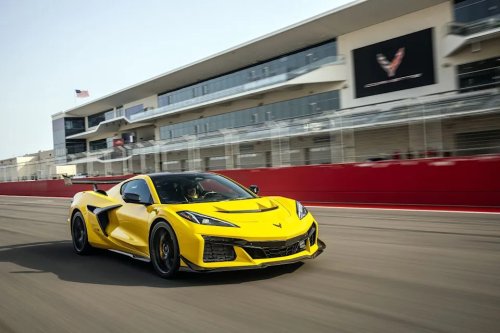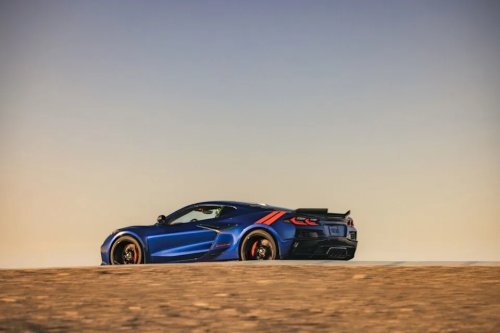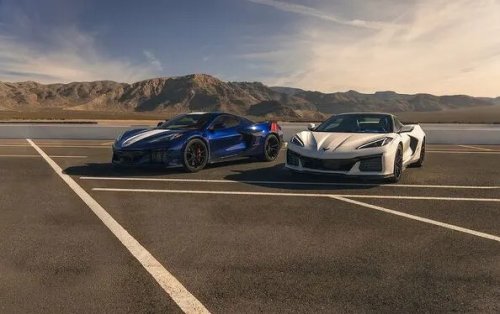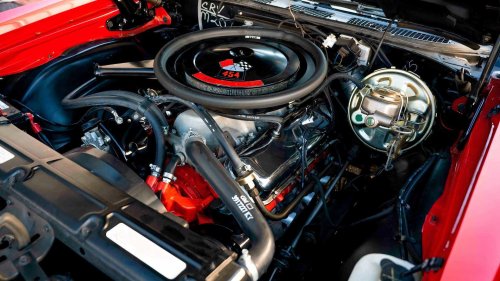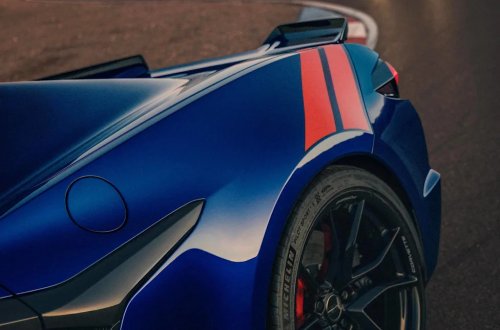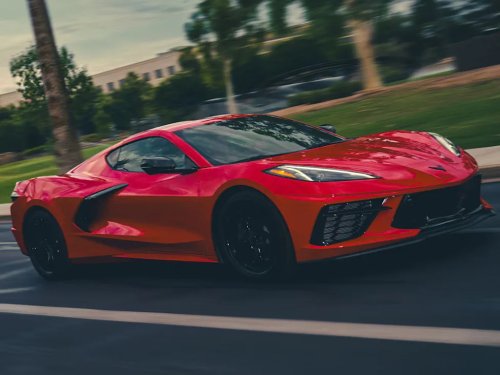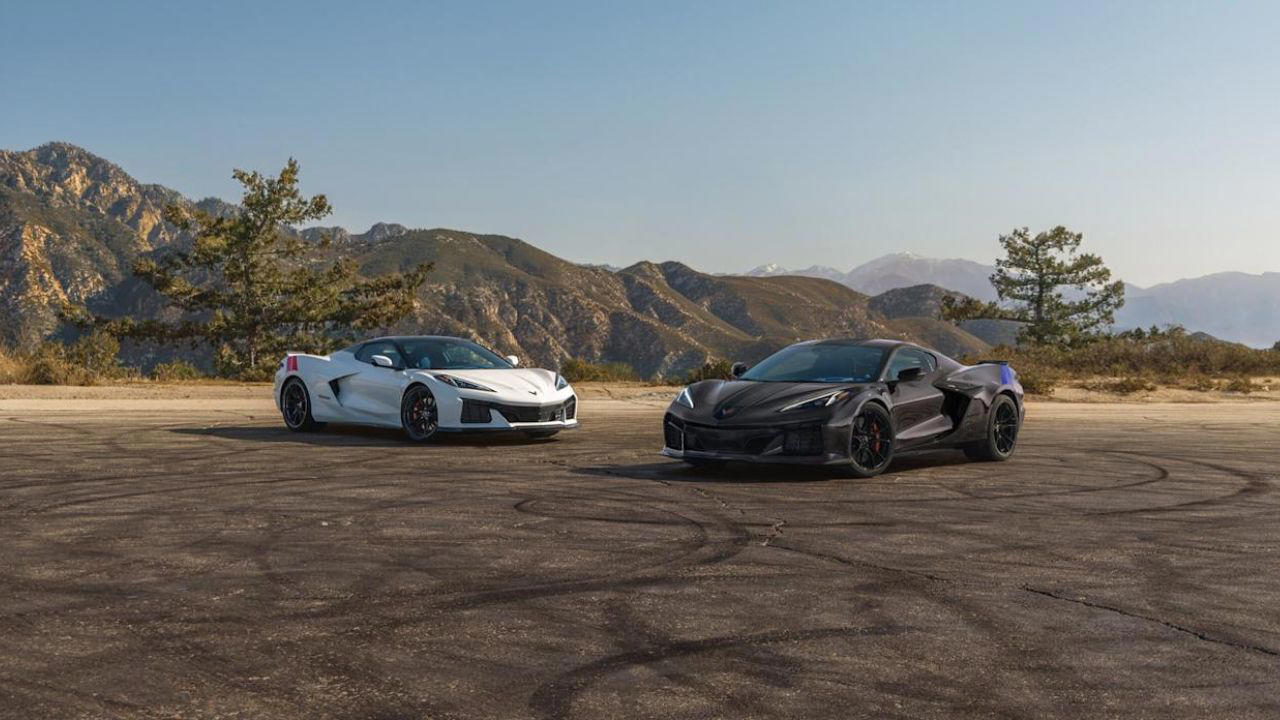


















GM reveals 535-HP V8 coming to next-gen Corvette and it’s not what drivers expectedThe next-generation Corvette is getting a new V8 with 535 horsepower, and it is not the twin-turbo hybrid or downsized electrified powertrain many expected. Instead, GM has revealed a big-displacement, naturally aspirated LS6 that leans hard into classic Corvette values while quietly resetting the baseline for American performance engines. The surprise is not just the output, but the way Chevrolet is using this engine to reshape the Corvette lineup around the revived Grand Sport name. The Grand Sport returns as the new heart of the lineup Chevrolet is positioning the new Corvette Grand Sport as the core of the range, sitting between the Corvette Stingray and the more extreme variants. In GM’s words, Corvette Stingray is an everyday supercar, while both Corvette Grand Sport and Grand Sport X are described as driver’s cars that sharpen that formula for enthusiasts who want more edge without jumping to full track specials. In that context, the Grand Sport becomes what GM calls The Heart of the Lineup, the place where performance, price, and daily usability intersect for most buyers. The Grand Sport badge itself carries heavy racing heritage, and Chevrolet is reviving one of Corvette’s most storied racing names with this 2027 Corvette Grand Sport. Together with Stingray, GM expects the combined Stingray and Grand Sport family to account for the vast majority of Corvette sales, underscoring how central this model is to the broader strategy for the nameplate. Rather than treating Grand Sport as a niche track toy, Chevrolet is using it as the primary showcase for the new engine and as the default choice for drivers who want something more serious than the base car. Hints of this direction surfaced earlier when Chevrolet expanded the Corvette lineup with two thrilling new models, the Grand Sport and the hybrid Grand Sport X, positioned as complementary offerings for different types of performance buyers. That expansion confirmed that the Grand Sport and the Grand Sport X are not side curiosities but foundational pieces of the future Corvette story. A new LS6 V8 with old-school displacement The centerpiece of the Grand Sport is the all-new LS6 V8, which debuts in the new Chevrolet Corvette Grand Sport lineup as the replacement for the long-serving LT2. GM specifies that this next-generation engine displaces 6.7-liter, a figure that alone sets it apart from the downsized turbocharged units proliferating across the performance market. Rather than chase small-displacement boost, Chevrolet has doubled down on cubic inches and high-flow breathing. According to GM’s deep technical overview, the LS6 is the most powerful base engine ever offered in a Corvette. With 535 horsepower, it surpasses any previous entry-level Corvette V8 on record. Its 520 pound-feet of torque makes it the highest torque output of any naturally aspirated production V8 that GM has built for a road car, a remarkable statistic in an era dominated by turbocharged torque curves. Chevrolet has also detailed how the LS6 achieves those numbers. The company says the LS6 has forged pistons and rods, revised exhaust manifolds, a new lubrication system, a new throttle body, and what it calls a tunnel ram intake. These components are not marketing flourishes; they indicate an engine built for sustained high load, frequent track use, and long-term durability in the hands of owners who will not baby their cars. Output that resets the naturally aspirated benchmark GM states that the engine produces 535 horsepower at 6,100 rpm and 520 lb-ft of torque at 4,600 rpm. Those figures matter for more than bragging rights. They confirm that the LS6 is not just a peaky screamer or a low-rpm stump puller, but a broad, usable powerplant that delivers serious thrust across the rev range. For a base Corvette engine, that combination of top-end power and midrange torque is unprecedented. Independent analysis of the new LS6 notes that it gives the 2027 Corvette more torque than any factory naturally aspirated V8 ever installed in a production Corvette. That claim aligns with GM’s own description of the LS6 as the highest torque output of any naturally aspirated production V8 it has offered. The engine thus serves two roles at once: it is both a new baseline for Corvette performance and a statement about what is still possible with atmospheric induction. The 535 horsepower figure also carries symbolic weight. It puts the Grand Sport in a performance window that overlaps with previous-generation high trims, which means the new mid-level car effectively delivers what used to be near-flagship output. For long-time Corvette observers, that shift illustrates how far the platform has moved and how aggressively GM is willing to push the standard for its so-called base engines. Why enthusiasts did not see this coming Many Corvette watchers assumed that the next major powertrain announcement would lean more heavily into electrification or turbocharging. The existence of the hybrid Grand Sport X and other electrified Corvettes had primed expectations for a future where the internal combustion side of the lineup would shrink or move toward smaller, boosted engines. Instead, GM has introduced a large-displacement, naturally aspirated LS6 that feels more like a greatest-hits compilation of classic Corvette values. Part of the surprise stems from the name itself. Enthusiasts remember earlier LS6 engines as high-performance small-blocks from previous generations, and some expected any new LS6 to be a limited-run specialty motor rather than the mainstream base V8. GM has flipped that assumption on its head by making the LS6 the standard engine for the Grand Sport and a key pillar of the Corvette range. Timing added to the shock. A leak on social media late last year hinted that Chevrolet had expanded the Corvette lineup with the Grand Sport and the hybrid Grand Sport X, and it suggested that a new engine was coming with those models. At the time, many speculated that the powerplant would be a turbocharged or heavily electrified unit. The official reveal confirmed that the new engine is instead a big, naturally aspirated LS6, cutting against those early expectations. How the Grand Sport lineup is structured Chevrolet has split the Grand Sport name into two trims, the standard Grand Sport and the Grand Sport X. The conventional Grand Sport is aimed at drivers who want a purist, rear-drive, V8 sports car with a focus on balance and feedback. The hybrid Grand Sport X targets buyers who want extra performance and technology, using electrification to add power and potentially all-wheel-drive capability. GM describes the 2027 Corvette Grand Sport as engineered for track-capable performance that still works on the street. Alongside Stingray, the Grand Sport family is expected to carry the bulk of Corvette volume, reinforcing the idea that this is not a fringe variant. The Grand Sport X, in particular, is designed to complement the standard car rather than replace it, offering a different flavor of performance for those who want the latest hybrid hardware layered on top of the LS6 foundation. Chevrolet has already showcased the two Grand Sport trims publicly, highlighting that both are powered by its next-generation V8. That reveal framed the LS6 as the common thread that unites the analog appeal of the standard Grand Sport with the more complex hybrid capabilities of the Grand Sport X, a clever way to keep the brand identity consistent even as the technology mix diversifies. Technical character and driving intent GM’s deep dive into the 2027 Corvette’s next-generation V8 emphasizes that this engine is designed for repeated hard use. The forged pistons and rods point to an internal architecture built to withstand high cylinder pressures and sustained high rpm. Revised exhaust manifolds and the tunnel ram intake are aimed at improving breathing, which helps explain how the LS6 can deliver 535 horsepower without forced induction. The new lubrication system is another clue about the LS6’s mission. Track use exposes engines to prolonged lateral and longitudinal g loads that can starve conventional oiling systems. By reworking the lubrication, Chevrolet is signaling that the LS6 is intended to handle serious circuit work in the hands of owners who will exploit the Grand Sport’s chassis. That fits with the way GM describes both Corvette Grand Sport and Grand Sport X as driver’s cars, not just cosmetic packages. From a character standpoint, the torque curve suggests an engine that will feel muscular in everyday driving yet eager to rev. Peak torque arriving at 4,600 rpm, combined with peak power at 6,100 rpm, implies a broad plateau of usable thrust. For a car that GM still positions as suitable for daily use, that balance between low-speed responsiveness and high-rpm excitement is central to the appeal. Positioning against the rest of the Corvette family Within the Corvette hierarchy, the LS6-equipped Grand Sport sits above the Corvette Stingray but below more extreme track machines. Corvette Stingray remains the everyday supercar, the entry point into mid-engine Corvette ownership. The Grand Sport, with its 6.7-liter LS6 and 535 horsepower, turns up the intensity for drivers who prioritize lap times and feel. GM has been explicit that with Stingray, the Grand Sport and Grand Sport X are expected to account for the vast majority of Corvette sales. That projection effectively makes the LS6 the default Corvette engine for a large share of customers. It also means that the attributes of this V8, from its naturally aspirated character to its torque-rich delivery, will define how a new generation of drivers experiences the brand. The decision to debut the LS6 in the Grand Sport rather than in an ultra-limited flagship signals that GM sees this engine as a long-term workhorse, not a short-lived halo motor. By anchoring the middle of the lineup with such a capable V8, Chevrolet leaves room above for even more radical powertrains, including higher-output hybrids or specialized track engines, without undermining the appeal of the core models. Why GM is betting on big displacement in a hybrid era At a time when many performance brands are pivoting to smaller turbocharged engines or full electrification, GM’s choice to invest in a 6.7-liter naturally aspirated V8 might look contrarian. Yet the move aligns with how Corvette buyers tend to use their cars. Many owners value throttle response, sound, and linear power delivery as much as outright numbers, and a large atmospheric V8 delivers those qualities in a way that turbos often struggle to match. The LS6 also pairs naturally with hybrid systems. In the Grand Sport X, the engine can provide the emotional core and mechanical simplicity, while electric components add torque fill, traction, and efficiency. By keeping the internal combustion side relatively straightforward, GM preserves the character that has defined Corvette for decades, even as it layers in new technology where it makes sense. More from Fast Lane Only Unboxing the WWII Jeep in a Crate 15 rare Chevys collectors are quietly buying 10 underrated V8s still worth hunting down Police notice this before you even roll window down The post GM reveals 535-HP V8 coming to next-gen Corvette and it’s not what drivers expected appeared first on FAST LANE ONLY.