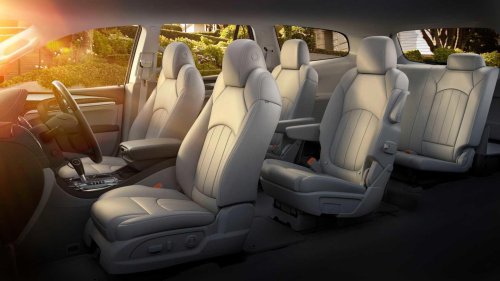
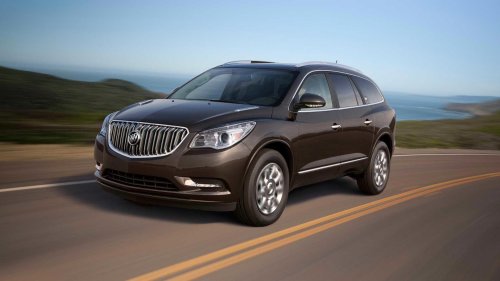
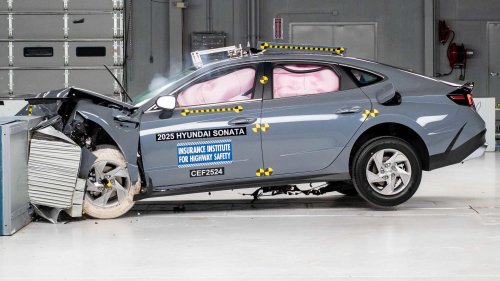
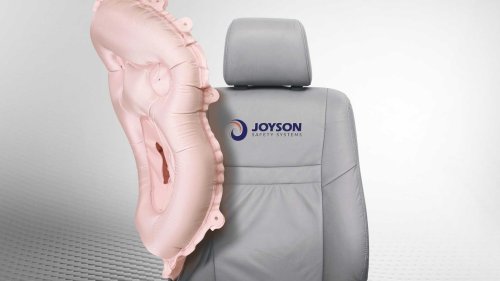
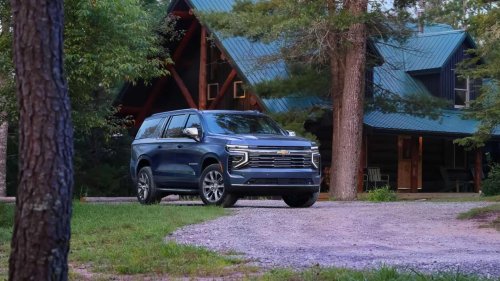
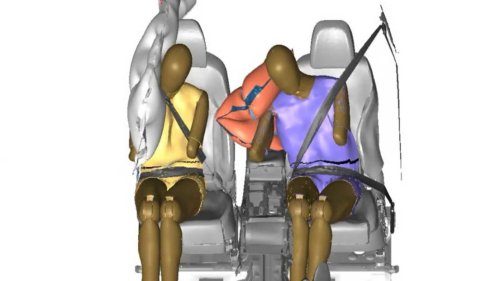
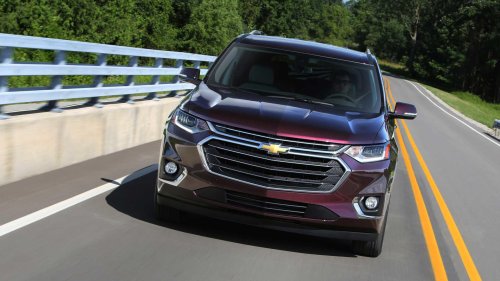
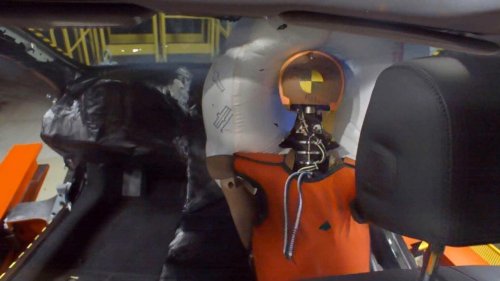
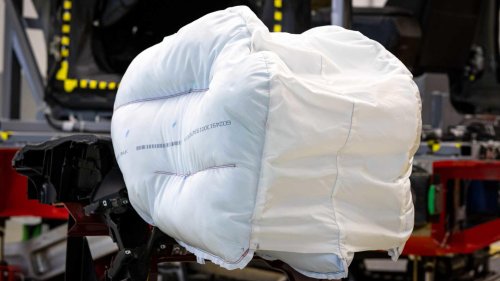



















Starting in the 2013 model year, the Buick Enclave and various versions of the GMC Acadia and Chevrolet Traverse were the first to incorporate an industry-first airbag technology called the front center airbag. This first-of-its-kind inflatable restraint was the latest in four decades of innovation since airbags first hit US roads in 1973, to a bit of a slow start.GM’s front center airbag was an award-winning piece of technology that made headlines in its day and received expert recognition for helping mitigate occupant harm in a type of car crash that was proving to be an emerging danger on the roads of the day. Not long after its launch, the front-center airbag virtually disappeared from the headlines as other safety technologies became trendier.Still, to this day, this GM-pioneered technology can be found in various applications from various automakers. We just don't hear very much about them, because digital safety has largely stolen the show. What Is A Front Center Airbag? HyundaiYou’d be quite happy to have a front center airbag equipped if you were ever involved in what’s known as a ‘far side impact’. According to a 2005 study by the Association For The Advancement of Automotive Medicine, occupants exposed to far-side impacts are those seated on the side of the vehicle opposite the side that gets struck.This type of impact can throw occupants towards the center of the vehicle, causing a dangerous and violent rotation that imparts especially harmful forces and increases the likelihood of dangerous head-to-head contact between belted front-seat occupants. In the study, authors noted that automakers had been focusing on advancing protection for occupants seated on the same side of the vehicle as a side impact, but that occupants seated on the non-struck side "had been given limited consideration in safety regulations."Buick When it’s triggered, the front center airbag inflates between the two front seats. Its hardware is located within the inboard bolster of the driver’s seat, and the airbag itself is tethered to the seat frame. Once inflated, it resembles an air-filled noodle that occupies the space between the front seat passengers. It's not designed to deploy in front or rear collisions, but it is designed to inflate when the vehicle is involved in a far-side collision or when a rollover is calculated as inevitable. GM Beat The Industry To This Life-Saving Tech BuickAccording to GM, the tethered, tubular front center airbag is designed to provide restraint during passenger-side crashes when the driver is the only front occupant, and also acts as an energy-absorbing cushion between driver and front passenger in both driver- and passenger-side crashes. In launching the new front center airbag in 2013, GM cited analysis of National Highway Traffic Safety Administration’s (NHTSA) data that found far-side impact crashes accounted for 11 percent of belted front occupant fatalities in non-rollover impacts between 2004 and 2009, involving 1999 model year or newer vehicles.In 2013, automakers weren’t yet addressing the far-side collision issue with much urgency. In launching the front center airbag with the Lambda-platform SUVs that year, GM was putting a major safety innovation right where safety-minded family shoppers would notice it.IIHSExperts noticed it, too. In 2013, the Automobile Journalist Association of Canada (AJAC) called the Front Center Airbag their Best New Technology of the year, citing its response to a ‘significant and until now unaddressed safety issue’. Importantly, this technology wasn’t launched as a reaction to an incoming regulation, but rather, to go above and beyond in protecting occupants with an innovation designed to address alarming new injury data.It’d be seven more years before a far-side impact test was added to crash testing regimens, by which point GM and supplier Takata had a well-proven solution. The front center airbag had arrived at least seven years before it needed to.Joyson To create it, GM worked with supplier Takata over three years to create the resulting airbag using the best combination of packaging and protection for a variety of crash types and occupant sizes. The two companies shared patents on the design of the airbag cushion. More Models Got The Front Center Airbag, But Digital Safety Was All The Rage Chevrolet Starting around 2015, GM started to roll out front center airbag technology to its full-sized SUV models, including the Suburban, Yukon, Tahoe, and Escalade. Along with the Traverse, Acadia, and Enclave, you’ll still find GM’s front center airbag in use today. If you drive one of these vehicles, you should notice a small ‘airbag’ tag on the inner bolster of the driver’s seat, signifying the presence of the front center airbag.Hyundai By the time GM applied its front center airbag technology to the full-sized models, not much of a fuss was made about it. As customer preferences shifted and safety became an even more important selling point for family-oriented vehicles, other high-tech driver assistance and safety systems started to steal the headlines.As airbags became an expectation, shoppers shifted their safety-minded gaze to the latest high-tech offerings of the day. Airbags remained a major part of the safety offerings of modern vehicles, though they’d stopped earning much attention as automakers instead pushed the latest in digital safety via features like pedestrian detection, automatic emergency braking, blind spot assist, and other outward-looking safety systems all designed to help keep drivers from ever experiencing an airbag deployment. Tougher Standards Spread The Front Center Airbag Across The Industry Chevrolet In 2020, Euro NCAP safety standards were updated to include a new ‘far side’ collision test. Updates to test procedures like this one make it more difficult for automakers to ace safety testing, driving further safety-related innovations. As the latest standards were set to take effect, various other automakers turned towards front center airbag systems, originally pioneered by GM some 7 years earlier.For instance, in 2020, Polestar made a new "inner-side" airbag system standard on the Polestar 2, in all markets. Honda installed a front center airbag in the Honda Jazz, which wasn’t available in the US. This particular airbag system was designed to protect the driver from hitting the passenger-side door and, if a front passenger is present, prevents the driver from colliding with the front passenger.That same year, Mercedes-Benz introduced a front center airbag as one of various safety innovations on the latest S-Class, though that machine's groundbreaking use of frontal airbags for rear-seat passengers was the major airbag-related headline of the day.Why Far‑Side Impact Safety Became a Priority High injury severity: Far‑side crashes expose occupants to lateral motion toward the vehicle’s centerline, which is strongly associated with dangerous injuries. Occupant‑to‑occupant contact: In two‑person front rows, the risk of head‑to‑head contact increases dramatically in this type of crash. Limited regulatory focus: Until recently, most safety standards emphasized protecting near-side occupants, not far-side occupants, leaving a safety gap. Rising real‑world occurrences: As vehicles grew larger and heavier, far‑side crashes became more common in multi‑vehicle collisions. New test protocols: Euro NCAP’s 2020 far‑side test accelerated industry adoption of center‑airbag options. In 2021, the Genesis GV80 was one of the only vehicles on the US market with the brand’s "center-side" airbag system. By 2022, Tesla had added a similar airbag to the Model Y. You’ll find a front center airbag, optionally available in the latest Nissan Murano, too. According to automotive airbag supplier Joyson, this restraint concept is able to address approximately a third of all serious injuries related to side impact collisions, which were getting more attention than ever.Honda Since the days of the first front center airbags, driver assistance systems have advanced considerably to help drivers avoid more collision types than ever with early warnings. Specifically, numerous new models feature intersection assist type features, which can detect an incoming perpendicular vehicle before the driver does.With early warning and intervention, features like these can help prevent far-side collisions altogether when used in conjunction with your careful and attentive driving. Honda Had An Award-Winning Airbag Innovation In This Era, Too HondaGM’s noodle-shaped front center airbag is one of several modern-day airbag innovations that don’t get a ton of attention. Another is the Honda "catcher’s mitt" airbag. This award-winning technology was designed to address a problem found in crash data, which suggested that most real-world crashes involve angled collisions, not head-on ones.In an angled collision, a driver’s head is more likely to slide off a conventional airbag, so Honda’s driver airbag is instead shaped like a baseball catcher’s mitt that uses a unique three-chamber design to help catch and stabilize the driver’s head. This reduces rotational injuries associated with dangerous head and neck injuries. It originally launched in 2021 in the Acura TLX, before being adapted to the MDX and Pilot.