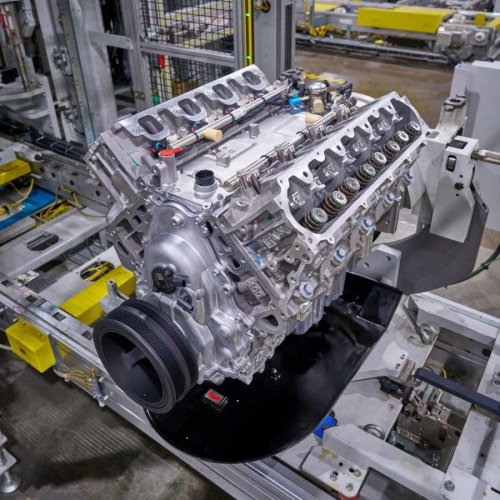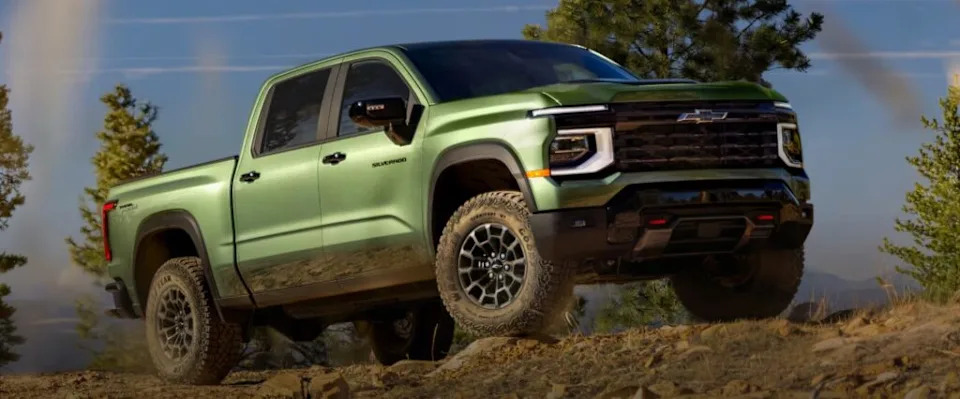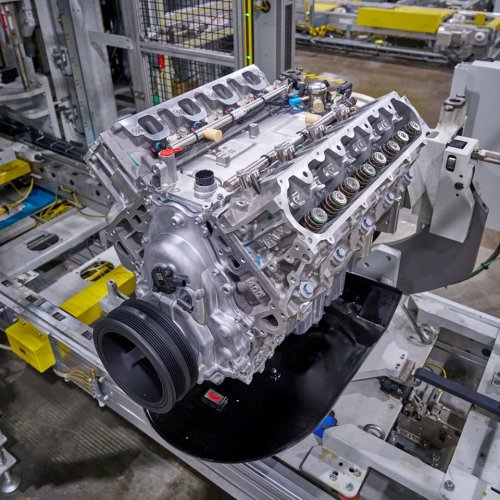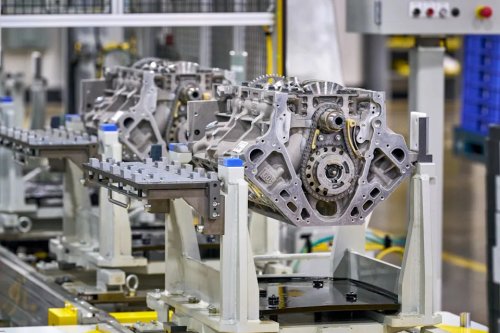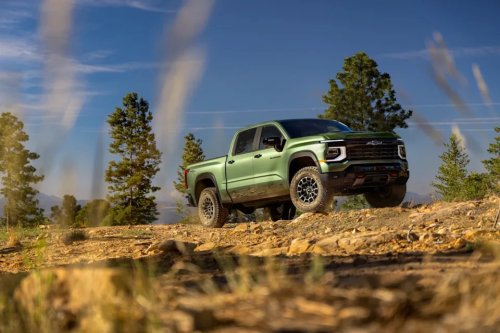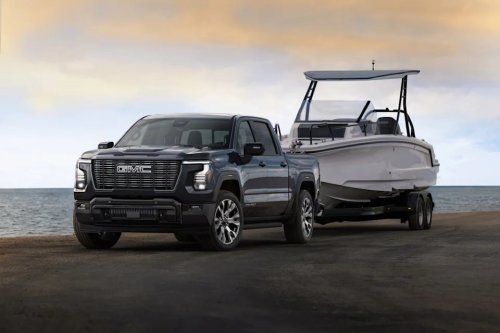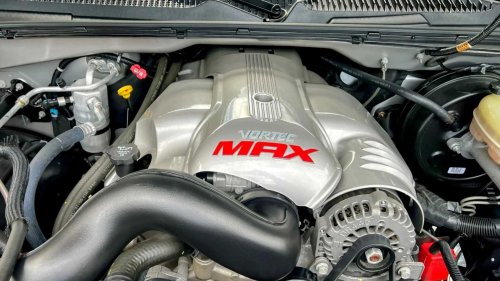
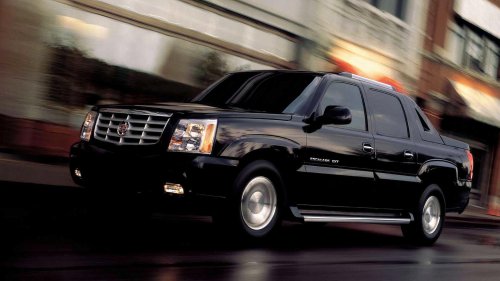
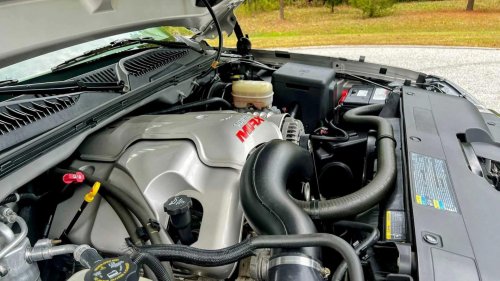
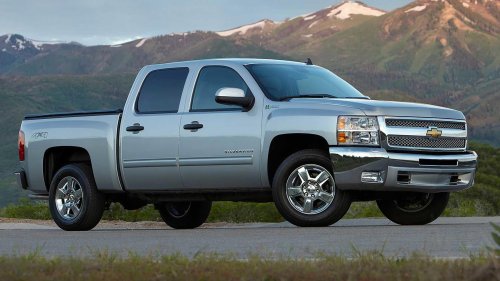
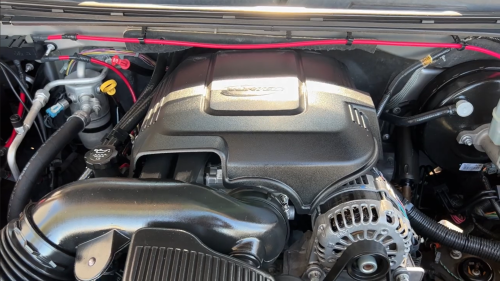
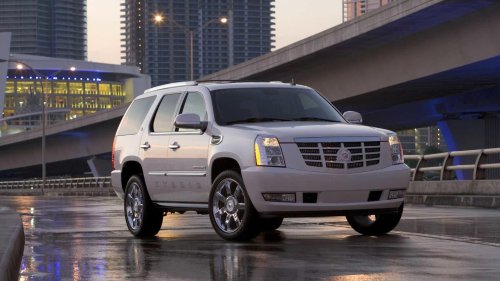


















Over the course of its existence, General Motors has produced a litany of V8 engines, the most famous of which is the Chevrolet small-block V8. While GM's involvement in building V8s goes back further, the famous Chevy small block brought the V8 engine, largely, into the spotlight. It first hit the market in 1955 as an optional mill for the then-struggling C1 Chevrolet Corvette, along with the Bel Air, 210, and 150 models.Since then, the General Motors small block has gone through loads of changes. Along the way, several special versions of the mill have been produced in varying quantities and at various times. Take today's engine of interest: the VortecMax. The namesake was used for just a handful of years and was attached to two distinct engines. Only a handful of models offered the suped-up mill, but those that did boast it was given a notable boost in power, enough to make it a venerable street machine straight out of the factory. The Overlooked VortecMax: Origins Bring A Trailer Quick Facts About The VortecMax V8 Introduced in 2002 Name applied to the LQ9 and L76 V8s Offered across several models, including the Chevrolet Silverado 1500/GMC Sierra 1500 Positioned as a bridge between the 5.3-liter and 6.2-liter V8s Use of the namesake discontinued following the 2009 model year The idea behind producing the VortecMax engine came about in the early 2000s, when General Motors was keen to give some of their more-upscale SUVs and trucks a bit more of an edge in terms of power.The first of GM's subsidiaries to request a more powerful engine was Cadillac. In 2001, the luxury marque approached GM's top brass with a request for a special high-output version of the 6.0-liter LQ4 V8 for its all-new Escalade. At the time, the LQ4 was used exclusively by Chevrolet, GMC, and Hummer SUVs and trucks. Cadillac, on the other hand, took advantage of the 5.7-liter V8 up to this point, which only produced 255 horsepower.Cadillac The '02 Escalade was already slated to receive GM's 285-hp, 5.3-liter V8 as standard, but adding a more powerful 6.0-liter mill would put the model at the top of its class in terms of horsepower output, a promising marketing point. The request was granted, and the new motor, coined the "VortecMax" or "LQ9", hit the market for the first time in 2002 as an optional upgrade on the Cadillac Escalade and Escalade EXT pickup. The long-wheelbase Escalade ESV received the mill a year later. Making The VortecMax Bring A Trailer In order to transform the normal LQ4 into the LQ9 VortecMax, GM engineers swapped its pistons out for flat-topped ones, increasing the mill's compression ratio and, as a result, adding power. For contrast, the LQ4 used more standard-dished pistons, which bode well for durability, but less so for power output. Come 2004, the LQ9 gained stronger connecting rods out of the Generation IV GM small-block V8. In addition, a set of full-floating pins replaced the pressed pins seen in earlier LQ9 iterations from 2002 and 2003.To support the increase in power, the LQ9 needed a completely different fuel injector setup. LQ4 mills took advantage of injectors that pumped out about 24 pounds of fuel per hour at approximately 58 psi. LQ9s were fitted with injectors that produced a slightly higher flow rate, measuring at around 25 pounds of fuel per hour. The LQ9 also requires the use of premium unleaded fuel, whereas the LQ4 can run on standard octane. This is due to the LQ9's increased compression ratio. Models Using The LQ9 VortecMax Engine 2002–2006 Cadillac Escalade AWD 2005–2006 Cadillac Escalade 2WD 2002–2006 Cadillac Escalade EXT 2003–2006 Cadillac Escalade ESV 2003–2007 Chevrolet Silverado SS & H/O Edition 2005–2006 GMC Sierra Denali 2006–2007 Chevrolet Silverado Classic VortecMax/GMC Sierra Classic VortecMax The VortecMax Gets An Update ChevroletThe original LQ9 VortecMax mill received the axe following the 2007 model year. However, General Motors wasn't ready to give up the namesake just yet. Beginning with the 2007.5 model year, General Motors began placing the moniker on certain USDM models equipped with the 6.0-liter L76 V8. It's derived from the GM LS2 V8, and was originally marketed in Australia as an option for the 2006 Holden Commodore and Statesman models.It first hit US streets under the hoods of the 2007.5 Chevrolet Silverado 1500 and GMC Sierra 1500 models, along with the Chevrolet Suburban, GMC Yukon XL, and Chevrolet Avalanche. However, only the Silverado/Sierra received special "VortecMAX" front door badging. Like the original LQ9 version, the L76 VortecMAX was situated in the gap between the standard 5.3-liter V8 and the 6.2-liter L92 V8 options. Mechanical Make-Up YT: Father And Sons Auto SalesOne of the largest differences between the L76 – and the LQ9 which it replaced – lies in its casting material. While the older LQ9 used cast iron, the L76 sports an all-aluminum block, helping to save overall engine weight. Its cylinder heads are made of aluminum, as well. It features GM's Active Fuel Management (AFM) variable displacement tech. Variable camshaft phasing comes as standard, as well, allowing the mill to optimize fuel usage and reduce emissions. Models Using The L76 VortecMax Engine (USDM) 2008–2009 Pontiac G8 GT (361 hp, 385 lb-ft) 2007–2009 Chevrolet Suburban 1500 2007–2009 Chevrolet Avalanche 2007–2009 Chevrolet Silverado 1500 2007–2009 GMC Sierra 1500 2007–2009 GMC Yukon XL The End Of The VortecMax CadillacWhile the VortecMax namesake remained in use until 2009 when the L76 was axed, its replacement had already entered production by 2007. It was coined the L9H, and it measured in at 6.2 liters. At first, the L9H was destined for Cadillac use only, much like the original LQ9 VortecMax engine. However, GMC also managed to secure usage of the motor. By 2008, the powerplant was being used by other GM brands, like Chevrolet and Hummer, the latter of which was sourcing the engine for its H2.Like the L76, the L9H made exclusive use of aluminum for both its block and cylinder heads. Interestingly, the mill was originally meant to support Active Fuel Management capabilities. Shortly after production commenced, though, this decision was reversed. This meant that some early L9H engines were built with AFM hardware built in, but it was inoperable. Subsequent L9H engines were built without any AFM components at all. In place of the famous Lifter Oil Manifold Assembly, or valley cover, a plate that sits on top of the mill's intake manifold and houses the AFM parts on many GM V8s, the L9H used a blank plate. The L9H finally gained AFM in 2010, becoming known as the L94.Come 2014, the L9H had a replacement lined up and in production called the L86. It was destined for use by the Chevrolet Silverado 1500, GMC Sierra 1500, Chevrolet Tahoe/Suburban, GMC Yukon/Yukon XL, and the Cadillac Escalade/Escalade ESV. The mill is capable of producing 420 hp and 460 lb-ft of torque.